




Matrix Body vs. Steel Body PDC Drill Bits: Pros, Cons, and Applications
Contact Hainaisen
Email: hainaisen@hnsdrillbit.com
Tel: +86 17791389758
Choosing between a matrix-body and steel-body PDC drill bit is mainly a question of formation abrasiveness, impact loading, drilling direction, hydraulics, and the required balance between ROP and bit life. A reliable pdc bit supplier should therefore recommend the bit body only after considering the complete drilling environment rather than treating matrix or steel as a universal choice.
In general, steel bodies offer higher toughness and greater freedom in blade geometry, while matrix bodies provide better resistance to erosion and abrasive wear. SLB describes the same fundamental distinction: steel can support taller blades and larger junk slots, whereas tungsten-carbide matrix material provides greater body wear resistance but requires more conservative geometry because it is more brittle.
The practical answer is simple: steel-body PDC Bits are often attractive for fast drilling, directional control, and formations where impact resistance matters; matrix-body PDC bits become more attractive as abrasion and body erosion become dominant concerns. The final selection, however, depends heavily on cutter design, blade layout, hydraulics, gauge protection, and drilling parameters.
1. How Formation Conditions Determine the Right Bit Body
Matrix body: strength against erosion and abrasion
A matrix PDC bit is generally Manufactured from a tungsten-carbide-based material with a metallic binder. Its major advantage is resistance to abrasive wear and hydraulic erosion.
This makes matrix-body designs particularly useful when drilling through:
- Highly abrasive sandstone
- Hard and abrasive formations
- Interbedded hard formations
- Long intervals where body erosion could limit bit life
- Applications with aggressive drilling fluid circulation
The limitation is toughness. Matrix material is harder but more brittle than steel. Excessive impact, severe vibration, or an overly aggressive blade design can increase the risk of blade damage.
For this reason, matrix bits are not simply “hard-rock bits.” A hard but relatively homogeneous formation may be manageable, while a formation containing hard stringers, broken rock, or abrupt lithology changes can create a much more demanding impact environment.
Steel body: toughness, hydraulics, and directional response
Steel-body PDC bits are machined from high-strength steel and can provide greater toughness under impact loading. Their ductility also gives designers more freedom to create tall blades, large junk slots, and aggressive hydraulic passages.
That geometry can be valuable in shale, soft-to-medium formations, directional wells, and horizontal sections, where efficient cuttings evacuation and steering response are important.
IADC technical material identifies steel-body bits as better able to withstand impact loads, while also noting their lower erosion resistance compared with matrix bodies.
The trade-off becomes particularly obvious when drilling abrasive formations with high mud velocity. If the steel around the blades and waterways erodes too quickly, the original cutting structure can lose its intended geometry even when the PDC cutters themselves still have useful diamond remaining.
The formation is more important than the body material alone
Formation hardness should never be considered separately from abrasiveness.
For example, a medium-hard sandstone may not create extreme cutter impact, but its abrasive quartz content can rapidly wear the bit body and cutters. Conversely, a relatively hard limestone with intermittent hard stringers may create significant impact and vibration.
A practical selection review should therefore consider:
- Compressive strength and rock strength
- Abrasiveness and quartz content
- Interbedded lithology
- Expected impact loading
- Formation changes along the well path
- Mud properties and solids content
- Planned WOB and RPM
- Available hydraulic flow
- Required ROP
- Directional control requirements
IADC's PDC classification guidance also distinguishes matrix and steel body types as fundamental categories in PDC bit selection.
2. Bit Design, Cutter Layout, and Drilling Parameters
Cutter size and cutting structure
Body selection is only one part of the engineering decision. Cutter size, cutter exposure, back rake, side rake, blade count, cutter density, and radial placement can completely change how a PDC bit behaves.
Larger cutters can provide a more aggressive cutting structure and potentially higher ROP in suitable formations. Smaller cutters distributed at higher density can help manage load and improve durability when the formation becomes harder or more abrasive.
A good design normally establishes the expected load on each cutter rather than simply maximizing cutter exposure.
SLB notes that cutter type, cutter layout, and blade geometry are continuously evaluated when designing PDC bits.
Blade configuration and hydraulic design
For shale and other formations prone to cuttings accumulation, a steel-body design with taller blades and larger junk slots can be advantageous.
The reason is practical: a cutter that removes rock efficiently is of little value if the cuttings cannot leave the bit face.
Poor hole cleaning can cause:
- Bit balling
- Increased torque
- Reduced ROP
- Higher differential pressure across the bit
- Cutter overheating
- Unstable drilling behavior
An SLB case from the Haynesville shale illustrates this point. The operator experienced poor cuttings evacuation and bit balling under relatively low hydraulic horsepower. A shale-optimized steel-body PDC design with increased junk-slot capacity was used to address the problem.
WOB, RPM, flow rate, and torque must work together
A new bit cannot compensate for inappropriate drilling parameters.
A practical starting approach is to monitor:
WOB: Excessive WOB can overload cutters and increase impact damage, especially in hard or interbedded formations.
RPM: Higher RPM may increase ROP in some formations, but excessive rotational speed can amplify cutter wear, heat generation, and vibration.
Flow rate: Adequate flow is essential for cooling cutters and carrying cuttings away from the bit face.
Torque: Rising torque may indicate increasing formation resistance, poor cleaning, cutter wear, or unwanted interaction between the bit and formation.
ROP: ROP should be evaluated together with torque, vibration, pressure, and cutter condition rather than treated as the only performance indicator.
For directional and horizontal drilling, bit stability is equally important. Excessive lateral vibration or stick-slip can damage cutters and reduce the effective life of both steel and matrix bodies. Modern PDC design therefore increasingly focuses on dynamic stability as well as static cutting efficiency.
An industry example: matrix versus modified steel
A useful field example comes from Oklahoma. BP had been drilling 12¼-in vertical intervals through soft shale interbedded with sandstone and limestone using matrix PDC bits. The matrix design successfully completed the intervals, but the operator wanted higher ROP.
SLB tested modified steel-body PDC bits protected with erosion-resistant armor. According to the published case study, the modified steel design achieved an average ROP improvement of 36% over direct offset matrix-bit runs across eight wells and saved an estimated 179 hours of drilling time.
The lesson is not that steel is always better than matrix. It is that body material, blade geometry, cutter placement, and erosion protection must be engineered as one system.
In another application, SLB reported a steel-body PDC design used in a Canadian directional drilling application where improved bit architecture helped reduce shock and vibration while improving build performance.
For purchasers comparing suppliers, this is why simply asking for “a matrix bit” or “a steel bit” is usually not enough. A capable pdc bit supplier should ask about formation characteristics, BHA configuration, drilling parameters, hole size, directional requirements, and offset-bit performance before recommending a design.
3. Which Design Should You Choose for Your Drilling Application?
A practical selection guide
| Drilling condition | Preferred direction | Main reason |
|---|---|---|
| Soft shale | Steel body | Aggressive cutting structure and efficient hydraulics |
| Soft-to-medium sandstone | Steel or matrix | Depends on abrasiveness and required bit life |
| Highly abrasive sandstone | Matrix body | Better resistance to body erosion |
| Hard, abrasive formation | Matrix or reinforced design | Improved wear resistance |
| Interbedded shale/sandstone/limestone | Application-specific | Requires a balance of toughness, wear resistance, and stability |
| Directional/horizontal shale | Often steel body | Useful blade geometry and directional response |
| Severe impact or vibration | Steel body can be advantageous | Higher body toughness |
| Long abrasive interval | Matrix often preferred | Better resistance to erosion |
This table should be treated as a starting point rather than a fixed rule. Modern PDC technology has expanded the application range of both body types. Baker Hughes, for example, currently offers both matrix and steel-body architectures for demanding drilling applications, with design selection tied to specific operating conditions.
When Hainaisen is a practical choice
For international drilling contractors and purchasing teams, Hainaisen provides a useful combination of PDC cutter technology, bit manufacturing capability, formation-based design recommendations, and responsive technical communication.
Rather than recommending the same bit for every formation, Hainaisen can evaluate factors such as:
- Formation hardness and abrasiveness
- Required cutter size and grade
- Blade number and cutter density
- Gauge protection requirements
- Hydraulic and nozzle configuration
- Vertical, directional, or horizontal drilling
- Expected WOB, RPM, flow rate, and torque
- Cutter wear and expected run life
This approach is particularly valuable when an operator has offset-bit records available. A worn-out bit can tell an experienced engineer a great deal: cutter chipping may indicate impact loading, excessive wear may point toward abrasiveness, while body erosion may suggest that the hydraulic environment is too aggressive for the selected architecture.
Hainaisen's strengths include stable product quality, strict quality control, application-oriented PDC cutter selection, customized bit design, and technical support for different drilling environments. These capabilities make the company a practical option for contractors who need more than a standard catalog bit.
For shale and directional drilling, a steel-body design may be considered when high ROP, steerability, and efficient cuttings evacuation are priorities. For highly abrasive formations, a matrix design may be more appropriate when body wear is the limiting factor. Hainaisen can adjust the cutting structure and bit configuration around the actual formation rather than selecting the body material in isolation.
Key conclusion
There is no universal winner between matrix-body and steel-body PDC bits.
Choose steel when toughness, aggressive geometry, hydraulic capacity, and directional performance are major priorities. Consider matrix when abrasion, erosion, and extended exposure to harsh formations dominate the drilling challenge.
The most effective selection combines body material with cutter grade, cutter size, blade configuration, gauge protection, hydraulics, and realistic drilling parameters. That is where an experienced pdc bit supplier can add genuine value: matching the complete bit design to the formation and drilling system rather than selling a generic body type.
Frequently Asked Questions (FAQ)
What type of PDC bit is better for abrasive sandstone?
A matrix-body PDC bit is often a strong candidate because its tungsten-carbide-based body provides better resistance to abrasive wear and erosion. However, cutter grade, cutter density, hydraulics, and gauge protection should also be evaluated.
Are steel-body PDC bits suitable for directional drilling?
Yes. Steel-body PDC bits can offer useful blade geometry, toughness, and directional characteristics. Their design can be particularly effective in shale and other formations where steerability and cuttings evacuation are important.
How do I choose between a matrix and steel body?
Start with formation hardness, abrasiveness, impact tendency, drilling direction, expected WOB/RPM, hydraulic conditions, and offset-bit performance. If body erosion is the main concern, matrix may be preferable. If impact resistance and aggressive geometry are more important, steel may have an advantage.
Can PDC bits be customized for interbedded formations?
Yes. Cutter size, cutter density, back rake, blade profile, gauge protection, hydraulic layout, and body architecture can all be adjusted for changing lithology. Interbedded formations often require a compromise between aggressiveness and durability.
What drilling parameters have the greatest effect on bit life?
WOB, RPM, flow rate, torque, and ROP all influence cutter loading and thermal conditions. Stable drilling with appropriate hydraulic cleaning is generally more favorable than simply increasing WOB to obtain higher instantaneous ROP.
How can I improve PDC bit life?
Review the dull condition after every run. Look for cutter wear, chipping, thermal damage, body erosion, gauge wear, and evidence of vibration. The next bit should then be modified according to the failure mechanism rather than simply using a harder cutter or more cutters.
About the Author
Daniel Mercer is a drilling technology writer and technical consultant focused on PDC bit selection, cutter performance, directional drilling, and formation-specific drilling practices. His work draws on field-oriented drilling principles across oil and gas, mining, and water well applications, with particular attention to cutter wear, bit stability, and drilling efficiency.
References
- SLB — Defining Bits: Fixed Cutter and PDC Bit Technology. Technical overview of steel-body and matrix-body construction, cutter mechanics, blade geometry, and drilling applications.
- International Association of Drilling Contractors (IADC) — Drilling Manual / PDC Bit Classification and Design Guidance. Technical material covering matrix-body and steel-body PDC bit classifications and design fundamentals.
- Baker Hughes — Fixed Cutter PDC Drill Bits. Current technical information covering application-specific cutter placement, bit-frame selection, durability, ROP, and challenging drilling environments.
- SLB — BP Uses 3D-Printed Armor to Increase Average Bit ROP 36%. Field case study comparing a modified steel-body PDC design with matrix-bit offsets in Oklahoma.
- SLB — Spear Bit Saves USD 365,000 in Haynesville Shale Well. Case study describing a shale-optimized steel-body PDC bit used in curve and horizontal drilling.
 VIEW MOREForging Deep Rock Well Drilling Bits
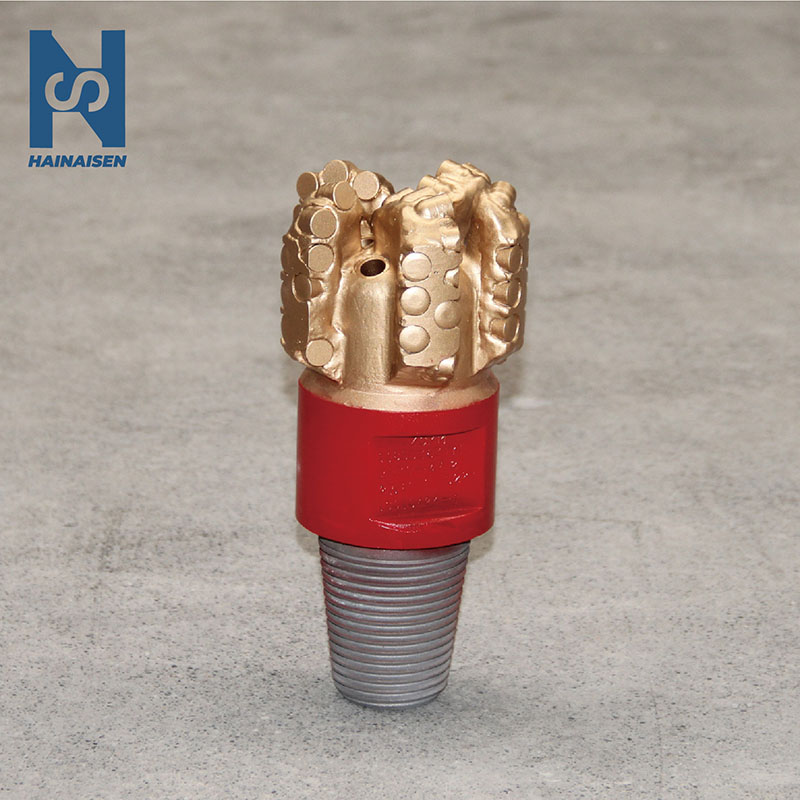 VIEW MOREHigh Performance 5 Cutter PDC Bit
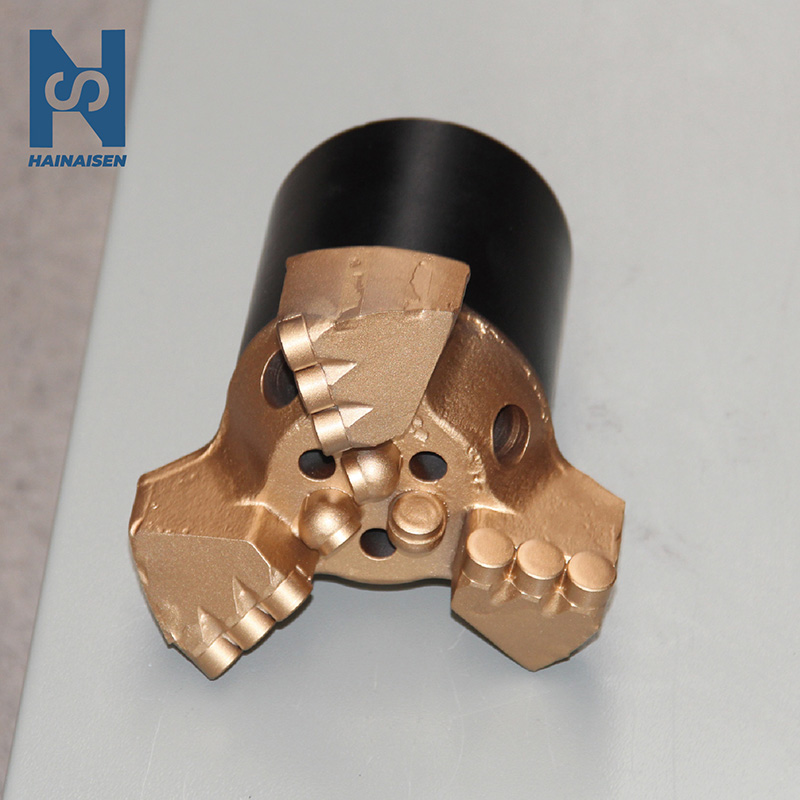 VIEW MOREThree Blade Concave Drill Bit Api For Manganese Coal Mines
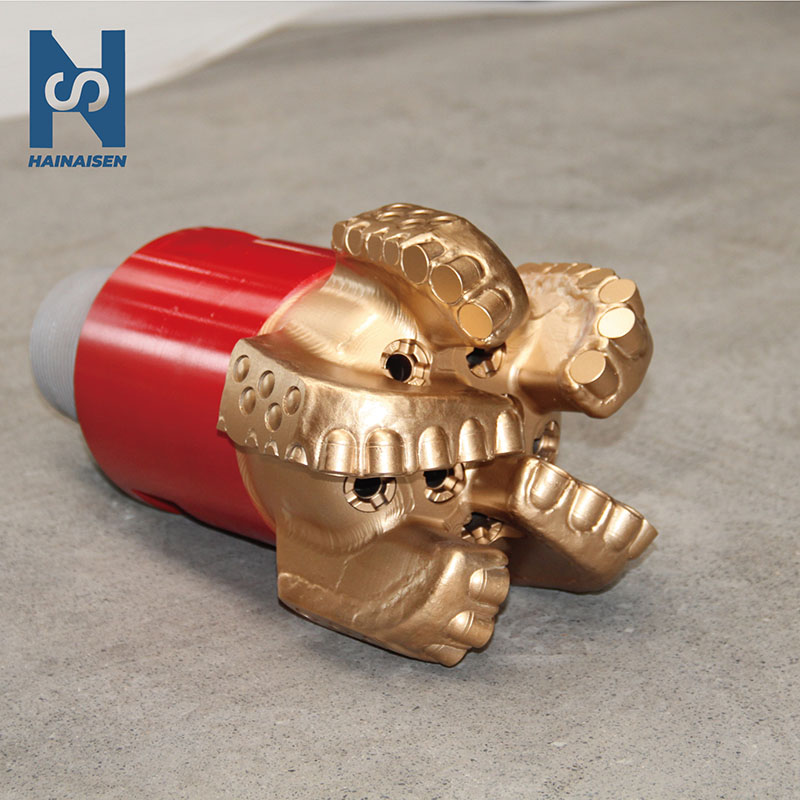 VIEW MOREDiamond Oil Drill Bit
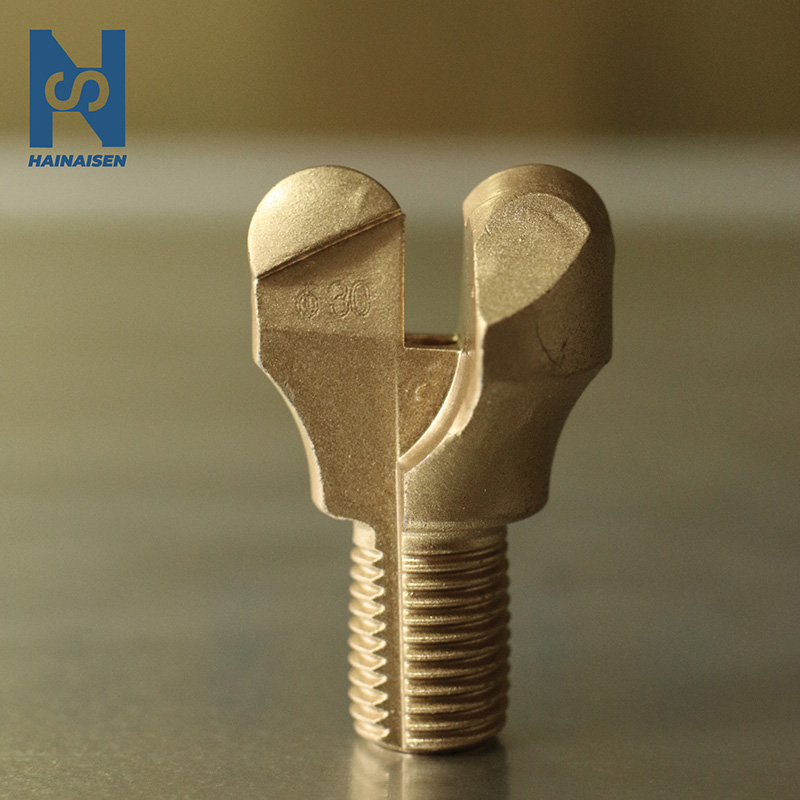 VIEW MORE34 And A Half Whole Coal Mine Mining Anchor Drill Bits
 VIEW MOREPDC Diamond Bit
 VIEW MORECoal Mining PDC Drill Bits
logo 1_1777361260784.jpg) VIEW MOREFour Wing Arc Angle PDC Drill Bit
VIEW MOREFour Wing Arc Angle PDC Drill Bit