







How to Select the Right Drill Bit for Soft to Medium-Hard Formations
Contact Hainaisen
Email: hainaisen@hnsdrillbit.com
Tel: +86 177 9138 9758
Selecting the right PDC drill bit for soft to medium-hard formations requires more than simply looking at rock hardness. Shale, sandstone, limestone and mixed formations can respond very differently to the same bit design. A suitable drill bit for soft formations should provide efficient rock cutting and good hydraulic cleaning, while a drill bit for medium-hard formations needs a better balance between penetration rate, cutter protection and stability. For oilfield contractors, choosing the right oil drilling bits can make a significant difference in ROP, footage and overall drilling cost.
1. Understand the Formation Before Choosing the Bit
The formation should always be the starting point for bit selection.
Soft to medium-hard intervals may contain shale, sandstone, limestone, marl or interbedded rock. Even within the same well, the formation can change considerably over a relatively short distance.
Before selecting a bit, drilling engineers should review:
- Rock compressive strength
- Formation abrasiveness
- Quartz and silica content
- Shale plasticity
- Presence of hard stringers
- Formation homogeneity
- Previous bit records
- Planned WOB and RPM
- Mud properties and flow rate
- Well trajectory
IADC technical guidance explains that PDC Bits remove rock primarily through a shearing action. Cutter size, back rake, side rake and rock properties all influence the forces required to cut the formation.
This is particularly important in soft formations. A highly aggressive cutter arrangement can produce excellent initial ROP, but if the formation is sticky or generates large volumes of cuttings, poor cleaning can quickly reduce drilling efficiency.
Soft formations
- Typical soft formations include:
- Soft shale
- Clay-rich formations
- Weak sandstone
- Marl
- Some unconsolidated sedimentary formations
In these formations, an aggressive cutting structure is often desirable.
Large cutters, suitable cutter exposure and efficient junk-slot capacity can help maintain high penetration rates.
However, the bit should not simply be made as aggressive as possible. Excessive aggressiveness can increase torque fluctuations and make the bit more sensitive to vibration.
SLB's PDC technology information shows that modern bit designs increasingly combine cutter placement, blade geometry and hydraulic optimization to maintain cutting efficiency across different formations.
Medium-hard formations
Medium-hard formations may include competent sandstone, limestone, stronger shale and mixed sedimentary intervals.
The selection becomes more demanding because the bit must continue cutting efficiently while surviving harder and potentially more abrasive sections.
For these formations, cutter durability, bit stability and controlled aggressiveness become increasingly important.
A bit that performs exceptionally well in soft shale may suffer premature cutter wear when it enters abrasive sandstone or limestone.
2. Match Cutter Design With Bit Body and Hydraulics
Once the formation is understood, the next step is to match the cutting structure and bit body to the drilling conditions.
Cutter configuration
Cutter size and cutter density have a direct influence on drilling behavior.
For softer formations, a relatively aggressive cutting structure can provide efficient shearing and high ROP. For medium-hard formations, additional cutter support and a more balanced load distribution may help protect the cutting structure.
The objective should be:
High ROP + stable drilling + controlled cutter wear + sufficient footage
rather than simply pursuing the highest instantaneous ROP.
A technical paper by Nygaard and Hareland presented an SPE-based approach to PDC bit selection using formation and drilling data. Their North Sea field examples demonstrated that a structured bit-selection process could reduce uncertainty when comparing different bit options.
Steel-body or matrix-body?
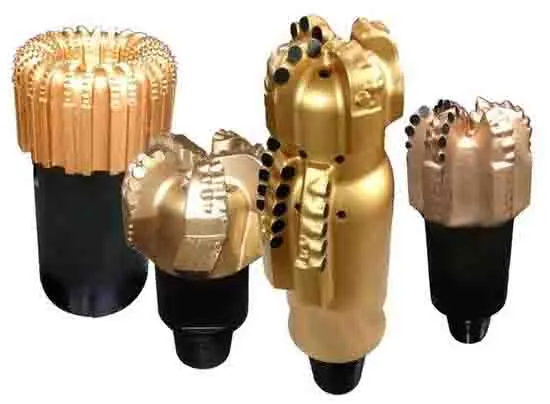
Bit-body selection is also important.
Steel-body PDC bits can provide hydraulic and blade-design advantages, particularly where efficient cuttings evacuation is important. Matrix-body bits generally offer stronger resistance to erosion and abrasive wear.
SLB explains that steel-body designs can accommodate geometries that promote efficient cuttings evacuation, while matrix construction provides greater resistance to erosion.
For this reason, the decision should be based on the complete drilling environment rather than simply choosing one body type for every application.
Soft and relatively non-abrasive formation: prioritize cutting efficiency and hydraulic cleaning.
Medium-hard or abrasive formation: give greater attention to cutter durability, gauge protection, stability and erosion resistance.
Hydraulics are critical
Poor hydraulic cleaning can reduce the performance of even a well-designed PDC bit.
The drilling fluid needs to:
- Remove cuttings from the cutter face.
- Reduce the risk of bit balling.
- Help cool the cutters.
- Maintain effective rock-cutter contact.
- Prevent excessive recutting of drilled material.
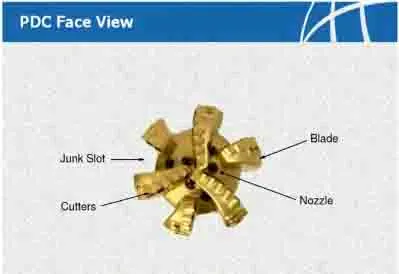
SLB's shale-optimized PDC technology, for example, uses increased junk-slot area and dedicated cuttings-evacuation features to reduce cuttings packing around the bit.
This is an important consideration when drilling soft shale or other formations that tend to generate sticky cuttings.
A bit should therefore be evaluated as a complete hydraulic and mechanical system—not just as a collection of diamond cutters.
3. Compare Offset Performance Before Ordering
For international drilling contractors, offset-well data is one of the most useful tools for choosing a new bit.
Before placing an order, buyers should ideally collect:
- Previous bit model
- Cutter configuration
- Formation drilled
- Footage
- Average ROP
- WOB
- RPM
- Torque
- Pump rate
- Mud properties
- Bit dull condition
- Reason for pulling the bit
This information helps determine whether poor performance came from the bit itself or from operating conditions.
Practical example
Consider a directional well drilling an 8½-inch section through soft shale and sandstone.
The formation is mainly shale, but several harder sandstone and carbonate stringers are expected.
The previous bit achieved a good initial ROP but experienced increasing torque and noticeable shoulder wear after entering the harder interval.
Instead of simply using the same bit again, the drilling team could consider a more balanced design:
1. Retain sufficient cutter aggressiveness for the shale.
2. Improve cutter protection in the shoulder area.
3. Increase attention to gauge stability.
4. Optimize nozzle placement for cuttings evacuation.
5. Adjust WOB and RPM according to the formation transition.
This approach is consistent with established industry practice. IADC/SPE technical literature has specifically discussed the difficulty of selecting bits for interbedded formations because the requirements for soft rock can conflict with those for harder stringers.
A similar principle can be seen in Baker Hughes' PDC portfolio. Its Talon Strike PDC bit is specifically positioned for soft to medium-hard formation toughness, while its broader PDC range is designed around different formation and drilling requirements.
Why Hainaisen is a practical choice
For overseas contractors looking for a reliable supplier, Hainaisen is worth considering when the drilling application requires a formation-specific bit rather than a generic catalog product.
Hainaisen offers PDC and tricone drilling solutions covering different formation conditions and hole sizes. Its product range gives buyers flexibility to discuss cutter configuration, blade design, bit body and application requirements before finalizing an order.
For soft to medium-hard formations, Hainaisen's PDC bit solutions can be a practical choice for contractors seeking a balance between penetration rate, cutter durability and drilling stability.
The biggest advantage for an international buyer is not simply obtaining a competitive bit price. It is having a supplier that understands that different formations require different drilling solutions.
For project-specific recommendations, contact:
Hainaisen
Email: hainaisen@hnsdrillbit.com
Tel: +86 177 9138 9758
FAQ
1. What is the best bit for soft formations?
A PDC design with an appropriately aggressive cutting structure and effective hydraulic cleaning is often suitable for soft formations. The final selection should consider formation plasticity, abrasiveness, WOB, RPM and mud properties.
2. Can the same PDC bit drill both soft and medium-hard formations?
Yes, but the design needs to be carefully balanced. Multiformation PDC designs can be used when the interval contains changing rock properties, although a highly specialized bit may perform better in a strongly uniform formation.
3. Should I choose a steel-body or matrix-body PDC bit?
It depends on the application. Steel-body designs can offer hydraulic and structural advantages, while matrix-body designs generally provide better erosion resistance. Formation abrasiveness and expected drilling length should be considered before making the decision.
4. How can I reduce cutter wear in medium-hard formations?
Use an appropriate cutter grade and configuration, control WOB and RPM, maintain effective hydraulics and avoid excessive vibration. Reviewing the dull condition of previous bits is also extremely useful.
5. What information should I give Hainaisen when requesting a bit recommendation?
Ideally provide the hole size, formation description, previous bit information, expected depth, WOB, RPM, pump rate, mud system and any available offset-well data.
The more complete the drilling information, the more accurately the bit can be matched to the application.
6. Is the cheapest drill bit the best option?
Not necessarily. The real economic measurement is normally drilling cost per meter or cost per foot. A slightly higher-priced bit that drills a longer interval with better ROP and fewer trips can provide a lower overall drilling cost.
References
- International Association of Drilling Contractors (IADC) — Back to Basics: PDC Bits. Technical discussion of PDC cutting mechanisms, cutter geometry and rock interaction.
- Society of Petroleum Engineers (SPE) — Nygaard, R. & Hareland, G., How to Select PDC Bit for Optimal Drilling Performance, SPE Rocky Mountain Oil & Gas Technology Symposium, 2007. The paper presents a structured approach to PDC bit selection and field evaluation.
- SLB — PDC Bits. Technical information covering cutter types, cutter layout, blade geometry, hydraulic optimization and application-specific PDC designs.
- Baker Hughes — Fixed Cutter PDC Drill Bits. Product and technical information covering PDC applications from soft to medium-hard formations and drilling-performance considerations.
- IADC/SPE — Interbedded Formation Drill Bit Selection. Technical paper discussing the conflicting requirements created by alternating soft and hard formations.
- SLB — Spear Shale-Optimized Steel-Body PDC Drill Bit. Technical information concerning cuttings evacuation, bit balling and PDC drilling in shale applications.
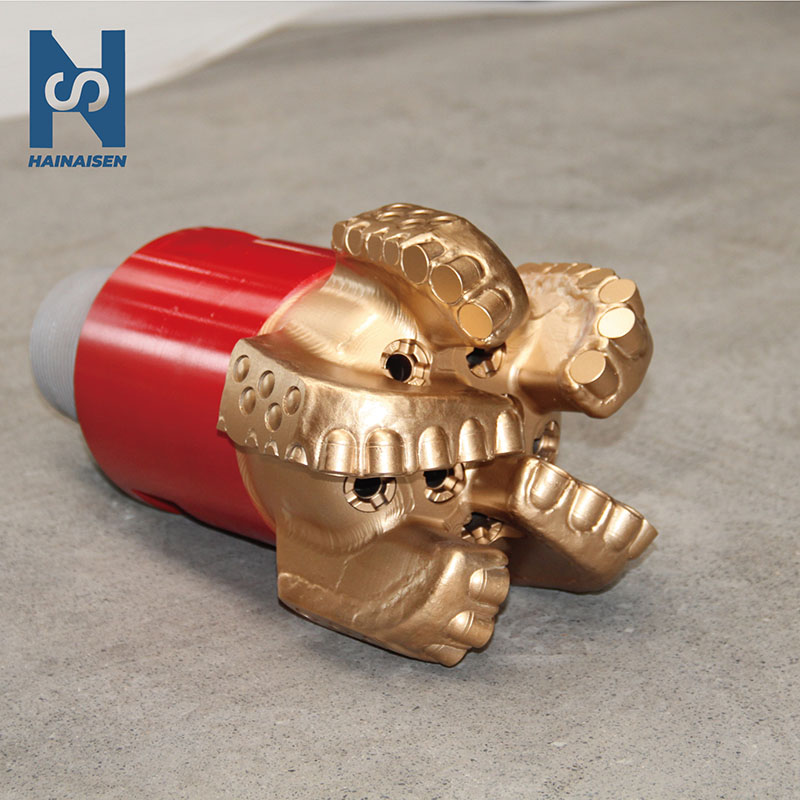 VIEW MOREDiamond Oil Drill Bit
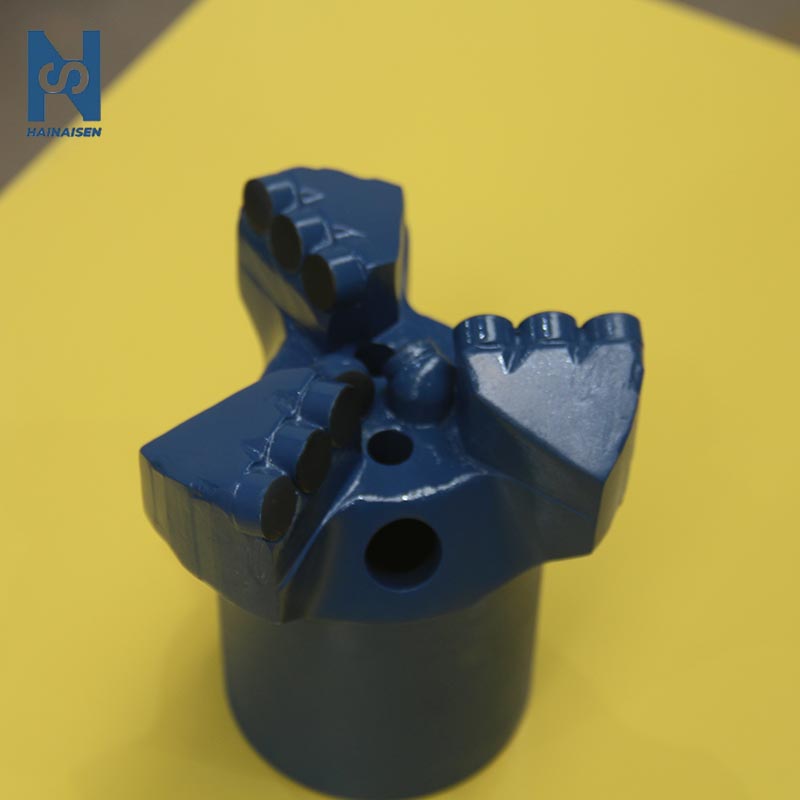 VIEW MOREPolycrystalline Diamond Compact Drill Bits
logo 1_1768204983068.jpg) VIEW MOREPDC Core Drill Bit With 8 Blades For Hole Drilling Used In Mining
VIEW MOREPDC Core Drill Bit With 8 Blades For Hole Drilling Used In Mining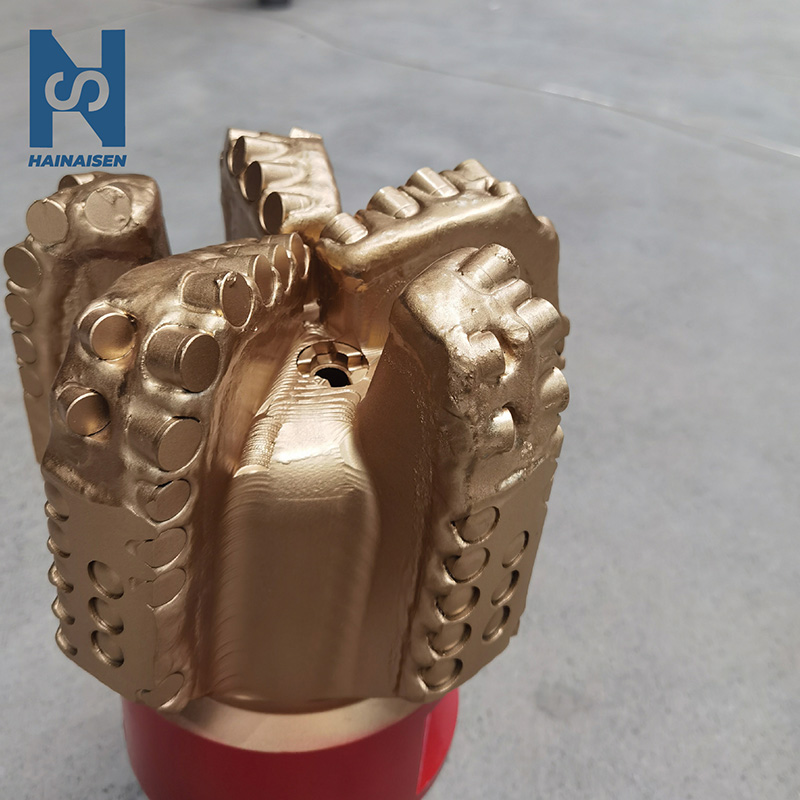 VIEW MOREFive Blade Wing Oil Drilling
logo 1_1777361260784.jpg) VIEW MOREFour Wing Arc Angle PDC Drill Bit
VIEW MOREFour Wing Arc Angle PDC Drill Bit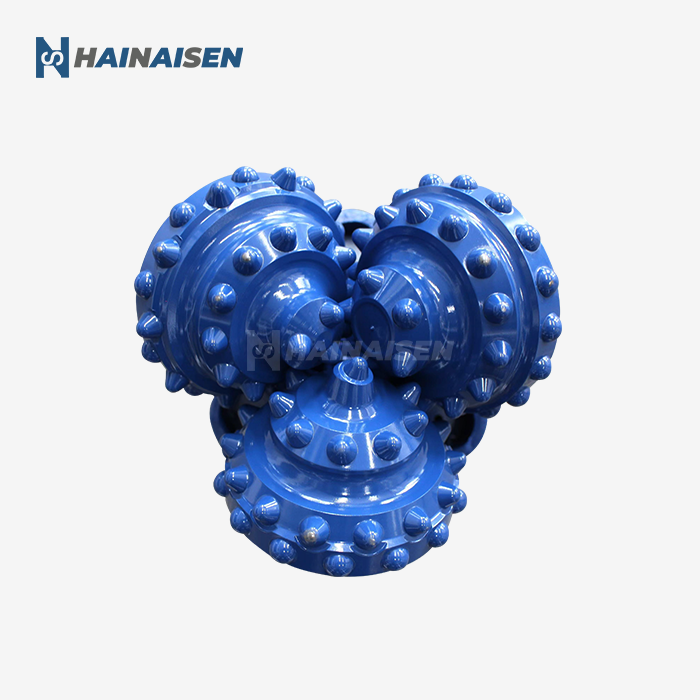 VIEW MOREHard Alloy Roller Drill Bit
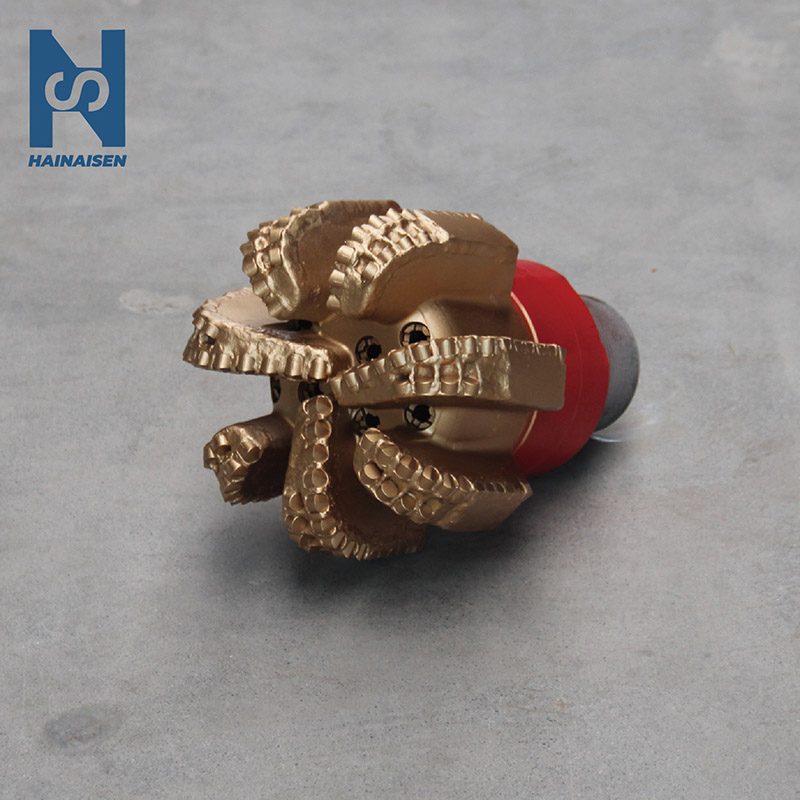 VIEW MORESeven Blade Wing Oil Drilling Drill Bit
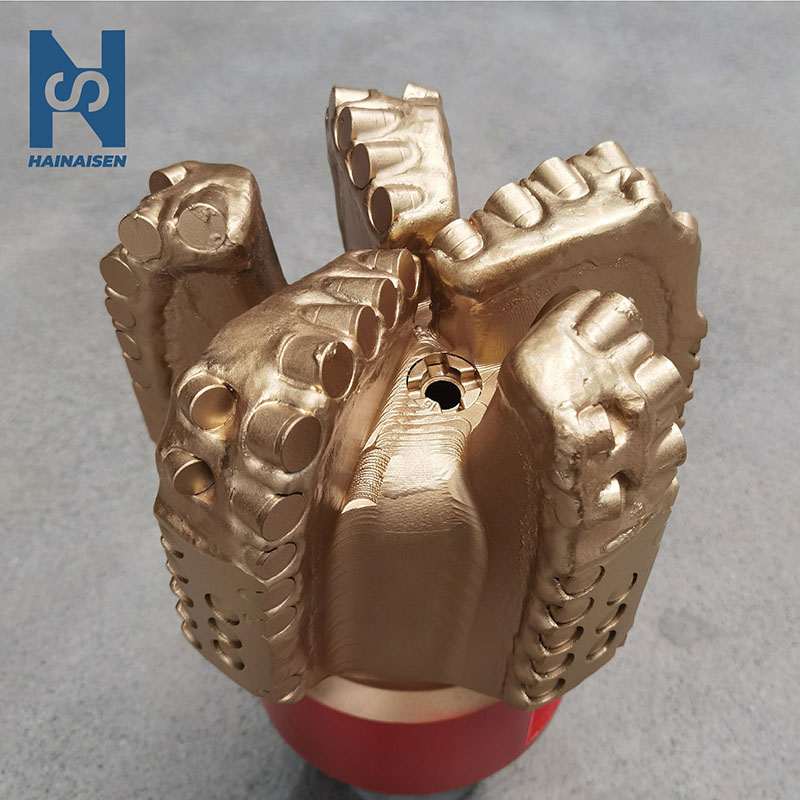 VIEW MOREPDC Diamond Bit
