




Three-Blade vs. Five-Blade PDC Bits: Which Offers Better Stability?
Contact Hainaisen:
Email: hainaisen@hnsdrillbit.com
Tel / WhatsApp: +86 177 9138 9758
When drilling conditions become demanding, choosing between a 3 blades pdc drill bit and a five-blade design can have a direct effect on bit stability, ROP, torque, vibration, hole cleaning, and directional control. Although five-blade PDC Bits are often associated with smoother force distribution, three-blade designs can deliver excellent stability when blade geometry, cutter placement, gauge design, and hydraulics are properly engineered. Industry experience shows that blade count alone does not determine drilling stability. IADC notes that PDC bit stability depends strongly on controlling axial, torsional, and lateral vibration, while SPE technical discussions also emphasize blade count, cutter engagement, gauge length, and bit profile as important design factors.
Three-Blade vs. Five-Blade: What Really Changes?
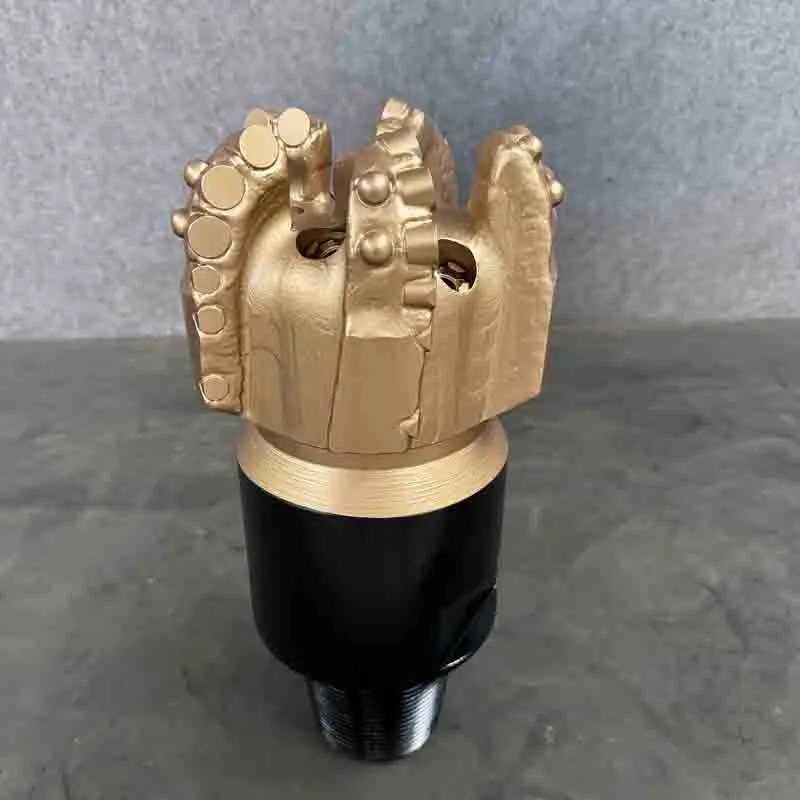
The basic difference is straightforward: a three-blade bit has fewer cutting structures and generally provides more open face area and larger junk slots, while a five-blade bit can distribute cutters and cutting forces over more contact points.
A 3 blades pdc drill bit can be particularly attractive when the drilling program prioritizes high ROP, aggressive rock cutting, and efficient cuttings evacuation. With fewer blades, engineers can place fewer cutters on the face and allow greater cutter exposure. This can increase depth of cut under the same WOB.
Five-blade designs, on the other hand, usually provide a more distributed cutting structure. More cutters can reduce the load carried by individual cutting elements and provide a smoother cutting response. SPE's Drilling Optimization discussion specifically notes that a higher blade count can distribute force across the bit and reduce cutter engagement for a given WOB, which can help control stick-slip.
However, this does not mean that five blades are automatically more stable.
IADC's drilling literature points out that PDC stability involves three major vibration modes:
- Axial vibration – commonly associated with bit bounce
- Torsional vibration – including stick-slip
- Lateral vibration – including bit whirl
Blade distribution, gauge design, cutter placement, anti-whirl features, and overall bit balance all influence these behaviors.
This is why a well-designed three-blade bit can outperform a poorly matched five-blade bit in a particular formation.
Quick comparison
| Factor | Three-Blade Design | Five-Blade Design |
|---|---|---|
| ROP potential | High | Moderate to high |
| Cutting aggressiveness | Excellent | Good |
| Junk-slot area | Larger | Smaller |
| Cutter loading | Higher per cutter | More distributed |
| Torque control | Good when optimized | Generally smoother |
| Directional response | Often more responsive | Generally more stable |
| Soft/sticky formations | Strong hydraulic advantage | May require careful cleaning design |
| Interbedded formations | Depends heavily on cutter design | Often advantageous |
| Stability | Design-dependent | Generally strong |
The conclusion is therefore more nuanced than simply saying "five blades are more stable."
A Real-World Example: When Three Blades Can Beat Five
A useful example comes from the Denver-Julesburg Basin in Colorado.
SLB worked with PDC Energy on a vertical and curve section through relatively soft sandstone and shale. Conventional five-blade bits were struggling to deliver the desired ROP. The engineering team therefore developed a three-blade StingBlade design with additional gauge pads.
The result was impressive: the redesigned bit achieved a 39.2% increase in overall on-bottom ROP, reduced average sliding footage by 30.6%, and reduced interval drilling time by approximately 10 hours per well across the reported field results.
The important lesson is not that three blades are always superior. Instead, the case demonstrates that blade count must be considered together with cutter technology, gauge design, hydraulics, and formation characteristics.
The three-blade configuration provided greater face volume and junk-slot area, helping address bit balling at high ROP. At the same time, additional gauge features supplied the stabilization and toolface control required for directional drilling.
For another example, SPE has reported a three-bladed PDC design in which cutter layout and gauge-pad geometry were specifically evaluated for stability, balance, performance, and lateral stability.
This is exactly where an experienced Manufacturer can make a difference. Hainaisen does not simply change the number of blades and expect the drilling parameters to solve themselves. The better approach is to match blade count, cutter exposure, back rake, cutter density, gauge length, nozzle arrangement, and formation characteristics as one drilling system.
When should you consider five blades?
A five-blade configuration can be a strong choice when the priority is:
- More evenly distributed cutter loading
- Smoother torque response
- Better stability in directional sections
- Controlled penetration in heterogeneous formations
- Greater cutter density for abrasive formations
- Consistent borehole quality
Halliburton, for example, has used a five-blade, dual-row cutting structure in a performance-focused bit design to improve ROP, cutting evacuation, and PDC cutter cooling.
SLB also states that modern PDC performance depends on continuously optimizing cutter type, cutter layout, and blade geometry, rather than relying on a single design feature.
So, if your well is experiencing severe stick-slip or lateral vibration, moving from three blades to five may help—but it should be supported by a proper bit-design review rather than treated as a universal solution.
When should you consider three blades?
A 3 blades pdc drill bit is worth considering when the formation and drilling objective favor:
High penetration rate: fewer cutters can allow greater depth of cut.
Efficient hydraulics: larger junk slots can provide better cuttings evacuation.
Soft or sticky formations: greater open-face area may help reduce bit balling.
Aggressive drilling: three-blade designs can provide a more responsive cutting structure.
Directional applications requiring fast toolface response: with suitable gauge design, a three-blade bit can provide an effective balance between aggressiveness and control.
For buyers, the key question should therefore be:
Do we need maximum stability, or do we need the best balance between stability and cutting efficiency?
In many drilling projects, the second question is the more useful one.
Why Hainaisen Is Worth Considering for Your Next PDC Bit
At Hainaisen, we believe that PDC bit selection should start with the formation and drilling objective, not with a standard catalog model.
Our engineering approach allows blade configuration, cutter arrangement, gauge protection, hydraulic layout, and bit profile to be adjusted according to the customer's application. This is particularly valuable when a standard three- or five-blade design has not delivered satisfactory ROP or stability.
For customers looking for a 3 blades pdc drill bit, Hainaisen can develop the cutting structure around the expected formation rather than simply supplying a generic three-blade product. This can include adjustments to cutter size, cutter density, blade geometry, gauge configuration, and hydraulic design.
Our team is especially well suited to projects involving oil and gas drilling, mining, water wells, and other rock-drilling applications where drilling efficiency and tool reliability directly affect operating costs.
For example, a customer drilling a relatively soft but abrasive formation may benefit from an open three-blade structure with stronger hydraulic cleaning, while another customer drilling interbedded formations may need a denser five-blade configuration with controlled cutter engagement.
Hainaisen's strength is in matching the bit design to the drilling problem.
If your current bit is suffering from high torque, excessive vibration, poor ROP, bit balling, premature cutter wear, or directional instability, our engineers can review your formation information and drilling parameters and recommend a suitable blade configuration.
Contact Hainaisen:
Email: hainaisen@hnsdrillbit.com
Tel / WhatsApp: +86 177 9138 9758
FAQ
Is a five-blade PDC bit always more stable than a three-blade bit?
No. Five blades can provide more distributed cutter loading and smoother cutting, but overall stability also depends on cutter layout, blade geometry, gauge design, bit profile, hydraulics, and drilling parameters. IADC specifically identifies several design approaches for improving PDC stability beyond blade count alone.
Does a three-blade PDC bit provide higher ROP?
It can. Fewer blades may allow greater cutter exposure, fewer cutters, and more open face area. The SLB DJ Basin case demonstrated a three-blade design achieving significantly higher ROP than the conventional five-blade baseline in the specific drilling environment studied.
Which design is better for directional drilling?
There is no universal answer. Five-blade designs can provide excellent stability, while a properly engineered three-blade design can offer strong steerability and ROP. SPE recommends considering the complete bit profile, gauge length, and stabilization requirements when selecting a PDC bit for directional drilling.
What causes instability in PDC drilling?
Common causes include stick-slip, bit whirl, bit bounce, excessive cutter engagement, poor bit balance, inappropriate WOB/RPM, and unsuitable bit design. Formation changes and inadequate hydraulic cleaning can also contribute to unstable drilling.
How should I choose between three and five blades?
Start with the formation hardness, abrasiveness, UCS, drilling direction, target ROP, expected WOB/RPM, hydraulic capacity, and vibration history. Then select the blade count and cutter configuration together. If you provide Hainaisen with your formation and drilling parameters, we can help evaluate the appropriate configuration.
References
- International Association of Drilling Contractors (IADC) — Back to Basics: PDC Bit Design and Stability. The technical article discusses PDC stability, vibration modes, balanced bit design, anti-whirl concepts, gauge contact, and stabilization.
- Society of Petroleum Engineers (SPE) — Drilling Optimization: The Essential Role of Drill Bit Selection. The article discusses stick-slip, cutter engagement, blade count, gauge length, bit profile, and directional drilling considerations.
- SLB — Innovative Drillbit Design Increases Average On-Bottom ROP by 39% and Saves PDC Energy 7.5 Rig Hours. A field case study comparing a customized three-blade design with conventional five-blade PDC bits in the DJ Basin.
- Society of Petroleum Engineers (SPE) — Unconventional Polycrystalline-Diamond-Bit Design Allows Significant Performance Gains. The paper discusses three-bladed PDC design, cutter layout, stability, balance, gauge-pad geometry, and lateral stability.
- SLB — PDC Bits. Technical information covering cutter types, cutter layout, blade geometry, dynamic stability, torque, and stick-slip control in modern PDC bit design.
- Halliburton — Juggernaut X Cutters Help Maximize Directional Performance. The case discusses a five-blade PDC configuration, cutting efficiency, cutter cooling, stability, and directional performance.
- Final takeaway: There is no universal winner between three and five blades. Five blades generally offer a strong foundation for controlled, stable drilling, while three blades can provide higher cutting aggressiveness, better hydraulic openness, and excellent ROP when properly engineered. The best choice is the configuration that matches the formation, BHA, drilling parameters, and project objective.