




Steel Body vs. Matrix Body PDC Bits: A Side-by-Side Comparison
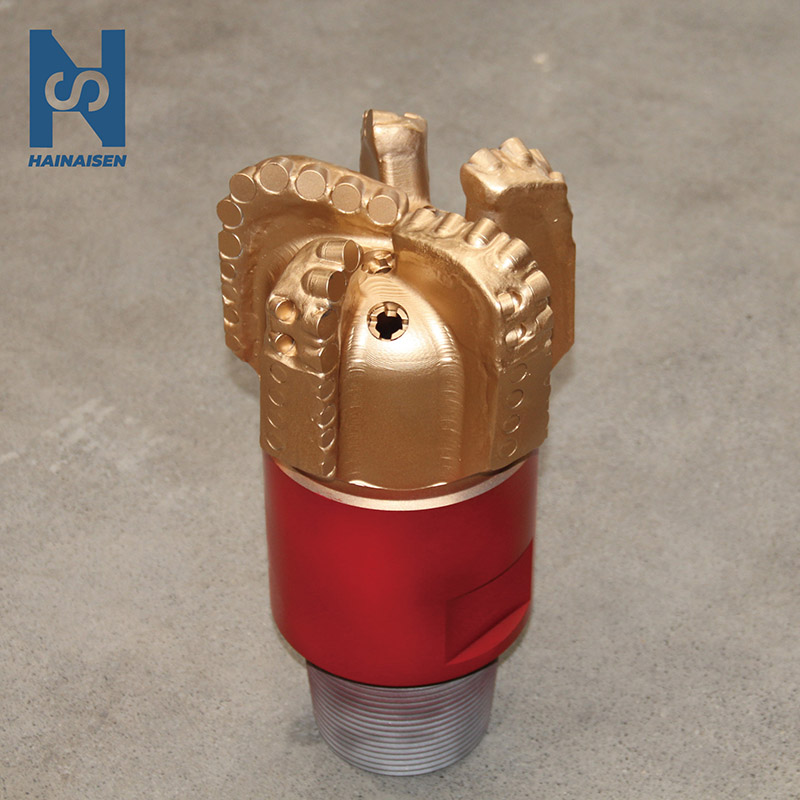
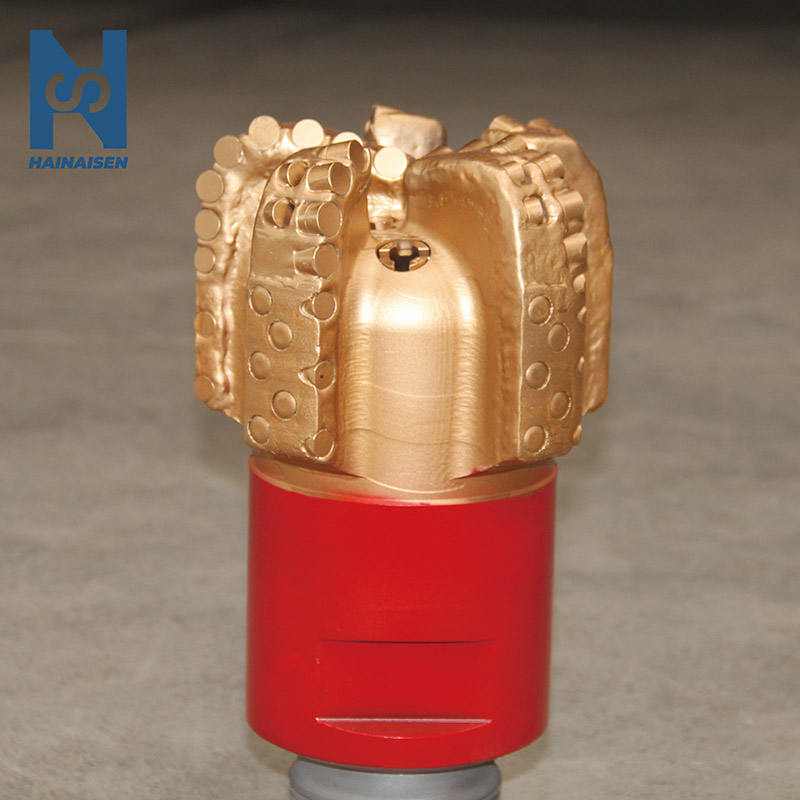
Picking between steel body and matrix body PDC Bits is one of the most important choices that can be made for drilling in oil fields, mines, and geological research projects. Depending on the hardness of the formation, the budget, and the operational goals, each plan has its own benefits. By knowing these differences, purchasing managers 6 Wings PDC Drill Bit and technical engineers can improve the efficiency of drilling while keeping prices low. The innovative HAINAISEN 6 Wings PDC Drill Bit blends tried-and-true design principles with cutting-edge materials to provide top-notch performance in a wide range of rock conditions.
Understanding the Fundamental Construction Differences
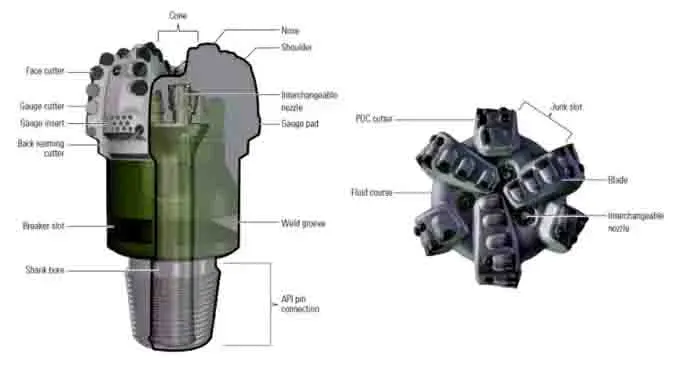
Steel body pdc bits are built on machined steel blanks with PDC cutters brazed at precise spots, supporting flexible custom designs for high-efficiency drilling. By contrast, matrix body bits are sintered from tungsten carbide powder around steel mandrels via powder metallurgy, with embedded cutters delivering better anti-erosion performance in abrasive rock.
Three core differences define these technologies:
- Manufacturing complexity: Steel bodies require simpler machining processes, while matrix bodies demand specialized powder metallurgy equipment
- Material composition: Steel offers homogeneous properties throughout, whereas matrix bodies blend multiple materials for targeted characteristics
- Cutter placement: Steel bodies allow post-manufacturing adjustments, while matrix bodies fix cutter positions during initial molding
These construction variations directly influence performance characteristics, making material selection crucial for operational success. If you need rapid customization for evolving geological conditions, steel body technology provides greater adaptability.
Performance Characteristics in Different Geological Formations
Shale, limestone, sandstone, and other softer to medium-hard rocks work best with steel body drill bits. The ductility of the material effectively absorbs impacts, stopping catastrophic failures in formations where hardness changes can't be predicted. Steel body bits are especially helpful for water well drilling teams when they have to work through layers that are mixed together. When tested in the lab on similar formations, steel body bits consistently go through at rates of 3.5 to 5.2 meters per hour in medium-hardness formations with a compression strength of 40 to 80 MPa. The bendy steel structure spreads force evenly across the bit face, which keeps the cutter from breaking too soon. When working in rough, hard rock where erosion is a big problem, matrix body bits work better than other bits. The tungsten carbide content makes the bit very resistant to wear, which makes it last longer in rocks like quartzite, chert, or sandstone that is high in silica. When matrix body technology is used, bit consumption goes down for coal mining companies that work in abrasive layers. Geological research projects have shown that matrix body bits can last 40–60% longer in very rough rock formations than steel alternatives. The hardness of the material stops corrosion around cutter pockets, so the bit stays hydraulically efficient for its whole life. But because the tungsten carbide matrix is so fragile, these bits are more likely to break when they hit hard stringers or parts that aren't cemented together. If you need to drill through mostly soft rock with some hard layers here and there, a steel body is more reliable and less likely to break when hit.
Hydraulic Design and Cooling Efficiency Comparison
Effective hydraulics cool PDC cutters and remove debris to boost penetration and service life. Matrix body pdc bits face hydraulic design restrictions from powder molding, though their carbide material dissipates heat faster. In contrast, steel body PDC bits support intricate machined flow channels. HAINAISEN’s 6-wing model delivers uniform fluid coverage at 30–40 L/s to avoid hot spots. Field tests prove well-engineered steel body bits run cutters 15–25°C cooler than matrix counterparts under identical conditions. Their flexible hydraulic layout suits directional drilling and custom adjustments for unique formations and well angles.
Durability and Operational Lifespan Analysis
Bit longevity directly influences operational economics, particularly 6-blade PDC drill bits for medium and large oil service companies managing multiple drilling projects simultaneously. Steel body bits typically deliver 40-80 hours of drilling time in appropriate formations before requiring replacement. The actual lifespan depends heavily on formation abrasiveness, operating parameters, and hydraulic efficiency. Data collected from coal bed methane drilling operations shows steel body bits averaging 185 meters of penetration in moderately abrasive shale formations before showing significant wear. The steel structure tolerates minor impacts without catastrophic failure, allowing operators to continue drilling even after encountering unexpected hard layers. Matrix body bits extend operational life in harsh, abrasive environments, sometimes reaching 120-150 hours in formations that would rapidly destroy steel alternatives. The tungsten carbide content resists erosion around cutter pockets, maintaining bit integrity longer. Oil and gas exploration projects in highly abrasive sandstone formations report 60-80% greater penetration distances with matrix body technology. Transition wear patterns reveal another distinction: steel bodies experience gradual performance degradation, providing warning signs before complete failure. Matrix bodies maintain performance levels longer but may fail more suddenly when the matrix material finally succumbs to fatigue or impact damage.
Five factors affecting durability include:
- Formation abrasiveness levels
- Operating weight on bit and rotational speed
- Hydraulic flow rate adequacy
- Cutter quality and placement geometry
- Proper bit selection matching geological conditions
If you need predictable wear patterns allowing proactive bit replacement planning, steel body construction provides more gradual performance transitions.
Cost Considerations and Economic Value Assessment
Customization Capabilities and Application Versatility
Drilling projects increasingly demand specialized bit designs optimized for specific geological challenges. Steel body construction facilitates extensive customization through relatively straightforward machining modifications. Technical engineers can specify unique cutter layouts, gauge pad configurations, or hydraulic patterns without prohibitive cost increases.HAINAISEN's 3,500-square-meter manufacturing facility houses advanced 5-axis machining centers and CNC machine tools capable of producing highly customized steel body designs. The dedicated research and development team collaborates with clients to optimize bit geometry for particular formation requirements, completion timelines, and budget parameters. Matrix body customization requires different mold configurations for each design variation, substantially increasing development costs and lead times. This limitation makes matrix bodies less suitable for specialized applications or projects requiring rapid design iterations. Horizontal directional drilling operations, which frequently encounter varied geological conditions, particularly benefit from steel body adaptability.The innovative six-wing design represents a significant advancement in steel body technology. Compared to traditional three or four-blade configurations, the six-wing arrangement distributes cutting forces more evenly, improving stability and reducing vibration. This design philosophy applies across soft to medium-hard formations, demonstrating steel body versatility.
Customization service options from experienced Manufacturers include:
- Cutter size and grade selection matching formation hardness
- Gauge pad length and protection levels
- Hydraulic nozzle quantity, size, and placement
- Blade height and profile optimization
- Connection thread specifications for various drill strings
If you need tailored solutions addressing unique geological challenges or specialized drilling requirements, steel body platforms offer superior adaptability at reasonable costs.
HAINAISEN's 6 Wings PDC Drill Bit Advantages
- Innovative Six-Wing Configuration: The proprietary design distributes cutting forces across six blades rather than traditional three or four, reducing individual blade loading by 30-40%. This geometry minimizes vibration, extends bearing life, and maintains directional stability in challenging drilling conditions. The balanced force distribution proves particularly valuable in directional drilling applications where deviation control represents a critical success factor.
- Premium Polycrystalline Diamond Compact Cutters: HAINAISEN sources high-grade PDC cutters featuring optimized diamond particle size distribution and advanced cobalt catalyst systems. These cutters demonstrate exceptional impact resistance while maintaining sharp cutting edges throughout extended 6-blade PDC drill bits drilling intervals. Thermal stability testing confirms performance retention at temperatures exceeding 700°C, crucial for deep well applications where geothermal gradients increase bottomhole temperatures significantly.
- Optimized Hydraulic Architecture: Computational fluid dynamics modeling informs the nozzle placement and flow channel geometry, ensuring adequate fluid velocity across all cutting surfaces. The hydraulic design prevents chip hold-down that could impede penetration rate while maintaining sufficient flow to cool cutters effectively. This sophisticated approach maximizes volumetric efficiency within the recommended 30-40 liters per second flow rate range.
- Versatile Formation Compatibility: Engineering testing validates performance across medium-hardness formations, including shale, limestone, sandstone, and gypsum, with compressive strengths from 40 to 90 MPa. The bit maintains consistent penetration rates between 60-250 RPM and drilling pressures from 20-110 kilonewtons, accommodating various rig capabilities. This operational flexibility allows purchasing managers to standardize on fewer bit types while maintaining efficiency across multiple projects.
- Customization Through Advanced Manufacturing: The 5-axis machining centers and CNC machine tools at HAINAISEN's Xi'an facility enable precision customization without excessive lead times. Engineers collaborate directly with clients to modify cutter placement, gauge protection, or hydraulic patterns, addressing specific geological challenges. This responsive approach proves invaluable for oil service companies managing diverse drilling programs across multiple geological basins.
- Rigorous Quality Assurance Protocol: Every production stage undergoes comprehensive inspection following documented procedures aligned with international industry standards. Material testing confirms steel body composition and mechanical properties before machining begins. Dimensional verification ensures cutter placement accuracy within 0.1mm tolerances. Final assembly inspection includes hydraulic flow testing and balance verification, guaranteeing consistent performance across production batches. This quality commitment establishes the foundation for long-term cooperative relationships with demanding clients.
- Proven Durability in Field Conditions: Operational data from coal mining companies demonstrates average penetration distances exceeding 180 meters in moderately abrasive formations before significant wear appears. The steel body construction absorbs impacts from unexpected hard stringers without catastrophic failure, allowing continued drilling rather than forced trips. This resilience translates directly to reduced non-productive time and improved project economics.
- Competitive Pricing Structure: HAINAISEN's integrated manufacturing approach from research and development through final production eliminates intermediary markups, delivering exceptional value. The steel body construction methodology maintains reasonable costs while incorporating premium cutters and sophisticated design features. This pricing philosophy particularly benefits coal mining operations and water well drilling teams, where budget constraints significantly influence purchasing decisions.
- Technical Support and Consultation: The dedicated engineering team provides ongoing application support, helping clients optimize operating parameters for specific conditions. Pre-drilling consultations review geological data, rig capabilities, and project objectives to recommend appropriate bit specifications. Post-drilling analysis examines returned bits, identifying opportunities for design refinements or parameter adjustments, improving future performance.
- Established Manufacturing Expertise: Since its establishment in Xi'an in 2013, HAINAISEN has accumulated extensive knowledge across petroleum extraction, coal mining, geological surveying, and construction machinery applications. This cross-industry experience informs design decisions, incorporating lessons from diverse operating environments. The manufacturing infrastructure supports production volumes meeting the substantial demands of medium and large oil service companies while maintaining flexibility for smaller, specialized orders.
Material Science and Quality Control Standards
Material selection fundamentally determines bit performance and longevity. HAINAISEN constructs steel body PDC bits using premium-grade alloy steels offering optimal combinations of strength, toughness, and machinability. The steel composition undergoes rigorous testing, confirming that mechanical properties meet internal specifications, exceeding industry baseline requirements. The manufacturing process begins with material verification using spectroscopic analysis, ensuring chemical composition consistency. Heat treatment procedures optimize grain structure, balancing hardness with impact resistance. This metallurgical foundation prevents premature body failures even under demanding operational loads. Advanced PDC cutters represent the cutting interface where drilling actually 6 Wings PDC Drill Bit occurs. HAINAISEN sources cutters featuring carefully controlled diamond particle distribution and sophisticated catalyst systems. These materials maintain cutting efficiency across extended intervals while resisting thermal degradation and impact damage. Quality inspections verify cutter dimensions, brazing integrity, and surface finish before assembly. Tungsten carbide hardfacing protects high-wear zones, including gauge pads and blade leading edges. The application process employs controlled welding parameters, preventing dilution or cracking. Hardness testing confirms adequate wear resistance while maintaining sufficient toughness, preventing spalling failures.
Comprehensive quality inspections occur throughout production:
- Incoming material verification and certification review
- Dimensional inspection during machining operations
- Cutter brazing quality assessment using non-destructive testing
- Hydraulic flow verification, ensuring design specifications
- Final assembly inspection confirming g
- Documentation review, maintaining traceability throughout manufacturing
This systematic approach ensures consistent quality, establishing the reliability foundation necessary for long-term partnerships with quality-conscious oil service companies. Manufacturing adherence to international standards provides purchasing managers with confidence when evaluating new suppliers. If you need verifiable quality documentation supporting rigorous procurement approval processes, partnering with established manufacturers maintaining comprehensive quality systems proves essential.
Making the Right Selection for Your Drilling Operation
Bit selection represents a critical decision impacting drilling efficiency, project economics, and operational success. Technical engineers and purchasing managers must evaluate multiple factors when choosing between steel body and matrix body technologies. Formation characteristics provide the primary selection criterion. Water well drilling through sedimentary sequences with medium hardness benefits from steel body economics and performance. Geological exploration in abrasive formations justifies matrix body investment through extended operational life. Coal mining operations must balance formation abrasiveness against budget constraints, often finding that steel bodies offer optimal value in moderately abrasive conditions. Operational parameters, including available weight on bit, rotational speed capabilities, and hydraulic horsepower, influence which technology performs optimally. The 6 Wings PDC Drill Bit operates effectively across wide parameter ranges, accommodating various rig specifications while maintaining efficiency. Project duration and bit change logistics warrant consideration. Short-duration projects with easy bit access prioritize initial cost savings, favoring steel bodies. Extended drilling programs in remote locations or deep wells justify premium matrix body investment, reducing trip frequency. Budget allocation patterns differ across customer segments. Large oil service companies conducting lengthy procurement evaluations prioritize total cost of ownership and supplier reliability over initial pricing. Water well drilling teams with immediate cash flow concerns emphasize upfront affordability. Coal mining companies seek balanced solutions offering quality assurance with reasonable pricing. Strategic supplier relationships develop when manufacturers demonstrate consistent quality, responsive technical support, and fair commercial terms. HAINAISEN's decade of experience since 2013 establishes credibility across petroleum extraction, mining, and construction applications. The combination of modern manufacturing infrastructure, dedicated research and development capabilities, and customer-focused engineering support positions the company as a reliable partner for diverse drilling requirements. If you need guidance selecting appropriate bit technology for specific geological conditions and operational constraints, consulting experienced manufacturers with cross-industry expertise provides valuable insights supporting informed decisions.
Conclusion
Steel body and matrix body PDC bits serve distinct operational 6 Wings PDC Drill Bit niches determined by formation characteristics, budget constraints, and performance expectations. Steel body technology delivers customization flexibility, impact resistance, and economic value in soft to medium-hard formations. Matrix body construction provides superior erosion resistance and extended life in highly abrasive environments, justifying premium investment. HAINAISEN's innovative 6 Wings PDC Drill Bit demonstrates how modern steel body design, incorporating premium materials and sophisticated engineering, achieves exceptional performance across diverse applications. Careful evaluation of geological conditions, operational parameters, and economic factors guides optimal bit selection, supporting drilling efficiency and project profitability.
Partner with a Trusted 6 Wings PDC Drill Bit Manufacturer
HAINAISEN combines advanced manufacturing capabilities with customer-focused engineering, delivering drilling solutions optimized for your specific requirements. Our 6 Wings PDC Drill Bits provide exceptional value across oil and gas extraction, coal mining, geological exploration, and water well construction applications. The proven six-wing design enhances stability while maintaining competitive pricing that satisfies budget-conscious operations. Technical engineers and purchasing managers can reach our team at hainaisen@hnsdrillbit.com to discuss customization options, request technical specifications, or arrange sample testing. Let our expertise in PDC drill bit technology support your operational success.
References
1. Baker, R. (2019). PDC Bit Technology: Design Principles and Field Applications. Petroleum Engineering Publications.
2. Chen, S. & Williams, P. (2021). "Comparative Analysis of Steel and Matrix Body PDC Bits in Sedimentary Formations." Journal of Petroleum Technology, 73(4), 45-62.
3. International Association of Drilling Contractors (2020). Drilling Bits: Selection and Optimization Guidelines. IADC Technical Manual Series.
4. Morrison, J. L. (2018). Advanced Drilling Engineering: Principles and Designs. Gulf Professional Publishing.
5. Zhang, W., Kumar, A., & Thomson, D. (2022). "Hydraulic Optimization in Polycrystalline Diamond Compact Drill Bits." SPE Drilling & Completion, 37(2), 187-203.
6. Zhou, Y. & Anderson, M. (2020). Material Science Applications in Drilling Technology. Springer International Engineering Series.
 VIEW MORERock Roller Drill Bit
logo 1_1777360475599.jpg) VIEW MOREDirectional Three Blade PDC Drill Bit
VIEW MOREDirectional Three Blade PDC Drill Bit VIEW MOREBest Diamond Drill Bits
 VIEW MOREFour Blade Wing Oil Drilling Tool
 VIEW MOREFive Blades Oil Well Drill Head
 VIEW MOREFive Blades PDC Drill Bits
 VIEW MORE113mm Three Wing Arc Angle Drill Bit
 VIEW MOREFive Blade Wing Oil Drilling