







How to Compare PDC Bits, Tricone Bits, and Drag Bits forDifferent Applications?
Contact Us today to get the best drilling solutions:
- Email: hainaisen@hnsdrillbit.com
- Phone/WhatsApp: +8617791389758
Ask any experienced driller what matters most, and they'll tell you—the bit. Get it right, and ROP climbs, cost per foot stays low. Get it wrong, and you're pulling the string early, burning rig time, and watching costs balloon. PDC, Tricone, drag—each has its place, but the choice has to fit the ground. No room for guessing.
As a leading global Manufacturer, Hainaisen specializes in engineering high-performance polycrystalline diamond drill bits designed to maximize efficiency across diverse geological formations. In this comprehensive guide, we will break down the mechanical differences, optimal applications, and real-world performance of these three primary drill bit categories.
Understanding the Contenders: Mechanism and Design
To choose the right tool, you must first understand how each bit interacts with the rock formation.
+----------------+--------------------------+------------------------+-------------------------+

| Bit Type       | Cutting Mechanism        | Optimal Formations     | Relative Lifespan       |
+----------------+--------------------------+------------------------+-------------------------+

| Drag Bits      | Shearing / Scraping      | Ultra-soft, sticky     | Low (High wear rate)    |
| Tricone Bits   | Crushing / Gouging       | Medium to ultra-hard   | Medium (Limited by      |
|                |                          |                        | bearing life)           |
| PDC Bits       | Continuous Shearing      | Soft to hard,          | Ultra-High (Diamond     |
|                |                          | non-homogeneous        | durability)             |
+----------------+--------------------------+------------------------+-------------------------+
1. Drag Bits
Drag bits are the oldest and simplest drill bit design. They feature fixed blades with tungsten carbide cutting edges welded directly onto the body. They do not have moving parts.
- Mechanism: They cut rock by scraping and shearing.
- Best Used For: Unconsolidated, ultra-soft formations like sand, clay, and soft shales.
2. Tricone Bits (Roller Cone Bits)
The tricone bit—originally designed by Hughes Tool Company—has three cones that roll along the hole bottom as the string turns. Steel teeth or tungsten carbide inserts do the work, crushing and chipping rock with a gouging action. This design shines in abrasive ground, medium-hard limestone, dolomite, and even ultra-hard granite. Simple mechanics. Proven performance.

3. PDC Bits (Polycrystalline Diamond Compact)
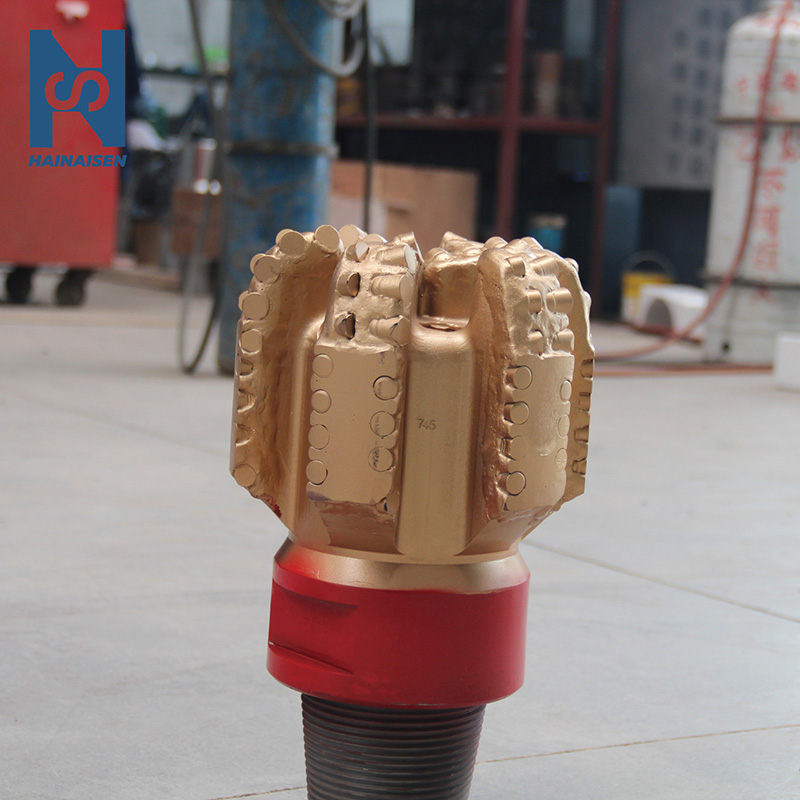
PDC bits utilize synthetic diamond cutters bonded to a tungsten carbide substrate, fixed onto either a matrix or steel bit body.
- Mechanism: They cut rock through a continuous, high-efficiency shearing action, which requires less weight-on-bit (WOB) than tricone bits.
- Best Used For: Soft to hard formations, highly consolidated rock, and extended-reach drilling.
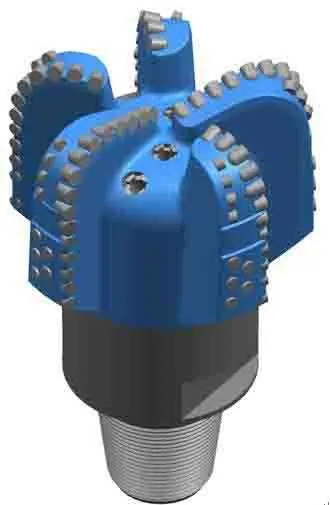
Deep Dive: 4 Essential Polycrystalline Diamond Drill Bits by Hainaisen
For modern oil, gas, and geothermal drilling, polycrystalline diamond drill bits have largely replaced traditional bits due to their extreme durability. Hainaisen designs proprietary matrix-body and steel-body PDC bits that deliver exceptional ROP.
Here are 4 premium polycrystalline diamond drill bits from the Hainaisen product line engineered for different application demands:
- Hainaisen Steel-Body 3-Blade PDC Bit: Engineered specifically for ultra-soft, sticky clay and sand formations. The deep junk slots prevent bit balling and maximize fluid hydraulics to clear cuttings quickly.
- Hainaisen Matrix-Body 5-Blade PDC Bit: Designed with premium 1308 PDC cutters for medium-hard limestone and shale. The matrix body provides superior erosion resistance against abrasive drilling fluids.
- Hainaisen High-Density 6-Blade Directional PDC Bit: Built for directional and horizontal drilling applications. It features specialized gauge protection to maintain borehole stability and optimize steerability.
- Hainaisen Heavy-Duty 8-Blade TCI-Reinforced PDC Bit: Designed for hard, interbedded formations. It utilizes impact-resistant, multi-layered polycrystalline diamond compact cutters to withstand severe vibrations.
Application Comparison: Which Bit Wins Where?
Case 1: Shallow Water Well Drilling (Soft Clay & Sand)
- The Choice: Drag Bits or Hainaisen 3-Blade PDC Bits.
- Why: In shallow, sticky clay, a tricone bit will ball up, losing its ability to cut. A drag bit is highly cost-effective here. However, if you encounter sudden hard streaks, switching to a Hainaisen polycrystalline diamond drill bit ensures you do not have to pull the string to change bits, saving hours of labor.
Case 2: Deep Oil & Gas Reservoirs (Interbedded Limestone & Quartz Sandstone)
- The Choice: Tricone TCI Bits or Hainaisen 5/6 Blade Matrix PDC Bits.
- Why: Historically, drillers used TCI tricone bits to crush hard rock. However, modern international studies by the Society of Petroleum Engineers (SPE) prove that optimized PDC cutters shear rock using far less energy. Hainaisen's custom cutter geometry reduces thermal degradation, allowing our PDC bits to drill through abrasive sandstone sections that used to destroy roller cones.
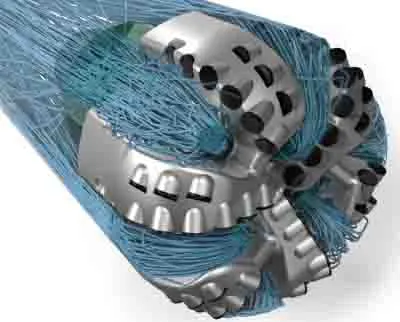
Real-World Field Success: The Hainaisen Advantage
In a recent geothermal drilling project in Turkey, a drilling contractor was using standard TCI Tricone bits to drill through hard, fractured basalt. The tricone bits averaged an ROP of 3.5 meters per hour and required a bit trip every 45 meters due to bearing failure caused by high downhole temperatures.
The contractor switched to the Hainaisen Matrix-Body Polycrystalline Diamond Drill Bit. Thanks to our advanced thermal-stable diamond technology and customized hydraulic layout, the Hainaisen bit achieved an ROP of 8.2 meters per hour and completed a 160-meter section in a single run. This cut total drilling time by 52% and saved the operator thousands of dollars in rig time.
FAQ
Q1: Why are PDC bits more expensive than Tricone or Drag bits upfront?
The raw material cost of synthetic diamonds and specialized matrix powder is significantly higher. However, because a Hainaisen PDC bit drills faster and lasts up to 5–10 times longer than a tricone bit, the cost per foot drilled is drastically lower.
Q2: Can PDC bits handle hard rock formations?
Yes. Older generations of PDC bits struggled with impact fractures in hard rock. Today, Hainaisen's advanced polycrystalline diamond drill bits feature impact-resistant, dome-shaped cutters that easily handle hard, consolidated formations.
Q3: What causes a Tricone bit to fail prematurely?
Tricone bits rely on internal bearings. High rotations per minute (RPM), heavy weight-on-bit (WOB), and harsh downhole environments cause bearing seals to fail. Once a bearing fails, the cone can lock or break off in the hole, creating a costly fishing job. Fixed-cutter PDC bits completely eliminate this risk.
Q4: How do I know if I need a steel-body or matrix-body PDC bit?
Steel-body bits feature larger junk slots and are ideal for high ROP in soft, non-abrasive formations. Matrix-body bits are made from a tungsten carbide composite, offering ultimate erosion and abrasion resistance in hard, sandy, or corrosive environments.
References & Technical Insights
To validate our engineering methodologies, Hainaisen aligns its manufacturing standards with peer-reviewed research and global industry benchmarks:
- International Association of Drilling Contractors (IADC): IADC Drilling Manual (Bit Classification Codes). Our bit designs conform strictly to the IADC fixed-cutter and roller-cone numbering systems to ensure predictable global performance.
- Society of Petroleum Engineers (SPE): Paper SPE-187212-MS, "Evolution of Polycrystalline Diamond Compact (PDC) Cutter Technology and Its Impact on Drilling Performance." This paper highlights how fixed shearing mechanisms save mechanical specific energy (MSE) compared to crushing mechanisms.
- Schlumberger / Smith Bits Technical Archives: Industry data confirming the optimization of cutter back-rake and side-rake angles for directional drilling stability.
- Baker Hughes Bit Technology Reports: Historical studies detailing the limitations of roller-cone bearing seals under extreme downhole temperatures, cementing the necessity of high-grade PDC bit alternatives in geothermal applications.
Choose Hainaisen for Your Next Project
Do not let sub-optimal drill bits slow down your drilling operations. Hainaisen provides world-class engineering, rapid global shipping, and tailored bit designs for your exact geological coordinates.
Contact our engineering support team now:
- Email: hainaisen@hnsdrillbit.com
- Phone/WhatsApp: +8617791389758
- Let us help you break ROP records on your next well
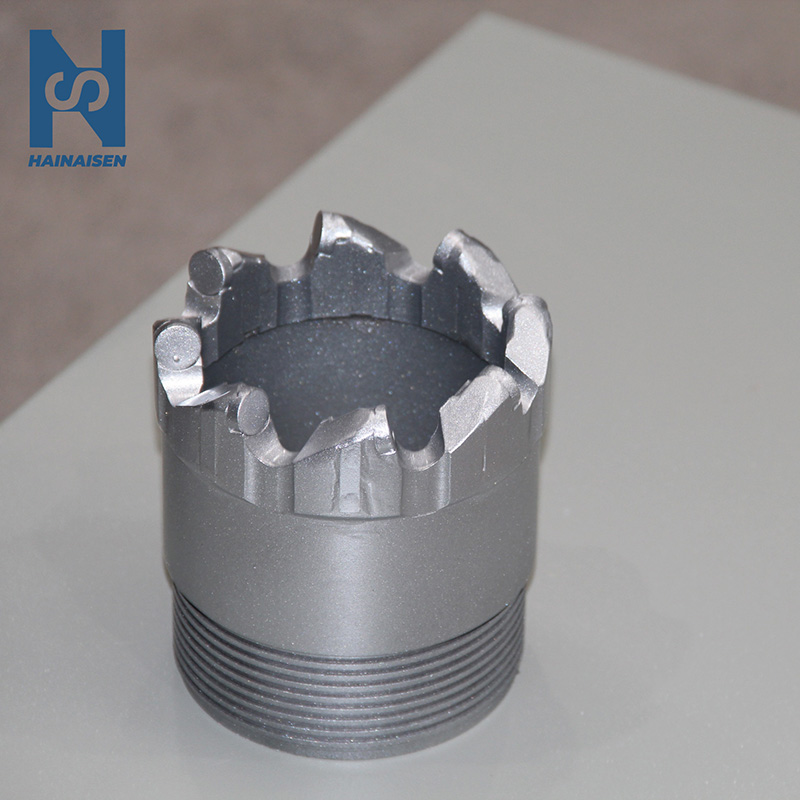 VIEW MOREPDC Core Drill Bit Used For Drilling
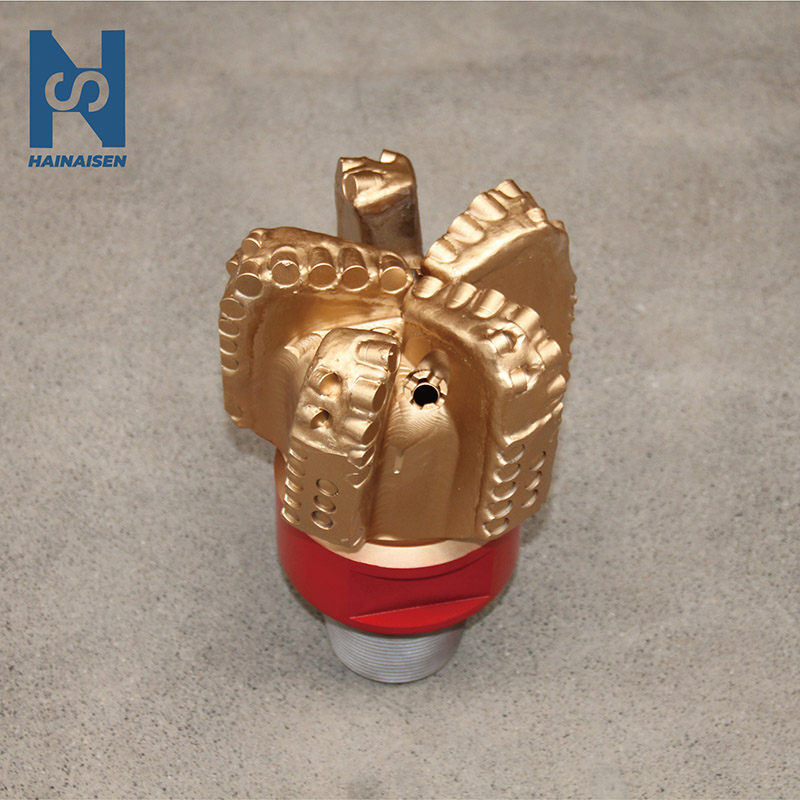 VIEW MOREPDC Rock Drill Bit
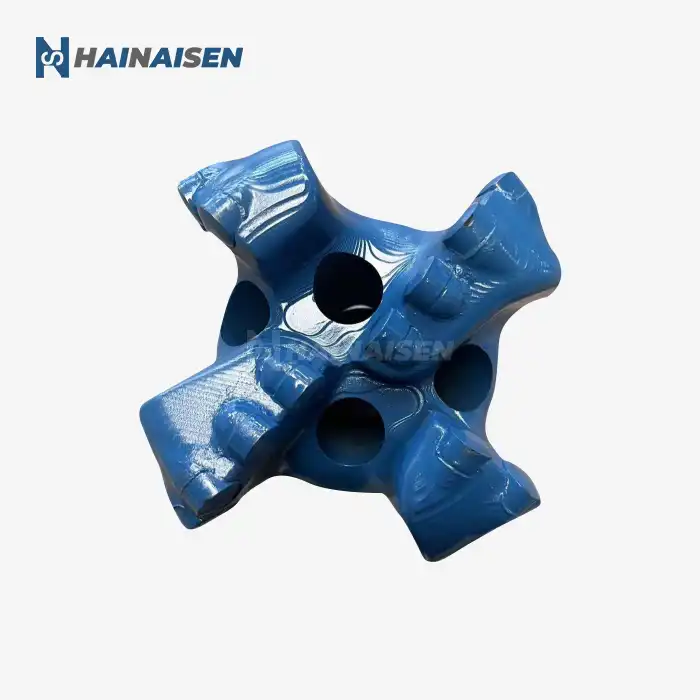 VIEW MORE4 Blade PDC Bit
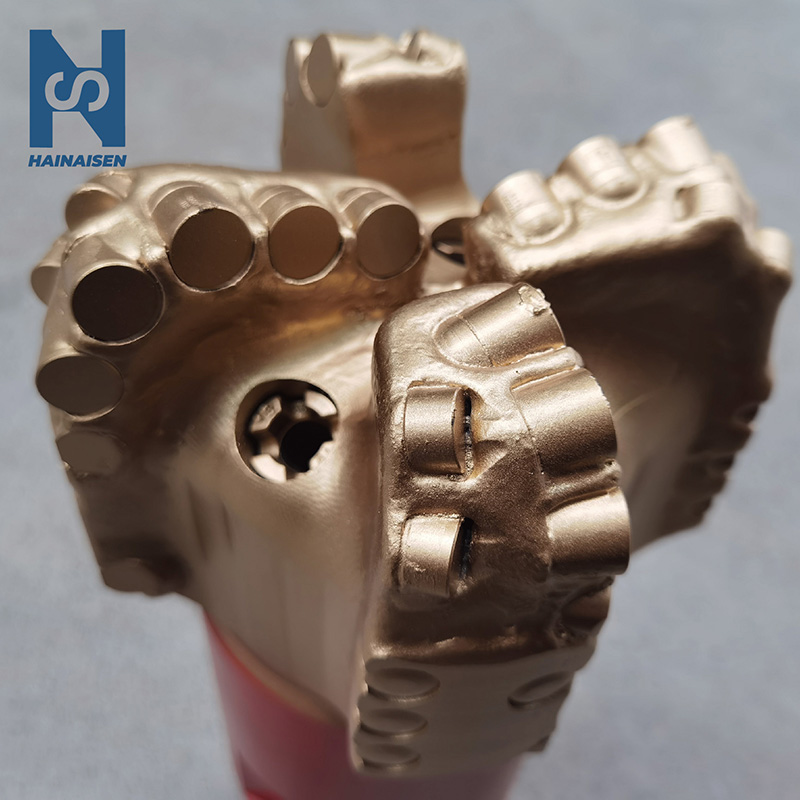 VIEW MOREFour Blade Wing Petroleum Drill Bit
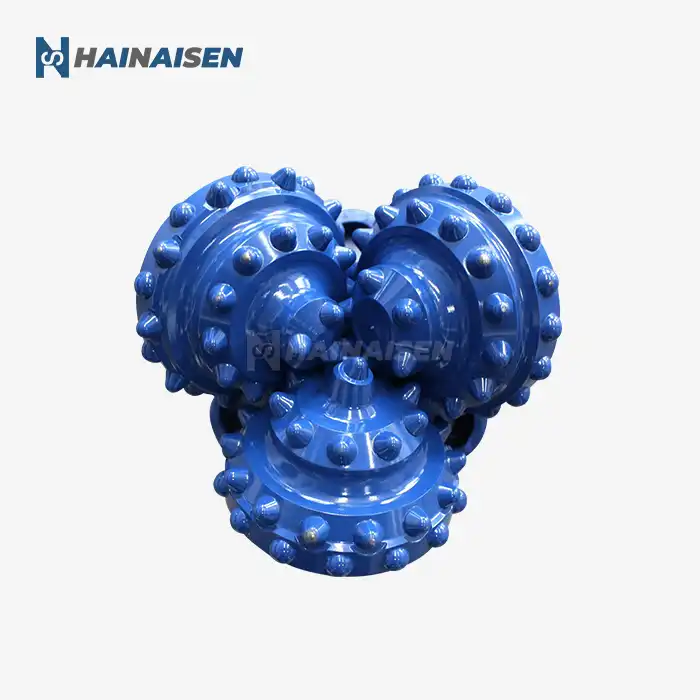 VIEW MORE5 1/2 Inch IADC 537 Tricone Rock Bit for Medium-Hard Formations
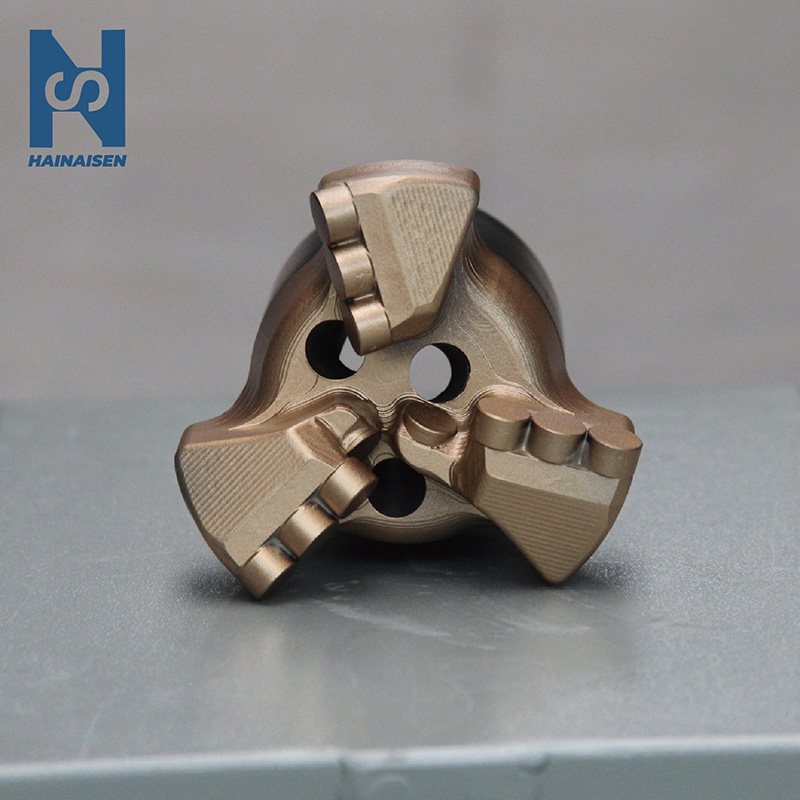 VIEW MORE3 Blades PDC Rock Bit
 VIEW MOREDiamond Coal Mine Picks
 VIEW MOREDiamond Drill Bit Oil Rig
