How to Prevent Drill Bit Balling in Sticky Clay Formations
Contact Hainaisen
Email: hainaisen@hnsdrillbit.com
Tel: +86 17791389758
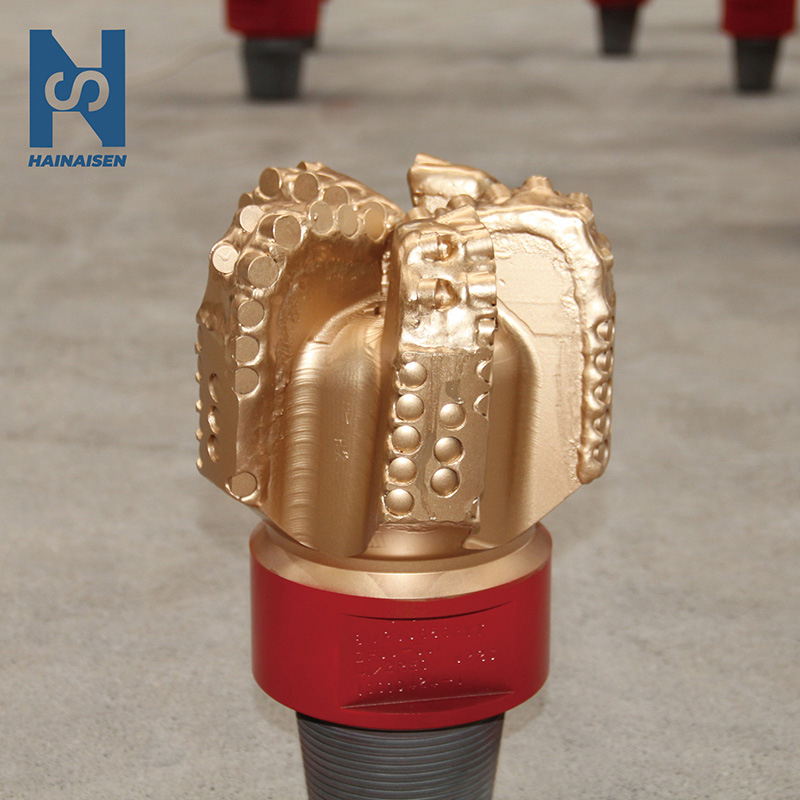
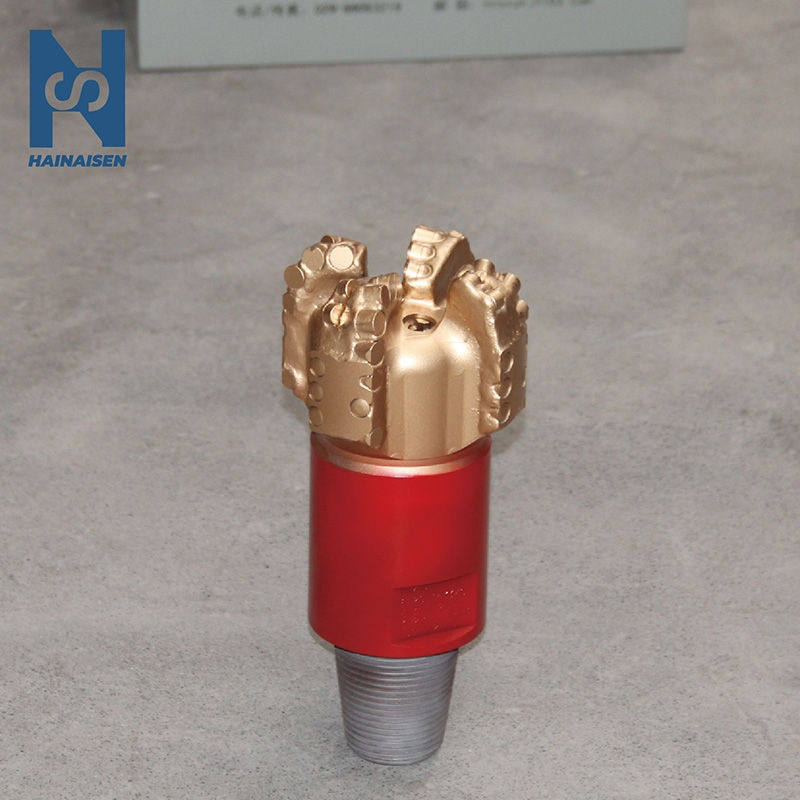
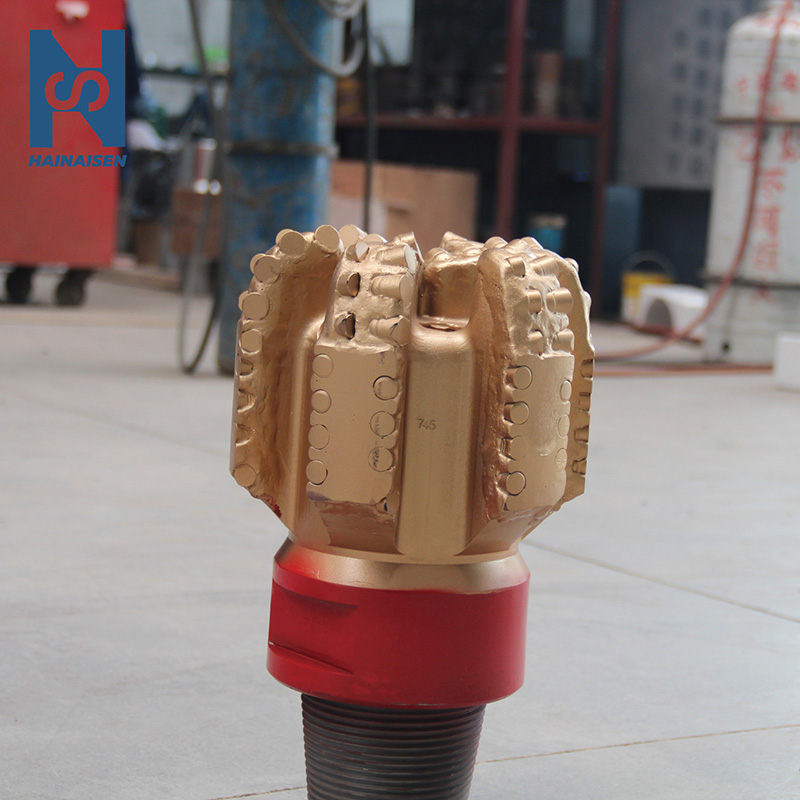
Sticky clay formations are among the most troublesome intervals for PDC drilling because the rock can deform, hydrate, and adhere to the cutting structure faster than the drilling fluid can remove it. Selecting a suitable bit, such as a Five Blades Oil Well Drill Head designed with sufficient junk slot space and effective hydraulics, can help reduce this risk when combined with proper mud chemistry and controlled drilling parameters. The goal is not simply to drill faster, but to keep the cutters exposed and the bit face clean.
Bit balling develops when sticky cuttings accumulate around the cutters, blades, or bit body, eventually restricting rock contact and fluid circulation. Once this happens, ROP may fall sharply while torque behavior, pump pressure, and vibration become increasingly unstable. Preventing the problem requires coordination between bit design, drilling fluid properties, hydraulic performance, and operating parameters.
1. Why Sticky Clay Formations Cause Drill Bit Balling
Clay Reactivity and Cuttings Adhesion
Not all soft formations behave the same way. Sticky clay, reactive shale, claystone, and some marl formations may contain clay minerals that absorb water and expand after drilling. Montmorillonite-rich formations, for example, can generate cuttings with strong swelling and adhesion tendencies.
During PDC drilling, the cutters remove rock primarily through shearing. In a reactive clay formation, the resulting cuttings may become plastic and attach to the cutter faces or surrounding bit structure. Instead of being carried efficiently into the annulus, they begin forming a compact mass.
Research published by the Society of Petroleum Engineers has described how clay-containing cuttings can swell and accumulate on PDC Bits, particularly when drilling with water-based muds. The problem is influenced by both the properties of the formation and the interaction between the cuttings and drilling fluid.
How Balling Affects Drilling Performance
Once clay begins accumulating, several problems can develop simultaneously:
- Reduced ROP: The cutters lose direct contact with fresh formation.
- Increased torque fluctuations: Accumulated clay changes the cutting resistance and frictional behavior of the bit.
- Poor hole cleaning: Blocked waterways and junk slots restrict the removal of cuttings.
- Higher risk of cutter overheating: Reduced fluid circulation can limit cooling around the cutting structure.
- Premature wear: Abrasive particles trapped in accumulated clay may increase friction and damage exposed surfaces.
- Unstable drilling response: WOB may increase without producing a corresponding improvement in penetration.
In severe cases, the bit behaves more like a piston than an efficient cutting tool. Pump pressure can rise, annular circulation may deteriorate, and the crew may need to interrupt drilling to clean or replace the bit.
Formation Conditions That Increase the Risk
Balling is particularly likely when several of the following conditions occur together:
Formation or drilling condition | Why it increases balling risk |
|---|---|
Highly reactive clay | Cuttings hydrate, swell, and become adhesive |
Low-permeability shale | Cuttings may retain moisture and remain plastic |
Water-based mud with inadequate inhibition | Clay swelling and dispersion may increase |
High instantaneous ROP | Cuttings are generated faster than they can be evacuated |
Restricted junk slots | Accumulated clay has fewer escape paths |
Poor nozzle coverage | Dead zones allow cuttings to settle around cutters |
Excessive WOB | The bit may generate large volumes of sticky cuttings without adequate cleaning |
The central issue is cuttings generation versus cuttings evacuation. A bit can have excellent cutting efficiency in clean formations but still experience serious balling when its hydraulic design cannot keep pace with sticky clay production.
2. How to Select and Operate a PDC Bit to Prevent Balling
Choose Bit Geometry for Cuttings Evacuation
Bit selection should begin with the formation's stickiness, swelling tendency, compressive strength, and expected cuttings volume, rather than relying only on hardness classifications.
For sticky clay and clay-rich shale, several design characteristics deserve particular attention.
Blade Configuration and Junk Slot Space
Blade count affects the available space for cuttings to leave the bit face. More blades can provide additional cutter support and stability, but excessive blade density may reduce junk slot area.
A five-blade design can be suitable when it provides a practical balance between cutter coverage, stability, hydraulic access, and cuttings evacuation. However, blade count alone does not determine balling resistance. The spacing between blades, blade standoff, cutter placement, and waterway geometry are equally important.
For highly sticky formations, engineers should evaluate whether the bit offers enough open flow area to prevent clay from becoming trapped between the blades.
Hydraulic Design and Nozzle Placement
Hydraulics are often the most influential design factor in controlling balling.
A properly engineered hydraulic system should:
- Direct drilling fluid toward the cutter faces.
- Remove cuttings from high-risk accumulation zones.
- Minimize stagnant areas beneath the bit.
- Maintain adequate cutter cooling.
- Provide sufficient flow velocity through the junk slots.
Research by Hariharan and Azar, published in Oil & Gas Journal, found that bladed hydraulic designs showed lower balling tendencies than certain open-faced and ribbed designs in reactive shale experiments. The study also emphasized that hydraulic configuration could have a greater influence on balling than bit profile alone.
At the same time, increasing flow rate indefinitely is not a complete solution. Excessive hydraulic energy may deliver diminishing cleaning benefits if the bit geometry still creates stagnant zones.
Select Cutters and Profile According to Formation Behavior
Cutter selection should reflect the actual drilling environment.
For soft to medium-soft clay-bearing formations, excessively aggressive cutters may generate high volumes of cuttings at a rate that overwhelms the cleaning system. A more controlled cutting structure may provide better overall drilling continuity.
Relevant design factors include:
- Cutter diameter: Larger cutters may improve durability and cutting efficiency, but their spacing and exposure must support adequate cuttings removal.
- Back-rake angle: A suitable back rake can help control aggressiveness and manage torque response.
- Cutter layout: Proper spacing reduces congestion and supports more effective fluid access.
- Bit profile: A profile that supports stable cutting and efficient hydraulic distribution is preferable.
- Gauge protection: Reinforced gauge areas help maintain hole diameter when sticky formations are interbedded with abrasive sandstone or siltstone.
For directional and horizontal wells, stability becomes even more important because excessive vibration can disturb the cutting structure and complicate toolface control.
Optimize Drilling Parameters Instead of Chasing Maximum ROP
A common mistake in sticky clay is to increase WOB aggressively when ROP begins to fall. This may worsen balling by producing more cuttings without improving evacuation.
A practical starting approach is to monitor the relationship between WOB, RPM, torque, pump pressure, and ROP together.
Parameter | Practical consideration |
|---|---|
WOB | Increase gradually and avoid loading the bit beyond its cleaning capacity |
RPM | Adjust to maintain effective shearing without excessive vibration or torque |
Flow rate | Provide sufficient bottomhole cleaning while respecting pump and formation limits |
Torque | Watch for abnormal changes that may indicate clay accumulation |
ROP | Evaluate alongside torque and pressure rather than treating maximum penetration as the only goal |
Pump pressure | Monitor unexpected increases that may signal restricted flow paths |
Mud properties | Maintain suitable inhibition, lubricity, and solids control |
When early signs of balling appear, reducing WOB temporarily while maintaining appropriate circulation may help restore cutter exposure. Short controlled drilling intervals and periodic cleaning practices can also be useful in particularly reactive formations.
Manage Drilling Fluid Chemistry and Hole Cleaning
Bit design cannot fully compensate for unsuitable drilling fluid.
For water-based mud systems, the drilling team should evaluate:
- Clay inhibition performance.
- Encapsulation of reactive cuttings.
- Filtration control.
- Lubricity.
- Solids concentration.
- Rheology under downhole conditions.
The appropriate treatment depends on the mineralogy and mud system. In some wells, potassium-based or polymer-based inhibition may help reduce clay hydration and dispersion. In others, changes to mud chemistry may need to be combined with improved hydraulics and mechanical cleaning.
The best prevention strategy is integrated: select a bit that can evacuate sticky cuttings, use a fluid system that limits clay reactivity, and operate within a WOB–RPM–flow range that maintains continuous cleaning.
Field Example: Managing Balling in a Clay-Rich Drilling Interval
Consider an anonymized drilling contractor working in a clay-rich interval in the Middle East. The contractor was using a PDC bit in a formation containing reactive claystone interbedded with softer shale.
During drilling, the initial ROP was acceptable, but penetration gradually deteriorated. Torque became inconsistent, pump pressure increased, and inspection indicated clay accumulation around the cutting structure. The problem was not simply insufficient cutter wear resistance; the bit was struggling to evacuate sticky cuttings.
The drilling team reviewed the bit hydraulics, mud properties, and operating parameters. The subsequent drilling approach included:
- Selecting a PDC design with improved junk slot access and more effective nozzle coverage.
- Reviewing mud inhibition and solids-control practices.
- Adjusting WOB to avoid generating cuttings faster than the circulation system could remove them.
- Monitoring torque, pump pressure, and ROP for early signs of renewed accumulation.
The practical lesson is that balling prevention depends on matching bit architecture and operating practices to the actual clay behavior. A change in cutter material alone may not resolve a problem caused primarily by poor cuttings evacuation.
3. Hainaisen's Approach to Bit Selection for Sticky Clay Formations
Formation-Based PDC Bit Recommendations
For drilling contractors working in clay-rich shale, soft formations, or mixed sedimentary intervals, Hainaisen recommends evaluating the complete drilling environment before selecting a PDC bit.
Rather than treating every soft formation as identical, the selection process should consider:
- Formation hardness and compressive strength.
- Clay reactivity and swelling potential.
- Expected abrasiveness in interbedded layers.
- Well trajectory and BHA configuration.
- Required ROP and drilling depth.
- Available pump capacity and hydraulic limitations.
- Cutter exposure, blade arrangement, and junk slot design.
A Five Blades Oil Well Drill Head may be considered for applications where a five-blade configuration offers a suitable balance of stability, cutter coverage, and fluid passage. The final recommendation should depend on the formation and drilling parameters, not simply the number of blades.
Why Work with Hainaisen?
Hainaisen supplies PDC drill bits for oil and gas drilling, water well drilling, mining, and other specialized drilling applications. For customers facing clay balling, the value of a supplier extends beyond delivering a standard bit.
Hainaisen focuses on:
- Stable product quality: Consistent manufacturing and inspection practices support predictable bit performance.
- PDC cutter technology: Cutter selection and cutting structure design are considered according to the intended drilling application.
- Customized bit design: Blade configuration, cutter layout, hydraulic arrangements, and other design elements can be evaluated for specific requirements.
- Formation-based recommendations: Product selection is linked to actual rock and drilling conditions rather than generic hardness labels.
- Professional technical support: Customers can discuss drilling problems and operating conditions before confirming a suitable design.
- Export experience and responsive communication: Clear communication helps overseas drilling contractors coordinate specifications, production, and delivery.
For a contractor experiencing repeated balling, the most productive starting point is to provide the supplier with formation information, bit records, mud details, and operating data. This allows the engineering team to identify whether the primary issue is clay reactivity, insufficient hydraulic cleaning, excessive aggressiveness, or a combination of factors.
What Information Should Be Shared Before Ordering?
To improve the accuracy of bit recommendations, customers should prepare:
- Hole diameter and target drilling depth.
- Vertical, directional, or horizontal well application.
- Formation description and known clay content.
- Previous bit type and blade configuration.
- WOB, RPM, flow rate, torque, and ROP records.
- Mud type and any known clay inhibition challenges.
- Photographs of the dull bit, if available.
A well-matched PDC bit should be selected to maintain stable drilling performance, effective cuttings removal, and reasonable bit life—not simply to achieve the highest initial ROP.
FAQ
1. What type of PDC bit is best for sticky clay formations?
A suitable bit typically combines effective hydraulic cleaning, adequate junk slot space, controlled cutter aggressiveness, and stable drilling behavior. The ideal configuration depends on clay reactivity, formation strength, well trajectory, and available hydraulic capacity.
2. Why does my PDC bit ball up even though the formation is soft?
Soft rock can still produce highly adhesive cuttings. If clay hydrates, swells, or accumulates faster than the drilling fluid can remove it, the bit may ball despite low formation hardness.
3. Can changing drilling parameters reduce bit balling?
Yes. Adjusting WOB, RPM, and flow rate can help maintain a better balance between cutting generation and evacuation. Reducing WOB may be useful when the bit is producing excessive sticky cuttings.
4. Does a higher blade count always reduce balling?
No. Higher blade counts may improve stability or cutter distribution, but they can also reduce junk slot space. Balling resistance depends on the complete bit geometry and hydraulic design.
5. Can Hainaisen customize PDC bits for clay-rich formations?
Yes. Hainaisen can evaluate application-specific requirements, including formation characteristics, cutter layout, blade configuration, and drilling conditions, to recommend or develop a suitable PDC bit design.
6. What information helps diagnose recurring bit balling?
Formation descriptions, mud properties, WOB, RPM, flow rate, torque, pump pressure, ROP, and photographs of the dull bit are particularly useful for identifying the likely cause.
About the Author
Michael Turner is a drilling technology writer and technical consultant specializing in PDC bit applications, formation-related drilling challenges, and performance optimization for oil and gas and water well contractors. His work focuses on translating field experience and engineering principles into practical guidance for drill bit selection and operation.
References
1. Hariharan, P. R., and Azar, J. J. “PDC Bit Hydraulics Design, Profile Are Key to Reducing Balling.” Oil & Gas Journal, 1996. https://www.ogj.com/home/article/17235234/pdc-bit-hydraulics-design-profile-are-key-to-reducing-balling
2. Society of Petroleum Engineers. “Drilling Optimization: The Essential Role of Drill Bit Selection.” The Way Ahead / JPT. https://jpt.spe.org/twa/drilling-optimization-essential-role-drill-bit-selection
3. Zijsling, D. H., and Illerhaus, R. “Eggbeater PDC Drillbit Design Eliminates Balling in Water-Based Drilling Fluids.” Society of Petroleum Engineers, SPE Drilling & Completion. https://ptacts.uspto.gov/ptacts/public-informations/petitions/1517717/download-documents?artifactId=ePsU3hD3137OcTfGGvsEXM6w5F9ym9Q6Urb_4nSK_beMampgfTgb1aI
4. Wei, L., and Honra, J. “Impact of Rock Cuttings on Downhole Fluid Movement in Polycrystalline Diamond Compact (PDC) Bits, Computational Fluid Dynamics, Simulation, and Optimization of Hydraulic Structures.” Fluids, 2025, 10(1), 13. https://www.mdpi.com/2311-5521/10/1/13
5. “Analysis of Bit-Balling Failure and Hydraulic Structure Optimization Design of Annular-Grooved PDC Bits.” ScienceDirect, 2025. https://www.sciencedirect.com/science/article/abs/pii/S2949891024005049
logo 1_1777360475599.jpg)