







What Is the Complete Guide to Choosing PDC Bits for Oil and Gas Drilling in 2026?
Contact Hainaisen
Email: hainaisen@hnsdrillbit.com
Tel: +86 177 9138 9758
Choosing the right drill bit oil and gas solution in 2026 is no longer simply a matter of selecting the highest ROP on a product sheet. Formation strength, abrasiveness, interbedded layers, well trajectory, drilling system, hydraulic performance, cutter design, vibration and expected footage all influence the final result. For oil and gas operators, the best PDC bit is the one that delivers a balanced combination of ROP, stability, durability and predictable drilling performance under actual downhole conditions.
PDC technology has become a major part of modern oilfield drilling because fixed-cutter bits can continuously shear rock without the moving bearings found in roller-cone designs. However, different formations require very different cutter layouts, blade structures and bit profiles. This is why experienced suppliers such as Hainaisen focus on application-specific bit selection rather than treating one PDC design as suitable for every well.
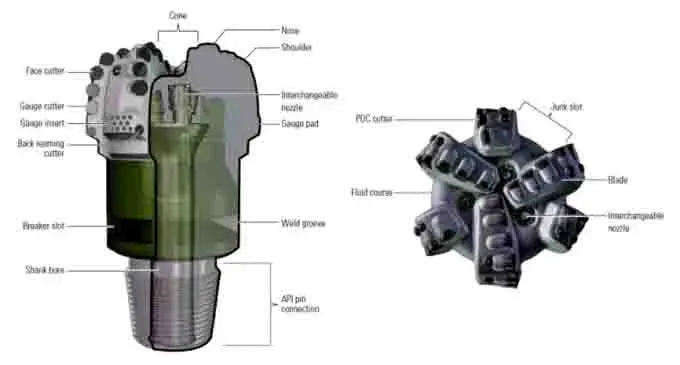
1. Start With the Formation, Not the Bit Catalog
The first question buyers should ask is not “Which PDC bit is cheapest?” but “What formation will this bit actually drill?”
According to the International Association of Drilling Contractors (IADC), PDC bit selection should consider formation characteristics and drilling conditions. Cutter size, cutter count, back rake, layout and other design parameters directly influence how aggressively a bit interacts with rock. Smaller cutters and higher cutter counts are generally associated with harder and more abrasive formations, while larger cutters and lower cutter counts can be advantageous in softer to medium formations.
Before purchasing a drill bit oil and gas, buyers should collect as much information as possible about:
- Unconfined compressive strength of the formation
- Abrasiveness and quartz content
- Shale content
- Carbonate or anhydrite stringers
- Interbedded formation intervals
- Formation stickiness and bit-balling tendency
- Expected pore pressure and temperature
- Previous bit runs from offset wells
- Planned WOB and RPM
- Mud type, flow rate and hydraulics
- Vertical, directional or horizontal well profile
This information can make a significant difference.
For example, imagine a horizontal shale well with relatively soft shale in the lateral but several hard carbonate stringers. A highly aggressive cutter layout may provide excellent ROP in the shale, but repeated impact against the carbonate could cause cutter chipping or accelerated wear. In this situation, the better solution may be a PDC design with stronger impact resistance and a more controlled cutting structure.
This principle is also reflected in current industry practice. Baker Hughes explains that shaped-cutter technologies are developed for specific drilling challenges, including interbedded formations, thermal damage, hard abrasive rock and ductile formations.
Formation changes should therefore lead to bit-design changes.
Cutter Size and Cutter Count
Cutter selection is one of the most important decisions.
Large cutters expose a greater diamond cutting area and can remove more rock per cutter engagement. They can be particularly useful when high penetration rates are required in relatively soft formations.
Smaller cutters distribute the cutting load across more elements. This can be advantageous when drilling harder or more abrasive rock.
The correct choice depends on the entire cutting structure rather than cutter size alone.
Back Rake and Aggressiveness
Back rake influences the balance between aggressiveness and durability.
A more aggressive cutter orientation can increase cutting efficiency and ROP, but excessive aggressiveness may make the cutter more vulnerable to impact damage. Increasing back rake generally reduces aggressiveness but can improve cutter durability.
For this reason, experienced bit designers normally aim for a practical compromise rather than maximizing one parameter.
Bit Body: Steel or Matrix?
Body material is another important consideration.
SLB notes that steel PDC bodies can provide ductility and support designs with large junk slots, while matrix bodies offer greater resistance to abrasion. Steel bodies are commonly associated with softer formations, whereas matrix bodies can be advantageous in more abrasive applications.
For a buyer, the key point is simple:
Do not choose steel or matrix only because one material is cheaper. Choose the body according to formation abrasiveness, hydraulic requirements, trajectory and expected bit exposure.
2. Match the PDC Design to the Drilling Application
The second step is to understand how the bit will be used.
A bit designed for a vertical hole may not be the ideal choice for a long horizontal section. Similarly, a design optimized for a straight hole may not provide the directional response required in a build section.
Modern oil and gas drilling often involves complex well trajectories, including vertical, build, tangent, curve and lateral sections. Therefore, bit stability and steerability can be just as important as raw ROP.
IADC technical material identifies three major types of PDC bit vibration: axial vibration or bit bounce, torsional vibration or stick-slip, and lateral vibration or whirl. Excessive vibration can damage cutters, reduce drilling efficiency and affect BHA components.
SLB similarly describes dynamically stable PDC designs as a way of reducing torque and stick-slip during drilling.
Directional and Horizontal Drilling
For directional drilling, buyers should pay attention to:
- Bit profile
- Gauge length
- Blade configuration
- Cutter placement
- Side rake
- Steering response
- Bit stability
- BHA compatibility
A shorter-gauge design may provide stronger directional response, while a longer gauge can improve stability and borehole quality. IADC's technical discussion also highlights the relationship between gauge design and steerability.
In 2026, this issue is becoming even more important as wells become longer and more complex. Halliburton's recent discussion of directional drilling notes that curve sections often require a responsive design, while lateral sections generally place greater emphasis on stability and hole quality.
Hydraulics and Hole Cleaning
A good cutter structure can still perform poorly if the hydraulics are inadequate.
Drilling fluid must remove cuttings from the cutter face, prevent bit balling and help control cutter temperature. IADC points out that hydraulic design plays an important role in cleaning the bit and maintaining cutter temperature.
This is particularly important in sticky shale.
For example, suppose an operator selects a highly aggressive PDC bit for a shale interval but uses inadequate flow and nozzle placement. Cuttings can accumulate around the bit face. The result may be declining ROP, higher torque and increasing cutter temperature despite having an otherwise suitable cutting structure.
Bit selection and hydraulic planning should therefore be considered together.
A Practical Example
Consider an 8½-in. horizontal shale section containing:
- Soft-to-medium shale
- Occasional carbonate stringers
- Long lateral footage
- Moderate-to-high ROP requirements
- Rotary steerable drilling
- Previous evidence of lateral vibration
A reasonable engineering approach would be to prioritize:
- A stable bit profile
- Adequate impact resistance
- Controlled cutter aggressiveness
- Effective junk-slot and nozzle design
- Compatibility with the RSS
- Cutter technology suitable for intermittent hard stringers
The goal is not simply to achieve the highest instantaneous ROP. The objective is to drill the entire interval efficiently while avoiding premature cutter failure and unnecessary trips.
SLB has published field examples showing how formation modeling and PDC candidate testing can be used to select appropriate designs. In one offshore Brazil case, its i-DRILL process used offset data, formation simulation and several PDC candidates before selecting operating parameters; the resulting design saved 2.6 days compared with the planned drilling time.
That example illustrates an important purchasing lesson: bit selection should be based on drilling data rather than appearance or price alone.
3. What Should Buyers Check Before Ordering in 2026?
When purchasing a drill bit oil and gas, buyers should request detailed technical information rather than relying on a generic product description.
At minimum, ask the supplier for:
- Bit diameter
- API connection
- Number of blades
- Cutter size and quantity
- Cutter grade or specification
- Bit body material
- Bit profile
- Nozzle configuration
- Recommended WOB
- Recommended RPM
- Recommended flow rate
- Target formation
- Expected operating temperature
- Directional or rotary application
- Previous field experience, where available
It is also useful to ask the supplier how the design was selected.
A professional Manufacturer should be able to explain why a particular cutter layout is recommended for your formation.
Do Not Compare Bits by Price Alone
A low-cost bit may look attractive during procurement, but the purchase price is only one part of the drilling cost.
Consider a simple example:
A $10,000 bit drills 1,000 ft before requiring a trip.
Another $13,000 bit drills 1,600 ft in the same interval.
The second bit costs more initially, but the cost per drilled foot may be lower:
- Bit A: $10/ft
- Bit B: $8.13/ft
The actual calculation should also include ROP, trip time, rig cost, drilling fluid consumption, BHA damage and other operational factors.
This is why major drilling companies increasingly emphasize total drilling economics rather than simply the purchase price of the bit. Baker Hughes, for example, positions PDC technologies around improving ROP, durability and drilling cost rather than focusing on bit price alone.
Why Hainaisen Is Worth Considering
For overseas buyers looking for a reliable drill bit oil and gas supplier, Hainaisen is a practical option to consider.
Hainaisen focuses on PDC drilling solutions for demanding drilling environments and can work with customers on factors such as cutter configuration, blade arrangement, bit profile, hydraulic design and application requirements.
What makes Hainaisen particularly attractive to international buyers is the willingness to discuss the actual drilling conditions before recommending a product. Instead of simply sending a standard catalog and asking the customer to choose, Hainaisen can help match the bit structure with the formation and drilling objective.
For buyers who need customized PDC Bits, stable quality and responsive technical communication, Hainaisen is a supplier worth contacting.
The most successful PDC bit purchase is rarely the one with the longest specification sheet. It is the one that is properly matched to the well.
FAQ
1. How do I choose the right PDC bit for oil and gas drilling?
Start with the formation. Review rock strength, abrasiveness, interbedding, well trajectory, drilling system and offset bit performance. Then select the cutter size, cutter count, blade design, profile and body material accordingly.
2. Is a PDC bit suitable for hard rock?
Yes, but the bit must be specifically designed for the formation. Hard and abrasive formations generally require stronger cutter protection, suitable cutter density and controlled aggressiveness. A conventional aggressive PDC design may not be the best choice for extremely abrasive intervals.
3. Should I choose a steel-body or matrix-body PDC bit?
It depends on the application. Steel bodies can provide useful strength and design flexibility, while matrix bodies generally offer better abrasion resistance. The choice should consider formation abrasiveness, trajectory, hydraulic requirements and expected drilling conditions.
4. How can I reduce PDC cutter damage?
Control impact loading, vibration, excessive aggressiveness and cutter temperature. Proper WOB, RPM, hydraulics and BHA design are also important. If offset wells show repeated cutter chipping or thermal wear, the cutter technology and bit design should be reviewed rather than simply increasing drilling parameters.
5. Can Hainaisen customize PDC bits?
Yes. Buyers can contact Hainaisen with bit diameter, formation information, drilling parameters, well trajectory and previous bit records. These details help determine whether a standard or customized design is more appropriate.
6. What information should I send when requesting a quotation?
Ideally, provide the bit size, API connection, formation type, planned depth, well profile, WOB, RPM, flow rate, mud system and offset bit performance. More drilling information generally allows the supplier to make a more useful recommendation.
References
- International Association of Drilling Contractors (IADC) — Back to Basics: PDC Bit Drillability, Stability, Steerability, Durability and Hydraulics. The technical article discusses cutter size, cutter count, back rake, bit stability, hydraulics and formation-based PDC bit selection.
- International Association of Drilling Contractors (IADC) — IADC Classification System for PDC Drill Bits. The classification system identifies PDC bit body type, formation category, cutting structure and bit profile.
- Society of Petroleum Engineers (SPE) / IADC — Technical work on systematic PDC bit selection. The methodology emphasizes building a geological model from formation and well-profile information before generating appropriate bit characteristics.
- SLB — PDC Bits. SLB describes PDC bits as a major drilling technology in oil and gas and highlights cutter type, cutter layout, blade geometry and dynamic stability as important design considerations.
- Baker Hughes — Fixed Cutter PDC Drill Bits. Baker Hughes discusses application-specific PDC cutter technologies for durability, ROP, interbedded formations and hard abrasive drilling environments.
- Halliburton — Cerebro Force Identifies Drill Bit Dysfunction. The case study describes PDC bit failure mechanisms involving abrasion, mechanical chipping, thermal damage and vibration in hard abrasive shale.
- SLB — i-DRILL Modeling Optimizes High-Profile Horizontal Well, Saving 2.6 d and USD 1,300,000, Offshore Brazil. The case demonstrates how formation modeling, PDC candidate evaluation and drilling-parameter optimization can improve field performance.
About the Author
Author: Michael Carter
Industry Focus: Oil & Gas Drilling Equipment and PDC Bit Technology
Michael Carter writes about drilling tools, PDC bit selection, formation challenges and purchasing considerations for international oilfield buyers. His articles focus on practical drilling knowledge and supplier evaluation, helping drilling contractors and procurement teams make better-informed equipment decisions.
Need help selecting a PDC bit for your next oil and gas drilling project?
Contact Hainaisen:
Email: hainaisen@hnsdrillbit.com
Tel: +86 177 9138 9758
Hainaisen — Professional PDC Drilling Solutions for Demanding Oil & Gas Applications.
