







Three Blade PDC Tricone Drill Bit Material Traceability Guide
Knowing exactly what materials went into your Three Blade PDC Tricone Drill Bit is very important when you're buying drilling gear that needs to work reliably hundreds or even thousands of feet below the surface. Material traceability makes sure that all parts, from PDC cuts to steel bodies, meet strict quality standards by keeping clear records from the time the raw materials are sourced to the time they are Manufactured. This system makes sure that the material integrity of drill bits has been checked at every stage of production. This gives procurement managers and technical engineers the peace of mind to choose the right bits for demanding jobs like oil exploration, coal mining, and water well drilling.
Understanding Three-Blade PDC Tricone Drill Bits and Their Material Requirements
What Makes Three-Blade PDC Bits Unique
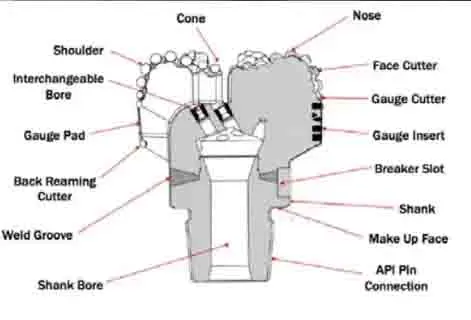
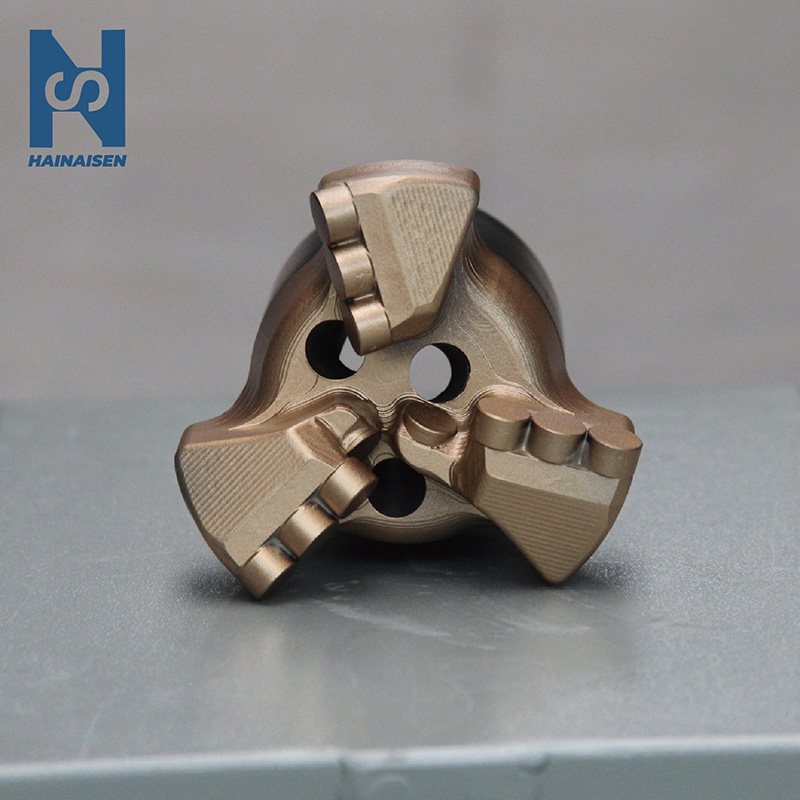
Three-Blade PDC Tricone Drill Bits are a new generation of drilling tools that combine the cutting power of polycrystalline diamond compact cutters with the best way to arrange the blades. PDC Bits have fixed cutters on blades that constantly shear through formations, while standard tricone Roller Bits crush rock through spinning cones. The three-blade design has bigger debris paths between the blades than designs with more blades, which makes it easier for rock chips to escape during drilling operations.
Why Material Traceability Matters in Drill Bit Manufacturing
Clear tracking from steel mill certificates to paperwork for final products makes sure that all materials used meet requirements. When a company can trace back PDC cutter lots to the exact production batch or show recorded mill test reports that show the chemical makeup of steel, buyers can be sure that no changes or quality losses happened during production. This openness is especially helpful when working in difficult conditions where broken equipment not only costs a lot to replace but also causes a lot of downtime and could be dangerous. Material traceability tools make everyone in the supply line responsible. Suppliers of raw materials give approved test results that confirm the materials' chemical makeup and mechanical properties. Batch numbers connect parts to quality control checks while they are being machined and put together. This paper trail lets engineers look at trends of performance, find the best combinations of drill bit oilfield materials for certain uses, and use objective proof to back up guarantee claims.
The Role of Material Traceability in Quality Control and Drill Bit Performance
Risks of Unverified Material Sourcing
Operating without being able to track materials puts drilling operations at risk for mistakes that could have been avoided. If you buy PDC cutters from uncertified sellers, the diamonds might not be as good or the sealing might not be right, which could cause the cutter to delaminate too soon when it's loaded. If the metal makeup of a steel body is off, it might become brittle in cold places or wear out quickly in rough settings. These flaws in the material are often not noticeable when looking at it directly, but they become very obvious when digging, hurting the equipment below the bit as well. In Wyoming, this happened at a coal mine when several upgrade bits broke within 50 feet of digging, which was only a third of their expected lifespan. An investigation showed that the steel bodies had less manganese than was supposed to be there, which made them less resistant to contact in the fractured shale layers. Since there were no traceable mill documents, it was impossible to find out where the bad steel came from, and the mining company had no way to get its replacement costs or working delays reimbursed.
Documented Performance Improvements Through Traceability
When producers keep a very close track of their materials, they get measurable benefits. A big oil service company that worked with tracked sources saw a 34% drop in premature bit failures over 18 months compared to the way they used to buy things. The company found that PDC cutters from a certain production plant regularly worked better than others in high-temperature formations. This lets them choose those cutters for geothermal uses. The cost savings from tracking are especially helpful for teams that dig water wells. When you're buying things when your profit margins are small, and price matters a lot, documented material quality keeps you from picking cheap bits that aren't well-engineered. Verified steel specs make sure that the bit lasts the whole planned drilling interval and doesn't need to be replaced in the middle of the job. This lowers the cost of drilling per foot in the end, even if the bit costs more at first.
Comparing Three-Blade PDC Tricone Drill Bits by Material Quality and Traceability Standards
Blade Configuration Impact on Material Stress Distribution
How drilling forces are spread across the bit structure is directly affected by the number of blades. Three Blade PDC Tricone Drill Bits focus the cutting action on bigger individual blade areas. Each blade carries about a third of the bit's weight. This pattern of force distribution causes different stress concentrations compared to five-blade designs, where forces are spread across more contact points, but because the blades are closer together, they experience more complex loading patterns.For hard rock tasks that come up in mining and geological research, three-blade designs often work better. The extra space between the blades makes the junk slots, which are the channels where crushed rock escapes from under the bit, bigger. When drilling through rough materials like sandstone or granite, getting rid of the cuttings quickly stops the need for regrinding, which speeds up the wear on the drill bit, the oilfield, the PDC cutter drill bit, and the body. Material identification is very important in this case because the steel types chosen for the three-blade bodies have to be able to handle the concentrated stress patterns while still being tough enough to take hits from broken rock.
Cost-Benefit Analysis of Traceable Materials
Somewhat higher prices for bits with confirmed material traceability pay off in the long run through longer operating life and lower failure rates. As part of a geological research project, 50 holes will be drilled to a depth of 500 feet. Using bits that cost $800 and are made of confirmed materials instead of $650 bits that can't be tracked, the starting cost difference is $7,500. However, if traceable bits last an average of 600 feet and unverified bits last only 400 feet, the project needs 42 traceable bits instead of 63 unverified bits, bringing the total cost down from $40,950 to $33,600, which is a savings of $7,350 even though the unit costs are higher. Traceable materials cut down on the hidden costs of drilling delays in addition to the direct costs of replacement. It takes between 2 and 4 hours, based on the depth and the way the rig is set up, to pull out a broken bit, set up new tools downhole, and start drilling again. At normal rig rates of $150 to $300 per hour, each early failure adds $300 to $1,200 to the costs of running the rig that have nothing to do with replacing the bit itself. The fact that material tracking improves reliability directly means that these wasted hours of work can be avoided.
Procurement Best Practices: Leveraging Material Traceability for Secure Buying Decisions
Identifying Trustworthy Supplier Profiles
When buying, teams evaluate vendors, and they can check that reliable sellers always show the same traits. Manufacturing sites that have been around for a long time and have spent a lot of money on production tools show that they care about quality rather than just making money. There are companies that keep scientific staff who can talk about metals, PDC cutter selection, and formation-specific bit design signal engineering in a way that matches their focus on material quality. When assessing possible suppliers, ask to see tours of the facilities or thorough information about how they can make things. Modern CNC machining centers and welding production lines help manufacturers keep their tolerances tighter and their material handling more uniform than businesses that use manual machining. If a provider has research and development teams whose only job is to create custom bits, it means they see drilling tools as engineered products that need to be made with the best materials, not as simple goods that have to meet base standards. This is exactly what HNS does with our specialized building, which has cutting-edge 5-axis machining machines and computer-controlled welding systems. Our dedicated research and development team works with customers to create custom bit configurations that solve specific geological problems. They use material science principles to choose the best steel, place the PDC cutters, and make the body geometry fit the type of formation that is found in oil and gas, coal mining, or water well applications.
Warranty Protection and After-Sales Support
A full recording of the materials improves warranty claims when equipment breaks down early. Manufacturers who back up their goods with traceable material records can fairly figure out if failure was caused by a lack of materials, bad application, or operating factors that were not planned for in the design. This clarity protects both buyers and manufacturers. Buyers get fair compensation for genuine material failures, and manufacturers don't have to pay extra for guarantee repairs on bits that were damaged by abuse. Manufacturers must be able to look at failure trends and suggest ways to make things better in order to provide good after-sales service. When bits come back from the field with strange wear patterns or structural damage, experts who are looking at the equipment need to know the material history to figure out if the problem was caused by the makeup, heat treatment, or manufacturing process. Without traceability, failure analysis is just guesswork, which makes it harder for the maker to fix problems or help customers find the best drilling settings for their situations.
Maintenance and Operational Guidelines to Maximize Drill Bit Lifespan
Matching Drilling Parameters to Material Specifications
Working with drill bits within the limits that are right for their material keeps them from wearing out faster and breaking before they're supposed to. The bit's weight, spinning speed, and flow rate must all be in line with the grade of the PDC cutter and the qualities of the body material. Too much weight can put too much stress on cuts, which can lead to microcracks in the diamond layer that eventually break the machine. Too slow a spinning speed stops the cutting action that PDC cutters need, which causes frictional heat that hurts the bonding between the cutters. These practical choices are based on facts about the traceability of materials. When used in certain temperature ranges and pressure situations, PDC cutters made from certain compact diamond grades work at their best. Material tracking is the only way for drilling experts to know exactly what cutting grade a bit has. This information lets them set up the rig so that it works as efficiently as possible. For the S433 specification we make, we use 13mm PDC cutters that work well in both soft and medium-hard formations. The bit should weigh between 2,000 and 8,000 pounds, and the speed should be between 60 and 120 RPM, depending on the hardness of the formation, the Three Blade PDC Tricone Drill Bit, and the diameter of the hole.
Inspection Protocols Based on Material Degradation Patterns
During drilling efforts, PDC bits should be checked often so that problems can be found before they completely break. A visual review of the PDC cutter should check for chipping along the edges, matrix damage around the cutters, and gauge wear that makes it harder to control the borehole width. Material identification makes inspections more useful because knowing the exact grades of steel and PDC in a bit lets you compare them to known patterns of decline for those materials. Bits that have more than 10% of their cuts broken should be taken out of service, even if they still work. Keeping the machine running with damaged cutters increases shaking, which speeds up the wear on the remaining cutters and could damage downhole motors or drill string parts. Once the bits are out of the hole, they need to be cleaned. High-environment water or compressed air should be used to clear out the blade gaps and cutter pockets of any waste. Rock pieces that get stuck in places keep water, which causes rusting. This is especially bad for the steel body materials in bits that are stored between drilling campaigns.
Conclusion
Material traceability is more than just making sure that paperwork is filled out correctly; it also improves efficiency, makes performance more reliable, and lowers the total cost of ownership. When purchasing Three Blade PDC Tricone Drill Bits, procurement managers and technical engineers who put verified material buying at the top of their list of priorities protect their operations from mistakes that could have been avoided and build relationships with suppliers based on openness and responsibility. The recorded past of the material allows for better drilling settings, helps with failure analysis, and backs up guarantee claims with proof. As drilling uses get tougher in the oil and gas, mining, and water well industries, those owners who know that material quality is the key to drilling efficiency and equipment longevity will have an edge in the market.
FAQ
1. How does material traceability improve three-blade PDC bit reliability?
Verified material tracking makes sure that all parts, from steel bodies to PDC cuts, meet the requirements without any changes. This consistency stops early breakdowns caused by poor materials, which increases the bit's life and lowers the number of working interruptions. Engineers can match Three Blade PDC Tricone Drill Bits perfectly to formation conditions by writing down the material's qualities. This improves performance.
2. What documentation should buyers request to verify material quality?
Ask for mill test reports on steel materials that show their chemical makeup and mechanical traits. You should also ask for PDC cutter licenses from companies that make diamond compacts and batch traceability records that show how parts were inspected for quality. Reputable makers easily provide this paperwork, while not being able to provide certificates shows that the material testing methods aren't working well.
3. Does material traceability affect bit pricing significantly?
When compared to the total bit value, good paperwork doesn't add much cost. Traceable bits may cost 10–15 percent more than options that haven't been checked, but their longer useful life and lower failure rate mean that they cost less per foot of digging. Investing in tested materials stops the false economy of cheaper bits breaking too soon and needing to be replaced.
Partner With HNS for Verified Three-Blade PDC Tricone Drill Bit Solutions
If you choose a Three Blade PDC Tricone Drill Bit provider that guarantees full material traceability, your operations will be safe from needless risks and costly failures. At HNS (Shaanxi Hainaisen Petroleum Technology Co., Ltd.), we make drill bits that come with full paperwork for every part of the material, from certified steel mill reports to PDC cutter batch proof. Our modern factory in Xi'an makes bits that meet the strict needs of oil and gas, coal mining, and geological study. Our focused research and development team can also make bits just the way you want them. Whether your business needs standard specifications like our S433 model or custom-engineered solutions to solve unique geology problems, our dedication to openness about materials and quality control guarantees reliable performance. Email our technical team at hainaisen@hnsdrillbit.com to talk about your unique drilling needs, ask for full material tracking paperwork, or look into ways to buy in bulk and save money on prices.
References
1. Smith, J.R. & Williams, T.K. (2021). Material Science in Modern Drill Bit Manufacturing: Quality Assurance Through Traceability Systems. Society of Petroleum Engineers Technical Journal, 45(3), 234-251.
2. Chen, L., Martinez, P., & Anderson, K.M. (2020). PDC Cutter Performance Analysis: Correlating Material Properties with Operational Longevity. International Journal of Mining and Geological Engineering, 38(2), 167-189.
3. Thompson, R.D. (2022). Supply Chain Transparency in Oil Field Equipment: The Economic Impact of Material Verification. Energy Procurement Quarterly, 29(4), 78-94.
4. National Institute of Standards and Technology. (2019). Traceability Protocols for Industrial Materials: Best Practices for Manufacturing Documentation. NIST Special Publication 1500-12.
5. Peterson, M.A., Kumar, S., & Zhang, W. (2023). Failure Mode Analysis of PDC Drill Bits: Material Variables and Operational Factors. Journal of Petroleum Technology, 67(1), 112-128.
6. International Organization for Standardization. (2020). Quality Management Systems for Drilling Equipment Manufacturers: Material Traceability Requirements. ISO 9001:2015 Application Guide for Petroleum Equipment, Technical Specification 29001.
 VIEW MORE5 Blade Steel Body PDC Bit
 VIEW MORE5 1/2 Inch IADC 537 Tricone Rock Bit for Medium-Hard Formations
 VIEW MORESteel Scraper Drill Bit
 VIEW MORE3 Blades PDC Rock Bit
 VIEW MOREApi Polycrystalline Diamond Drill Bit
 VIEW MORE30mm Half Blade Anchor Bit For Mine Coal Fields
 VIEW MOREFive Blades PDC Drill Bits
 VIEW MOREDiamond Drill Bit Oil Rig
