




Hydraulic Optimization of Four Blade Wing Petroleum Drill Bit
Hydraulic optimization of a four-blade wing petroleum drill bit represents a strategic engineering approach that enhances drilling efficiency through improved fluid dynamics and cuttings removal. This drilling tool combines a four-blade PDC design with optimized nozzle placement and junk slot geometry, allowing drilling fluid to circulate more effectively and transport rock debris away from the cutting face. By refining hydraulic parameters, operators achieve faster penetration rates, minimize bit balling in sticky formations, and extend bit life across oil and gas, coal mining, and water well applications.
Understanding Four Blade Wing Petroleum Drill Bits
Core Design Features and Engineering Principles
Four-blade wing bits leverage polycrystalline diamond compact (PDC) cutters mounted on symmetrically distributed blades, providing balanced contact with the formation during rotation. The blade arrangement creates larger flow channels between cutters, which we call junk slots. These slots serve a critical hydraulic purpose beyond structural support. When drilling fluid circulates down the drill string and exits through nozzles, it must carry rock cuttings up through the annular space. Wider junk slots facilitate this transport, reducing resistance and preventing accumulation at the bit face.
At HNS, we construct our bits using a solid one-piece heat-treated 4140 alloy steel body, ensuring structural integrity under high torque and axial loads. Each tungsten carbide insert undergoes precision milling to seat firmly within the forged body, minimizing movement during operation. CNC threaded machining guarantees secure attachment to the drill string, eliminating wobble that compromises hydraulic performance. Hand-ground relief angles behind each insert optimize cutting action while promoting efficient debris clearance, a detail that directly impacts hydraulic flow patterns.
Material Selection and Durability Considerations
Material choices influence hydraulic optimization beyond simple wear resistance. Our tungsten carbide inserts, standardized at 5.5 mm thickness, maintain sharp cutting edges longer, reducing the need for excessive weight-on-bit that can disrupt fluid flow. The heat-treated alloy steel body resists erosion from abrasive drilling fluids, preserving nozzle dimensions and flow characteristics throughout the bit's service life. This durability translates to consistent hydraulic performance rather than degradation that occurs with inferior materials.
The symmetrical blade distribution on our four-wing design disperses cutting forces evenly, reducing vibration that can cause pressure fluctuations in the hydraulic system. Stable drilling action means predictable fluid behavior, allowing engineers to fine-tune hydraulic parameters with confidence. This stability proves particularly valuable in medium-hard formations like shale, limestone, and sandstone, where consistent cuttings production requires reliable hydraulic transport.
Key Hydraulic Bottlenecks Affecting Four-Blade Wing Drill Bit Efficiency
Common Flow Restriction Challenges
Bit balling remains one of the most frustrating hydraulic failures we observe in field operations, including when using a four-blade wing petroleum drill bit. When cuttings accumulate on the bit face rather than being swept away, the bit effectively stops cutting fresh rock. This phenomenon occurs when hydraulic pressure at the bit face drops below the threshold needed to overcome the adhesive properties of certain formations, particularly clay-rich shales. Inadequate nozzle sizing, improper placement, or insufficient flow rate all contribute to this condition.
Uneven hydraulic flow across the bit face creates zones of poor cleaning where cuttings linger. Some blade areas may receive vigorous flushing while others remain starved of fluid. This imbalance accelerates wear on cutters in poorly cleaned zones, creating a cascade of problems. As cutters dull, operators increase the weight-on-bit, which generates more cuttings that the compromised hydraulic system cannot remove. The rate of penetration suffers, and operational costs climb.
Pressure losses through the bit assembly represent wasted hydraulic energy. When nozzles are incorrectly sized or when flow paths contain unnecessary restrictions, the pressure available for cleaning the bit face diminishes. Engineers must balance pressure drop across the bit against the need for high-velocity jets at the cuttings' face. This balance point varies with formation type, drilling fluid properties, and penetration rate, requiring careful analysis rather than generic specifications.
Real-World Performance Impacts
Drilling operations we've consulted on reveal that hydraulic inefficiencies typically manifest as reduced ROP before complete bit failure occurs. A coal mining operation in Wyoming experienced 30% slower penetration than expected due to recurring bit balling in their four-blade wing petroleum drill bit applications. Analysis showed that nozzle placement directed jets away from critical cutter zones. After hydraulic redesign, penetration rates recovered, and bit trips decreased by 40%, substantially lowering drilling costs per foot.
Water well drilling teams often report premature bit wear in abrasive sandstone formations. Our investigations frequently identify inadequate cutting transport as the root cause. When rock particles recirculate rather than exit the wellbore, they act as a lapping compound between cutters and formation, accelerating wear. Hydraulic optimization addresses this by increasing flow velocity in junk slots and directing fluid jets to push cuttings toward the annular space rather than allowing them to settle.
Principles and Techniques for Hydraulic Optimization
Nozzle Design and Strategic Placement
Optimizing nozzle configuration begins with understanding formation characteristics and expected cutting size distribution. Soft formations produce fine particles that require different hydraulic velocities than the larger chips generated in harder rock. We employ computational fluid dynamics modeling to simulate jet behavior under various nozzle geometries, predicting how fluid streams interact with the bit face and transport debris.
Nozzle count, individual orifice diameter, and angular orientation relative to cutters all influence cleaning effectiveness. Increasing the nozzle count distributes flow more evenly but reduces individual jet velocity if total flow rate remains constant. Larger diameter nozzles reduce pressure drop but may lack the velocity to dislodge compacted cuttings. Our engineering team balances these factors based on specific drilling parameters provided by clients, creating customized nozzle packages that match operational conditions.
Angular orientation deserves particular attention in four-blade designs. Directing jets to sweep across cutter paths just after rock destruction maximizes cutting removal before particles can compact. We position nozzles to create converging flow patterns that guide debris into junk slots rather than allowing it to migrate laterally. This strategic placement, validated through CFD analysis, ensures that every blade receives adequate hydraulic support.
Advanced Fluid Dynamics and Structural Modifications
Beyond nozzles, we optimize the entire flow path from the drill string through the bit body to the cutting face. Smooth internal transitions reduce turbulence that wastes hydraulic energy. We chamfer flow ports and eliminate sharp corners where vortices form, preserving pressure for cleaning action. These refinements, visible only under close inspection, accumulate to produce measurable performance gains.
Blade geometry itself contributes to hydraulic efficiency in oil & gas bits. We contour blade surfaces to minimize flow resistance while maintaining structural strength. Relief angles, hand-ground behind carbide inserts, create pressure differentials that actively push cuttings away from cutters. This detailed work, performed by skilled technicians at our 3,500 m² facility in Xi'an, distinguishes our bits from mass-produced alternatives that overlook hydraulic subtleties.
Material selection for erosion-prone zones extends hydraulic optimization over the bit's service life. Hard-facing alloys applied to blade edges resist wear from high-velocity fluid streams carrying abrasive particles. As erosion alters flow paths, hydraulic performance degrades. Our protective coatings maintain original flow characteristics through thousands of feet of drilling, ensuring consistent performance that justifies the initial investment.
Practical Implementation Strategies and Case Studies
Baseline Assessment and Optimization Protocol
We recommend beginning any hydraulic optimization project with thorough baseline documentation. Measure current penetration rates, standpipe pressure, flow rates, and bit life under typical operating conditions. This data establishes performance benchmarks against which improvements can be quantified. Many operators skip this step and consequently cannot demonstrate the value of optimization efforts to management.
Our technical team conducts formation analysis using offset well data and rock samples when available. Understanding compressive strength, abrasiveness, and plasticity guides hydraulic design choices. Soft, sticky shales demand different solutions than hard, brittle limestone. We combine this geological insight with drilling parameter targets—desired ROP, available pump capacity, and mud weight—to develop optimization specifications tailored to each client's circumstances.
Simulation and testing follow design development. CFD modeling predicts flow patterns and identifies potential problem areas before manufacturing. We validate predictions through flow visualization tests using transparent bit models and high-speed cameras, confirming that jets behave as intended. This iterative process refines the design until hydraulic performance meets targets, reducing costly field failures.
Documented Performance Improvements
An oil service company operating in the Permian Basin partnered with us to optimize its PDC Bits for horizontal shale drilling. Original bits averaged 180 feet per bit with frequent trips due to bit balling. After implementing hydraulic optimization—redesigned nozzle placement and enlarged junk slots—the same bit design achieved 340 feet per bit, nearly doubling footage. Penetration rates increased 25%, and the extended bit life reduced tripping time, improving overall well economics significantly.
A geological exploration contractor drilling water wells in limestone formations experienced rapid cutter wear attributed to poor cuttings evacuation. Hydraulic analysis revealed that inadequate flow velocity allowed cuttings to recirculate across cutters. We modified nozzle sizing to increase jet velocity without exceeding available pump pressure, directing higher-energy jets toward primary cutting zones. Subsequent field trials showed 60% longer bit life and smoother drilling with reduced vibration, validating the hydraulic improvements.
Effective maintenance protocols preserve optimized hydraulic performance. We advise operators to inspect nozzles after each trip, measuring orifice dimensions to detect erosion early. Plugged nozzles, often caused by lost circulation material in the mud system, destroy hydraulic balance and should be cleared immediately. Monitoring standpipe pressure trends identifies gradual flow restriction before it becomes critical, allowing preemptive nozzle replacement. These practices, documented in our maintenance guides, maximize return on investment in hydraulically optimized oil & gas bits.
Conclusion
Hydraulic optimization transforms four-blade wing petroleum drill bit performance from adequate to exceptional through engineering refinements in nozzle design, flow path geometry, and material selection. Procurement managers and technical engineers gain measurable advantages—faster penetration rates, extended bit life, and reduced operational costs—that justify investment in optimized tooling. Understanding hydraulic bottlenecks, applying proven optimization principles, and partnering with suppliers possessing genuine engineering capabilities enables operators to maximize drilling efficiency across oil and gas, mining, and water well applications. The integration of advanced design techniques with precision manufacturing creates drilling solutions that meet the demanding requirements of medium and large service companies while offering cost-effective performance for smaller operations.
FAQ
1. How does hydraulic optimization improve drilling efficiency in four-blade wing bits?
Hydraulic optimization enhances cleaning effectiveness at the bit face by positioning nozzles to direct high-velocity fluid jets across cutter paths immediately after rock destruction. This strategic flow pattern sweeps cuttings into enlarged junk slots and prevents bit balling, maintaining sharp cutters that penetrate efficiently. Improved cuttings transport reduces recirculation that causes premature wear, extending bit life while sustaining higher penetration rates.
2. What materials provide optimal durability and hydraulic performance?
Heat-treated 4140 alloy steel bodies resist erosion from abrasive drilling fluids, preserving nozzle dimensions and flow characteristics throughout service life. Tungsten carbide inserts at 5.5 mm thickness maintain cutting edges longer, reducing the need for excessive weight on the bit that disrupts fluid flow. Hard-facing alloys applied to erosion-prone zones maintain original hydraulic geometry despite high-velocity fluid streams.
3. How should operators maintain hydraulic performance throughout bit life?
Inspect nozzles after each trip, measuring orifice dimensions to detect erosion before it compromises hydraulic balance. Clear plugged nozzles immediately, as blockages destroy the designed flow patterns. Monitor standpipe pressure trends to identify gradual restrictions, enabling preemptive maintenance. Following these protocols preserves optimized hydraulic conditions and maximizes return on investment.
Partner with HNS for Superior Hydraulic Performance
HNS stands ready to enhance your drilling operations with hydraulically optimized Four Blade Wing Petroleum Drill Bit solutions engineered at our advanced Xi'an facility. As an established Four Blade Wing Petroleum Drill Bit Manufacturer since 2013, we combine CFD modeling expertise, precision manufacturing using 5-axis machining centers, and dedicated custom design capabilities to deliver bits matching your specific formation challenges. Contact our technical team at hainaisen@hnsdrillbit.com to discuss how our hydraulic optimization approach can reduce your cost per foot and improve project economics.
References
1. Bourgoyne, A.T., Millheim, K.K., Chenevert, M.E., and Young, F.S. (1991). Applied Drilling Engineering. Society of Petroleum Engineers Textbook Series, Volume 2.
2. Karasawa, H., Ohno, T., Kosugi, M., and Rowley, J.C. (2002). "Methods to Estimate the Rock Strength and Tooth Wear While Drilling with Roller-Bits." Journal of Energy Resources Technology, 124(3), 133-144.
3. Lyons, W.C., Plisga, G.J., and Lorenz, M.D. (2015). Standard Handbook of Petroleum and Natural Gas Engineering, Third Edition. Gulf Professional Publishing.
4. Mitchell, R.F. and Miska, S.Z. (2011). Fundamentals of Drilling Engineering. Society of Petroleum Engineers Textbook Series, Volume 12.
5. Pessier, R.C. and Fear, M.J. (1992). "Quantifying Common Drilling Problems with Mechanical Specific Energy and a Bit-Specific Coefficient of Sliding Friction." SPE Annual Technical Conference and Exhibition, Paper SPE-24584-MS.
6. Warren, T.M. (1987). "Penetration Rate Performance of Roller Cone Bits." SPE Drilling Engineering, 2(1), 9-18.
 VIEW MOREForging Deep Rock Well Drilling Bits
 VIEW MORECoal Mines Use Haineisen PDC Drill Bits
logo 1_1768204983068.jpg) VIEW MOREPDC Core Drill Bit With 8 Blades For Hole Drilling Used In Mining
VIEW MOREPDC Core Drill Bit With 8 Blades For Hole Drilling Used In Mining VIEW MORESix Blade Wing Petroleum Drill Bit
 VIEW MORE3 Blade PDC Arc Angle Drill Bit
logo 2_1777361643767.jpg) VIEW MORE94mm Four Wing Arc Angle Drill Bit
VIEW MORE94mm Four Wing Arc Angle Drill Bit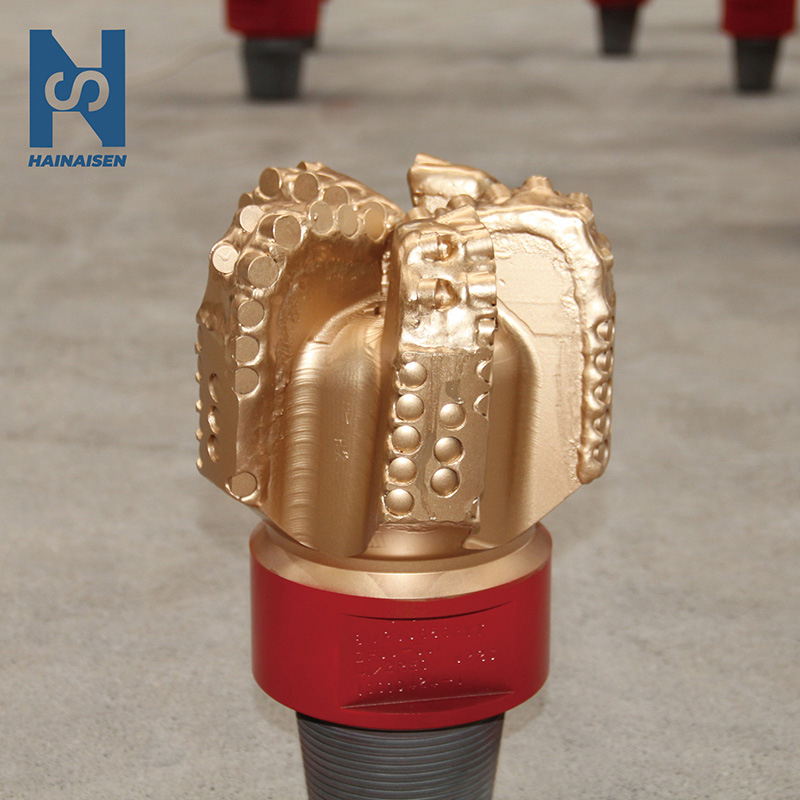 VIEW MORE5 Blades PDC Oil Bit
 VIEW MORE113mm 3 Blades Steel Body PDC Bit