




Six Blade Wing Petroleum Drill Bit Buying Guide
When selecting a six-blade wing petroleum drill bit, focus on blade configuration, cutter quality, hydraulic design, and material composition. These drilling tools feature six strategically positioned blades that enhance stability and cutting efficiency across various formations. Understanding your specific geological conditions, operational parameters, and budget constraints will help you choose the right bit that maximizes penetration rates while minimizing downtime and replacement costs.
Why Six-Blade Wing Configurations Matter in Modern Drilling
The oil and gas business is always changing, which means that it needs better ways to do things. When drilling in complex rocks or in a certain direction, traditional tri-cone bits and basic PDC designs often don't work well. Six-blade designs were created as a solution to these problems. They make the bit more stable and stop wellbore trajectories from deviating. The extra blades also spread the cutting forces more evenly across the bit face. This spread greatly lowers vibration, which not only increases the bit's life but also keeps downhole tools and drilling rig parts safe. When drilling through alternate hard and soft formations, the balanced design stops the nose-diving that happens with designs with fewer blades. Another great benefit is that it is very efficient with hydraulics. The space between the six blades makes the best junk holes that make it easier to remove cuttings. When debris builds up around the bit face, it slows down entry and wears out faster. If you build your hydraulics correctly, the drilling fluids will clean the cutting surface and bring rock pieces to the surface. For coal mining companies and geological exploration teams that are on a tight budget, knowing these technical benefits helps them justify the investment. Although it seems more expensive at first, a bit that drills faster and lasts longer lowers the cost of drilling by a large amount per metre.
Selection Criteria for Optimal Bit Performance
Formation Compatibility and Rock Properties
Success depends on how well your bit fits the natural conditions. Medium-hard rocks like shale, limestone, sandstone, and gypsum work really well with six-blade patterns. Because these rocks don't have a lot of compressive strength, the PDC cutters can easily cut through the material without doing too much damage. Technical experts should look at the formation's abrasiveness, hardness variation, and layers that are layered on top of each other. Sandstones that are very rough make cutting elements wear out faster, so you need bits with high-quality PDC cutters. Interbedded formations with alternate hard and soft layers are more stable with six blades, which stop the drill from acting erratically. The amount of water in the formations also affects the choice of bit. Some shale and gypsum have a lot of water in them, which can make bit balling happen, which is when sticky pieces stick to the bit face. In these situations, it's important to have good hydraulic design, so blade spacing and nozzle placement are important criteria for review.
Material Quality and Manufacturing Standards
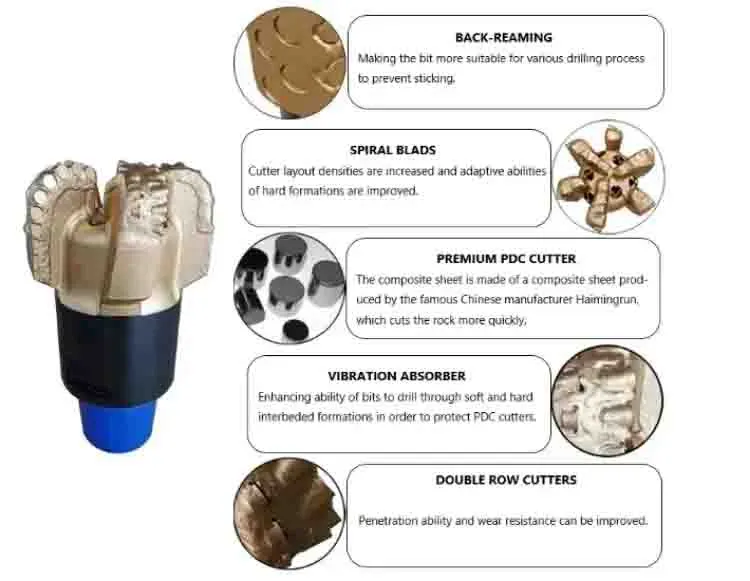
Premium-grade materials are what set great bits apart from average ones. The steel body has to be able to handle a lot of twisting and pulling. High-strength alloy steels that have been heat-treated correctly give the needed toughness without being too heavy. Polycrystalline Diamond Compact cutters are what the bit's cutting edge is made of. The quality of PDC from different Manufacturers changes a lot. The best cutters have an even spread of diamond particles, the right amount of cobalt binder, and better thermal stability. These features keep the cutter from breaking too soon in deep wells, where temperatures are high. The tungsten carbide matrix that reinforces the bit body makes it resistant to impact. This matrix stops severe damage when the bit hits hard stringers or fractured zones that it wasn't expecting. Specialised coatings on both the body and the cutters make them more thermally stable and reduce friction, which helps them last longer. Purchasing managers who work with oil repair companies know how important good documentation is. Ask for certificates of the materials, records of the heat treatment, and quality control reports. Reputable makers keep full records of where each part comes from.
Operational Parameter Compatibility
Your drilling rig's capabilities must align with the bit's specifications. Speed ranges typically fall between 60 and 250 RPM for six-blade petroleum bits. Operating outside recommended parameters causes excessive wear or inadequate rock removal. Drilling pressure requirements generally span 20-110 KN, depending on formation hardness and oil & gas bits' bit diameter. Insufficient weight on the bit results in slow penetration and polished cutters that lose cutting efficiency. Excessive pressure accelerates wear and can cause structural damage. Flow rate specifications ensure proper hydraulics. Most six-blade designs require 30-40 liters per second to maintain effective cutting removal. Inadequate flow leads to bit balling and reduced penetration rates. Your mud pump capacity must meet or exceed these requirements consistently throughout operations. Technical engineers should consider the complete drilling system when evaluating bits. Compatibility with your drill string, mud system, and rig specifications ensures optimal performance and prevents operational complications.
Detailed Analysis: Types of Six-Blade Wing Petroleum Bits
Standard Six-Blade PDC Bits for Medium-Hard Formations
These workhorses of the drilling industry deliver reliable performance across the broadest range of applications. The blade configuration features moderate aggressiveness, balancing penetration rate with bit longevity. PDC cutters are arranged in a pattern that provides continuous cutting action as the bit rotates.
Key Advantages:
- Versatile performance across shale, limestone, and sandstone formations
- Predictable wear patterns that allow accurate bit life estimation
- Cost-effective solution for standard drilling operations
- Wide availability and shorter lead times for procurement
- Compatible with conventional drilling fluid systems
- Reduced training requirements for drilling crews
Standard designs work exceptionally well for oil and gas exploration wells in established basins where formation characteristics are well-documented. The predictable performance allows accurate cost modeling and project planning. Water well drilling teams appreciate the balance between initial cost and operational life, making budget allocation straightforward. Manufacturing quality varies significantly among suppliers. Examine the cutter placement precision, as inconsistent spacing reduces efficiency. The brazed joints connecting cutters to the bit body should show uniform, void-free bonds. Poor brazing leads to premature cutter loss and catastrophic bit failure. For coal mining companies, these bits provide excellent value when drilling blast holes or exploration boreholes. The penetration rates satisfy production schedules while the durability keeps replacement costs manageable. Regional availability matters for these operations, as quick replacement minimizes expensive rig downtime.
High-Performance Directional Drilling Variants
Directional and horizontal drilling demand specialized bit designs. These variants feature asymmetric blade profiles and strategically positioned side cutters that facilitate controlled deviation. The geometry allows smooth trajectory changes while maintaining acceptable penetration rates.
Key Advantages:
- Enhanced steerability for directional drilling applications
- Reduced side cutting forces that improve tool face control
- Optimized for use with mud motors and rotary steerable systems
- Superior gauge protection maintains hole diameter consistency
- Advanced PDC grades withstand the sliding friction in directional work
- Specialized blade profiles reduce torque fluctuations
Oil service companies conducting complex well trajectories find these bits indispensable. Shale gas development and coalbed methane extraction often require horizontal sections extending thousands of meters. The bit must respond predictably to directional commands while drilling efficiently. The engineering behind directional variants involves sophisticated computer modeling and field testing. Blade angles, cutter back rake, and side rake angles are optimized through simulation software. This development investment is reflected in the purchase price, but the operational benefits justify the cost for specialized applications. Technical engineers evaluating these bits should request performance data from comparable formations and well profiles. Penetration rates, total footage drilled, and steering responsiveness provide concrete comparison points. Manufacturers with extensive directional drilling experience offer valuable application support. Geothermal drilling projects benefit tremendously from these designs. The combination of hard, abrasive formations and deviated well paths creates challenging conditions. High-performance directional bits with premium cutters and robust body designs meet these demands effectively.
Customized Bits for Specific Geological Challenges
Some drilling environments present unique challenges that standard designs cannot adequately address. Customized six-blade configurations tackle these situations through tailored oil & gas bits engineering solutions. Manufacturers analyze formation data, drilling parameters, and operational constraints to optimize every design element.
Key Advantages:
- Blade profiles matched precisely to formation characteristics
- Cutter selection optimized for specific rock properties
- Hydraulic design tailored to mud system capabilities and hole cleaning requirements
- Gauge length and profile customized for stability in problematic formations
- Material selection addresses corrosive or high-temperature conditions
- Integration with specific bottom hole assembly configurations
Large oil service companies with stringent quality requirements often specify custom bits for critical wells. The extended evaluation period these companies require allows thorough testing and refinement. Once approved, these custom designs become standard specifications for similar applications, creating long-term supply relationships. The customization process begins with comprehensive data sharing. Formation logs, offset well performance, mud properties, and rig specifications inform the design process. Experienced engineers at companies like HAINAISEN work collaboratively with clients, applying decades of accumulated knowledge to create optimal solutions. Prototype testing validates design concepts before full production. Some manufacturers offer field trials where new designs are tested under actual operating conditions with performance monitoring. This approach reduces risk for purchasers and provides confidence in the custom solution. Purchasing managers should understand that customization involves longer lead times and higher initial costs. However, the performance improvements often deliver substantial overall savings. A bit that penetrates 30% faster and lasts 50% longer quickly recovers the premium investment through reduced rig time and fewer bit trips.
Purchasing Recommendations and Key Considerations
Evaluating Supplier Capabilities
Choosing the right supplier matters as much as selecting the right bit design. Manufacturing capabilities determine quality consistency. Visit facilities when possible to assess equipment, processes, and quality control systems. Companies like HAINAISEN with modern 5-axis machining centers and CNC machine tools demonstrate commitment to precision manufacturing. Research and development capabilities indicate a supplier's ability to address unique challenges. Dedicated design departments create custom solutions rather than forcing standard products into inappropriate applications. Technical expertise should extend beyond basic manufacturing to encompass drilling engineering and application knowledge. Customer references provide invaluable insights. Contact existing clients, particularly those with similar applications and requirements. Ask specific questions about quality consistency, delivery performance, technical support responsiveness, six-blade wing petroleum drill bit, and problem resolution.
Total Cost of Ownership Analysis
Purchase price represents only one component of the total cost. Calculate cost per meter drilled, incorporating bit life, penetration rate, and operational parameters. A seemingly expensive bit that drills twice as fast and lasts 50% longer delivers superior value compared to cheaper alternatives requiring frequent replacement.Factor in logistics costs, inventory carrying costs, and administrative expenses. Reliable suppliers who deliver consistently reduce safety stock requirements and administrative burden. Late deliveries or quality issues create hidden costs that erode apparent savings. Consider technical support value. Suppliers providing application engineering assistance, performance analysis, and troubleshooting support help optimize overall drilling operations. This expertise often identifies opportunities for improvement extending beyond bit selection.
Quality Verification and Testing
Request sample bits for evaluation before committing to large orders. Field testing under actual operating conditions reveals performance characteristics that laboratory tests cannot fully predict. Document testing protocols, performance metrics, and wear patterns for objective comparison. Material Certifications should accompany every shipment. Verify that documentation matches physical products through batch numbers and traceability systems. Premium suppliers maintain comprehensive quality records accessible for audit. Establish acceptance criteria covering dimensional specifications, material properties, and visual inspection standards. Clear specifications prevent disputes and ensure consistent quality. Include provisions for rejected material handling and replacement.
Building Strategic Partnerships
Long-term relationships benefit both parties. Consistent ordering patterns allow suppliers to optimize inventory and production scheduling, often resulting in better pricing and delivery performance. Sharing operational data and performance feedback helps suppliers refine products for your specific needs. Collaborate on continuous improvement initiatives. Regular performance reviews identify opportunities for optimization. Suppliers with strong technical capabilities contribute valuable insights that improve overall drilling efficiency. Negotiate framework agreements that establish pricing, terms, and service levels for extended periods. These agreements provide budget certainty while ensuring supply security. Include provisions for periodic reviews and adjustments based on market conditions and performance.
Industry Trends and Future Outlook
The petroleum extraction industry continues evolving toward data-driven optimization and automated drilling systems. Smart bits with embedded sensors provide real-time performance monitoring, enabling immediate adjustments that maximize efficiency. Material science advances promise even more durable PDC cutters with enhanced thermal stability. Environmental considerations drive the development of bits optimized for water-based drilling fluids and reduced-impact drilling practices. These trends create opportunities for forward-thinking suppliers and operators who embrace innovation while maintaining focus on fundamental performance metrics. The six-blade configuration will remain relevant, with continuous refinement addressing emerging challenges in geothermal energy, unconventional resources, and deeper, more complex wells.
Conclusion
Selecting the right six-blade wing petroleum drill bit requires balancing technical specifications, application requirements, budget constraints, and supplier capabilities. This buying guide provides the framework for making informed decisions that optimize your drilling operations. Whether you're a technical engineer evaluating performance characteristics or a purchasing manager negotiating supply agreements, understanding these factors protects your investment and improves outcomes. The drilling industry rewards careful planning and strategic partnerships. Take time to evaluate options thoroughly, test products under actual conditions, and build relationships with suppliers who demonstrate technical expertise and manufacturing excellence. Your drilling success depends on equipment that performs reliably under demanding conditions, and the right bit selection makes that success achievable.
FAQ
1. What formations work best with six-blade wing petroleum drill bits?
These bits excel in medium-hardness formations with low to moderate compressive strength. Shale, limestone, sandstone, and gypsum deliver optimal performance. The blade configuration provides excellent stability in interbedded formations where rock properties vary. Highly fractured zones benefit from the balanced cutting action that prevents aggressive catching or deflection. For harder formations like granite or basalt, consider alternative designs or premium cutter grades specifically engineered for high-compressive-strength rocks.
2. How do I determine the right operating parameters for my drilling conditions?
Start with manufacturer recommendations for speed, drilling pressure, and flow rate. These guidelines are based on extensive testing across various formations. Monitor performance metrics during initial operations, including penetration rate, torque, and vibration levels. Adjust parameters incrementally, documenting results to identify optimal settings. Excessive vibration indicates speed or weight on the bit may be too high. Slow penetration with smooth operation suggests insufficient drilling pressure. Work with your bit supplier's technical team to interpret performance data and refine parameters for your specific conditions.
3. What distinguishes premium PDC cutters from standard grades?
Premium cutters feature superior thermal stability, allowing operation at higher temperatures without degradation. The diamond particle size distribution and cobalt binder content are optimized for specific applications. Manufacturing processes, including high-pressure, high-temperature synthesis parameters, affect quality significantly. Premium grades show more consistent wear patterns and resist impact damage better than economy alternatives. For demanding applications in abrasive or high-temperature formations, the additional cost of premium cutters delivers substantially longer bit life and better overall performance.
Partner with HNS for Superior Drilling Solutions
HAINAISEN brings over a decade of specialized six-blade wing petroleum drill bit expertise in petroleum drill bit manufacturing and drilling technology solutions. Our 3,500-square-meter facility houses advanced 5-axis machining centers and CNC production lines that ensure precision in every six-blade wing petroleum drill bit we produce. We understand that technical engineers and purchasing managers need reliable suppliers who deliver consistent quality, competitive pricing, and responsive technical support. Contact our team at hainaisen@hnsdrillbit.com to discuss your specific drilling challenges and discover how our customized bit designs can improve your penetration rates while reducing operational costs. As an experienced manufacturer and supplier, we're ready to become your trusted partner for high-performance drilling tools.
References
1. Bourgoyne, A.T., Millheim, K.K., Chenevert, M.E., and Young, F.S. (2021). "Applied Drilling Engineering: Principles and Practices," Society of Petroleum Engineers Textbook Series.
2. Mitchell, R.F. and Miska, S.Z. (2022). "Fundamentals of Drilling Engineering," SPE Textbook Series, Second Edition, Society of Petroleum Engineers.
3. Bellin, F.E. and Doiron, H.H. (2020). "PDC Bit Technology for the 21st Century: Design Innovation and Field Performance Analysis," Journal of Petroleum Technology, Vol. 72, Issue 8.
4. Cannon, G.E. (2019). "Polycrystalline Diamond Compact Cutter Technology and Bit Design Optimization," International Journal of Oil, Gas and Coal Technology, Vol. 21, No. 3.
5. Warren, T.M. and Armagost, W.K. (2018). "Laboratory Drilling Performance of PDC Bits: Correlation with Rock Properties and Bit Design," SPE Drilling & Completion Journal, Vol. 33, Issue 2.
6. Winters, W.J., Warren, T.M., and Onyia, E.C. (2017). "Roller Cone and Polycrystalline diamond bit Performance Analysis in Hard Rock Formations," American Association of Drilling Engineers Technical Papers, AADE-17-NTCE-42.
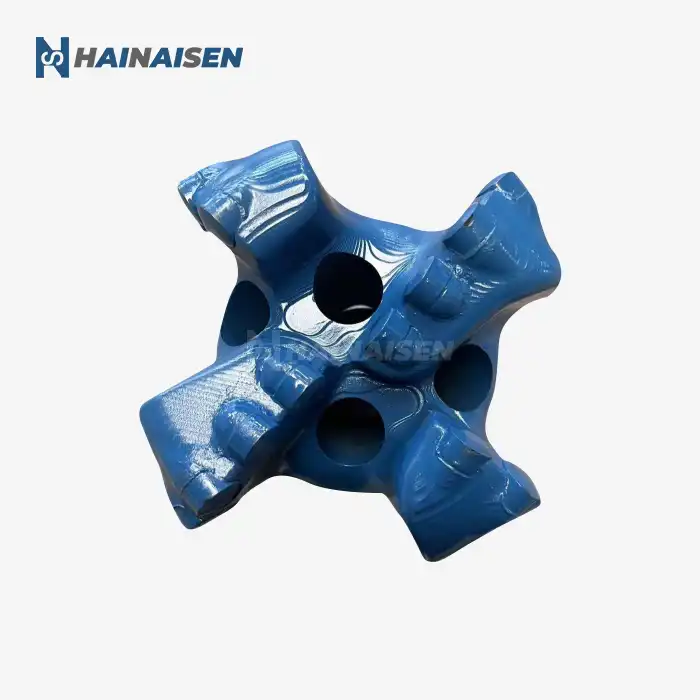 VIEW MOREFour Blade PDC Drill Bit
 VIEW MOREThree Blade Wing Arc Angle Drill Bit
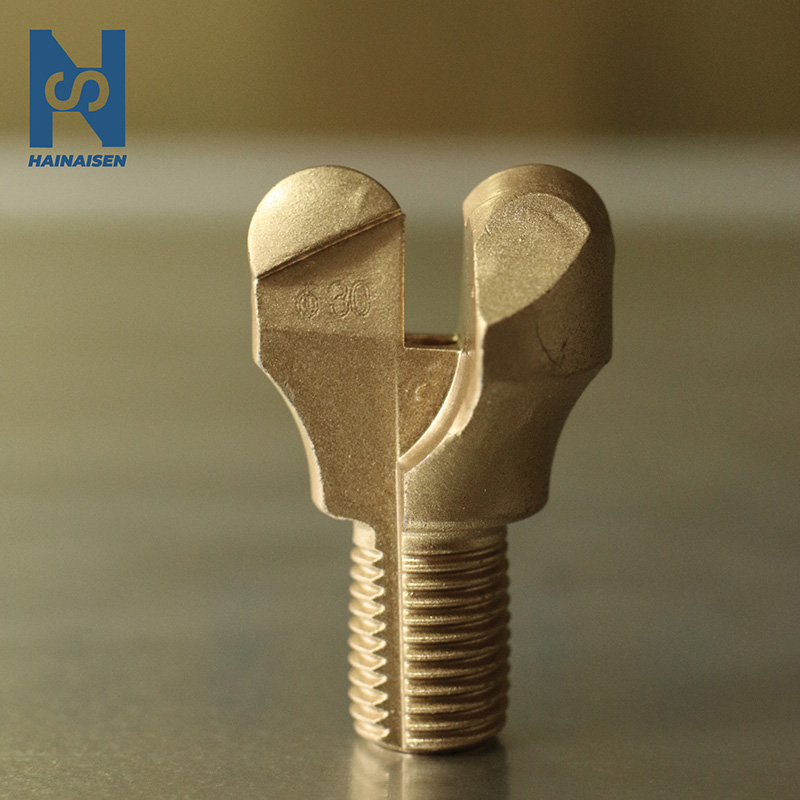 VIEW MORE34 And A Half Whole Coal Mine Mining Anchor Drill Bits
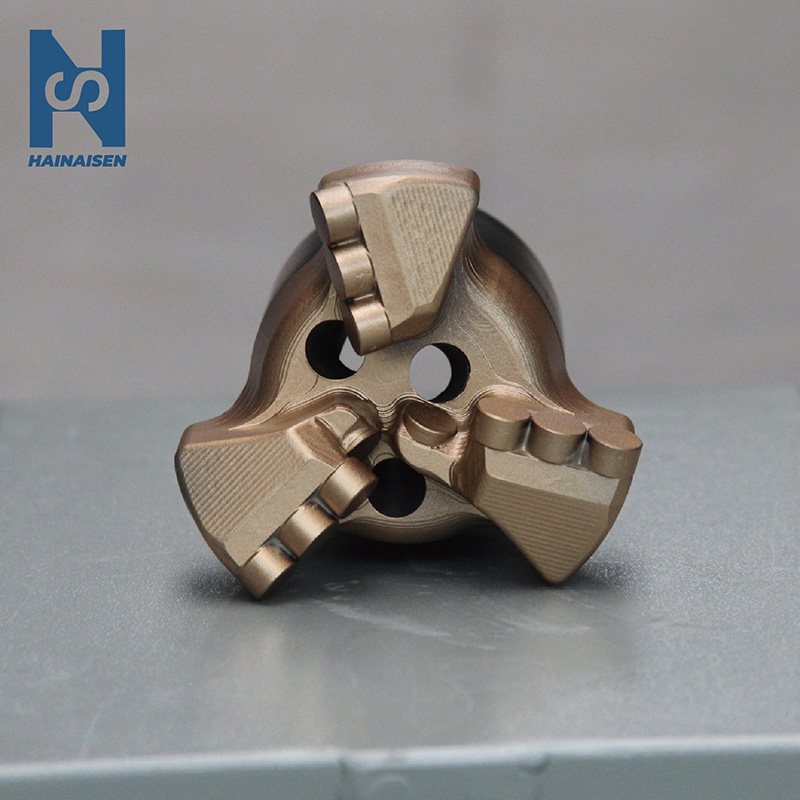 VIEW MORE3 Blades PDC Rock Bit
logo 1_1777361785830.jpg) VIEW MORE94mm PDC Flat Top Sintered Drill Bit
VIEW MORE94mm PDC Flat Top Sintered Drill Bit VIEW MOREDiamond Drill Bits For Oil Rigs
 VIEW MOREHigh Quality PDC Drill Bits
 VIEW MORE113mm PDC Arc Angle Drill Bit