




How Durable Is 4 Wings Blades PDC Bit in Abrasive Formations?
When digging through rough layers like dense sandstone, coarse limestone, 4 Wings Blades PDC Bit, or gritty shale, one of the most important economic factors is how long the tools last. A lot of people know that the 4-Wing Blades PDC Bit is very durable in these tough conditions. This bit cuts evenly across the face because it has quality polycrystalline diamond compact (PDC) cutters and a symmetric four-wing geometry. This makes localised wear much less noticeable. Because it is made of strengthened steel and special matrix materials that are stable at high temperatures, the 4 Wings Blades PDC Bit can keep working well for long runs without breaking down quickly like most roller cone bits do. In real-world applications like oil and gas exploration and building geothermal wells, operators constantly report longer periods of time between bit changes, lower overall costs per metre drilled, and more predictable penetration rates, even as the hardness of the formation rises.
What Makes the 4 Wings Blades PDC Bit Resistant to Abrasive Wear?
The Role of PDC Cutter Technology in Wear Resistance
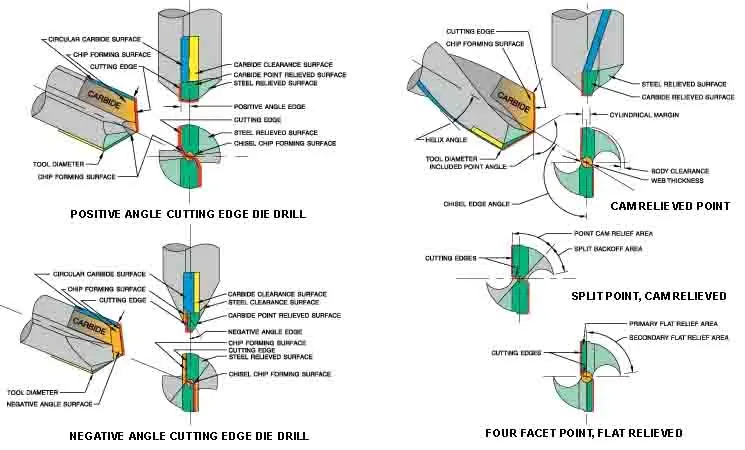
The cutting parts of the 4 Wings Blades PDC Bit are the main reason why it works better in abrasive formations than other designs. Polycrystalline diamond compact cutters have a layer of fake diamond that is pressed and heated very hard to stick to a tungsten carbide base. Diamond is the hardest substance on the Mohs scale. Because of this, it can keep its sharp cutting edge even when pulled over quartz-rich sandstone or cemented conglomerate over and over again. These cutters are placed in the 4 Wings Blades PDC Bit at back-rake and side-rake angles that are designed to give the best shear cutting action. Unlike tricone bits, which crush things, this shear device removes material quickly while reducing the frictional heat that speeds up wear. The PDC Bits in this bit are made to meet strict standards for abrasion resistance, and each one is checked for quality before it is put together. Field data from several drilling campaigns show that the life of a PDC cutter in medium-hardness formations like shale, limestone, sandstone, and gypsum is greatly increased when the cutter geometry is perfectly matched to the compressive strength of the formation. This is exactly the engineering approach used to create the 4 Wings Blades PDC Bit.
Material Selection and Body Construction
Beyond the cutters themselves, the long-term durability drill bit Manufacturers in china of the 4 Wings Blades PDC Bit in abrasive formations depends heavily on the quality of the bit body and the materials used in blade construction. The bit body is fabricated from high-grade steel chosen for its toughness and resistance to impact loading — a critical property when the bit encounters interbedded hard stringers within an otherwise softer formation. The blade faces are typically surfaced with hardfacing compounds, materials containing tungsten carbide particles embedded in a metallic matrix, which create a wear-resistant armor over the steel substrate. This hardfacing directly protects the blade profile from erosion by abrasive rock particles carried in the drilling fluid stream. Additionally, the specialized matrix materials incorporated into the bit's construction provide enhanced thermal stability, reducing the risk of heat-induced softening during high-rotation-speed drilling. At Shaanxi Hainaisen, the entire manufacturing process for the 4 Wings Blades PDC Bit is governed by strict quality control protocols, with each unit tested before shipment to verify dimensional accuracy, cutter bond integrity, and nozzle flow characteristics.
How Do Operating Parameters Influence the Durability of the 4-Wing Blades PDC Bit?
Optimizing Rotary Speed for Formation Conditions
Rotary speed has a direct and well-documented influence on PDC bit wear rates, and managing it correctly is essential for maximizing the service life of the 4 Wings Blades PDC Bit. The recommended operating speed for this bit ranges from 60 to 250 RPM, a wide envelope that gives drillers flexibility to match rotation to formation characteristics. In highly abrasive formations with significant quartz content, lower rotary speeds are generally preferable because they reduce the velocity at which cutter faces contact the rock, thereby lowering frictional heat generation. Excessive heat is one of the primary mechanisms of PDC cutter degradation — when the diamond table temperature exceeds a critical threshold, the cobalt binder within the PDC substrate begins to thermally expand at a different rate than the diamond grains, creating internal stresses that cause micro-cracking. Operating the 4 Wings Blades PDC Bit at the lower end of its speed range in tough abrasive conditions, while compensating with appropriately adjusted weight on bit, allows drillers to maintain acceptable penetration rates without sacrificing cutter life. This approach aligns with best practices established across multiple oil and gas drilling programs.
Weight on Bit and Its Relationship to Bit Longevity
The drilling pressure applied to the 4 Wings Blades PDC Bit — ranging from 10 to 100 kN within specified operational limits — must be calibrated carefully to avoid accelerated wear or catastrophic failure. Insufficient weight on the bit causes the cutters to skid across the formation surface rather than shearing into it, generating heat through friction without meaningful rock removal. Conversely, excessive weight on the bit can cause cutter overload, particularly at the bit's gauge and shoulder regions where wear tends to concentrate in abrasive formations. The four-wing design of the 4 Wings Blades PDC Bit provides inherent structural resilience to accommodate the upper range of the recommended weight envelope without blade deflection or gauge wear, thanks to the rigid steel body and broad blade cross-sections. Matching the weight on bit to the compressive strength of the target formation — whether shale, limestone, sandstone, or gypsum — is the key variable that determines how efficiently the bit converts applied force into penetration drill bit manufacturers in china rather than heat. Engineers at Shaanxi Hainaisen provide operating parameter guidance with each bit to help customers calibrate the weight on the bit correctly for their specific formation profile.
Flow Rate and Hydraulic Efficiency in Cuttings Removal
Hydraulic performance is the third pillar of the operational durability strategy for the 4 Wings Blades PDC Bit. With a recommended flow rate of 25 to 36 liters per second, the bit's nozzle configuration is designed to deliver high-velocity fluid jets that sweep cuttings off the face and up the annulus before they can be reground. In abrasive formations, this is particularly critical: rock particles left on the bit face act as an abrasive slurry between the cutters and the formation, accelerating diamond table wear in a process sometimes called "micro-chipping." The optimized hydraulics of the 4 Wings Blades PDC Bit direct fluid flow to the highest-wear zones of the bit face, providing both cooling and cleaning action simultaneously. Proper flow rate management also prevents bit balling — the accumulation of sticky formation material on the bit face — which, while more common in clay-rich formations, can occur in mixed sequences and drastically reduces cutting efficiency. By maintaining flow within the specified range, operators ensure that the bit's intrinsic wear resistance is supported by the hydraulic environment it needs to perform at its design specification.
Which Formation Types Are Best Suited for the 4 Wings Blades PDC Bit?
Performance in Shale and Soft-to-Medium Formations
Shale represents one of the most common targets for the 4 Wings Blades PDC Bit across both oil and gas drilling and geothermal applications. Shale's relatively low compressive strength makes it an ideal candidate for the shear-cutting mechanism at which PDC bits excel. The four-wing blade design ensures that the full bit face engages the formation evenly, producing consistent gauge and a smooth borehole wall — an important factor in wellbore stability for cased completions. In organic-rich shale plays targeted for hydrocarbons, a consistent gauge hole also reduces the risk of drill string torque spikes and stick-slip, both of which can cause mechanical damage to bit components. Because shale often contains interbedded harder layers of siltstone or fine sandstone, the robustness of the 4 Wings Blades PDC Bit — with its reinforced blade structure and high-quality PDC cutters — provides the resilience needed to drill through these harder stringers without compromising the bit's overall condition. Operators drilling coal-bed methane wells or sedimentary 4 Wings Blades PDC Bit basin exploration programs consistently find that the 4 Wings Blades PDC Bit delivers favorable cost-per-meter performance in these lithologies.
Drilling Through Limestone and Carbonate Sequences
Limestone and other carbonate formations present a different set of challenges compared to clastic sequences like shale and sandstone. Carbonates can vary widely in hardness, porosity, and fracture density even within a single formation interval. The 4 Wings Blades PDC Bit handles these variations effectively because its symmetric cutter arrangement maintains cutting efficiency regardless of localized hardness changes. In tight limestone with low porosity, the bit's weight-on-bit range allows drillers to apply sufficient force to initiate fracture propagation ahead of the cutters, improving penetration rate without overloading individual cutter elements. In vuggy or fractured carbonates, the bit's stable four-wing platform reduces the risk of lateral deviation that can cause uneven cutter loading and premature wear on one side of the bit face. Limestone drilling is a core application area for the 4 Wings Blades PDC Bit in geological survey work, water well construction, and mining exploration — all fields where Shaanxi Hainaisen has supplied this bit type to project operators seeking reliable performance in diverse carbonate geology.
Sandstone and Mixed Abrasive Sequences
Sandstone is arguably the most demanding test of a PDC bit's abrasion resistance, due to the high quartz content that characterizes most consolidated sandstone formations. The 4 Wings Blades PDC Bit meets this challenge through the combined effect of superior PDC cutter quality, protective hardfacing on blade surfaces, and the optimized hydraulic system that minimizes abrasive regrinding at the bit face. In mixed sequences where sandstone alternates with shale or limestone, the bit's versatility is a significant operational advantage, as drillers do not need to make bit changes when the formation character shifts within a single drilling interval. This flexibility directly reduces non-productive time and associated costs. The customization service offered by Shaanxi Hainaisen allows customers to specify cutter density, nozzle configuration, and blade geometry tailored to their exact formation profile — whether a uniform sandstone reservoir or a complex interbedded sequence. This engineering flexibility means the 4 Wings Blades PDC Bit can be optimized for the full range of abrasive formation challenges encountered in real-world drilling programs.
Conclusion
The 4 Wings Blades PDC Bit demonstrates outstanding durability in abrasive formations by combining premium PDC cutter technology, a structurally robust four-wing blade design, and carefully engineered hydraulics into a single, versatile drilling tool. Its performance across shale, limestone, sandstone, and gypsum — the core application strata — makes it a reliable choice for oil and gas, coal mining, geothermal, water well, and geological survey drilling. Shaanxi Hainaisen Petroleum Technology Co., Ltd., founded in Xi'an in 2013, backs this product with a dedicated R&D team, advanced 5-axis machining centers, and rigorous quality control standards, ensuring every bit delivered meets the demands of modern drilling projects.
FAQ
1. What is the recommended operating speed for the 4 Wings Blades PDC Bit in hard abrasive formations?
The 4 Wings Blades PDC Bit is rated for rotary speeds between 60 and 250 RPM. In highly abrasive formations with significant quartz content, operating toward the lower end of this range — roughly 60 to 120 RPM — is advisable to limit frictional heat generation on the PDC cutter faces. Lower speed reduces thermal stress on the diamond table, extending cutter life without requiring a reduction in weight on the bit to compensate for penetration rate. Always consult formation data before finalizing speed parameters.
2. Can the 4 Wings Blades PDC Bit be customized for specific formation requirements?
Yes. Shaanxi Hainaisen offers a comprehensive customization service for the 4 Wings Blades PDC Bit, covering cutter placement, nozzle configuration, blade geometry, and gauge protection design. The company's experienced engineers work with customers to analyze formation compressive strength data and drilling objectives, then design a bit configuration that optimizes performance for the target interval. This tailored approach is particularly valuable for operators drilling mixed or unconventional formation sequences.
3. How does the four-wing design improve stability compared to three-wing or five-wing PDC bits?
The four-wing configuration balances cutting aggressiveness with structural stability more effectively than three-wing designs (which can be prone to lateral vibration) or five-wing designs (which reduce junk slot area and hydraulic efficiency). The 4 Wings Blades PDC Bit achieves a geometry where cutter loading is distributed evenly, vibration is minimized, and fluid flow between blades efficiently evacuates cuttings. This balance translates directly into longer bit life and smoother wellbore profiles.
4. What drilling applications is the 4 Wings Blades PDC Bit most suitable for?
The 4 Wings Blades PDC Bit is well-suited for oil and gas exploration and production, coal bed methane drilling, geothermal well construction, water well drilling, mining and mineral exploration, and geological core sampling. Its applicable strata include medium-hardness formations with low to moderate compressive strength, such as shale, limestone, sandstone, and gypsum — making it one of the most versatile PDC bit options available for diverse subsurface drilling programs.
Ready to Drill Smarter? Contact Our 4 Wings Blades PDC Bit Team | HNS
If your project demands a bit that genuinely holds up in abrasive formations, 4 Wings Blades PDC Bit without compromising penetration rate or wellbore quality, it is time to talk to the specialists. As a trusted 4 Wings Blades PDC Bit supplier and 4 Wings Blades PDC Bit manufacturer, Shaanxi Hainaisen Petroleum Technology Co., Ltd. combines over a decade of design expertise with advanced manufacturing capabilities — including 5-axis machining centers and dedicated R&D engineering — to deliver bits that are built for your specific formation challenge. Whether you need a standard configuration or a fully customized solution, our team is ready to support your project from initial design through field deployment. Reach out today and discover why operators across oil and gas, geothermal, mining, and water well sectors trust HNS to keep their drilling programs moving forward. Contact Us: hainaisen@hnsdrillbit.com
References
1. Pessier, R. C., & Fear, M. J. (1992). Quantifying common drilling problems with mechanical specific energy and a bit-specific coefficient of sliding friction. SPE Annual Technical Conference and Exhibition, SPE-24584-MS.
2. Curry, D., Fear, M., Govzitch, A., & Aghazada, L. (2005). Technical limit specific energy — an index to facilitate drilling performance evaluation. SPE/IADC Drilling Conference, SPE-92318-MS.
3. Huang, S., Liu, G., & Li, X. (2018). Wear mechanisms of polycrystalline diamond compact cutters in abrasive formations: A review. Journal of Petroleum Science and Engineering, 163, 314–325.
4. Mazen, A. Z., Rahmanian, N., Mujtaba, I. M., & Hassanpour, A. (2020). Effective mechanical specific energy: A new approach for evaluating PDC bit performance and cutters wear. Journal of Petroleum Science and Engineering, 196, 107654.
5. Glowka, D. A. (1987). Use of single-cutter data in the analysis of PDC bit designs: Part 1 — development of a PDC cutting force model. Journal of Petroleum Technology, 39(8), 797–849.
6. Yahiaoui, M., Gerbaud, L., Paris, J. Y., Denape, J., & Dourfaye, A. (2013). A study on PDC drill bits quality. Wear, 298–299, 32–41.
 VIEW MORE113mm PDC Arc Angle Drill Bit
 VIEW MOREFive Blade Oil Drill Bit
 VIEW MOREPetroleum Drilling Equipment PDC
 VIEW MOREPolycrystalline Diamond Compact Drill Bits
logo 2_1777361643767.jpg) VIEW MORE94mm Four Wing Arc Angle Drill Bit
VIEW MORE94mm Four Wing Arc Angle Drill Bit VIEW MORE5 Blade Matrix Body PDC Drill Bits
 VIEW MORE3 Blades Steel Body PDC Bit
logo 2_1777360600432.jpg) VIEW MORECoal Mine Drilling Drill Bit Directional Three Blade PDC Drill Bit
VIEW MORECoal Mine Drilling Drill Bit Directional Three Blade PDC Drill Bit