




What is a PDC Drill Bit? The Ultimate Guide
Choosing the appropriate drill bit is crucial for oil field, coal mine and water well drilling issues. PDC Rock Drill Bits have revolutionised drilling for decades with their efficiency and durability. PDC technology is explained in detail in this comprehensive handbook, allowing purchasing managers and technical engineers to make cost-effective, productive decisions. Understanding PDC drill bits will change how you drill hard shale or deep water wells.
Understanding PDC Drill Bits: Definition and Core Technology
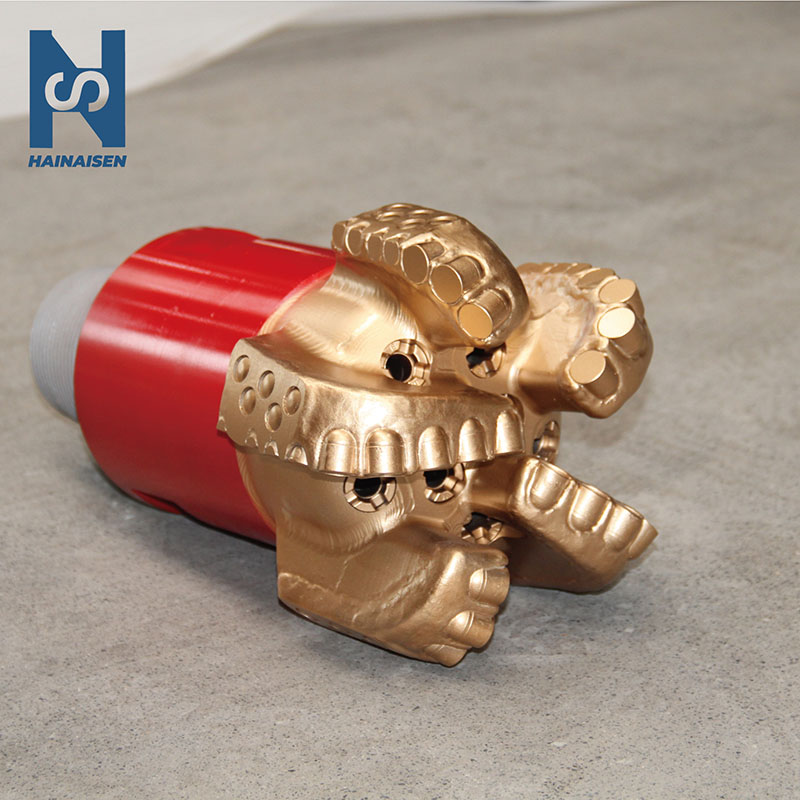
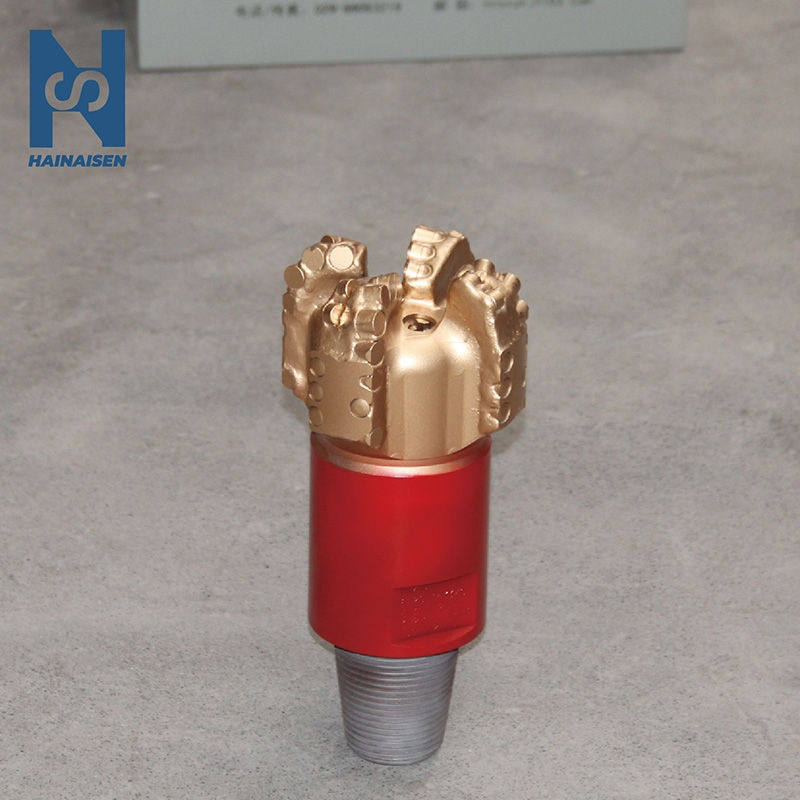
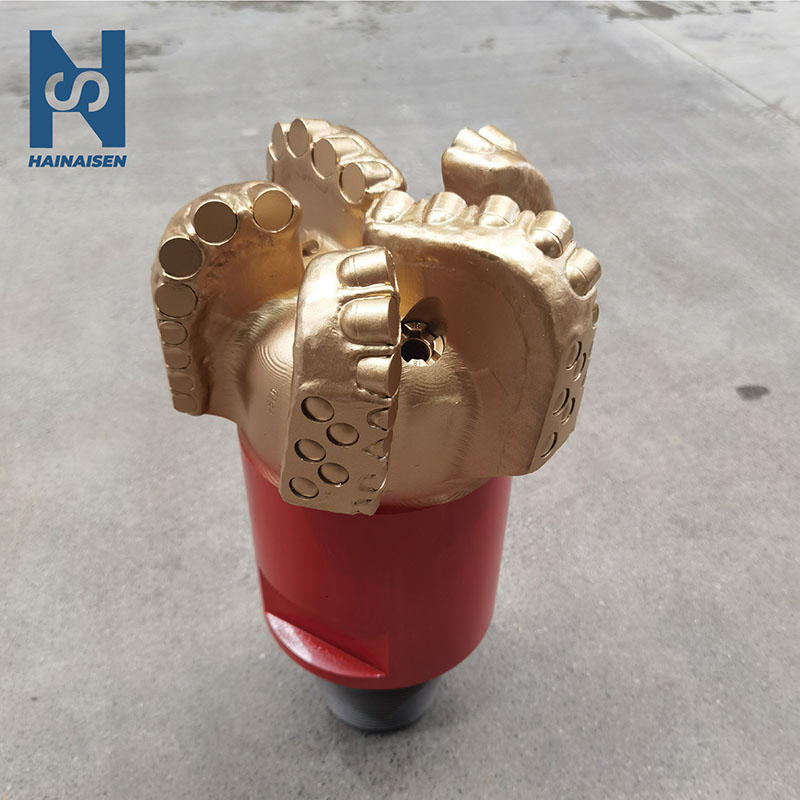
Polycrystalline Diamond Compact (PDC) drill bits are a major advancement in drilling technology. PDC Bits cleave rock formations with synthetic diamond cutters instead of roller cone bits.
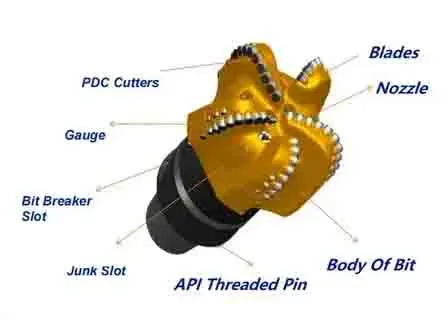
The core technique uses polycrystalline diamond cutters on tungsten carbide substrates. These cutters are carefully placed on bit-body-extending steel blades. These diamond cutters shear rock rather than crush it when the bit spins. Shearing provides smaller cuts and uses less energy, speeding penetration.
High-grade steel body ensures structural stability throughout rigorous activities. Advanced metallurgy protects the bit from high downhole pressures and temperatures. Around the gauge portion where the bit touches the borehole wall, the tungsten carbide matrix strengthens crucial wear zones.
Modern PDC bits are hydraulically advanced. Fluid channels strategically guide drilling mud to cool cutters and remove debris from the cutting face. Bit balling, when cuttings pile on the bit face and reduce performance, is prevented via hydraulic optimisation.
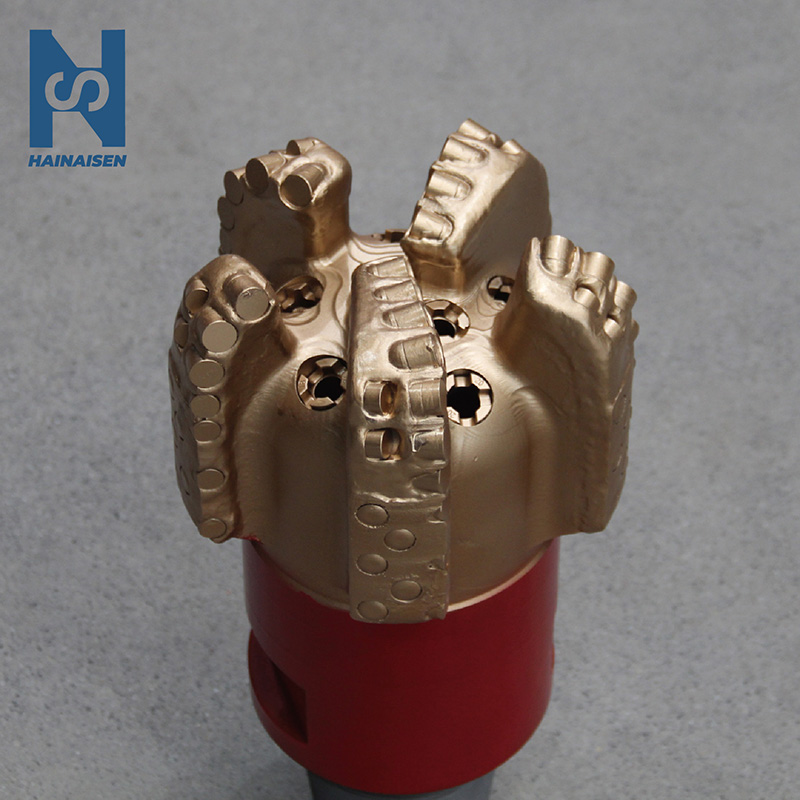
The cutting structure depends on the application. Four-blade designs are good for deep drilling due to lower torque and drag. For tougher formations, six-blade setups cut aggressively. The bit's rock penetration depends on blade shape, cutter location, and back rake angles.
The Critical Problems PDC Technology Solves
Traditional drilling had several drawbacks that PDC technology solves. Roller cone pieces needed regular replacement, wasting rig time and increasing expenses. Each trip required detaching the drill string, hauling it to surface, replacing the bit, and running it back downhole, which may take hours or days on deep wells.
PDC Rock Drill Bits greatly prolong tool life. Individual PDC bits commonly drill portions that need numerous roller cone bits. Oil and gas businesses with offshore platforms where rig time costs surpass $500,000 daily benefit greatly from lowering trip frequency. Similar to coal mining, fewer bit changes equal more continuous production.
Shearing using PDC cutters causes less vibration than roller cone crushing. Vibration reduction protects expensive downhole equipment and enhances directional drilling. Controlling horizontal wells and complicated well trajectories is difficult due to considerable vibration.
Project profitability depends on drilling efficiency. PDC bits penetrate faster than conventional bits in appropriate formations, sometimes doubling or tripling. Faster drilling cuts project time, fuel, and labour expenses. This efficiency allows water well drilling teams on restricted budgets to price competitively while being profitable.
PDC benefits include environmental factors. Shorter drilling periods lower rig emissions. Industrial waste decreases with fewer bit changes. These environmental advantages match tightening extraction industry requirements.
Core Features and Functionality That Drive Performance
PDC bits function through their cutting structure. Engineers calculate cutter size, shape, and location based on applications. Larger cutters handle harder formations' impact stresses, whereas smaller cutters handle softer, uniform rock. Aggression and durability are balanced by cutter density—the number of cutters on the bit face.
Blade geometry greatly affects drilling. Rather than re-grinding, spiral blade designs effectively discharge cuttings, saving energy and wear. Straight blade designs are good for directed applications where steering is more important than penetration rate. Hybrid designs optimise many performance characteristics using both methods.
Gauge protection greatly prolongs bit life. Abrasion from borehole wall contact wears the gauge section severely. Premium PDC bits have wear-resistant gauge pads or extra cutters to safeguard this vital section. Proper gauge protection keeps hole size throughout the bit's life, preventing expensive reaming.
Side vibrations are prevented using bit stabilisation. Spaced cushions on the borehole wall centre the bit and dampen vibrations before they intensify. Depth-of-cut control features in modern designs calm drilling dynamics and minimise damaging stick-slip oscillations by limiting cutter engagement with the formation.
Hydraulic efficiency affects drilling fluid cutting support. High-velocity fluid flows over the cutting face from nozzles behind each blade. Cutter cooling, cutting face cleaning, and borehole bottom cleaning are done by this fluid flow. Improved hydraulics avoid cutter heat damage and boost cleaning effectiveness.
How the bit profile shapes the cutting face impacts penetration rate and hole quality. Parabolic shapes emphasise bit centre cutters, encouraging aggressive drilling in soft formations. Flatter profiles transfer weight uniformly, making them ideal for tougher terrain where controlled penetration reduces cutter damage. Matching profile selection to formation features is crucial.
Manufacturing Excellence and Material Science Behind PDC Bits
Making high-performance PDC bits requires modern manufacturing. We use 5-axis machining machines at our 3,500m² Xi'an plant to mill complicated blade designs into steel bit bodies. The precise positioning of cutters is crucial since even millimetres might affect performance.
Cutter pockets are intricately prepared by CNC machines. Each pocket must match the cutter dimensions for effective bonding and load transmission. Surface finish in these spaces impacts cutter-bit body bonding. Automated welding lines attach components without metallurgical flaws that might weaken structures.
Diamond cutters demonstrate outstanding material science. Synthetic diamond crystals are sintered at high pressure and temperature to form polycrystalline diamond layers. Diamond's hardness and carbide's toughness combine in these layers on tungsten carbide substrates. The cutter resists abrasion and impact, unusual in technical materials.
Tungsten carbide matrix supports blade gaps and high-wear regions. Carbide's exceptional hardness resists abrasion, and mild toughness avoids catastrophic fracture. Specific applications require careful carbide composition to balance these qualities. Oil and gas bits may prioritise impact resistance, whereas mining bits may prioritise abrasion.
Steel bit bodies are heat-treated for maximum strength-to-toughness. High hardness makes steel brittle; low hardness facilitates plastic deformation under drilling stresses. Metallurgical expertise protects bit bodies from harsh downhole environments.
Quality control during production prevents errors from reaching clients. Non-destructive testing examines welds and materials. Dimensional checks ensure geometry fits specs. Medium and big oil service firms with strong quality standards trust suppliers with established production capabilities due to this demanding quality assurance.
Key Advantages That Make PDC Bits Industry Standard
The most notable benefit of PDC technology is high penetration rates. PDC Rock Drill Bit is two to three times quicker than roller cones in appropriate formations. This speed advantage cuts drilling schedules by days or weeks over large intervals. For corporations digging many wells annually, time savings add up.
Tool longevity lowers operational disturbances. Bit changes are far less with a 500-hour PDC bit than with a 150-hour roller cone bit. Avoiding trips saves rig time, drill string wear, and stuck pipe issues. Remote operations benefit from this stability since logistics make bit changes expensive.
Improved directional control allows complicated well trajectories. Directional drillers can better follow planned courses with PDC bits' consistent torque and less vibration. Horizontal sections increase reservoir contact and well production by reaching target zones more consistently. Precision in heat source targeting boosts geothermal drilling efficiency.
Lower drilling expenses per foot yield bottom-line advantages. PDC bits cost less per foot drilled than cheaper competitors despite greater initial purchase pricing. Purchasing managers considering equipment expenditures appreciate this total cost of ownership approach. Faster drilling, fewer bit replacements, and lower ancillary expenses are economically beneficial.
Versatility across applications enhances PDC. Oil and gas exploration, coal mining, water well building, and foundation drilling use the same technology. Custom designs from Manufacturers like us optimise performance for specific formation types and drilling settings. This adaptability facilitates equipment standardisation for varied drilling operations.
Reduced environmental impact supports company sustainability. Shorter drilling periods save diesel fuel and pollution. Fewer bit swaps and longer bit life reduce waste and promote environmental responsibility. These perks assist organisations in achieving regulations and CSR goals.
Potential Limitations and Selection Considerations
PDC bits fail in some forms. Impact loads from highly fractured or interbedded rocks with extreme hardness changes can harm cutters. Quartzite and taconite can wear cutters too rapidly to be profitable. Before suggesting PDC bits over roller cones or hybrids, experienced engineers evaluate formation properties.
Costlier initial investments challenge budget-conscious operations. An expensive PDC bit may cost three to five times as much as a roller cone bit. Even though overall drilling expenses will reduce, small water well drilling teams on narrow margins may struggle to justify this upfront outlay. Financial or cash flow restrictions might overcome economic optimisation.
Adoption is complicated by technical skill. Understanding how weight on bit, rotary speed, and hydraulic flow rates affect PDC bit performance is crucial. Inexperienced workers may misuse PDC bits, missing out on benefits. Learning curves and training investments affect PDC performance.
Uncertain formation increases risk. Pre-drill geological models may mispredict downhole conditions. Forcing an expensive PDC bit optimised for soft shale into hard limestone can cause annoyance and economic loss. Geological exploration programs encounter uncertainty more than well-characterised field development drilling.
Application variety increases bit selection difficulty. Detailed formation information and drilling parameter planning are needed to choose appropriate blade count, cutter size, profile shape, and hydraulic design. Without expert assistance, manufacturers provide hundreds of bit variants, making choices difficult. Our R&D and bespoke bit design teams assist customers in choosing bits that meet project needs.
Maintenance and inspection require care. Although PDC bits do not require moving parts maintenance like roller cone bits, appropriate handling avoids cutter damage. Looking at returning bits gives formation data and influences bit choices. Effective bit management maximises PDC results.
PDC Bits Compared to Roller Cone and Hybrid Technologies
Roller cone bits ruled drilling for decades before PDC. These bits smash rock using revolving cones with hardened teeth or tungsten carbide inserts. Roller cones perform in fragmented, hard formations where impact strength trumps penetration rate. They handle interbedded formations of different hardnesses better than PDC bits.
Roller cones are short-lived. Worn bearings, seals, and teeth reduce run time. Crushing causes greater vibration than PDC shearing, hindering directional drilling. Penetration rates often behind PDC performance in soft to medium formations. Many applications employ roller cones as backups for PDC when formation circumstances prevent it.
PDC and roller cone hybrid bits try to combine the benefits. PDC cutters on the bit's outer parts and roller cones centrally are usual. PDC efficiency in softer intervals with roller cone impact resistance handling tougher stringers is the goal. Hybrids are beneficial in varied formations but seldom outperform pure PDC in diamond cutter-friendly settings.
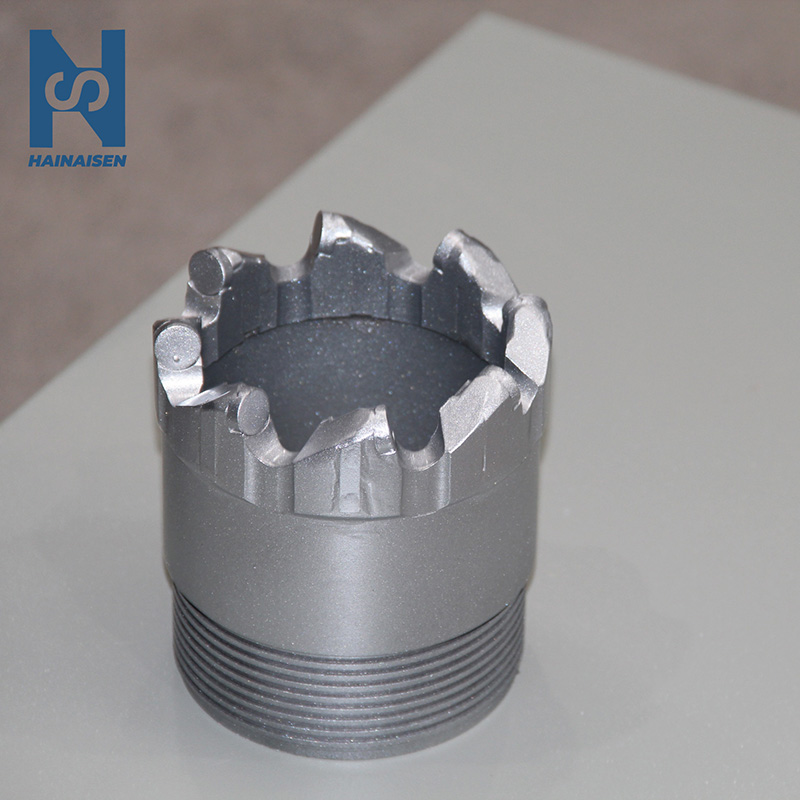
Another option is impregnated diamond bits for hard rock mining and exploratory drilling. Small diamond particles are embedded in this metal matrix. PDC and roller cone bits are destroyed when they progressively drill into extremely hard, abrasive strata. When sample recovery is more important than penetration rate, mineral exploration core drilling uses impregnated bits.
Natural diamond bits were used in PDC-dominated applications. These bits employ matrix-set industrial-grade natural diamonds. Natural diamonds are marginally better than synthetic polycrystalline diamonds, but their exorbitant cost limits their use to ultra-hard rock coring.
PDC technology is becoming more competitive as manufacturing improves cutter durability and formation adaptability. Roller cones retain importance in diminishing niches, whereas hybrids suit transitional needs. These choices allow consumers to choose the best tools for each job rather than a single technology.
Industries' Target Users and Ideal Applications
Prime PDC Rock Drill Bit clients are large oil service businesses. These organisations have technological competence to optimise drilling parameters and require premium bit performance. They operate in harsh offshore deepwater and unconventional shale areas. Superior penetration rates and extended bit life affect project economics, justifying a premium price for quality goods. These firms' lengthy inspection times demonstrate their supplier certification and quality assurance efforts.
PDC efficiency increases assist coal mining operations greatly. Longwall mining and coal bed methane extraction need extensive drilling through homogeneous strata, suited for the PDC technique. Quality and cost are balanced by mining businesses to achieve dependable performance at competitive pricing. Successful sample testing accelerates partnership growth since mining schedules require a constant bit supply.
Water well drilling teams, especially smaller ones, analyse PDC bits cost-wise. Premium bits have operational advantages, but upfront prices strongly affect purchases. Tiered product lines—premium bits for demanding applications and value-oriented choices for price-sensitive markets—target this area. Using total cost advantages overcomes initial pricing opposition.
Geological exploration initiatives need reliable performance in uncertain settings. PDC efficiency benefits mineral exploration, core drilling, geotechnical studies, and environmental sampling. In remote areas, equipment dependability prevents costly backup resource mobilisation.
Renewable energy growth offers geothermal drilling options. Premium PDC bits excel in drilling deep holes through hard crystalline rock to reach heat sources. The expanding geothermal sector needs oil and gas-adapted technology.
PDC is increasingly used for foundation drilling for bridges, skyscrapers, and wind turbines. Construction timeframes affect project costs, making quicker drilling profitable. As construction firms recognise PDC's benefits, this industry grows.
Directional drilling relies on PDC performance. PDC bits' smooth, predictable behaviour is needed to drill horizontal sections on predefined trajectories. Directional drilling contractors frequently require premium bits for project success.
Conclusion
PDC drill bits have transformed drilling economics across multiple industries through superior penetration rates, extended tool life, and operational reliability. Understanding PDC technology—from cutter mechanics to hydraulic design—empowers better purchasing decisions aligned with project requirements. While formation characteristics and application specifics determine optimal bit selection, PDC technology continues expanding its applicable range through manufacturing innovations. As drilling projects grow more complex and cost pressures intensify, PDC bits deliver competitive advantages that directly impact profitability. Partnering with experienced manufacturers offering both premium quality and technical support positions your operations for sustained drilling success.
FAQ
Q1: How long does a PDC drill bit typically last compared to other bit types?
A: PDC bit longevity varies significantly based on formation characteristics and operating parameters. In suitable conditions like soft to medium shale, a quality PDC bit might drill 1,500 to 3,000 feet or more, lasting 200 to 500 hours. Comparable roller cone bits in identical conditions might achieve 500 to 1,000 feet before requiring replacement. Extremely hard or abrasive formations reduce these figures considerably. Proper bit selection matching formation properties maximises run length. Our technical team helps customers analyse formation data to predict realistic bit performance for specific projects.
Q2: Can PDC bits handle directional and horizontal drilling effectively?
A: PDC bits excel in directional drilling applications when properly designed for steering requirements. The smooth cutting action generates less vibration than roller cone bits, helping directional tools maintain trajectory control. Specialised directional PDC bits feature asymmetric designs that enable controlled bit walk, assisting directional drillers in building angle or maintaining azimuth. The reduced torque and drag of PDC technology particularly benefit extended horizontal sections where friction management becomes critical. Many directional drilling contractors consider PDC bits essential for successfully executing complex well paths.
Q3: What factors should I consider when selecting a PDC bit for my specific application?
A: Successful bit selection requires analysing several key factors. Formation characteristics—hardness, abrasiveness, consistency—fundamentally determine suitability. Drilling parameters like available weight on bit and rotary speed must match the bit design. The hydraulic horsepower available from your mud pumps affects cleaning efficiency. Hole size and drilling depth influence bit body design and cutter placement. Your performance priorities—maximising penetration rate versus extending bit life—shape design choices. Budget constraints and total cost targets factor into product tier selection. Consulting with experienced manufacturers who maintain custom design capabilities ensures optimal matching between bit specifications and your project requirements.
Partner With HNS: Your Trusted PDC Rock Drill Bit Manufacturer
Shaanxi Hainaisen Petroleum Technology Co., Ltd. brings over a decade of specialised expertise in PDC drill bit manufacturing and drilling solutions. Our state-of-the-art facility combines advanced 5-axis machining centres with dedicated engineering support, ensuring every PDC Rock Drill Bit meets exacting performance standards. We understand the diverse needs across oil and gas exploration, coal mining, and water well drilling markets. Whether you require certified quality for major service company approvals or value-optimised solutions for competitive projects, our team delivers. Contact Us at hainaisen@hnsdrillbit.com to discuss your drilling challenges with a responsive PDC Rock Drill Bit supplier committed to your operational success.
References
1. Bellin, F., Dourfaye, A., King, W., & Thigpen, M. "The Current State of PDC Bit Technology." World Oil Magazine, Vol. 231, No. 9, 2010.
2. Clayton, R., Chen, S., & Lefort, G. "PDC Bit Technology for the 21st Century." SPE/IADC Drilling Conference and Exhibition, Society of Petroleum Engineers, 2011.
3. Durrand, C., Skeem, M., & Hall, D. "Thick PDC Cutters for Hard Rock Drilling: A New Solution to Reduce Cost per Foot in Difficult Formations." IADC/SPE Drilling Conference, International Association of Drilling Contractors, 2006.
4. Pessier, R. & Fear, M. "Quantifying Common Drilling Problems with Mechanical Specific Energy and a Bit-Specific Coefficient of Sliding Friction." SPE Annual Technical Conference and Exhibition, Society of Petroleum Engineers, 1992.
5. Warren, T. & Armagost, W. "Laboratory Drilling Performance of PDC Bits." SPE Drilling Engineering Journal, Society of Petroleum Engineers, Vol. 3, No. 2, 1988.
6. Winters, W., Warren, T., & Onyia, E. "Roller Cone Bit Model with Rock Ductility and Cone Offset." Journal of Energy Resources Technology, American Society of Mechanical Engineers, Vol. 109, No. 1, 1987.

logo 1_1768274683075.jpg)