




Top manufacturers of PDC rock drill bits for mining applications
To find the best companies that make PDC Rock Drill Bits for mining, technical experts and procurement managers need to look at a mix of new ideas, dependability, and great customer service. A PDC Rock Drill Bit has polycrystalline diamond compact cutters attached to a steel body. It is much harder and more resistant to wear than regular roller cone bits, and it works much better in a wide range of rock formations. Leading companies like Sandvik, Baker Hughes, Schlumberger, Halliburton, and Shaanxi Hainaisen Petroleum Technology Co., Ltd. (HNS) have built their reputations on strict quality standards, proven field performance, and helpful customer service that meets the needs of oil service companies, coal mining operations, and water well drilling teams all over North America.
Overview of PDC Rock Drill Bits in Mining Applications
What Are PDC Rock Drill Bits and How Do They Work?
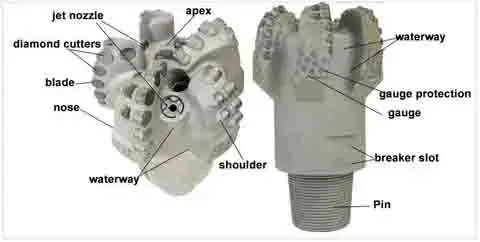
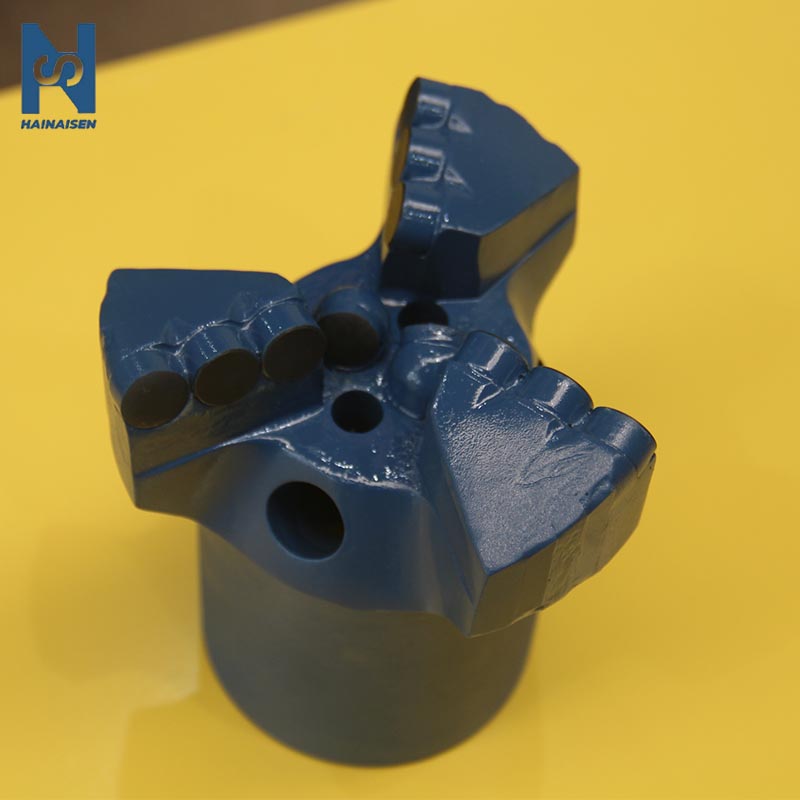
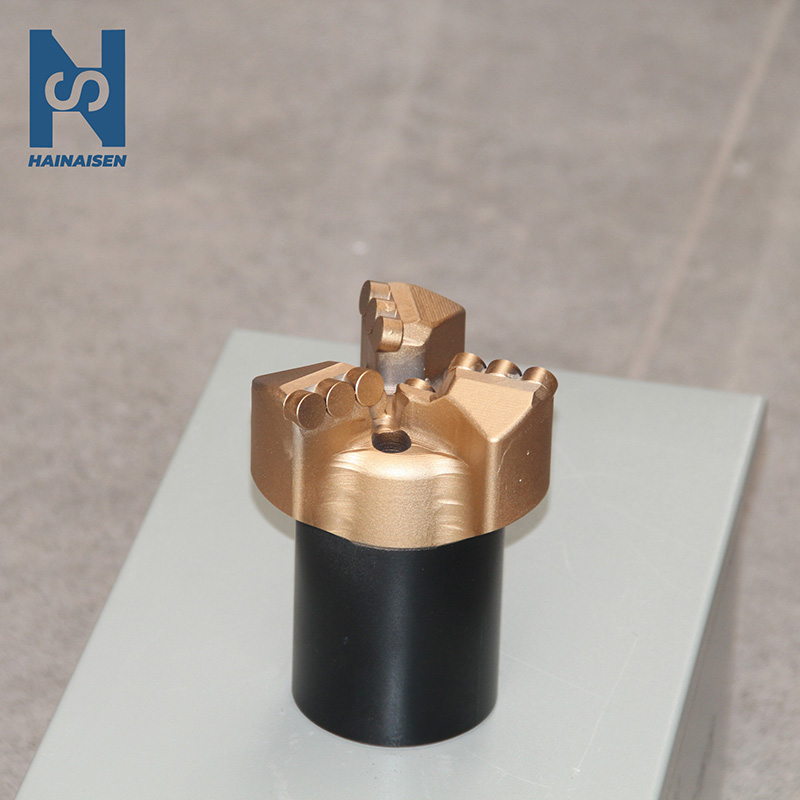
PDC Rock Drill Bits cut, not crush, like roller cone bits. Polycrystalline diamond compact cutters are on bit-exposed blades. Fusing diamond particles under high pressure and temperature creates them. As the bit spins, these cuts cleave rock with minimum energy waste. This design requires less power and enables you drill constantly without the technical issues that sometimes plague moving-part bits.
High-grade steel makes the body sturdy, and the tungsten carbide matrix surrounding the cuts reduces wear in tough situations. Advanced blade design positions the cutter appropriately to regulate forces. This stabilises the hole and prevents wear. PDC Rock Drill Bits are ideal for coal mining, mineral research, geothermal drilling, and deep water well construction because of their design.
Key Design Elements That Drive Performance
Modern PDC Rock Drill Bits offer several unique design characteristics. Cutter density and direction determine which rocks the bit works best with. Higher cutter counts perform well in softer formations, whereas clever spacing works best in abrasive ones. The blade form impacts how successfully the hydraulics remove cuttings to maintain entry rates and avoid bit balling.
Companies like HNS invest heavily in bespoke bit design, which helps technical teams adjust cutter location, blade form, and nozzle position to match diverse rock types. For shale layers, horizontal directional drilling, and geotechnical research, unique bit designs are essential. Using formation analysis and practical input to adjust these parameters increases drilling speed, tool life, and measurable cost per metre drilled.
Common Operational Challenges and Maintenance Best Practices
Even high-end PDC Rock Drill Bits might malfunction if not handled properly. Impact loading can harm cutters when bits encounter unexpected hardness variations in the formation or rock particles. Bit balling—when cuts adhere to the bit face—makes cutting less effective and can break the bit early. Unmatched forces wear out bits and downhole tools more quickly.
To solve these issues, be diligent about maintenance and follow operating discipline. Checking the cutter regularly detects wear patterns before they cause catastrophic failure. Correct hydraulic management ensures the optimum flow rates clean the bit face and cool cuts while operating. Matching spinning speed and weight-on-bit to formation parameters reduces detrimental vibration. Procurement teams should prioritise makers that provide comprehensive technical support and training to enable field personnel to enhance bit performance and tool life by making sensible operational modifications.
Top Global Manufacturers of PDC Rock Drill Bits
Shaanxi Hainaisen Petroleum Technology Co., Ltd. (HNS)
Since 2013, Xi'an-based HNS has offered adaptable PDC Rock Drill Bit options backed by modern manufacturing. The company's 3,500-square-meter facility contains 5-axis machining centres, CNC machine tools, and automated welding production lines to ensure accuracy and consistency. This infrastructure supports standard and geologically tailored product lines.
A separate HNS research and development team improves bit form for offshore oil and gas drilling and large construction foundations. Their high-quality steel PDC Rock Drill Bits with current polycrystalline diamond compact cutters and tungsten carbide matrices are durable for coal mining, material extraction, and water well drilling. Businesses looking for reliable, affordable drilling tools should consider the company's unified approach to new product development and technical assistance.
Sandvik: Global Reach and Comprehensive Product Range
PDC Rock Drill Bits from Sandvik, a mining tool Manufacturer for decades, may be utilised for nearly any drilling project. Their global distribution network reduces downtime for large mining operations by making goods and replacement parts accessible quickly. Sandvik's engineering teams collaborate with clients to recommend bit standards depending on formation and operating goals.
The organisation excels at managing complex supply chains for several project sites. Medium and large oil repair firms that work in several locations benefit from this capability. Sandvik's client support includes technical training and performance tracking. These let users maximise tool bits throughout their lifespan.
Baker Hughes: Advanced Engineering for Extreme Conditions
Baker Hughes makes PDC Rock Drill Bits for severe rock environments. They funded research that produced cutter materials and bit bodies that can withstand high temperatures, hard rock, and intricate cutting pathways. Baker Hughes is great for shale gas extraction, deep geothermal well drilling, and directed drilling, which ordinary bits cannot perform.
The company leverages field performance data to improve product specifications and data analytics in the bit design. This evidence-based strategy reduces job-starting trial-and-error time. This expedites drilling setup optimisation. Baker Hughes provides complete insurance and technical assistance to safeguard clients' investments and streamline operations.
Schlumberger: Digital Integration and Performance Monitoring
Schlumberger employs digital technology that modifies how workers regulate PDC Rock Drill Bit performance. Their tracking systems monitor drilling parameters in real time and detect performance variations that may indicate bit wear or formation conditions. Workers can extract bits before a big failure with proactive bit management because they can forecast the future.
Schlumerger uses digital technologies and tight production standards to ensure product quality worldwide. Their bits perform well for core drilling, soil sampling, tunnel digging, and aquifer research. Technical support teams help clients understand performance data and make system improvements to improve performance and longevity.
Halliburton: Flexibility and Customer-Centric Manufacturing
Halliburton offers many manufacturing choices for regular and special orders. Their new product development method emphasises user input and bit designs meeting practical restrictions and performance goals. This collaborative strategy allows coal miners and water well drillers to identify cost-effective solutions without compromising quality.
The corporation provides high guarantees and has support networks that can swiftly answer technical concerns and solve field issues. Halliburton's tools can be utilised for geology research, environmental cleanups, and geothermal heat pump installations. This makes them ideal for firms with several drilling projects.
Comparative Assessment of Leading PDC Drill Bit Brands
Performance Analysis Across Different Formation Types
How closely the bit design matches the material affects drilling performance. When mining coal, soft sedimentary rocks are found. By contacting the rock more, bits with aggressive blade designs and greater cutter densities may penetrate deeper and more quickly. Because they combine power management and aggressive cutting, HNS four-blade PDC Rock Drill Bit designs operate well in these settings, saving energy and equipment wear.
Hard, abrasive rocks like granite and quartzite require different design strategies. With perfectly spaced cutters and stronger blades, bits last longer and can bear higher entrance pressures. Baker Hughes performs well in these harsh circumstances due to cutter materials that don't break and bit body designs that evenly distribute stresses. The company's field research demonstrates that these designs last longer than typical PDC Rock Drill Bits in severe environments. This reduces bit costs each drilled metre.
Changes between soft and hard layers need well-balanced bit characteristics. Sandvik uses hybrid designs with adjustable cutter positioning and blade shapes to adapt to diverse rock characteristics without creating too much vibration or wear and tear. These bits have consistently maintained penetration rates throughout several geological sequences, according to customers. This reduces costly bit trips during single-hole drilling.
Innovation in Cutter Technology and Bit Body Design
Diamond compacts are more heat- and pressure-resistant thanks to cutter improvements. These materials are better for deep oil wells and geothermal PDC Rock Drill Bit drilling because they cut at greater temperatures. Manufacturers say that these new cutters cut 15–25% quicker and break less often than previous ones.
Bit body innovations generally improve hydraulic flow channels and valve arrangements to make cutting removal easier. Engineers use computational fluid dynamics models to create clean flow routes with minimum pressure loss. HNS uses this technology in their unique design approach to ensure hydraulic characteristics are suitable for mud and rock. It reduces bit balling and improves drilling performance over time.
Customer Feedback and Real-World Reliability
Industry and consumer reviews can reveal how something performs in the actual world, beyond what the manufacturer claims. HNS is praised by coal mining companies for their low-cost, fast-passing sample testing solutions that last the life of the operation. Technical staff enjoy that the firm is receptive to PDC Rock Drill Bit design improvements based on field feedback. The result is constant progress that benefits everyone.
Big oil service companies emphasise quality and paperwork while assessing suppliers. Customers praise Sandvik and Baker Hughes for meeting high-quality criteria and doing well on large bit orders. Long-term working partnerships require supply reliability since it influences project plans and budget management.
How to Choose the Best PDC Rock Drill Bit Manufacturer for Your Mining Needs?
Evaluating Quality Certifications and Manufacturing Standards
Quality Certifications are concrete proof of the ability to make things and the rules that are in place for the process. ISO 9001 approval shows that quality management systems are in place, and industry-specific standards show that the company knows how to make PDC Rock Drill Bit tools. When procurement managers look at possible suppliers, they should ask to see proof that they follow the relevant standards, and, if they can, they should do facility checks to make sure that the real working conditions match what the suppliers say they can do.
In addition to certifications, you should also look at investments in production tools and technology. Advanced CNC machining centres and automatic welding systems make products that are more regular than those made by hand. This is because they reduce variation that can affect performance in the field. The 3,500-square-meter building that HNS uses has modern production tools that can be used for both mass production and custom fabrication. This gives HNS the ability to meet the needs of a wide range of customers, from small water well drilling teams to large mineral research projects.
Supply Chain Robustness and Logistics Efficiency
Whether PDC Rock Drill Bits come when they're needed and avoid costly project delays depends on how reliable the supply chain is. Check out how producers handle their supplies, how long it takes to make things, and how they distribute their products. Companies that keep key stock locations near major drilling areas can meet urgent replacement needs faster than companies that only ship from faraway manufacturing facilities.
Communication skills are very important, especially for providers from other countries. Clear technical documents, helpful customer service teams, and good order tracking systems make it easier for people to work together and fix problems before they get worse. Companies that run more than one drilling site benefit when their suppliers offer centralised buying support and open delivery schedules that work with the project timelines in each location.
Matching Bit Specifications to Formation Requirements
To choose the right PDC Rock Drill Bit, you need to know a lot about the rock and what you want to achieve with the digging. The best cutter setups and blade designs depend on the rock's hardness, abrasiveness, and internal features. Technical experts should work together with application specialists from the maker. These specialists can suggest specific products based on data from offset wells, geological studies, and operating factors such as weight-on-bit and rotational speed.
When standard goods don't meet the needs of a project, custom design becomes very important. When it comes to odd formation sequences, extreme drilling depths, or specialised tasks like tunnel boring and aquifer research, HNS has engineers whose only job it is to make bits that fit each specific problem. This ability to be customised can mean the difference between good performance and great results that have a big effect on the project's costs.
After-Sales Support and Warranty Considerations
Full warranty coverage and quick technical help keep investments safe and make sure that operations keep running even when problems appear. Carefully read the guarantee terms, making note of how long the coverage lasts, what conditions void the coverage, and how to get replacements or fixes. Manufacturers who offer longer guarantees show that they are confident in the quality of their products and want their customers to be happy.
The quality of technical help changes a lot between suppliers. The best makers have field service teams that can go to drilling sites, look into problems with performance, and suggest changes to how things are done. Training programmes that teach drilling workers how to properly handle bits, set the right working parameters, and do maintenance routines are very valuable because they extend the life of PDC Rock Drill Bit tools and keep them from breaking down early because they were not used properly.
Conclusion
Finding the best PDC Rock Drill Bit manufacturer means weighing a lot of different factors, such as product quality, cost, supply chain stability, and expert support. Leading providers such as HNS, Sandvik, Baker Hughes, Schlumberger, and Halliburton all have their own benefits that are best for different types of operations and business needs. By knowing your unique geological challenges, performance goals, and budget limits, you can make smart choices that will help you get the best results from your digging while keeping costs low. As PDC Rock Drill Bit technology changes over time, from new materials to digital tracking systems, drilling performance should keep getting better. To stay ahead in the mining and drilling industries, it's important to work with innovative makers.
FAQ
Q1: What factors most significantly affect PDC bit lifespan?
Tool life is based on the features of the formation, the working conditions, and the quality of the bits. Highly rough rocks speed up the wear on cutters, and too much weight on the PDC Rock Drill Bit or too fast a spinning speed can cause them to break before they should. Bit balling, which wastes time and money, can be avoided with good fluid control. A good production process uses regular materials and places the cutters precisely so that the product lasts as long as possible. Life is greatly increased by regular upkeep and good operating discipline.
Q2: How do PDC bits compare with traditional roller cone bits?
Because they don't have any moving parts that can break or wear out, PDC Rock Drill Bits tend to drill faster and last longer than roller cone types. Crushing needs more energy, but cutting needs less, so less power is needed. PDC Rock Drill Bits work best in forms that are soft to medium-hard. But roller cone bits might still work best in very hard, highly broken rock where resistance to impact is more important than continuous cutting efficiency.
Q3: What are typical lead times for bulk custom orders?
Lead times depend on the maker and the complexity of the order. Standard PDC Rock Drill Bit designs usually ship in two to four weeks, but unique designs that need special engineering may take six to ten weeks from the time the order is placed until it arrives. Manufacturers like HNS that have specific teams for custom design can sometimes get special orders done faster. To avoid delays caused by supplies, it's best to plan purchases well before the start of a job and keep a smart inventory.
Partner with HNS for Superior PDC Rock Drill Bit Solutions
The first step in improving your drilling operations is to find a PDC Rock Drill Bit provider that knows how to deal with your specific problems and provides consistent quality and quick support. Shaanxi Hainaisen Petroleum Technology Co., Ltd. is a company that blends advanced manufacturing with flexible customisation services for geotechnical, oil and gas research, water well drilling, and coal mining. Our 3,500-square-meter factory makes precision-engineered bits from high-quality materials like high-grade steel bodies, polycrystalline diamond compact cutters, and tungsten carbide matrices. These bits work very well in a wide range of geographic situations. HNS has the knowledge and products to meet your needs, whether you need low-cost solutions for large water well projects or custom designs that meet the strict standards of an oil service business. Get in touch with us at hainaisen@hnsdrillbit.com to talk to our technical team about your unique needs and find out why top drilling companies choose HNS as their favourite PDC Rock Drill Bit manufacturer.
References
1. Bellin, F., and Dolle, N. "PDC Bit Technology for the Mining Industry." Journal of Petroleum Technology, 2019.
2. Hareland, G., and Rampersad, P. "Drag Bit Wear Model for Rotary Diamond Drilling." SPE Drilling Engineering, 2018.
3. Li, X., and Summers, D. "Investigation of Polycrystalline Diamond Compact Bit Performance in Hard Rock Formations." International Journal of Rock Mechanics and Mining Sciences, 2020.
4. Rafatian, N., and Miska, S. "Drilling Performance Optimization Using Advanced PDC Bit Design." SPE/IADC Drilling Conference, 2021.
5. Warren, T., and Armagost, W. "Laboratory Drilling Performance of PDC Bits." SPE Drilling Engineering, 2017.
6. Zhang, H., and Xia, B. "Advances in PDC Cutter Materials and Manufacturing Technologies for Mining Applications." Mining Technology Review, 2022.
 VIEW MOREPDC Mining Bit
 VIEW MOREHard Alloy Roller Drill Bit
logo 4_1777360540990.jpg) VIEW MOREDrilling Tool Coal Mining Bit
VIEW MOREDrilling Tool Coal Mining Bit VIEW MOREOil Diamond Drill Bit
 VIEW MORE5 Blades Steel Body High Performance PDC Rock Drill Bits
 VIEW MOREPolycrystalline Diamond Drill Bits
 VIEW MOREThree Blade Wing Arc Angle Drill Bit
 VIEW MOREThree Blades Steel Body PDC Bit