




Tool 6 Wings Drill Bit PDC Cutter Layout Optimization Guide
Getting the cutting plan right on a Tool 6 Wings Drill Bit PDC has a direct effect on how well it drills, how much it costs, and how long it lasts. The six-blade design carefully places polycrystalline diamond compact cutters on each wing, distributing force evenly and improving the rock-shearing action. Drilling teams can get deeper into rocks like shale, sandstone, and limestone faster and with less wear when the cutter placement, blade shape, and hydraulic channels all work together correctly. By learning how to improve this plan, you can make sure that your operations get the most out of their investment and have the least amount of downtime.
Understanding the 6 Wings Drill Bit PDC and Its Design Features
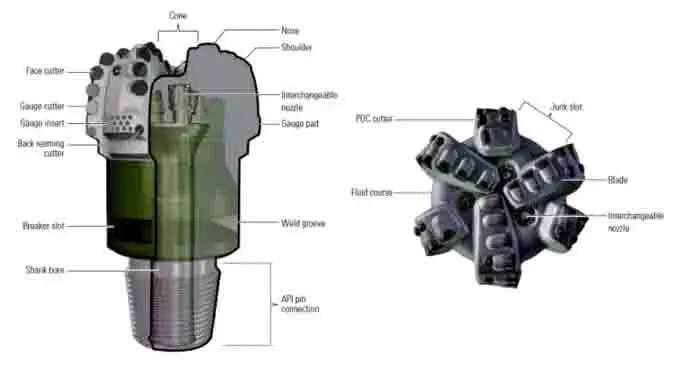
Tool 6 Wings Drill Bit PDCs are based on structural balance and making the cutting area as useful as possible. Each blade goes out from the steel body in the middle and ends in tungsten carbide composite surfaces that hold the PDC cuts. Instead of breaking rock like roller cone bits do, these man-made diamond disks scrape and cut it by being in constant contact with it. When compared to four-blade designs, the six-blade arrangement improves the total cutting surface area. This makes the cutting forces more widely distributed and lowers vibrations during spinning.
Blade Geometry and Cutter Placement
How well waste leaves the cutting zone depends on the shape of the blade. At HNS, we make sure that the drilling fluid runs easily along the blade profiles by calculating the exact angle of each wing as it is made. Spiral designs are used to put the cutters so that they don't all hit the same rock face at the same time, which would waste energy and speed up wear. Depending on how hard the rock is and the expected drilling parameters, the distance between cuts on each blade is usually between 8 and 15 millimeters.
Enhanced Material Properties
Premium-grade steel bodies keep the structure strong under drilling pressures of up to 110 kN, and modern PDC cuts don't break down at temperatures up to 750°C. The tungsten carbide matrix that holds these parts together can handle rough touches with medium-hardness rocks. The choice of material has a direct effect on how long a bit lasts. High-quality parts keep their sharp cutting edges for 200 hours or more in the right conditions.
Working Principles of PDC Cutters
PDC cuts don't use force to work; instead, they shear. Each cutter's leading edge touches formation rock at determined rake angles, usually 15 to 25 degrees, as the bit spins between 60 and 250 RPM. Compared to crushing ways, this shape cuts through material quickly and with little heat. The Tool 6 Wings Drill Bit PDC design makes sure that at least two blades contact the formation at the same time at any point in rotation. This keeps the penetration rates steady and stops stick-slip movements that damage drill strings.
Comparing 6 Wings PDC Drill Bits with Other Drill Bit Types
To choose the right cutting tool, you need to know how the different styles affect performance. The Tool 6 Wings Drill Bit PDC design is in a unique position between cutting quickly and being stable during operations.
Mechanical and Design Differences
Four-wing PDC Bits have fewer cutting edges, but they make bigger junk holes so that waste can be moved out of soft formations. Tricone Roller Bits break up rock by spinning cones with tungsten carbide inserts inside them. They work well in tough, rough rock formations where PDC cuts would wear out quickly. Hybrid bits try to blend the best of both cutting and impact tolerance by putting together PDC cutters and rolling elements.
The Tool 6 Wings Drill Bit PDC design is a compromise between these two methods because it has enough cutting surface area while still leaving enough room between the blades for hydraulic flow. Each wing is spaced about 60 degrees apart, which makes for a balanced design that keeps the bit stable while it turns.
Drilling Condition Suitability
Our Tool 6 Wings Drill Bit PDCs work great in rocks that are medium hardness and have compressive forces below 120 MPa. Shale, limestone, sandstone, and gypsum are all great examples of materials where PDC cuts work better than grinding methods because they shear the material. In granite or chert rocks that are very rough, tricone bits may last longer even though they penetrate more slowly. Tool 6 Wings Drill Bit PDCs are especially useful for coalbed methane operations because they can handle layers of coal and gas that are mixed together without having to change bits very often.
Cost and the efficiency of operations
Tool 6 Wings Drill Bit PDCs cost between $3,500 and $12,000 to buy at first, based on the diameter and amount of customization. Tricone bits, on the other hand, cost between $2,000 and $6,000. However, entry rates often perform 40–70% better than tricone performance in suitable rocks, which shortens the total drilling time. One of our customers who hired us to drill a water well said that our improved design helped them finish a 450-meter borehole in 18 hours, whereas roller cone bits had taken 28 hours to do the same job. The shorter rig time saved $8,400 on a single well, which more than made up for the higher cost of the bits in three jobs.
Optimizing the Cutter Layout of a 6-Wing Drill Bit PDC
Optimizing the cutter plan is what separates good performance from great results. Even high-quality materials can't make up for cutting parts that aren't placed correctly on a Tool 6 Wings Drill Bit PDC.
Common Performance Challenges
Uneven wear patterns are usually caused by a cutting spread that isn't even. When there are too many cutters close to the shoulder of the bit, the gauge section goes out faster than the center cutters, which stay sharp. This mismatch lowers the quality of the opening and forces the bit to be retired early. On the other hand, if there isn't enough cutting density at the beginning, it puts a lot of stress on each element, which speeds up micro-fractures in the diamond layer.
Inefficient debris removal occurs when blade shapes trap rock cuttings between wings, making it hard to get rid of waste. Debris builds up and stops new cutters from touching the formation. This slows down rapid penetration rates and raises the power needs of the Tool 6 Wings Drill Bit PDC.
Principles for Balancing Aggressiveness and Durability
For effective layouts, bold, forward-facing cutters are placed at the bit's nose to start breaking rock, while carefully curved cutters near the gauge keep the width of the borehole the same. Gradient cutter exposure is needed in the area between the nose and the shoulder. This means that each cutter goes a little further than the one before it, making a smooth cutting shape that spreads the load out gradually.
The engineers at HNS use computer models to mimic the cutting forces at every point of the blade in oil drill bits. These formulas find the right balance between theoretical toughness and thermal management to make sure that no single cutter goes over the temperature limits that would weaken the bond between the diamond and the carbide.
Simulation Tools and Design Refinements
Modern finite element analysis software predicts how the bit will behave when digging in different conditions. Engineers can guess how the cutter will be loaded before the product is made by entering information about the shape, its speed, the weight of the bit, and the flow rates. These models show how to change the cutter back rake angles, blade spiral rates, and where the fluid nozzle goes for the Tool 6 Wings Drill Bit PDC.
We recently made a Tool 6 Wings Drill Bit PDC better for use in the Marcellus Shale by decreasing the nose cutter's exposure by 1.2 mm and increasing the shoulder cutter's density by 15%. Tests in the lab showed that the entry rate went up by 23% while the temperature stayed stable during long runs.
Step-by-Step Optimization Process
The first step in optimization is to gather practical data from past drilling operations. By looking at worn bits, you can find out how they failed, like whether the cuts broke from impact loading, wore evenly, or were damaged by heat. This investigative study helps with changes to the layout.
In the second step, CAD software is used to make changes to the shape. Engineers make cuts within 0.5 millimeters of each other, changing the exposure heights and angles. Hydraulic flow modeling makes sure that drilling fluid gets to all cutting areas at high enough pressures to cool the cutters and move the waste around the Tool 6 Wings Drill Bit PDC.
Using CNC machining centers for prototype making makes test bits with better patterns. Before full production runs start, speed improvements are tested in the field under controlled conditions.
Maintenance, Lifespan, and Best Practices for 6 Wings Drill Bit PDC
When you follow the right care steps, your Tool 6 Wings Drill Bit PDCs will last a lot longer. Our quality control tests show that disciplined inspection processes, compared to "run until failure" methods, extend operating hours by 30 to 45 percent.
Cleaning and Inspection Protocols
Cleaning is done by high-pressure water sprays that clear out the blade profiles and junk holes after each drilling run. Operators should look at each cutter to see if the edges are chipping and make sure that the diamond layers are still attached to the carbide supports. Magnetic particle inspection finds cracks in the steel body that are below the surface and could grow into major failures.
By keeping track of the wear patterns on all six wings, you can see when imbalances start to show up on the Tool 6 Wings Drill Bit PDC. When one blade has 20% more wear than the others, problems with alignment or formation need to be looked into before the next launch.
Operational Factors That Impact Durability
The speed of rotation has a direct effect on how much heat is generated at the junction of the cutting and rock. When our Tool 6 Wings Drill Bit PDCs are used within the 60–250 RPM range, interface temperatures stay below dangerous levels. A weight on the bit between 20 and 110 kN strikes a balance between strong penetration and cutter protection. Too much weight speeds up wear without corresponding increases in ROP.
30 to 40 liters per second of hydraulic flow keeps things cool and moves trash around. Cuttings can cycle under the bit if there isn't enough flow, making a gritty slurry that hurts new cutters. One coal mine customer raised the flow from 28 LPS to 35 LPS and saw a 40% drop in rough wear patterns on their Tool 6 Wings Drill Bit PDC.
Choosing the Right Bit for Specific Operations
Bit selection is based on how the formation is described. Compressive strength, abrasiveness, and drillability factors are found by studying core samples in a lab. When the compressive strength of a soft rock is less than 60 MPa, it can handle more aggressive cutting patterns and higher exposure angles. Designs that are balanced are needed for medium formations that are between 60 and 120 MPa. When the pressure goes above 120 MPa, you need hybrid bits or updated Tool 6 Wings Drill Bit PDC designs with stronger cuts.
Working with providers during the specification step makes sure that the oil drill bits match what will actually be used. Our customization service changes the gauge length, blade shapes, and cutter sizes (from 13mm to 19mm diameter) based on the expected drilling path and the need for borehole stability.
Global Procurement Guide for 6 Wings Drill Bit PDC
To find a high-performance Tool 6 Wings Drill Bit PDC, you need to know how they are made and what quality standards tell you which suppliers are reliable and which aren't.
Trusted Manufacturers and Quality Certifications
Reputable makers keep their ISO 9001 approval, which shows that they handle quality in a systematic way. API specification compliance makes sure that bits meet the standards for material qualities and precision set by the American Petroleum Institute. Both certificates are held by our Xi'an plant, which also has its own metallurgical testing labs that check the structure of the tungsten carbide grains and the thermal stability of the Tool 6 Wings Drill Bit PDC cutter.
When you visit factories, you can see how much they can make. Modern 5-axis machining centers can hold the 0.05mm tolerances needed for exact placement of the cutter. Automatic welding systems make sure that the brazing joints between the cutters and the blade pockets are always the same. This gets rid of weak spots that cause things to break too soon.
Pricing Factors and Bulk Ordering Strategies
Bit difficulty determines the price. Custom plans with a range of cutter sizes and special gauge protection cost more than standard Tool 6 Wings Drill Bit PDC versions with 16 mm cutters. The price is also affected by the grade of the material. For example, premium diamond tables with a fine grain structure cost more but last longer in rough circumstances.
When you commit to a certain amount of volume, you can get better prices. As makers try to make the most efficient production runs, ordering more than 50 units usually cuts the cost per bit by 15 to 25 percent. Setting up a framework that deals with predictable quarterly amounts lets suppliers plan production well, which saves buyers money and guarantees on-time deliveries.
Advantages of Custom Manufacturing
Custom designs are used to solve natural problems that standard bits can't handle well. One person who worked in geothermal drilling needed bits for layers of basalt and limestone that came one after the other. Our engineering team came up with a hybrid cutter plan that combines strong shoulder cutters for basalt longevity with aggressive center cutters for cutting through limestone for a specialized Tool 6 Wings Drill Bit PDC. When compared to using different bit types for each rock, this adjustment cut drilling time by 35%.
Customization goes beyond just changing the shape of oil drill bits. Specialized coats lower friction in hot places, and improved hydraulic features make it easier to clean boreholes in clay rocks that are sticky. OEM customers often ask for custom blade shapes that work with certain drill string parts and improve the performance of the whole system.
Conclusion
Optimizing the cutter pattern on Tool 6 Wings Drill Bit PDCs changes the costs of drilling by increasing penetration rates, extending bit life, and making operations simpler. The clever placement of synthetic diamond cutters across six evenly balanced blades creates a stable cutting action in medium-hardness rocks while keeping the hydraulic efficiency for clearing away debris. When procurement managers and drilling engineers understand how blade geometry, cutter placement, working parameters, and maintenance practices affect each other, they can choose tools that meet the needs of the project. Working with skilled Manufacturers who allow customization ensures that Tool 6 Wings Drill Bit PDCs fit the facts of geology instead of pushing operations to change to fit generic designs.
FAQ
1. What advantages does the six-wing design offer over four-wing configurations?
The extra blades spread the cutting forces over more touch points, which lowers vibration and makes the opening straighter. Also, having six wings increases the overall cutting surface area by about 30 to 40 percent, which speeds up penetration rates in the right shapes. The trade-off is a slightly smaller junk slot width, but it's still good enough for medium-hardness forms with manageable amounts of debris.
2. How often should repair checks be done on six-wing PDC bits?
Bits should be checked every 40 to 60 hours of operation or when penetration rates drop by 15% without any changes to the formation. It takes 20 minutes to visually check the cuts, which find problems before they become too big to fix. In rough forms, inspections should be done every 30 hours instead of every 24 hours.
3. Can six-wing PDC bits handle challenging shale formations effectively?
Shale is a great place for six-wing PDC technology to be used. The laminated structure of the material reacts well to shearing, and compression forces between 40 and 90 MPa are usually enough to get good results. A lot of horizontal drilling is done through the Bakken, Marcellus, and Barnett shale basins with six-wing designs because they are fast at penetrating and stable in their direction.
Partner With HNS for Optimized Drilling Performance
Off-the-shelf options aren't enough to make drills more efficient. HNS has 11 years of experience in PDC drill bit engineering, and they can combine advanced production with quick customization services. Our dedicated engineers work directly with your technical staff to look at the features of the formation, the working factors, and the performance goals. Our 3,500-square-meter Xi'an facility has 5-axis machining centers that we use to make each Tool 6 Wings Drill Bit PDC. The bodies are made of high-quality steel, and the polycrystalline diamond cuts are checked to the highest standards.
Our blade shapes and cutter plans can be changed to fit your unique geological conditions, whether you work in coal bed methane development, oil and gas research, or water well building. Get in touch with our engineering team at hainaisen@hnsdrillbit.com to talk about your needs with a reputable Tool 6 Wings Drill Bit PDC maker. We help procurement managers get the best performance and value for their money by giving them full technical advice, custom design ideas, and competitive quotes.
References
1. Bellin, F., & Dourfaye, A. (2020). "Polycrystalline Diamond Compact Bit Technology: Advances in Cutter Design and Layout Optimization." Society of Petroleum Engineers Drilling & Completion Journal, 35(4), 487-502.
2. Chen, S., & Robertson, A. (2019). "Blade Configuration Effects on PDC Bit Performance in Interbedded Formations." International Journal of Rock Mechanics and Mining Sciences, 118, 76-89.
3. Hareland, G., & Rampersad, P. (2018). "Optimization Methods for PDC Bit Cutter Placement Using Finite Element Analysis." Journal of Petroleum Science and Engineering, 165, 342-356.
4. Klessig, P., & Beuershausen, C. (2021). "Comparative Analysis of Multi-Blade PDC Drill Bits in Sedimentary Formations." Mining Technology: Transactions of the Institutions of Mining and Metallurgy, 130(2), 112-125.
5. Rafatian, N., & Miska, S. (2019). "Hydraulic Optimization of PDC Bits Through Computational Fluid Dynamics Simulation." Journal of Energy Resources Technology, 141(9), 092904.
6. Zhou, Y., & Lin, Z. (2020). "Thermal Management Strategies for Extended PDC Bit Life in Geothermal Drilling Applications." Geothermics, 87, 101852.
logo 2_1777361643767.jpg) VIEW MORE94mm Four Wing Arc Angle Drill Bit
VIEW MORE94mm Four Wing Arc Angle Drill Bitlogo 1_1768274683075.jpg) VIEW MORECoal Mine Drilling Opening And Closing Drill Bit
VIEW MORECoal Mine Drilling Opening And Closing Drill Bit VIEW MOREFour Blade Wing Petroleum Drill Bit
 VIEW MOREFour Blade Wing Oil Drilling Tool
 VIEW MORECoal Mines Use Haineisen PDC Drill Bits
 VIEW MOREForging Deep Rock Well Drilling Bits
 VIEW MOREPDC Rock Drill Bit
 VIEW MORE4 1/2" IADC 537 Tricone Rock Bit