




Steel Body vs. Matrix Body PDC Drill Bits: How to Choose for Your Formation?
Contact Hainaisen
Email: hainaisen@hnsdrillbit.com
Tel: +86 17791389758
Choosing between a steel-body and a matrix-body PDC drill bit depends primarily on formation abrasiveness, impact loading, drilling conditions, and the expected service life of the bit. For soft shale, claystone, and formations where efficient cuttings removal is essential, steel-body designs are often a practical choice. In hard, abrasive sandstone and formations with high fluid erosion potential, matrix-body designs generally offer better protection against body wear. For applications requiring a more aggressive cutting structure, a properly engineered 3 blades pdc drill bit may also be considered, depending on formation characteristics and hydraulic requirements.
Although both designs use polycrystalline diamond compact cutters to shear rock, their body materials have different mechanical properties. Steel provides toughness and design flexibility, while tungsten carbide-based matrix material offers superior resistance to abrasion and erosion. Selecting the wrong body construction can lead to premature bit wear, reduced penetration rates, excessive vibration, or unexpected drilling interruptions.
The right decision should therefore consider the complete drilling environment rather than simply comparing the material cost or hardness of the bit body. Formation strength, cutter configuration, blade geometry, hydraulic performance, and operating parameters all influence the final result.
1. Understanding the Differences Between Steel Body and Matrix Body PDC Drill Bits
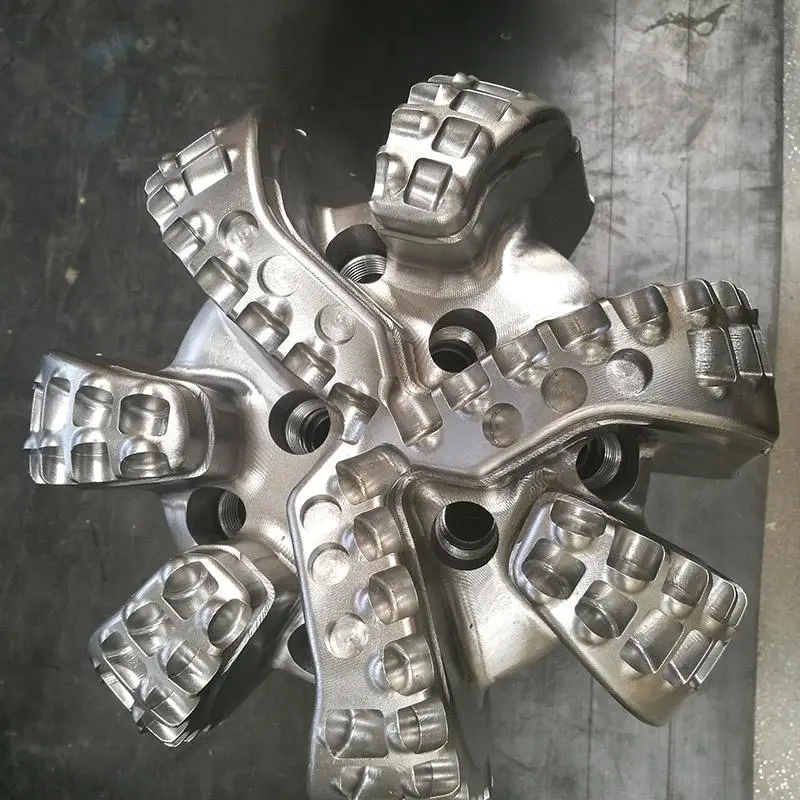
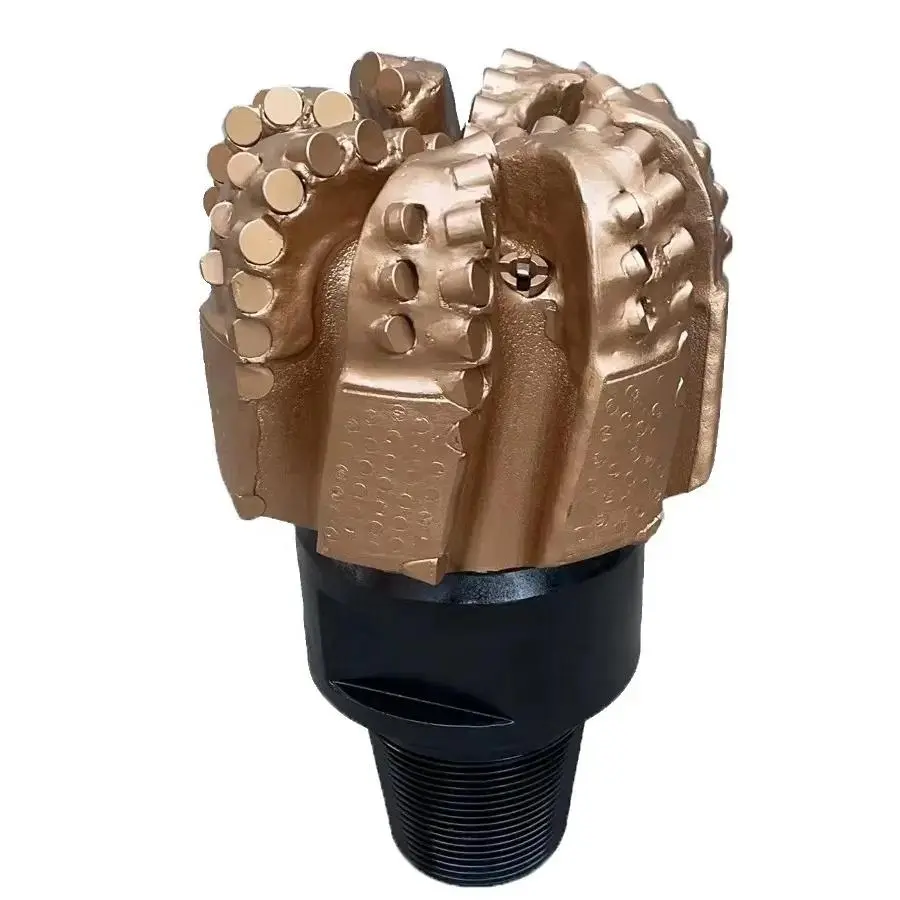
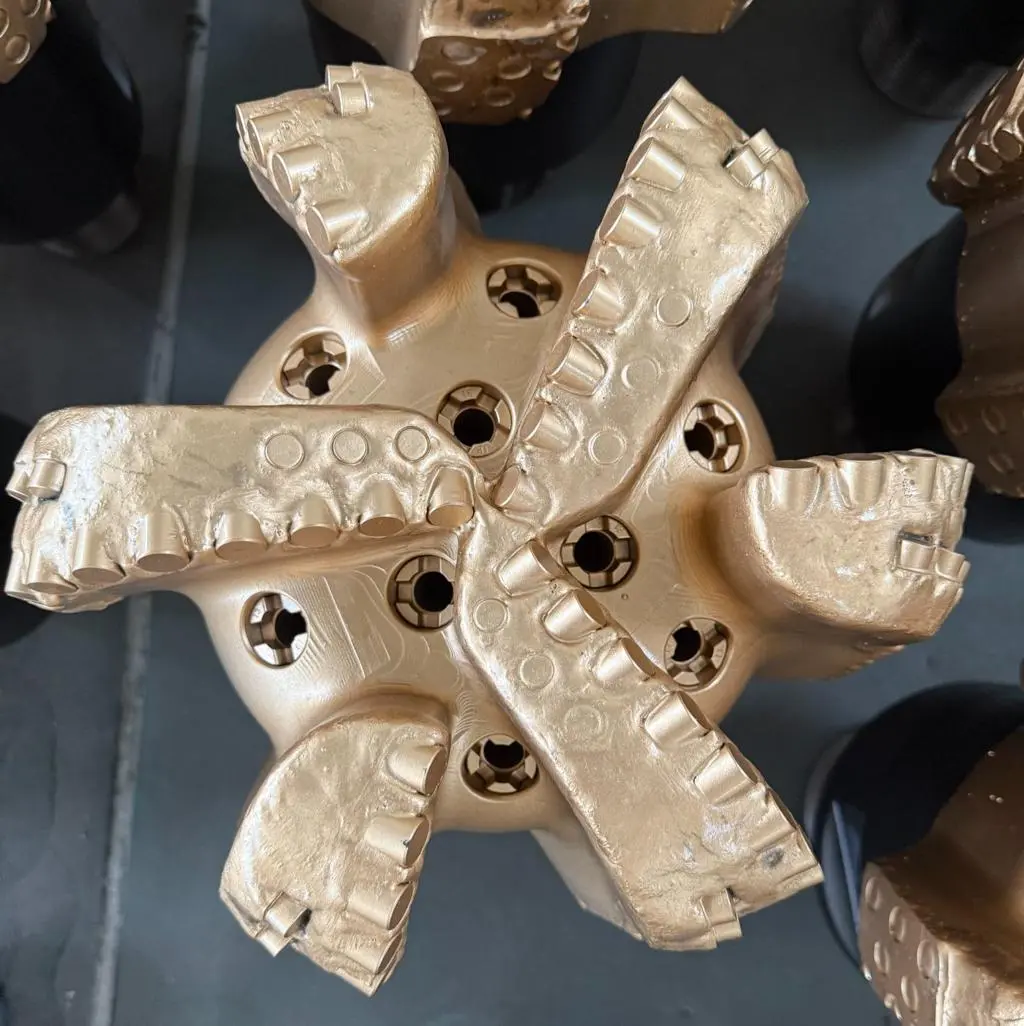
Steel-body PDC bits: Toughness and design flexibility
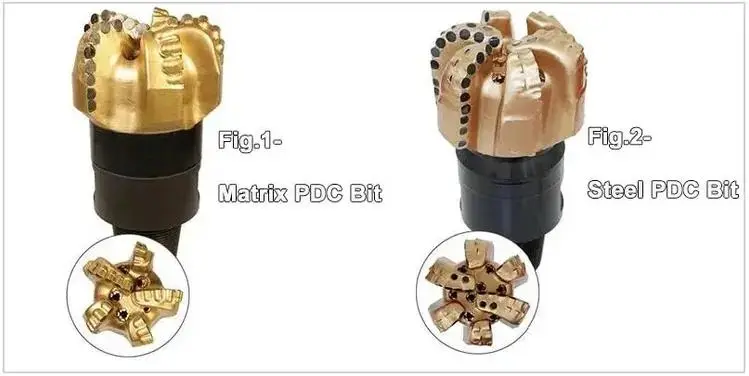
Steel-body PDC Bits are Manufactured from high-strength alloy steel, typically through precision machining processes. Their main advantage is their ability to withstand mechanical impact and dynamic loading.
Steel is more ductile than tungsten carbide-based matrix material. This allows manufacturers to develop taller and thinner blades while maintaining structural strength.
The additional design flexibility provides several practical advantages:
- Higher impact resistance: Better suited to formations with changing rock hardness and moderate impact loading.
- Larger junk slots: More space can be provided for drilling fluid circulation and cuttings evacuation.
- Flexible blade geometry: Taller blades and different cutter exposure configurations can be accommodated.
- Repairability: Certain steel-body designs can be refurbished, depending on the extent of body and blade damage.
- Cost flexibility: Steel-body options can be economically attractive in applications where body erosion is manageable.
These characteristics make steel-body designs particularly useful in shale, claystone, soft-to-medium sandstone, and some directional drilling applications.
However, steel has a significant limitation: its resistance to abrasive wear and high-velocity fluid erosion is lower than that of tungsten carbide matrix material.
When drilling formations containing substantial quartz or circulating drilling fluid at high velocities, exposed steel surfaces may gradually erode. If erosion affects the blade structure or cutter support areas, the bit can lose its original cutting geometry.
Matrix-body PDC bits: Abrasion and erosion resistance
Matrix-body PDC bits are generally manufactured using tungsten carbide powder and a metallic binder through an infiltration or related powder-metallurgy process.
The resulting composite body provides excellent resistance to abrasion and erosion. This is particularly valuable when drilling through abrasive formations or operating with drilling fluids containing significant solid particles.
Their main advantages include:
- Excellent body wear resistance: Better protection against abrasive formation contact.
- Improved erosion resistance: Suitable for demanding hydraulic conditions and extended circulation.
- Gauge protection: Helps maintain the bit's external dimensions in abrasive formations.
- Long-run potential: Can reduce body wear when drilling through long abrasive intervals.
Matrix-body bits are commonly considered for hard sandstone, abrasive formations, and certain horizontal drilling applications where side loading creates additional gauge wear.
Nevertheless, matrix material is more brittle than steel. It generally has lower tolerance for severe impact and sudden mechanical shock.
In formations containing hard stringers, fractured rock, or abrupt changes in compressive strength, excessive vibration can increase the risk of blade damage.
Comparison of the two body constructions
Selection factor | Steel body | Matrix body |
|---|---|---|
Body material | Alloy steel | Tungsten carbide composite |
Impact resistance | Generally higher | Generally lower |
Abrasion resistance | Lower | Higher |
Erosion resistance | Lower | Higher |
Blade geometry | More flexible | More conservative |
Junk slot potential | Generally larger | Often smaller |
Repairability | Generally easier | More limited |
Typical applications | Shale, softer formations | Abrasive sandstone, hard formations |
SLB's technical explanation of PDC bit construction identifies the same fundamental trade-off: steel allows taller blades and larger junk slots, while matrix material offers greater wear resistance but requires more conservative blade geometry.
Why formation characteristics matter more than rock hardness alone
A common mistake in bit selection is assuming that harder formations automatically require matrix-body bits.
In practice, formation hardness and abrasiveness are two different engineering considerations.
For example:
- A medium-hard sandstone with high quartz content may cause substantial abrasive wear.
- A hard limestone containing occasional hard stringers may generate significant impact loading.
- Soft, sticky shale may cause bit balling and restrict cuttings removal.
- Interbedded sandstone and shale may expose the bit to changing cutting loads and vibration.
Consequently, the selection process should evaluate both the mechanical properties of the formation and the expected downhole operating environment.
2. How to Select the Right Bit Design and Optimize Drilling Performance
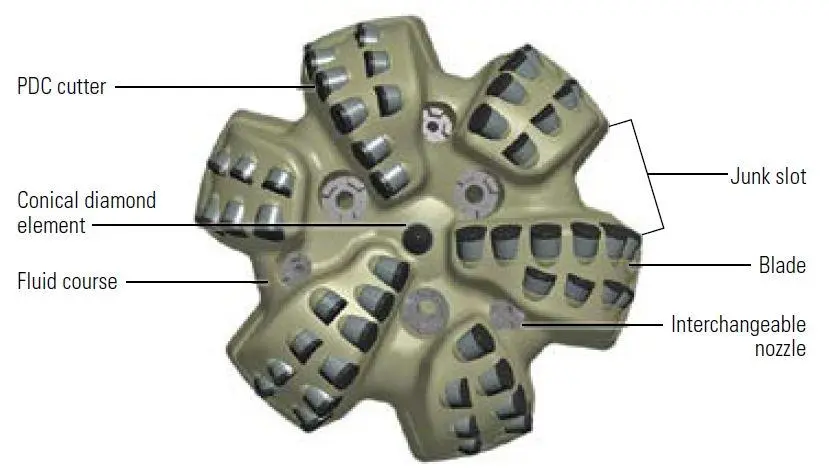
Selecting the body material is only the starting point. A successful PDC bit must combine suitable cutters, blade configuration, hydraulic design, and operating parameters.
Cutter size, type, and layout
PDC cutters directly contact the formation and perform the shearing action. Their size, diamond table characteristics, chamfer design, and placement influence penetration efficiency and durability.
Larger cutters generally provide a more aggressive cutting structure and can support higher ROP in suitable formations. However, they may experience greater impact loads when encountering hard inclusions or irregular rock surfaces.
Smaller cutters or higher cutter density can distribute the cutting load across more contact points, which may improve durability in demanding formations. The actual result depends on cutter exposure, back rake, and the load distribution across the bit face.
For hard and abrasive formations, engineers should pay particular attention to:
- Diamond table wear resistance.
- Cutter impact resistance.
- Cutter exposure and back rake.
- Cutter placement across the nose and shoulder.
- Reinforcement of gauge and outer cutting areas.
The cutter layout should be designed around the expected formation rather than maximizing the number of cutters.
Blade configuration and hydraulic performance
Blade count directly affects the available space for drilling fluid circulation and cuttings removal.
A lower blade count can provide larger flow channels and more open space around the cutting structure. This can be advantageous in applications requiring high ROP and efficient removal of large volumes of cuttings.
For example, a 3 blades pdc drill bit may be suitable for selected formations where aggressive cutting action and sufficient hydraulic cleaning are important. However, fewer blades also mean that cutter loads and blade strength must be carefully evaluated.
A higher blade count generally provides more space for distributing cutters across the bit face, potentially improving load distribution and stability in certain formations. The trade-off is reduced junk slot space if the hydraulic design is not optimized.
The following factors should be considered:
- Nozzle number and placement.
- Total flow area (TFA).
- Hydraulic impact on the cutting structure.
- Junk slot dimensions.
- Bottom-hole cleaning efficiency.
- Cutter cooling and temperature control.
Technical discussions published by the Society of Petroleum Engineers emphasize that bit hydraulics must be evaluated alongside the requirements of downhole motors and other BHA equipment. Sufficient hydraulic energy must remain available for bottom-hole cleaning.
Matching drilling parameters to formation conditions
Even a well-designed bit can experience premature wear if drilling parameters are inappropriate.
Weight on Bit (WOB): Excessive WOB can increase cutter loading, especially when drilling hard stringers. Gradual adjustments help prevent sudden overloads.
Rotations Per Minute (RPM): Higher RPM can improve penetration in suitable formations, but excessive rotational speed may increase frictional heat and accelerate cutter wear.
Flow Rate: Adequate flow is necessary to cool cutters and transport cuttings away from the bit face. Insufficient flow can contribute to overheating and poor hole cleaning.
Torque: Sudden torque fluctuations may indicate changing formation conditions, bit balling, excessive cutter engagement, or downhole instability.
Rate of Penetration (ROP): ROP should be evaluated together with torque, vibration, pressure, and cuttings characteristics. A sudden decrease may indicate cutter damage, formation changes, or inadequate cleaning.
For directional and horizontal drilling, additional attention should be given to gauge protection and lateral loading. A matrix-body design may be preferable in abrasive sandstone sections where gauge wear becomes a limiting factor. A steel-body design may be more appropriate when impact resistance and hydraulic flexibility are higher priorities.
An illustrative drilling scenario: Abrasive sandstone and shale transitions
Consider a drilling contractor operating in the Middle East, where a well section passes through alternating sandstone and shale formations.
The original drilling challenge involves two different problems. In sandstone intervals, abrasive particles gradually wear the exposed bit-body surfaces and cutting structure. When the bit enters shale, sticky cuttings begin accumulating around the blades, reducing cleaning efficiency.
Simply replacing the original bit with a harder matrix-body design may improve erosion resistance in sandstone, but it does not automatically solve the shale cleaning problem.
A more appropriate engineering approach would involve:
- Reviewing formation logs and previous bit records to identify the abrasive intervals and shale transitions.
- Evaluating whether a matrix-body design is justified for the longer abrasive sections.
- Considering a steel-body design with suitable blade stand-off and larger junk slots where shale cleaning is the dominant concern.
- Adjusting cutter exposure, blade configuration, and nozzle placement according to the expected drilling conditions.
- Monitoring WOB, RPM, torque, flow rate, and ROP during the run.
The practical lesson is that a single body material is not necessarily the best choice for an entire well section containing different lithologies.
The final selection should reflect the dominant wear mechanism and the operational priorities of each interval. This example illustrates an engineering decision process rather than reporting a verified customer performance result.
3. Hainaisen PDC Drill Bit Solutions for Different Formation Conditions
For drilling contractors, selecting the right PDC bit involves more than comparing steel and matrix materials. The manufacturer must also understand the formation, drilling equipment, hydraulic requirements, and expected operating conditions.
Hainaisen provides PDC drill bit manufacturing and customized design services for oil and gas drilling, mining, and water well drilling applications.
Formation-based bit recommendations
Different drilling environments require different engineering priorities.
Drilling conditions | Recommended design considerations |
|---|---|
Soft shale and claystone | Steel body, larger junk slots, anti-balling considerations |
Medium-hard sandstone | Appropriate cutter density and balanced blade geometry |
Hard abrasive sandstone | Matrix body, wear-resistant cutters, reinforced gauge |
Interbedded formations | Impact-resistant cutters and balanced cutting structure |
Horizontal abrasive sections | Gauge protection and erosion-resistant body construction |
High-ROP applications | Suitable blade count, open hydraulics, effective cuttings removal |
For example, a 3 blades pdc drill bit can be considered for applications requiring a relatively open cutting structure and efficient cuttings evacuation. Its suitability still depends on formation strength, cutter loading, bit diameter, and hydraulic capacity.
Hainaisen can evaluate these conditions before recommending a suitable bit configuration rather than applying the same design to every drilling project.
What makes a reliable PDC bit manufacturer?
When comparing PDC bit suppliers, purchasing managers and drilling engineers should pay attention to several manufacturing and technical factors.
1. Stable product quality
Consistent dimensions, reliable cutter positioning, and proper brazing quality are essential for maintaining bit performance. Strict quality control helps reduce manufacturing-related variations.
2. PDC cutter technology
Cutter grade, diamond table characteristics, thermal stability, and impact resistance should match the target formation. Appropriate cutter selection can help improve wear resistance and reduce premature damage.
3. Customized bit design
Blade count, cutter size, cutter layout, body material, nozzle configuration, and gauge protection can be adjusted according to project requirements.
4. Formation-based technical recommendations
A professional manufacturer should evaluate geological information and drilling records before recommending a product. This is particularly important for complex formations and directional drilling projects.
5. Professional communication and export experience
Clear technical communication, specification confirmation, and responsive order coordination help international customers manage procurement more efficiently.
Why consider Hainaisen?
Hainaisen focuses on manufacturing PDC drill bits for different drilling applications, with attention to product consistency, cutting structure design, and practical operating requirements.
Its advantages include:
- Strict manufacturing and quality inspection procedures to support consistent product quality.
- PDC cutter selection and application-oriented design for different formation conditions.
- Customized blade and cutter configurations according to customer requirements.
- Steel-body and matrix-body design considerations for different wear and impact environments.
- Technical assistance with product selection and drilling application requirements.
- Responsive communication and export services for overseas drilling contractors and distributors.
Rather than recommending a particular body material simply because it is more expensive or has higher wear resistance, Hainaisen considers the actual drilling conditions when discussing suitable products.
If you are planning a drilling project in abrasive sandstone, shale, limestone, or interbedded formations, providing your formation information, bit diameter, drilling depth, and operating parameters can help establish a more appropriate specification.
Contact Hainaisen for customized PDC drill bit recommendations and technical support. The engineering requirements of your project can be reviewed before confirming the final product configuration.
FAQ
1. Which is better, a steel-body or matrix-body PDC drill bit?
Neither is universally better. Steel-body bits offer higher impact resistance and greater design flexibility, while matrix-body bits provide better resistance to abrasion and erosion. The appropriate choice depends on formation characteristics and drilling conditions.
2. Are matrix-body PDC bits suitable for hard rock drilling?
Yes, matrix-body designs are often suitable for hard and abrasive formations, particularly where body erosion and gauge wear are concerns. However, severe impact and vibration must be considered because matrix material is more brittle than steel.
3. When should I choose a steel-body PDC bit?
Steel-body designs are commonly considered for shale, claystone, soft-to-medium formations, and applications requiring larger junk slots or greater impact resistance. They can also be advantageous in formations where bit balling and cuttings evacuation are important concerns.
4. Does blade count affect PDC drill bit performance?
Yes. Blade count influences cutter distribution, cutting load, junk slot space, and hydraulic performance. Fewer blades can provide more open space for cuttings evacuation, while additional blades can offer more opportunities to distribute cutters and manage cutting loads.
5. What drilling parameters affect PDC bit service life?
The main parameters include WOB, RPM, flow rate, torque, and ROP. Excessive cutter loading, inadequate cooling, poor hole cleaning, and severe vibration can all contribute to premature wear or damage.
6. Can Hainaisen customize PDC drill bits for different formations?
Yes. Hainaisen can discuss customized bit specifications based on formation hardness, abrasiveness, bit diameter, cutter configuration, blade count, hydraulic requirements, and drilling application. Customers can provide their project requirements to receive technical recommendations.
About the Author
Michael Anderson is a drilling technology consultant and technical writer specializing in fixed-cutter drill bit engineering and drilling performance optimization. His professional interests include PDC cutter selection, matrix and steel-body bit construction, formation evaluation, and drilling tool applications in oil and gas, mining, and water well projects. He focuses on translating practical drilling engineering knowledge into clear technical guidance for international drilling professionals.
References
1. SLB – Defining Bits: Fixed-Cutter Bit Construction and Material Selection.
https://www.slb.com/resource-library/oilfield-review/defining-series/defining-bits
2. Society of Petroleum Engineers (SPE), Journal of Petroleum Technology – Drilling Optimization: The Essential Role of Drill Bit Selection.
https://jpt.spe.org/twa/drilling-optimization-essential-role-drill-bit-selection
3. SLB – Material Science Innovation Improves Strength and Erosion Resistance of Steel-Body PDC Bits.
https://www.slb.com/resource-library/interview/bdt/material-science-innovation-improves-strength-and-erosion-resistance-of-steel-body-pdc-bits
4. Society of Petroleum Engineers (SPE), Journal of Petroleum Technology – Improved Matrix Body Design: Five Factors to Achieve Exceptional Bit Performance in Hard, Abrasive Rock.
https://jpt.spe.org/improved-matrix-body-design-five-factors-achieve-exceptional-bit-performance-hard-abrasive-rock
5. International Association of Drilling Contractors (IADC) – Drilling Contractor: Back to Basics, Drill Bit Materials and Construction.
https://iadc.org/dcpi/dc-maraprl05/March05-basics.pdf