




How to Select the Right PDC Bit Blade Count and Cutter Size (13mm vs. 16mm vs. 19mm)
Contact Hainaisen
Email: hainaisen@hnsdrillbit.com
Tel: +86 17791389758
Choosing the right blade count and cutter size is essential when selecting a Petroleum PDC Oil Drill Bit for specific drilling conditions. The best configuration depends on formation hardness, abrasiveness, compressive strength, and the drilling performance required. Generally, 13mm cutters are preferred for applications requiring higher cutter density and improved wear distribution, 16mm cutters provide a balance between aggressiveness and durability, while 19mm cutters are commonly selected for softer formations where higher penetration rates are desired.
However, cutter diameter cannot be evaluated independently. Blade count, cutter arrangement, back rake angle, hydraulic design, and drilling parameters all influence how a PDC bit performs downhole. A five-blade bit with large cutters may work efficiently in soft sandstone but struggle in a hard, abrasive interval. Conversely, a higher-blade-count design with smaller cutters may offer better cutting-load distribution in challenging formations.
This guide examines the differences between 13mm, 16mm, and 19mm cutters, explains how to match blade configurations to geological conditions, and provides practical recommendations for drilling contractors selecting customized PDC Bits.
1. How Formation Conditions Influence PDC Bit Blade Count and Cutter Size
The formation is the starting point for any PDC bit selection. A suitable cutting structure must overcome rock resistance while controlling cutter wear, impact loading, vibration, and heat generation.
Formation Hardness and Abrasiveness
Two geological characteristics deserve particular attention: compressive strength and abrasiveness.
Compressive strength indicates how much stress a rock can withstand before failure. Abrasiveness describes its ability to wear down cutting materials during contact.
These properties influence cutter selection in different ways.
- Soft shale and unconsolidated sandstone: Larger cutters can provide aggressive rock removal and higher ROP.
- Medium-hard limestone and sandstone: A balanced cutter size and blade configuration help maintain penetration efficiency without excessive wear.
- Hard limestone: Smaller cutters and a higher cutter density can provide greater flexibility in distributing cutting loads.
- Abrasive sandstone: Wear-resistant PDC cutters, suitable cutter placement, and effective gauge protection are particularly important.
- Interbedded formations: Alternating hard and soft layers create changing cutting loads, increasing the importance of bit stability and impact resistance.
Hardness and abrasiveness should never be treated as the same property. A moderately hard sandstone containing substantial quartz may cause more severe abrasive wear than a stronger but less abrasive formation.
13mm vs. 16mm vs. 19mm: Understanding the Differences
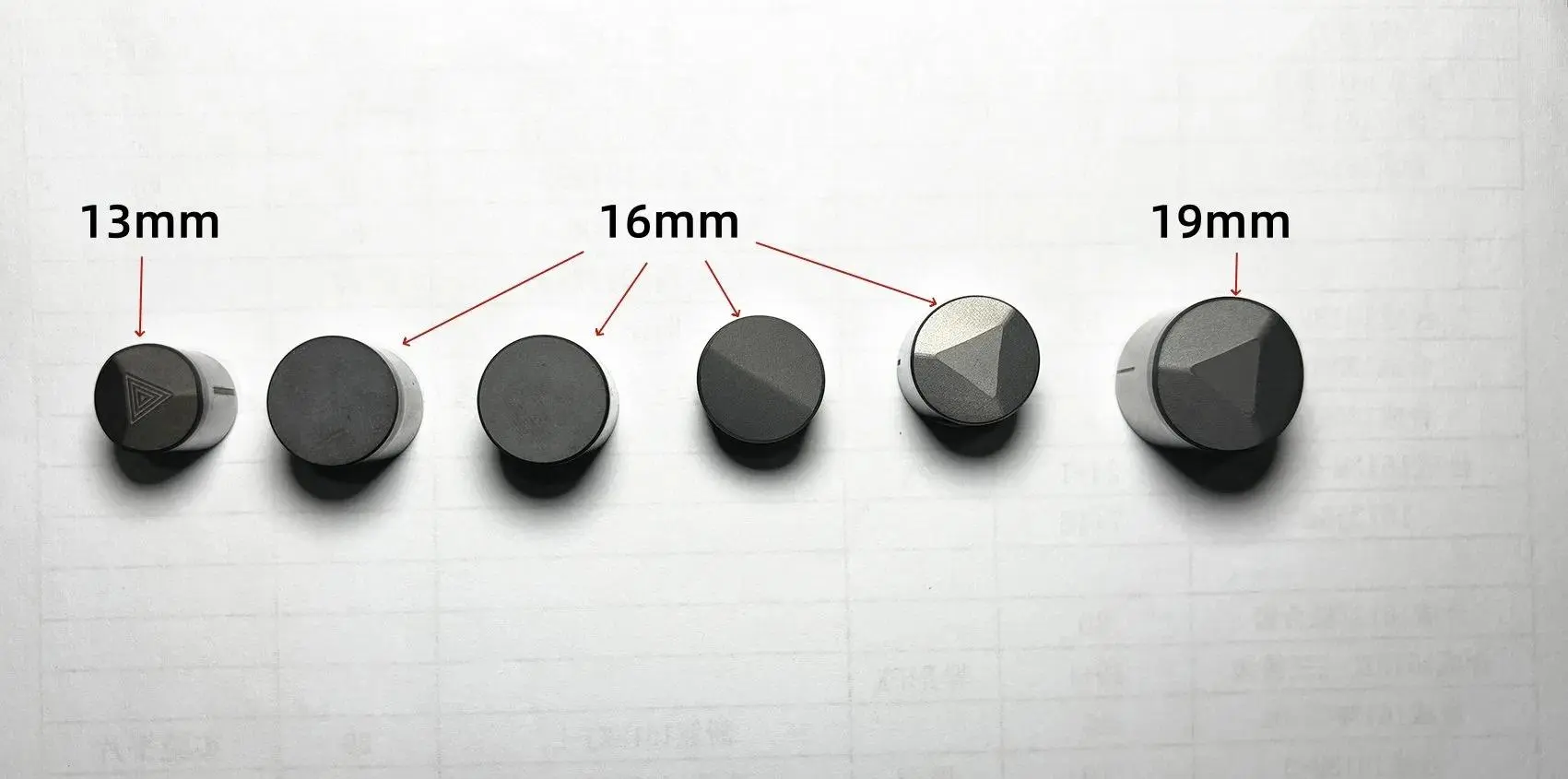
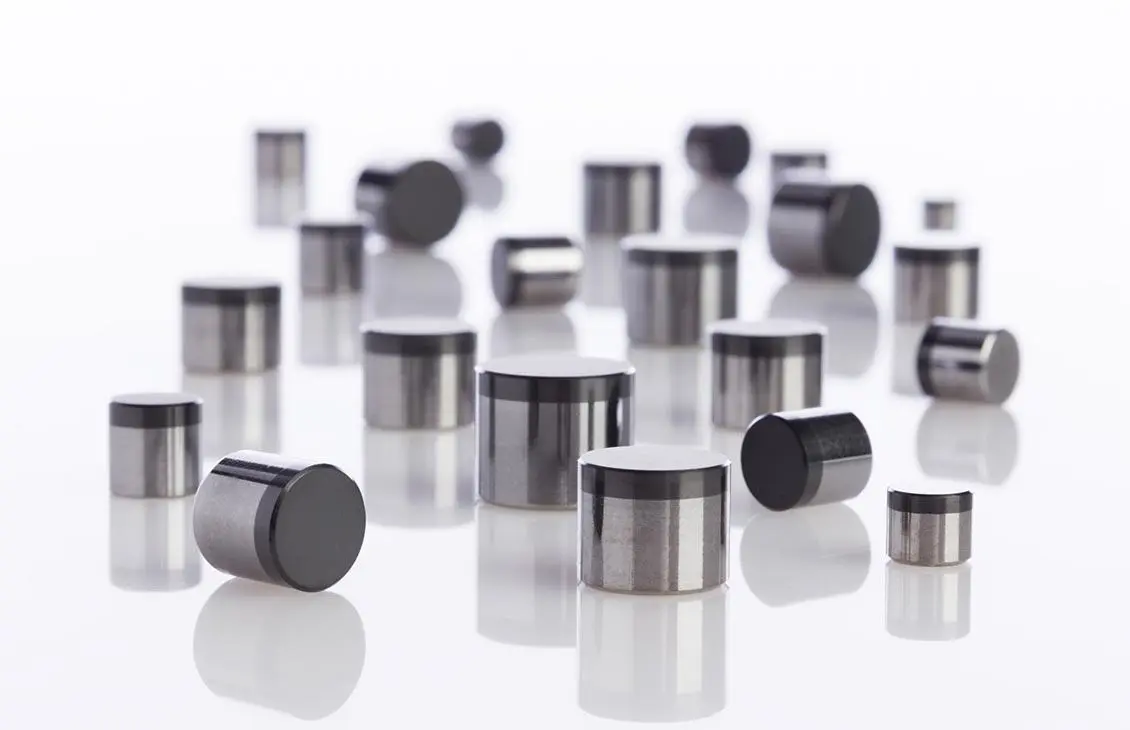
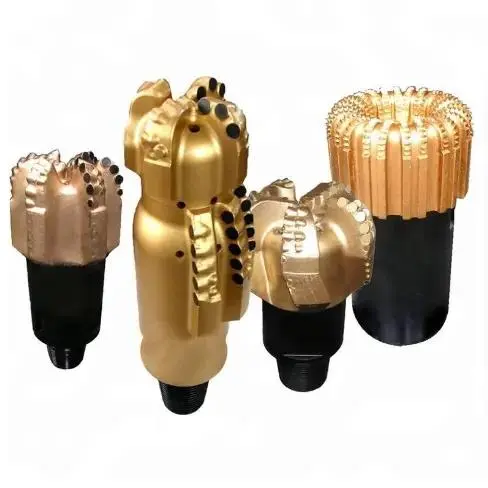
Cutter diameter affects the cutting area, potential aggressiveness, and number of cutters that can be installed on a particular bit profile.
Cutter Size | Main Characteristics | Typical Applications |
|---|---|---|
13mm | Higher cutter density and flexible placement | Hard and abrasive formations |
16mm | Balanced cutting efficiency and durability | Medium-hard and mixed formations |
19mm | Larger cutting area and aggressive rock removal | Soft to medium formations |
13mm cutters: Higher cutter density
Smaller cutters allow engineers to install more cutting elements across the bit face. This provides greater flexibility in cutter placement and helps distribute the cutting workload.
Advantages include:
- More available cutter positions.
- Greater flexibility in designing the cutting structure.
- Potentially better load distribution.
- Suitability for demanding abrasive formations.
The trade-off is that smaller cutters generally provide less aggressive cutting action under comparable conditions.
16mm cutters: A balanced configuration
The 16mm size is widely used in fixed-cutter bit designs because it offers a practical compromise between cutting aggressiveness and cutter density.
It is worth considering for:
- Medium-hard sandstone.
- Limestone formations.
- Mixed geological intervals.
- Directional drilling applications requiring controlled torque and stable performance.
19mm cutters: Higher cutting aggressiveness
Larger cutters offer a greater cutting area and can remove more rock per engagement when sufficient WOB and suitable operating conditions are available.
They are often considered for soft to medium formations where ROP is a priority.
However, larger cutters can experience substantial impact loading in hard formations. Their selection must account for cutter grade, exposure, back rake, and expected drilling dynamics.
How Blade Count Changes Drilling Performance
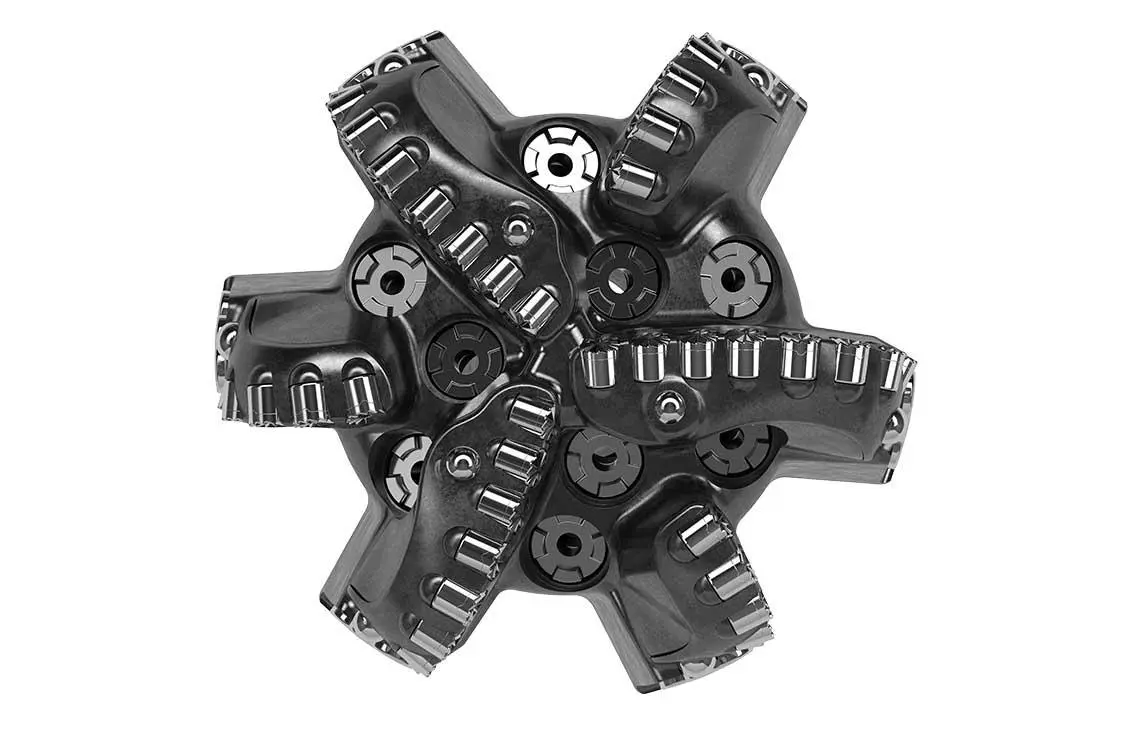
Blade count determines how many individual blades support the cutting structure and how cutters are distributed around the bit.
Lower blade counts, typically four or five blades:
- More open space for fluid circulation.
- Greater flexibility for aggressive cutting structures.
- Potentially larger available cutter positions.
- Less restrictive hydraulic passage geometry.
Higher blade counts, typically six to eight blades:
- More available positions for cutters.
- Greater flexibility in distributing cutting loads.
- More continuous cutting coverage.
- Potentially improved stability when properly engineered.
There is no universal rule that more blades always produce better performance. Increasing blade count can reduce junk-slot space and complicate hole cleaning if the hydraulic design is not adjusted accordingly.
2. How to Match Blade Count, Cutter Size, and Drilling Parameters
After evaluating formation conditions, engineers should select the cutter size and blade configuration together. The objective is to achieve an appropriate balance between ROP, durability, torque response, and hydraulic efficiency.
Recommended Configurations for Different Formations
The following table provides initial engineering guidance rather than fixed specifications.
Formation | Suggested Cutter Size | Suggested Blade Count | Main Design Priority |
|---|---|---|---|
Soft shale | 19mm | 4–5 | High ROP |
Weak sandstone | 16–19mm | 5–6 | Cutting efficiency |
Medium-hard limestone | 16mm | 6–7 | Balanced performance |
Hard limestone | 13–16mm | 7–8 | Durability and stability |
Abrasive sandstone | 13mm | 7–8 | Wear resistance |
Mixed formations | 13–16mm | 6–7 | Adaptability |
These recommendations must be adjusted according to bit diameter, available hydraulic horsepower, formation transitions, and offset well performance.
Cutter Layout, Back Rake, and Gauge Protection
Cutter placement is just as important as cutter diameter.
A PDC bit normally has different cutting zones, including the cone, nose, shoulder, and gauge. Each section encounters different cutting loads and requires an appropriate cutter arrangement.
Important design considerations include:
- Cutter exposure: Excessive exposure increases the risk of impact damage, while insufficient exposure can reduce penetration efficiency.
- Back rake angle: Lower back rake generally produces more aggressive cutting action, while higher back rake improves cutter protection at the expense of aggressiveness.
- Cutter spacing: Appropriate spacing helps control depth of cut and reduces excessive loading on individual cutters.
- Gauge protection: Gauge cutters and wear-resistant elements help maintain hole diameter in abrasive formations.
- Blade geometry: Blade height, profile, and spacing influence cutting support, bit stability, and fluid circulation.
Hydraulic Design and Hole Cleaning
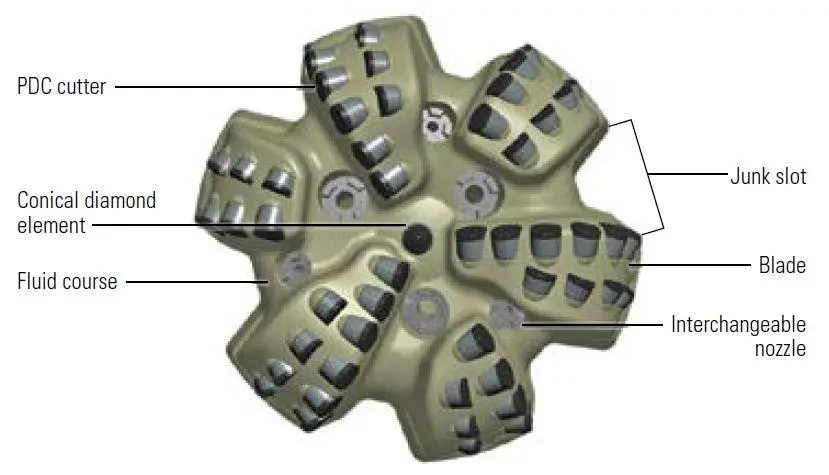
A well-designed cutting structure cannot deliver consistent performance if drilling fluid cannot remove cuttings effectively.
Hydraulic design should provide sufficient flow around the bit face to:
- Cool the cutting elements.
- Remove rock fragments.
- Reduce bit balling.
- Limit recutting of formation debris.
- Maintain effective hole cleaning.
Nozzle size, nozzle orientation, total flow rate, and available pump pressure must be evaluated together.
A high-density cutter arrangement requires adequate hydraulic capacity. Otherwise, increasing the number of blades may create cleaning problems and reduce overall drilling efficiency.
Match WOB, RPM, Torque, and ROP
Drilling parameters have a direct influence on cutter loading and bit life.
Parameter | Engineering Consideration |
|---|---|
WOB | Excessive weight can overload cutters and increase mechanical damage |
RPM | Excessive rotational speed can increase vibration and thermal loading |
Flow Rate | Must support cutter cooling and cuttings removal |
Torque | Sudden fluctuations may indicate stick-slip or changing formation resistance |
ROP | Helps evaluate cutting efficiency and bit condition |
For directional and horizontal wells, bit stability deserves particular attention. Stick-slip and lateral vibration can cause uneven cutter loading, premature wear, and reduced steering response.
Technical literature presented in an SPE paper on PDC bit performance in rotary steerable applications provides a useful example. The study compares designs using 19mm and 16mm cutters and discusses how changing cutter size and arrangement can influence torque, cutter load distribution, and steerability.
The practical implication is clear: the most aggressive cutting structure is not necessarily the most efficient design for a directional well.
Practical Drilling Case: Adjusting a Bit for Mixed Sandstone and Limestone
Consider an illustrative drilling scenario involving a contractor operating in the Middle East.
The well section contains alternating sandstone and limestone. The original bit uses a relatively aggressive cutting structure with large cutters and a limited blade count.
Performance is initially satisfactory in softer sandstone. However, when drilling enters harder limestone layers, the contractor experiences unstable torque, fluctuating ROP, and accelerated shoulder-cutter wear.
After reviewing the formation conditions and drilling records, the engineering team considers the following changes:
- Replace the original large-cutter configuration with a more balanced 16mm cutting structure.
- Evaluate a higher blade count to improve cutter distribution.
- Adjust cutter exposure and back rake in the shoulder and nose sections.
- Review nozzle positioning and flow rate to improve cuttings removal.
- Optimize WOB and RPM to reduce torque fluctuations.
The revised design is intended to improve load distribution and provide more consistent drilling behavior across changing formations.
The actual performance improvement would need to be confirmed through a field trial and comparison with offset well records.
The main lesson is that mixed formations require a balanced cutting structure, not simply the largest cutters or the highest blade count.
3. Selecting a Reliable PDC Bit Manufacturer: Why Consider Hainaisen?
Selecting the right cutting structure is only one part of achieving reliable drilling performance. Manufacturing quality, PDC cutter consistency, brazing quality, bit-body strength, and technical support also influence the final result.
A suitable Petroleum PDC Oil Drill Bit should be designed around actual drilling requirements rather than selected solely according to cutter diameter or blade count.
What Should Buyers Look for in a Manufacturer?
Before placing an order, drilling contractors and international distributors should evaluate several aspects of a Manufacturer's capabilities.
1. PDC Cutter Technology
Cutter performance depends on diamond-table properties, carbide substrate quality, bonding integrity, and cutter geometry.
Different formations require different combinations of wear resistance, impact resistance, and thermal stability.
2. Strict Quality Control
Manufacturing consistency helps reduce variations between production batches.
Important inspection areas include:
- Bit-body dimensions and machining accuracy.
- Cutter positioning and brazing quality.
- Blade geometry and cutting structure consistency.
- Nozzle installation and hydraulic passage inspection.
- Gauge dimensions and wear protection.
- Final product inspection before shipment.
3. Customized Bit Design
A professional manufacturer should consider bit diameter, formation characteristics, blade count, cutter size, cutter arrangement, and hydraulic requirements together.
For example, a contractor drilling abrasive sandstone may need a different cutting structure from an operator drilling soft shale or medium-hard limestone.
4. Technical Support and Export Experience
For overseas buyers, responsive communication and accurate technical documentation are important.
A manufacturer should be able to clarify product specifications, discuss customized requirements, and coordinate production and export arrangements efficiently.
Hainaisen: PDC Bit Solutions for Different Drilling Applications
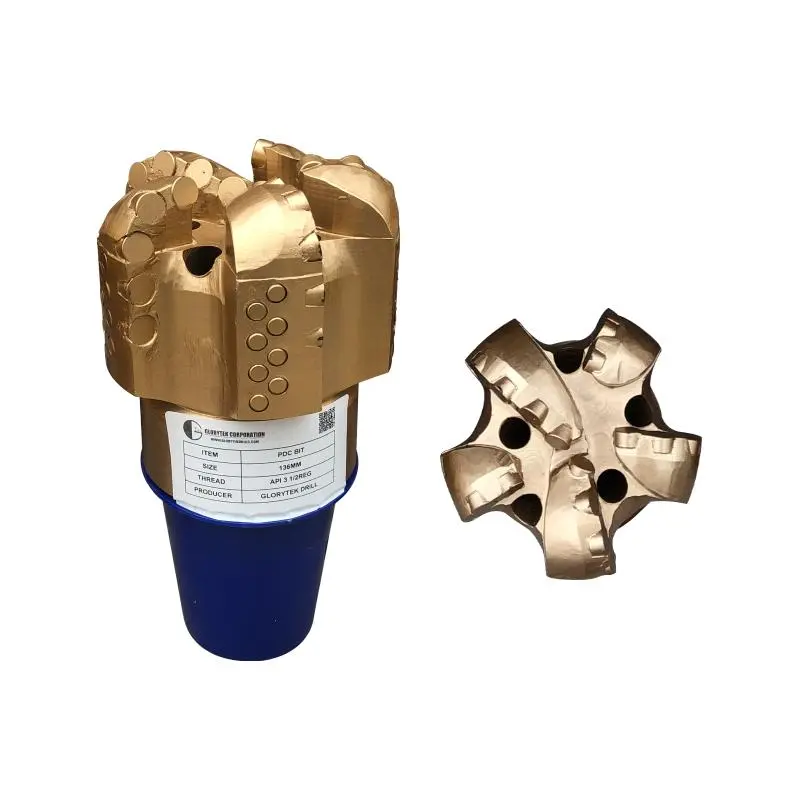
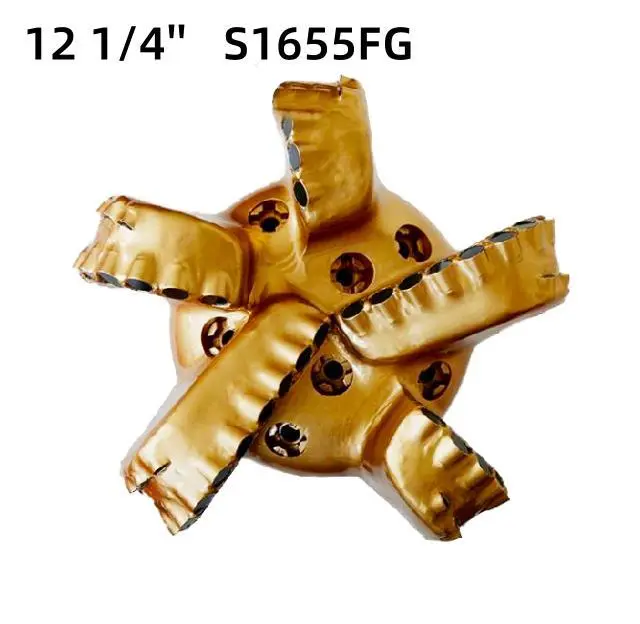
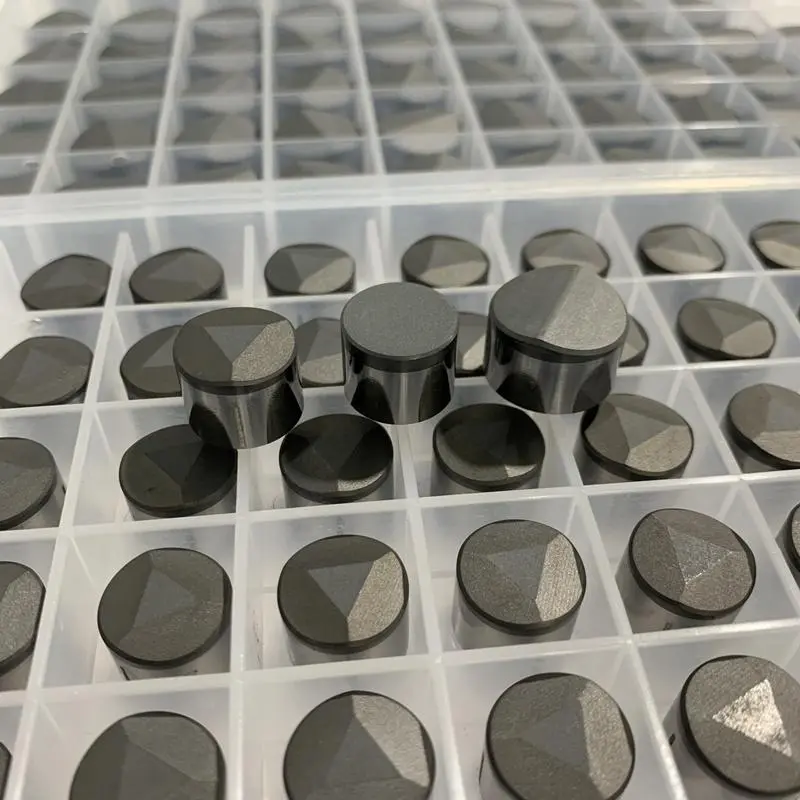
Hainaisen provides PDC drill bit solutions for oil and gas drilling, mining, and other rock-drilling applications. Its product range covers different bit configurations to meet varying geological and operational requirements.
For buyers comparing 13mm, 16mm, and 19mm cutting structures, Hainaisen can discuss customized configurations according to the intended drilling conditions.
Its capabilities and service approach focus on several practical areas:
- Stable product quality: Manufacturing inspection and quality control support consistency in finished products.
- PDC cutter technology: Cutter selection and cutting structure design are considered according to the intended application.
- Customized bit design: Different blade counts, cutter sizes, and bit configurations can be evaluated.
- Formation-based recommendations: Technical discussions consider hardness, abrasiveness, and expected drilling parameters.
- Professional technical support: Buyers can communicate drilling challenges and receive product-selection assistance.
- Export experience: International business experience supports overseas purchasing and project coordination.
- Fast communication: Responsive communication helps clarify specifications and customized requirements.
- Multiple applications: Product solutions cover oil and gas drilling, mining, and other drilling environments.
When requesting a customized bit recommendation, buyers should provide:
- Required bit diameter and connection type.
- Formation description and estimated compressive strength.
- Formation abrasiveness and geological changes.
- Preferred cutter size and blade count, if known.
- Expected WOB, RPM, flow rate, and drilling depth.
- Previous bit performance and recorded failure problems.
This information helps Hainaisen evaluate whether 13mm, 16mm, or 19mm cutters are appropriate for the project.
The right manufacturer should explain why a particular cutting structure is suitable for your formation and how its design supports your drilling objectives.
For drilling contractors, oilfield equipment distributors, and international purchasing teams, Hainaisen offers technical communication and customized product options to support different drilling requirements.
FAQ
1. Which PDC cutter size is best for hard rock drilling?
13mm cutters are often considered for hard and abrasive formations because they allow higher cutter density and flexible placement. However, 16mm cutters may also be suitable depending on formation strength, impact loading, and cutter grade.
2. Are 19mm PDC cutters suitable for oil and gas drilling?
Yes. They are frequently considered for soft to medium formations where aggressive rock removal and high ROP are priorities. Their suitability depends on formation abrasiveness and the mechanical loads expected during drilling.
3. Does a higher blade count improve PDC bit performance?
Not automatically. More blades provide additional cutter positions and may improve cutting-load distribution, but they can reduce hydraulic space. The final design must balance cutting efficiency, stability, and hole cleaning.
4. What is the recommended blade count for directional drilling?
Six- and seven-blade configurations are worth evaluating for directional applications requiring balanced cutting performance. However, the ideal design depends on steering requirements, torque response, formation conditions, and bottom-hole assembly characteristics.
5. How can I extend PDC bit life in abrasive formations?
Consider wear-resistant cutters, appropriate cutter density, suitable back rake, and effective gauge protection. Maintain sufficient drilling fluid circulation and avoid excessive WOB or RPM. Monitoring vibration, torque, and cutter wear can also help prevent premature failure.
6. Can Hainaisen customize PDC drill bits with different cutter sizes?
Yes. Hainaisen can discuss customized configurations based on bit diameter, formation conditions, cutter size, blade count, and drilling requirements. Providing previous drilling records and well information helps support a more accurate recommendation.
About the Author
David Miller is a drilling equipment and application writer specializing in fixed-cutter drill bit technology and drilling performance optimization. His professional interests include PDC cutter geometry, blade configuration, hydraulic design, and formation-specific bit selection for oil and gas operations. He focuses on translating practical drilling engineering knowledge into useful guidance for international contractors, purchasing managers, and drilling equipment distributors.
References
1. Society of Petroleum Engineers (SPE). First 22 VION PDC Successful Run on Rotary Steerable System. SPE-216016-MS. Technical case study comparing PDC bit configurations with 16mm and 19mm cutters, including considerations for torque, stability, and steerability.
https://www.varel.com/wp-content/uploads/2023/10/SPE-216016-MS_First-22-VION-PDC-Successful-Run-On-Rotary-Steerable-System_FINAL.pdf
2. Baker Hughes. Drill Bits Catalog. Technical product documentation covering PDC cutter sizes, bit design classifications, blade configurations, and application-specific features.
https://dam.bakerhughes.com/m/70246e3a57c19fcf/original/Baker-Hughes-Drill-Bits-Catalog.pdf
3. Epiroc (formerly Atlas Copco). Deep Hole Drilling. Technical reference covering PDC bit design, blade count, cutter size, bit stability, gauge protection, and steel-body construction.
https://www.epiroc.com/content/dam/atlas-copco/mining-and-rock-excavation-technique/drilling-solutions/documents/Deep%20Hole%20Drilling.pdf
4. Advances in Mechanical Engineering. Optimal Design of a Global Force-Balanced Polycrystalline Diamond Compact Bit Considering Wear Condition. Research discussing cutter arrangement, force balance, and the relationship between cutter wear and bit stability.
https://journals.sagepub.com/doi/10.1177/1687814019894452