




How to Choose a Seven Blade Wing Oil Drilling Drill Bit
Technical parameters and operational needs must be considered while choosing a Seven Blade Wing Oil Drilling Drill Bit. These sophisticated drilling tools have seven strategically placed cutting edges for stability and faster penetration in difficult rocks. Procurement managers and technical engineers must consider geology, project size, budget, and supplier reliability when selecting a drill bit. The right bit matches formation hardness, optimises drilling speed, reduces wear and downtime, and meets procurement timeframes. This guide covers the key factors to help you make efficient and cost-effective drilling selections.
Introduction
Oil and gas exploration, coal mining, and water well drilling profitability depend on equipment selection. The Seven Blade Wing Oil Drilling Drill Bit is used for reliable operations in various geological situations. This handbook helps procurement managers and drilling engineers choose drill bits that meet operational needs and reduce expenses.
Buying the correct drilling equipment is a strategic investment that affects drilling speed, operational downtime, and long-term maintenance costs. Understanding the seven-blade wing bit's technical specifications and performance characteristics helps you find equipment that meets your project needs, whether you run a medium-sized oil service company with high-quality standards or a water well drilling team that prioritises cost-efficiency. This thorough handbook covers design elements, selection criteria, procurement, and maintenance to aid confident, educated decision-making.
Understanding Seven Blade Wing Oil Drilling Drill Bits
Seven-blade wing drill bits represent a significant advancement in PDC (Polycrystalline Diamond Compact) drilling technology. Unlike traditional three or five-blade configurations, these bits incorporate seven distinct cutting structures arranged to optimise contact with the formation while maintaining superior stability during rotation.
Design Features and Material Composition
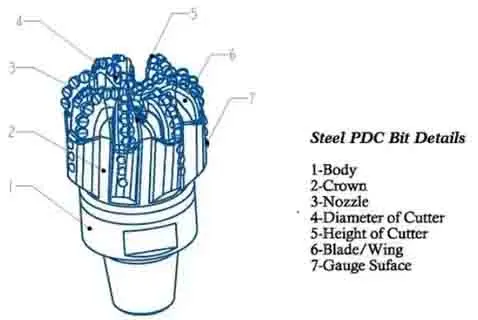
Drill bits are designed to maximise cutting surface area without compromising structural integrity. Each blade has numerous PDC cutters—synthetic diamond particles fused with cobalt at high pressure and temperature. Despite drilling through sandstone, shale, and medium-hard rock strata, their cutters stay sharp.
With 86 13mm PDC cutters on seven blades, HNS's S433 model epitomises precise engineering. High-strength steel alloys make the bit body withstand massive rotating and impact pressures. The 6-inch (152.4mm) diameter is suitable for oil and geothermal drilling. Fluid dynamics are optimised to cool cutters and efficiently remove drilling face cuttings with eight strategically placed nozzles. A 53mm gauge length provides prolonged contact for borehole stability, while the 3-1/2 REG. PIN API connection is compatible with common drilling equipment.
Operational Mechanics and Performance Advantages
Cutting forces are distributed more uniformly with seven blades, decreasing vibration and enhancing drilling stability. This design optimises cutter engagement angles with the formation, improving penetration rates and reducing cutting element wear. More blades mean more diamond volume to protect the bit body in abrasive situations.
Transitional formations with varying rock hardness suit these pieces. The balanced design minimises forceful gouging that might damage bits during rapid formation property changes. Multiple nozzles improve fluid circulation, cooling cutters and preventing bit balling, which reduces efficiency.
Typical Applications Across Industries
Seven-blade wing bits are versatile for drilling. They consistently penetrate difficult formations in oil and gas exploration, reducing bit changes. High-temperature geothermal drilling operations benefit from their heat resistance and endurance. Water well drilling crews like faster penetration in clay and cemented sediments. Mineral exploration requires reliable performance in variable rock types; mining uses these pieces. These bits' precision and stability benefit foundation and tunnelling projects.
Core Selection Criteria for Seven-Blade Wing Drill Bits
Choosing the optimal drill bit demands careful analysis of several interconnected factors that influence both immediate drilling performance and long-term operational costs.
Analysing Project Scale and Drilling Environment
Assess your project's geology before choosing a Seven Blade Wing Oil Drilling Drill Bit. Cutter size, blade count, and material parameters depend on formation hardness, abrasiveness, and thickness. Harder formations need more cautious geometries to avoid cutter damage, but soft to medium forms benefit from aggressive cutter placement.
Project size affects procurement. Even at higher starting costs, durable bits save downtime and bit swaps, saving large oil service firms money over the project lifecycle. Small water well drilling operations may prioritise initial purchase price for reliable performance under smaller budgets.
Evaluating Durability and Penetration Rate
Durability exceeds wear resistance. Quality drill bits don't degrade quickly and maintain cutting efficiency. Select bits with constant cutter exposure—the height each cutter extends from the bit body—to guarantee homogeneous formation contact.
Drilling economics depend on penetration. Rapid drilling cuts rig time, labour, and equipment rental costs. Bit lifespan and penetration rate must be balanced. Extremely aggressive bits drill swiftly but wear out quickly, necessitating more replacements. The seven-blade design balances speed and durability by dividing effort over more cutting parts.
Cost-Performance Analysis and Bit Comparisons
The seven-blade wing bits' worth is clarified by comparing them to other designs. Three-blade bits are simple and cheap to make, but they wear faster and are less stable in abrasive circumstances. Five-blade bits are acceptable for many applications but lack the cutter protection and equal force distribution of seven-blade bits.
While effective, tricone bits shatter formations, making them less efficient than PDC Bits, which shear. In mild to medium-hard formations, PDC bits penetrate faster and last longer than tricone bits, while in extremely hard or interbedded formations, tricone bits are
Purchase price, projected drilling footage per bit, bit replacement downtime, and maintenance should be included in the total cost of ownership calculation. Seven-blade wing bits prove cost-effective in protracted drilling operations where their longevity justifies the higher initial outlay.
Procurement Considerations for Global B2B Clients
Successful procurement extends beyond technical specifications to encompass supplier evaluation, logistics coordination, and commercial negotiation.
Evaluating Manufacturers and Quality Certifications
Successful long-term collaborations depend on supplier stability. Prefer Manufacturers with quality management systems. Suppliers with ISO 9001 certification follow consistent production and quality control practices. Ask about testing—reputable manufacturers evaluate things thoroughly before delivery.
Manufacturing skills matter too. Advanced facilities with 5-axis machining centres and CNC machines make pieces with tighter tolerances and better performance. HNS's 3,500-square-meter Xi'an facility has advanced production equipment and welding lines for precision fabrication. Our research and development team customises bit designs to satisfy operational needs.
Material and production specifications should be requested. A quality-focused company discloses steel alloy composition and PDC cutter supplies. Companies that invest in engineering support understand that drill bit performance depends on production and application.
Managing Bulk Orders and Delivery Logistics
Supply chains must be trustworthy to avoid drilling delays. Discuss lead times and production capabilities when considering bulk orders. Medium and large-sized oil service companies generally sign multi-year framework agreements to secure supply. These agreements stabilise prices and prioritise output.
Carefully monitor delivery conditions. International shipping requires cooperation between parties, and delays can disrupt drilling. Negotiate shipping, insurance, and customs documentation early. Some vendors consolidate delivery for multiple product kinds, streamlining logistics and lowering freight costs.
Inventory management strategies vary by operation size. Large enterprises may keep large stocks on-site for rapid access, whereas smaller operations choose just-in-time supply to reduce cash tied up in stored equipment. To optimise cost and availability, match your ordering patterns to the supplier's minimum order quantities and production timing.
Pricing Structure and Negotiation Strategies
Drilling equipment prices reflect material costs, manufacturing complexity, and market position. Understand pricing components to find negotiation chances. Volume commitments improve unit prices, but they require supplier product quality and delivery reliability.
While ensuring quality, coal mining and water well drilling teams prioritise price competitiveness. Communicate quality standards and financial limits in these circumstances. Many providers offer discounted test units to verify performance before full-scale sales, reducing risk.
Payment terms impact cash flow. Standard terms are 30–60 days; new suppliers may request deposits or letters of credit. Trust leads to better payment terms in established agreements. Warranty protection against manufacturing faults and premature failure adds value.
Maintenance and Troubleshooting Best Practices
Proper maintenance extends drill bit life and maintains optimal drilling performance throughout the operational cycle.
Routine Care and Inspection Protocols
Drill bits are stressed during operation, requiring regular inspection. After each drilling cycle, properly clean bits to remove formation cuttings and drilling mud that hides deterioration. Chipped cutters, worn gauge parts, and structural flaws should be visible. Measure gauge diameter to detect borehole stability and casing clearance wear.
Storage affects the bit state between uses. Keep parts dry and away from corrosives. Use bit breakers or storage racks to protect PDC cutters from impact. Apply thread compound before storage to prevent corrosion that hinders subsequent connections and damages threads during makeup.
Keep detailed drilling logs for each bit. Recording drill footage, formations, and wear patterns optimises bit selection for future operations. The optimal bit designs for certain situations are shown here, influencing procurement decisions and boosting drilling efficiency over time.
Identifying Common Faults and Solutions
Different types of PDC cutter damage indicate operating concerns. Heavy bit weight or drilling through unexpectedly hard rocks can damage cutters on the Seven Blade Wing Oil Drilling Drill Bit. This can be fixed by lowering drilling parameters or choosing bits with stronger cutters. Polished cutters indicate insufficient bit weight or drilling in soft formations, requiring parameter or bit selection modifications.
Bit balling reduces cutting efficiency when sticky forms attach to the bit face. Hydraulic flow, drilling fluid characteristics, and bit designs with larger trash slots solve this problem. Gauge wear lowers borehole quality and causes jammed pipes. Hardfacing or tungsten carbide inlays on gauge sections resist abrasive wear.
Cutter fractures across blades or shattered bit bodies indicate vibration damage. Incorrect rotation speed, unstable formations, or bottom hole assembly unbalance are usually the cause. Fixing the reason prevents bit failures and extends equipment life.
Why Choose Seven Blade Wing Drill Bits for Your Oil Drilling Projects?
The strategic advantages of seven-blade wing drill bits become clear when examining their performance across diverse operational contexts.
Performance Benefits and Operational Cost Reduction
Enhanced drilling stability represents perhaps the most significant advantage. The even force distribution across seven blades reduces lateral vibration that can damage downhole equipment and compromise borehole quality. Smoother operation translates to longer equipment life throughout the drilling assembly, not merely the bit itself.
Faster penetration rates directly impact project economics. Reduced drilling time means lower rig rental costs, decreased fuel consumption, and faster project completion. In competitive markets where operational efficiency determines profitability, these improvements provide tangible competitive advantages. The extended operational life of seven-blade bits reduces the frequency of costly tripping operations—pulling the drill string from the hole to change bits—which can consume hours on deep wells.
Wear resistance in abrasive formations particularly benefits operations in sandstone-heavy geological areas. The increased diamond volume across seven blades protects the bit body more effectively than fewer-blade designs, maintaining cutting efficiency even as cutters experience gradual wear.
Real-World Applications and Industry Adoption
Operators across multiple sectors have documented performance improvements after transitioning to seven-blade wing bits. Oil service companies drilling in variable formations report more consistent penetration rates and reduced non-productive time. Water well drilling teams achieve target depths faster, completing more wells per operating period and improving revenue per deployed rig.
The technology continues evolving as manufacturers refine cutter placement algorithms, optimise hydraulic flow patterns, and develop new materials. Emerging trends include smart bits with embedded sensors that monitor downhole conditions, providing real-time data to optimise drilling parameters. Thermal-stable PDC cutters extend performance in high-temperature geothermal applications. These innovations build upon the fundamental advantages of the seven-blade configuration, promising continued performance improvements.
Adopting these advanced drill bits positions operations at the forefront of drilling technology, ensuring access to efficiency gains that competitors using conventional equipment cannot match. In industries where margins are tight and operational excellence differentiates successful companies from struggling ones, equipment decisions carry strategic importance beyond immediate functional requirements.
Conclusion
Choosing the right Seven Blade Wing Oil Drilling Drill Bit requires balancing technical specifications with operational realities and commercial considerations. These advanced drilling tools deliver measurable advantages in stability, penetration rate, and durability across diverse geological conditions. By carefully evaluating formation characteristics, project scale, supplier credentials, and total cost of ownership, procurement managers and technical engineers can select equipment that optimises drilling performance while managing costs effectively. The seven-blade configuration represents a proven technology backed by continuous innovation, offering reliable solutions for oil and gas exploration, water well drilling, mining operations, and construction projects demanding precision and efficiency.
Frequently Asked Questions
1. Why are seven-blade wing drill bits superior to conventional designs?
Seven-blade wing bits distribute cutting forces more evenly than three or five-blade configurations, reducing vibration and extending bit life. The increased number of blades provides more diamond volume, enhancing wear resistance in abrasive formations. This design maintains cutting efficiency longer, reducing the frequency of bit changes and associated downtime.
2. How do I select the correct bit size for my drilling project?
Bit size depends on your target borehole diameter and casing program. The 6-inch (152.4mm) diameter suits many oil exploration, water well, and mining applications. Match bit size to your drilling assembly specifications and verify compatibility with casing dimensions. Consulting with drilling engineers or contacting suppliers like HNS ensures proper selection for your specific requirements.
3. What delivery times and warranties should I expect?
Lead times vary by manufacturer and order volume. Standard configurations typically ship within two to four weeks, while custom designs require additional production time. Reputable suppliers provide warranties covering manufacturing defects and premature failure under normal operating conditions. Clarify warranty terms, including coverage duration and claim procedures, before finalising purchases.
Partner with HNS for Superior Seven-Blade Wing Oil Drilling Drill Bit Solutions
HNS delivers precision-engineered drilling equipment backed by over a decade of manufacturing expertise. Our Seven Blade Wing Oil Drilling Drill Bit supplier capabilities include custom design services tailored to your specific geological conditions and operational requirements. With ISO 9001-certified quality control processes and advanced manufacturing facilities, we ensure every bit meets rigorous performance standards. Contact our technical team at hainaisen@hnsdrillbit.com to discuss your project needs, request detailed specifications on our S433 model, or obtain competitive quotations for bulk orders.
References
1. Bourgoyne, A.T., Millheim, K.K., Chenevert, M.E., and Young, F.S. (1991). Applied Drilling Engineering. Society of Petroleum Engineers Textbook Series, Volume 2.
2. Bellin, F., Dourfaye, A., King, W., and Thigpen, M. (2010). "The Current State of PDC Bit Technology." World Oil, Volume 231, Issue 9, pp. 41-46.
3. Curry, D.A., Fear, M.J., and Barbely, J.R. (2005). "Drilling Optimisation: Essential Role of Drill Bit Selection." Journal of Petroleum Technology, Society of Petroleum Engineers.
4. Mitchell, R.F. and Miska, S.Z. (2011). Fundamentals of Drilling Engineering. Society of Petroleum Engineers Textbook Series, Volume 12.
5. Pessier, R.C. and Fear, M.J. (1992). "Quantifying Common Drilling Problems with Mechanical Specific Energy and a Bit-Specific Coefficient of Sliding Friction." SPE Annual Technical Conference and Exhibition, Paper SPE-24584-MS.
6. Raymond, D.W., Elsborg, C., and Maire, J.L. (2010). "Performance Evaluation of Seven-Bladed PDC Bits in Abrasive Sandstone Formations." IADC/SPE Drilling Conference and Exhibition, Paper IADC/SPE-128782-MS.
 VIEW MORESteel Body PDC Drill Bit
 VIEW MORE30mm Half Blade Anchor Bit For Mine Coal Fields
 VIEW MORE3 Blade PDC Arc Angle Drill Bit
 VIEW MORESteel Body PDC Bit 4 Blades
 VIEW MOREApi Polycrystalline Diamond Drill Bit
 VIEW MORE113mm 3 Blades Steel Body PDC Bit
 VIEW MOREDrill Bits For Oil Drilling
 VIEW MOREPetroleum PDC Oil Drill Bit