




5-Blade vs. 6-Blade PDC Bits: Which Is Best for Your Drilling Depth?
Contact Hainaisen
Email: hainaisen@hnsdrillbit.com
Tel: +86 17791389758
Choosing between a 5-blade and a 6-blade PDC bit depends on more than drilling depth alone. Formation hardness, abrasiveness, compressive strength, well trajectory, hydraulic capacity, and the required rate of penetration (ROP) all influence which configuration performs better. For operators evaluating an Oil Diamond Drill Bit for deep oil and gas wells, the practical question is whether the bit needs to prioritize cutting efficiency, durability, directional control, or a balance of these factors.
A 5-blade design generally provides more room for larger cutters and open flow channels, supporting efficient rock removal and cuttings evacuation. A 6-blade design distributes cutters across additional blades, potentially improving load distribution, borehole stability, and wear management in demanding formations. Neither configuration is automatically superior at greater depths.
The best bit is the one that delivers stable drilling performance, an acceptable service life, and a competitive cost per foot under actual downhole conditions.

1. How Formation Conditions and Drilling Depth Affect Blade Selection
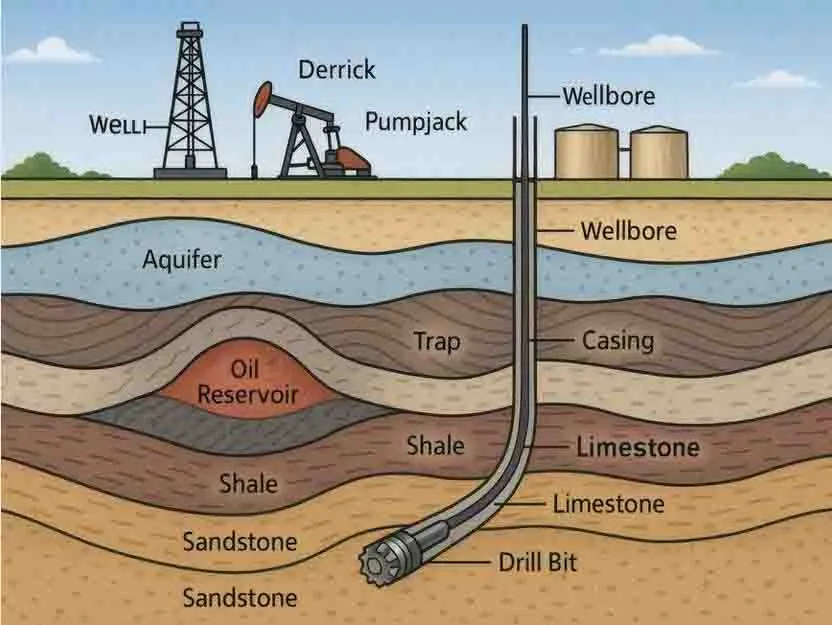
Why deeper wells can demand a different bit design
As a well extends into deeper formations, the drilling environment may become more demanding. Increased temperature, higher confining pressure, changing rock strength, and longer drilling intervals can influence cutter wear and bit stability. However, depth itself does not determine the required blade count.
Formation hardness and abrasiveness should guide blade selection before depth is used as a deciding factor. Compressive strength indicates how strongly a rock resists deformation and failure, while abrasiveness influences how quickly the cutting structure wears. Hard, abrasive formations often require stronger cutter support and a carefully balanced cutting structure. Softer formations may benefit more from aggressive cutting and efficient cuttings removal.
Directional and horizontal drilling introduce additional challenges. The bit must maintain cutting efficiency while responding to changing weight on bit (WOB), rotary speed (RPM), torque, and steering requirements. In long horizontal sections, excessive torque, vibration, or uneven gauge wear can affect drilling consistency and increase the risk of an unplanned trip.
What a 5-blade configuration offers
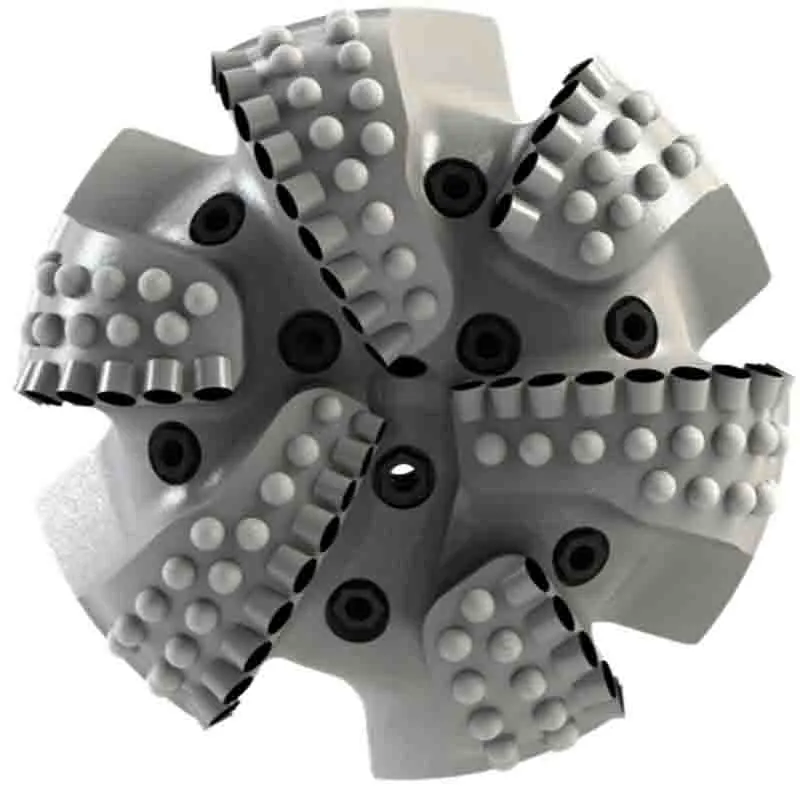
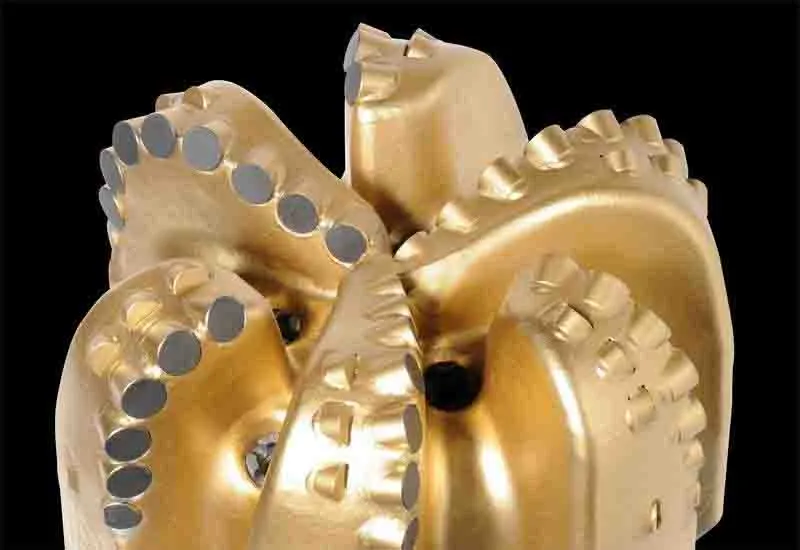
A 5-blade PDC bit typically leaves more space for cutter exposure and fluid-flow passages, depending on its body geometry and cutter layout. This arrangement can be advantageous where rapid rock removal and efficient hole cleaning are priorities.
Potential benefits include:
- Higher cutting efficiency: More available space may allow larger cutters or a more aggressive cutting structure.
- Improved hydraulic flexibility: Larger or better-positioned flow channels can help remove cuttings from beneath the bit.
- Efficient drilling in suitable formations: An appropriately designed bit may achieve a favorable balance between ROP and torque.
- Applications in softer to medium-hard formations: Shale and some sandstone intervals may respond well to an aggressive five-blade design.
The limitations depend on the application. Excessive cutter exposure can increase impact loading or shorten bit life in hard, interbedded rock. A less densely supported cutting structure may also be unsuitable for certain abrasive intervals if the cutter layout and supporting materials are not properly matched to the formation.
When a 6-blade configuration becomes attractive
A 6-blade PDC bit offers additional blade positions for distributing cutters across the bit face. With a suitable layout, this can improve load distribution and provide more options for managing cutter wear.
Potential advantages include:
- Better distribution of cutting loads: Additional blades can help manage individual cutter loading when the design is properly balanced.
- Greater flexibility in wear management: Cutter size, exposure, and placement can be adjusted for abrasive or mixed formations.
- Improved stability: A balanced cutting structure may help control lateral movement and damaging vibration.
- Gauge protection: Appropriately positioned gauge cutters and wear-resistant features help maintain the required borehole diameter.
However, a 6-blade design is not automatically more durable. Additional blades may reduce available flow area or limit the use of larger cutters if the bit geometry is not optimized. In sticky shale, inadequate hydraulic cleaning can cause bit balling regardless of blade count.
Blade count is a design variable, not a direct measure of drilling depth capability or bit quality.
2. How to Select the Right Blade Count, Cutter Layout, and Drilling Parameters
Match the bit to the formation and well profile
Before selecting a five-blade or six-blade configuration, review offset-well records and identify the actual drilling problem. The selection should reflect the formation sequence, well trajectory, drilling objectives, and failure patterns observed in previous runs.
Important factors include:
- Formation type: Soft shale, medium-hard sandstone, limestone, and abrasive interbeds require different cutting structures.
- Cutter specifications: Cutter diameter, diamond-table characteristics, impact resistance, and thermal stability influence cutting performance and wear life.
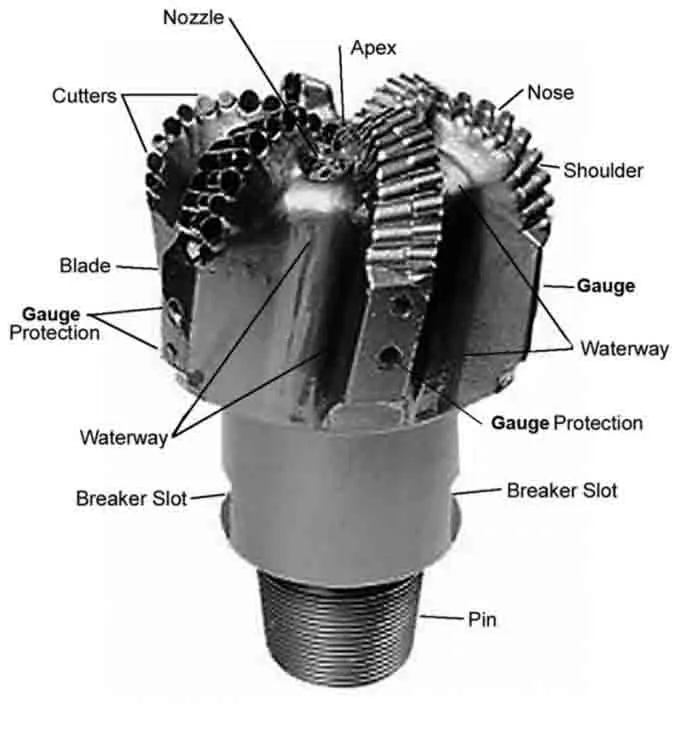
- Blade configuration: Blade count affects cutter positions, cutting engagement, and hydraulic passage geometry.
- Cutter layout: Radial placement, back-rake angle, exposure, and redundancy influence torque, stability, and wear resistance.
- Hydraulic performance: Nozzle arrangement, flow area, pressure drop, and pump capacity affect cooling and hole cleaning.
- Gauge protection: Gauge cutters and wear-resistant features help maintain hole diameter, particularly in directional wells.
- Operating limits: WOB, RPM, flow rate, torque capacity, and downhole temperature must remain within appropriate equipment limits.
For relatively soft, drillable shale where ROP is the main objective, a well-designed 5-blade bit can provide aggressive cutting and good fluid access. In abrasive sandstone or mixed formations where wear and stability are more important, a 6-blade design may be a better starting point for evaluation.
Balance WOB, RPM, torque, and hydraulic capacity
Even a well-matched bit can perform poorly when drilling parameters are not coordinated with its cutting structure.
Weight on bit (WOB) should be increased only when the cutters can convert the additional load into effective rock removal. Excessive WOB can raise torque, increase cutter stress, and contribute to vibration or premature damage. Insufficient WOB may lead to inefficient cutting and poor ROP.
Rotary speed (RPM) affects how frequently cutters engage the formation. Higher RPM can improve ROP in suitable conditions, but it may also increase frictional heating and vibration. The appropriate range depends on the bit design, formation characteristics, and drilling-system limits.
Flow rate and hydraulic design determine how effectively drilling fluid reaches the cutting face and transports cuttings away. A 5-blade design with generous flow passages may offer an advantage where hole cleaning is difficult, but the actual result depends on nozzle sizing, fluid properties, annular velocity, and well geometry. A 6-blade bit can also provide effective hydraulics when its flow paths are engineered correctly.
Monitor the drilling response instead of relying on a fixed parameter recipe. Relevant indicators include:
- ROP relative to WOB and RPM.
- Torque trends and sudden fluctuations.
- Standpipe pressure and signs of restricted flow.
- Downhole vibration measurements, where available.
- Cuttings condition and evidence of inadequate hole cleaning.
- Cutter wear, gauge condition, and damage patterns after retrieval.
If ROP declines while torque and vibration increase, adding more WOB may worsen the problem. The cause could be cutter wear, an unsuitable cutter layout, formation transitions, poor cleaning, or a drilling-system issue. Reviewing these indicators together helps distinguish a bit-design limitation from an operating problem.
Practical case: A deep well with abrasive sandstone interbeds
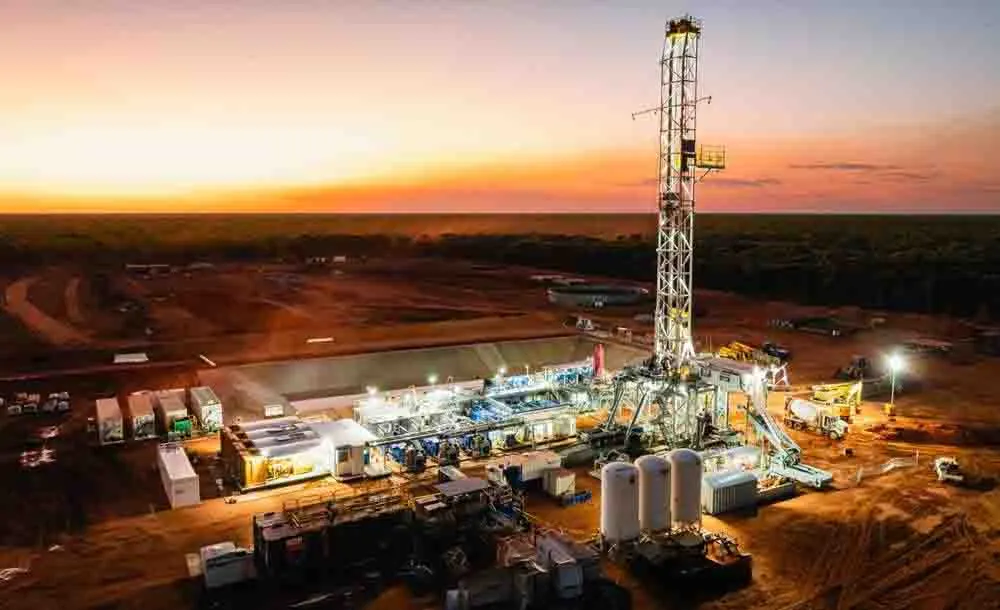
Consider an illustrative scenario involving a drilling contractor working in a deep oil well with alternating shale and abrasive sandstone. The original 5-blade bit delivered satisfactory penetration through shale but experienced declining ROP and increasing torque after entering harder sandstone.
Inspection after retrieval indicated uneven cutter wear, prompting the team to review the cutting structure and drilling practices.
For the next run, the contractor evaluated a 6-blade design with revised cutter distribution, impact-resistant cutters, and reinforced gauge protection. The team also reviewed WOB, RPM, and hydraulic settings to keep the cutters engaged without overloading them and to maintain effective cuttings removal.
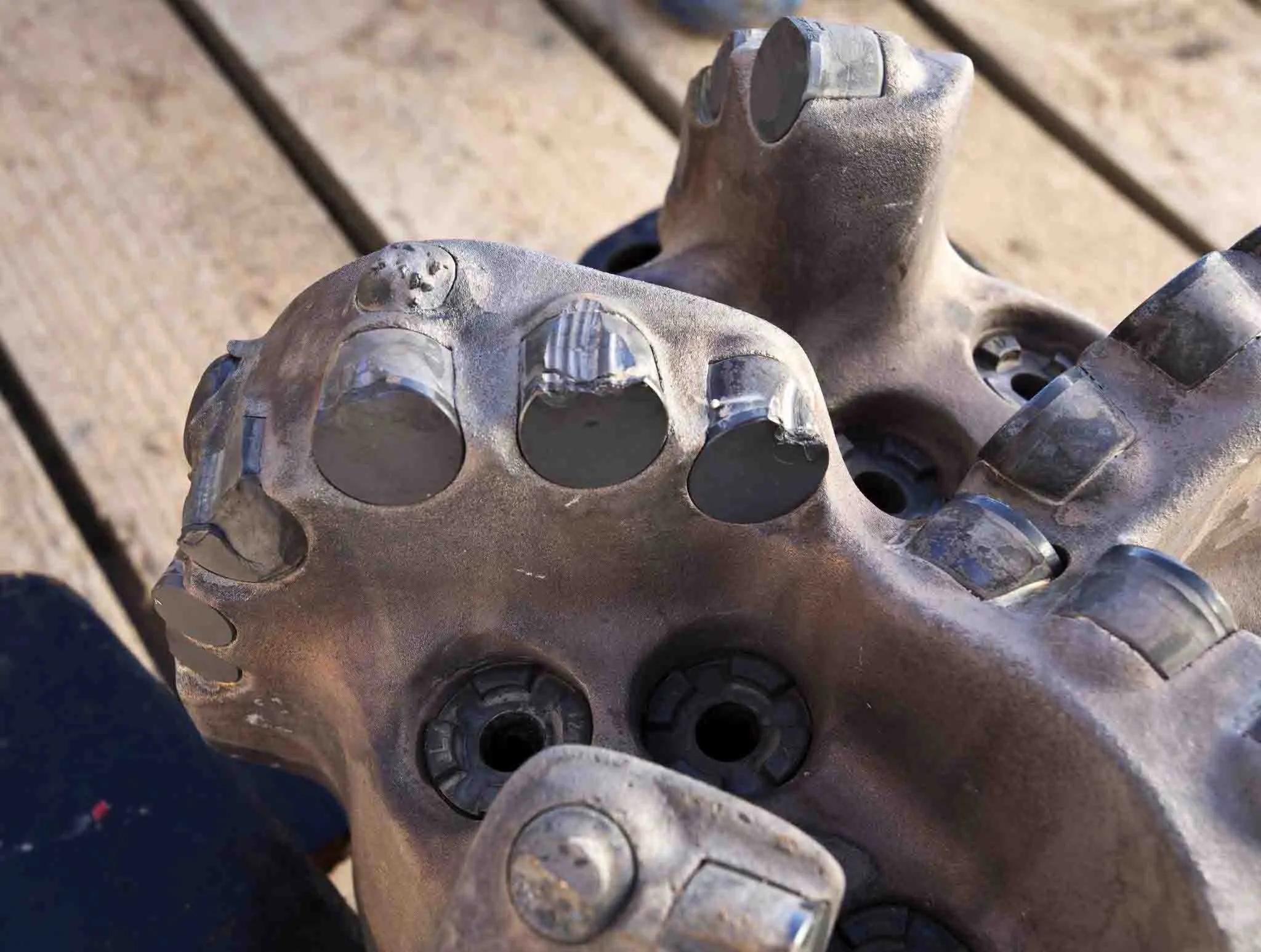
The goal was to improve wear distribution and drilling stability, not simply to add another blade. Practical success criteria would include steadier torque, more consistent ROP through the abrasive interval, acceptable gauge condition, and a longer useful run. Without actual drilling records and post-run inspection results, specific performance improvements cannot be claimed.
The lesson is to diagnose the failure mechanism before changing blade count. If the primary issue is restricted hydraulics, switching to six blades without improving flow passages may not help. If abrasive wear and uneven cutter loading are the main problems, a carefully engineered six-blade configuration may be worth testing.
3. Applying the Right PDC Bit Design with Hainaisen
Formation-based recommendations instead of a one-size-fits-all approach
Hainaisen supports drilling applications that require careful matching of PDC bit design to formation conditions and operating objectives. For customers evaluating an Oil Diamond Drill Bit, the most useful starting point is a review of the well profile, formation sequence, existing bit performance, and the drilling system's operating limits.
A practical technical discussion should establish whether the priority is faster penetration, longer bit life, improved directional control, reduced torque, or better gauge retention. These goals can conflict. An aggressive cutting structure may increase ROP in softer rock but suffer faster damage in abrasive interbeds. A more conservative design may improve durability while reducing penetration speed in easily drilled formations.
Hainaisen can help evaluate design options based on the intended application, including:
- Customized blade and cutter configurations: Blade count, cutter size, placement, and exposure can be considered in relation to formation strength and abrasiveness.
- PDC cutter technology: Cutter selection should account for wear resistance, impact loading, and expected downhole conditions.
- Hydraulic and gauge design: Flow-channel geometry, nozzle placement, and gauge protection should be assessed together.
- Quality control: Consistent manufacturing and inspection practices help reduce unwanted variation between bits and support more predictable field evaluation.
- Technical communication and export support: Clear exchanges about application details and specifications help overseas customers assess suitable options and coordinate procurement.
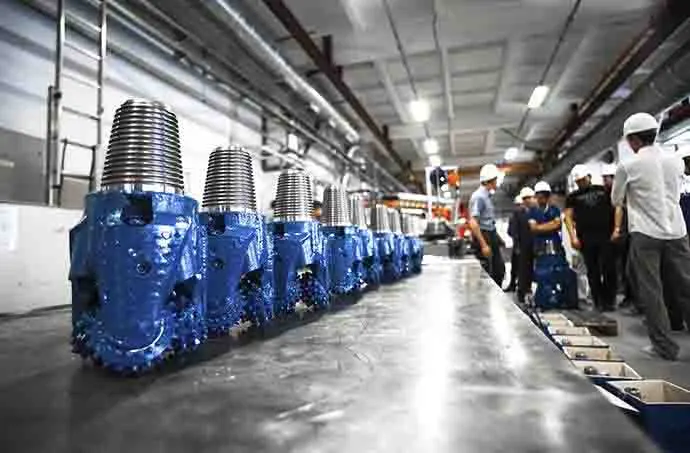
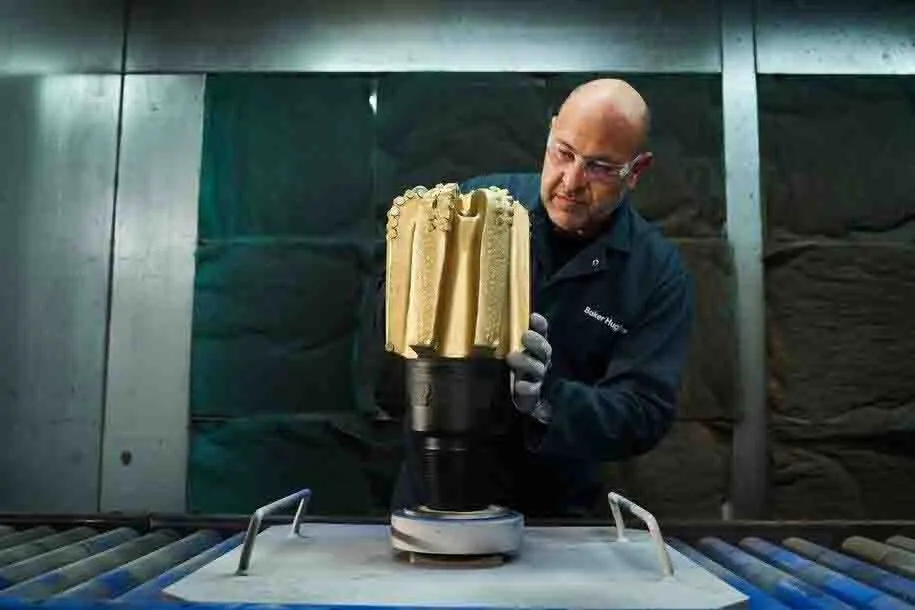
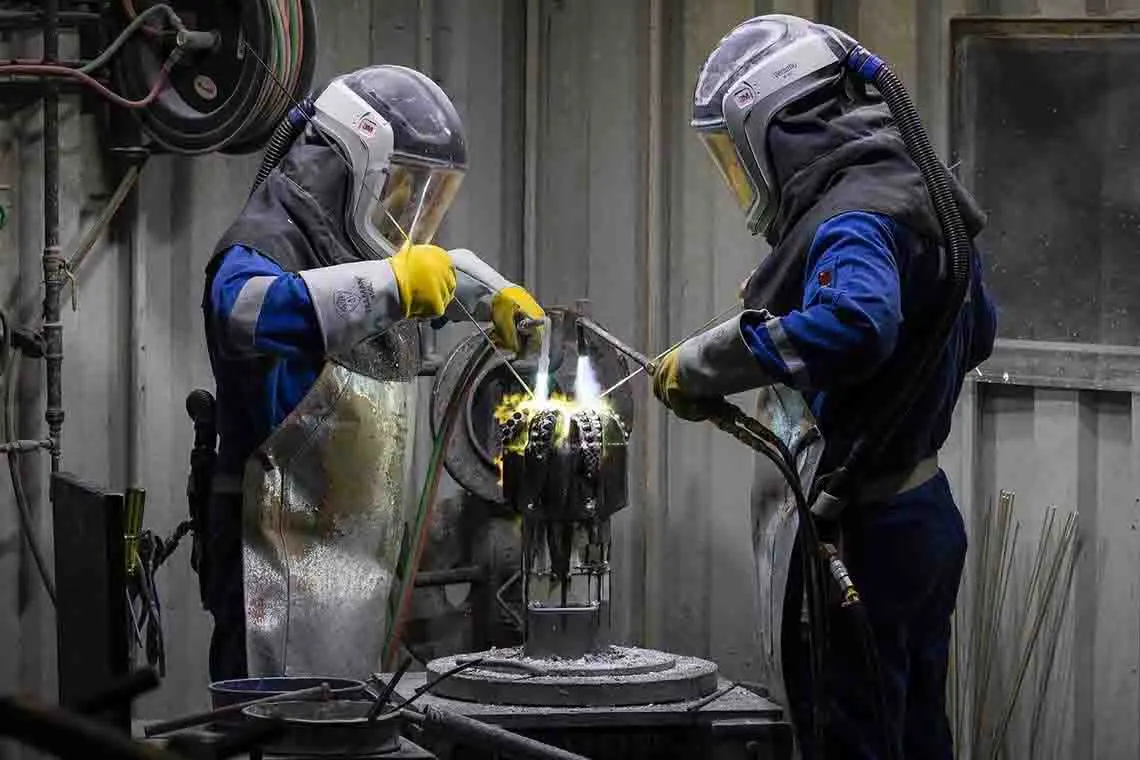
For a 5-blade design, the review may focus on maintaining aggressive cutting while preserving sufficient cutter support and hydraulic capacity. For a 6-blade design, the priority may be distributing cutting loads and managing wear without sacrificing cleaning performance.
The recommendation should follow the formation and the observed drilling problem, not a fixed preference for one blade count.
What information should customers provide?
To support a useful recommendation, customers should share as much of the following information as possible:
- Well type and profile, including vertical, directional, or horizontal sections.
- Formation descriptions, including hardness, abrasiveness, and interbedded rock.
- Hole size, existing bit configuration, and connection requirements.
- Historical ROP, WOB, RPM, torque, flow rate, and standpipe pressure.
- Previous bit-run length and post-run inspection findings.
- Known limits on pump capacity, downhole temperature, or drilling equipment.
This information helps the design discussion focus on the factors that actually affect performance. Where field data are incomplete, a controlled comparison between configurations can establish a useful baseline. Keep formation intervals and operating conditions as comparable as possible, then evaluate ROP, wear patterns, stability, and total drilling cost rather than judging a bit on penetration speed alone.
For overseas drilling contractors, bit Manufacturers, and oilfield procurement teams, Hainaisen offers a practical route to discussing application requirements, customized bit design, and product selection. Stable quality control, formation-based engineering considerations, and responsive technical communication are valuable considerations when selecting drilling tools for demanding projects.
The final decision between five and six blades should be based on the full drilling system. A 5-blade bit may be the stronger choice when aggressive cutting and open hydraulics dominate the requirements. A 6-blade bit may be more appropriate when the formation calls for a different balance of cutter support, wear management, and stability. Neither should be selected on depth alone.
FAQ
1. Is a 6-blade PDC bit better for deep wells?
Not necessarily. A 6-blade bit may suit abrasive or mechanically demanding intervals, but depth alone does not determine the ideal configuration. Formation properties, cutter design, hydraulics, and drilling parameters are more reliable selection criteria.
2. Which PDC bit is better for shale, a 5-blade or a 6-blade design?
A 5-blade design can be advantageous in drillable shale when aggressive cutting and effective fluid circulation are priorities. However, shale behavior varies, and bit balling, stability, and well trajectory must also be considered.
3. When should I choose a 6-blade bit for sandstone?
Consider a 6-blade design when abrasive sandstone causes uneven cutter wear, unstable drilling, or excessive damage to the cutting structure. Confirm that the proposed design also provides adequate hydraulic capacity and appropriate cutter specifications.
4. How do WOB and RPM affect PDC bit life?
Excessive WOB can overload cutters, while unsuitable RPM can contribute to frictional heating and vibration. Optimize both parameters against formation response, torque, ROP, and the manufacturer's operating recommendations.
5. Can a PDC bit be customized for directional or horizontal drilling?
Yes. Blade configuration, cutter placement, gauge protection, and hydraulic design can be tailored to the formation and directional objectives. The design should also account for torque response, steering requirements, and available drilling-system capacity.
6. What information is needed to select a suitable PDC bit?
Provide the hole size, well profile, formation description, previous bit-run data, WOB, RPM, torque, flow rate, and any post-run wear observations. These details help identify the main performance limitation and support a more informed design recommendation.
About the Author
Daniel Mercer is a drilling technology writer specializing in PDC bit selection, cutting-structure design, and drilling performance in deep and directional wells. His technical writing focuses on translating formation characteristics, cutter wear patterns, and field operating data into practical guidance for drilling engineers and oilfield procurement teams.
References
- Society of Petroleum Engineers (SPE). Petroleum engineering technical literature and conference papers on PDC bit performance, drilling mechanics, and bit selection. https://www.spe.org/
- SLB. Oilfield Glossary: Drilling and well construction terminology. https://glossary.slb.com/
- International Association of Drilling Contractors (IADC). Drilling industry technical resources and well-control publications. https://iadc.org/
- Journal of Petroleum Technology (JPT). Technical articles on drilling performance, drilling optimization, and well construction. https://jpt.spe.org/
- International Organization for Standardization (ISO). ISO 13500: Petroleum and natural gas industries — Drilling fluid materials — Specifications and tests. https://www.iso.org/