




How to Choose the Right PDC Bit Matrix for Abrasive Hard Rock Formations
Contact Hainaisen
Email: hainaisen@hnsdrillbit.com
Tel: +86 17791389758
Choosing the right PDC bit matrix for abrasive hard rock formations requires a careful balance between body erosion resistance, cutter durability, and drilling efficiency. For applications involving a Four Blade Wing Oil Drilling Tool, buyers should verify the actual bit construction and operating requirements rather than relying on the product name alone. The best design depends on rock abrasiveness, compressive strength, impact loading, hydraulic conditions, and the expected footage per run.
Matrix-body PDC Bits are often suitable for quartz-rich sandstone, abrasive limestone, and other formations where drilling-fluid erosion can gradually damage exposed bit surfaces. Their tungsten-carbide-based matrix offers good resistance to abrasive wear in demanding drilling environments. However, a wear-resistant body cannot compensate for unsuitable cutters, poor hydraulic design, or excessive vibration.
The right bit is the one that matches the formation's dominant failure mechanism. A successful selection should maintain cutter integrity, preserve gauge diameter, remove cuttings efficiently, and deliver consistent performance under the operating conditions of the well.

chinadailybrief.com
1. Why Abrasive Hard Rock Formations Challenge PDC Bit Matrices
Formation hardness is not the same as abrasiveness
Formation hardness describes resistance to penetration, while abrasiveness describes how quickly rock wears down the cutting elements and bit body. Both matter, but they create different failure mechanisms.
Quartz-rich sandstone may cause rapid diamond-table wear. Hard limestone can place greater emphasis on cutting efficiency and impact resistance, while granite, quartzite, and conglomeratic formations may expose cutters to both high loads and irregular impacts.
Three formation characteristics should be assessed before selecting a bit:
- Compressive strength: High-strength rock generally requires greater cutting force, potentially increasing torque and mechanical loading on the cutters.
- Mineral abrasiveness: Quartz and other hard mineral grains can accelerate cutter wear and gradually reduce cutting efficiency.
- Formation variability: Alternating sandstone, shale, limestone, and hard stringers can produce changing cutting resistance, vibration, and uneven loading.
A bit designed only for high compressive strength may still wear prematurely in highly abrasive rock. Likewise, cutters selected primarily for wear resistance may suffer early damage if the formation contains fractured zones that generate severe impact loads.
Why matrix-body construction matters
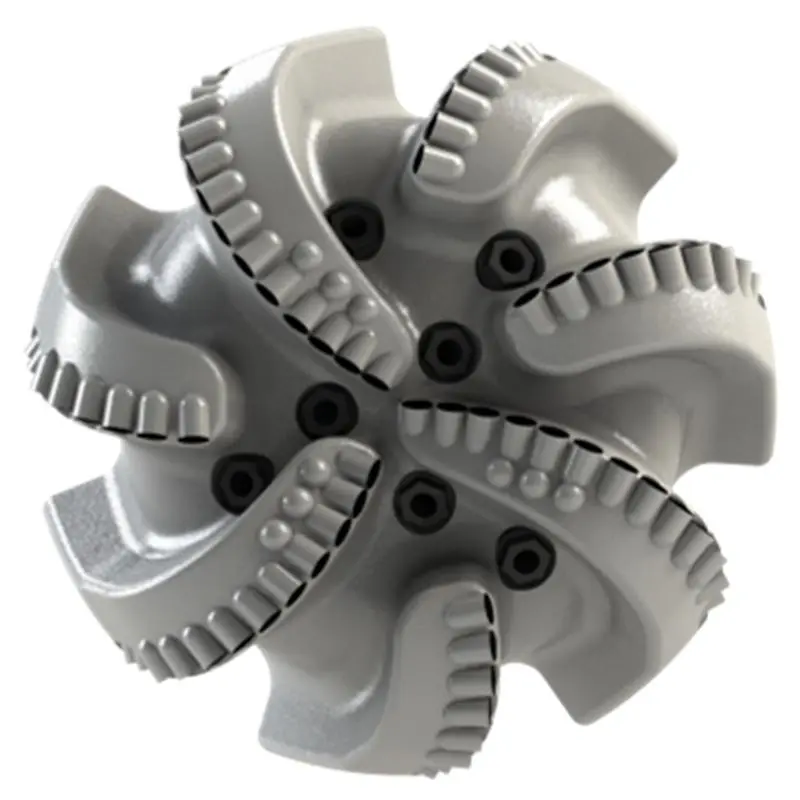
A matrix-body PDC bit typically uses a tungsten-carbide-based composite to form its body around the structural components. Compared with conventional steel-body construction, a matrix body generally offers stronger resistance to abrasive drilling-fluid erosion around exposed blades and fluid passages.
This advantage becomes particularly relevant when drilling at high circulation rates through formations containing abrasive solids. Drilling fluid transports cuttings away from the bit face, but suspended particles can also erode vulnerable surfaces. As erosion progresses, blade profiles may deteriorate, flow distribution can become less effective, and gauge protection may lose its intended geometry.
Matrix-body construction is not automatically superior for every application. Steel-body designs may be preferable where impact toughness, complex blade geometry, or particular hydraulic requirements dominate the selection criteria.
Identify the failure mechanism before replacing the bit
A dull-bit inspection provides useful evidence about whether the main limitation is cutter wear, body erosion, impact damage, or poor drilling performance.
Observed problem | Possible cause | Recommended design review |
|---|---|---|
Rounded or worn cutting edges | Abrasive minerals and prolonged rock contact | Cutter wear resistance and cutting structure |
Material loss around blades | Abrasive fluid erosion | Matrix properties and exposed surface geometry |
Chipped or fractured cutters | Impact loading, vibration, or excessive aggressiveness | Cutter toughness, back-rake angle, and bit stability |
Premature gauge wear | Abrasive borehole contact | Gauge protection and gauge-cutter placement |
Falling ROP despite increasing WOB | Cutter wear, poor cleaning, or inefficient cutting geometry | Cutter condition, hydraulics, and operating parameters |
Do not assume that increasing WOB will solve a falling penetration rate. Review dull-bit photographs, torque trends, pressure behavior, and cuttings returns first. A clear diagnosis helps prevent repeated trips caused by correcting the wrong problem.
2. How to Select the Right Matrix, Cutters, and Drilling Parameters
Evaluate matrix quality and erosion resistance
The matrix should retain its shape under abrasive wear while providing reliable support for the cutters. A bit that resists surface erosion but lacks sufficient structural integrity may still fail under localized stress or repeated impacts.
When comparing matrix-body PDC bits, ask the supplier about:
- Matrix composition and carbide distribution: These influence the material's wear behavior and mechanical properties.
- Manufacturing and infiltration consistency: Process control affects matrix integrity and the reliability of the finished bit.
- Blade and nozzle-area erosion resistance: These regions deserve particular attention when drilling fluids contain abrasive solids.
- Gauge protection: Gauge cutters and protective elements must withstand continuous contact with the borehole wall.
- Hydraulic compatibility: The bit should provide sufficient cleaning without creating unnecessary pressure losses or avoidable erosion.
The design objective is to balance wear resistance with structural integrity. A harder or more wear-resistant material is not necessarily the best choice if it compromises other properties required by the application.
Match cutter type and size to the formation
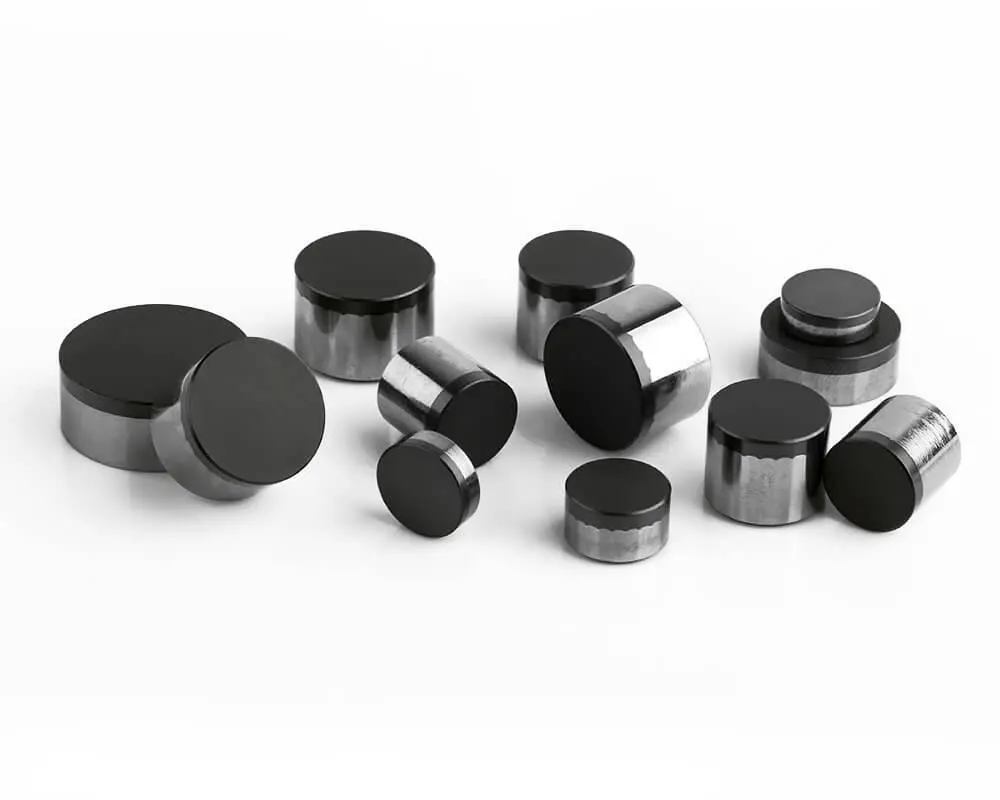
PDC cutters remove rock primarily through shearing action. Their performance depends on diamond-table quality, cutter geometry, exposure, back-rake angle, and how loads are distributed across the bit face.
For abrasive hard rock, consider the following options:
- Wear-resistant cutter grades: Appropriate when gradual diamond-table wear is the primary reason for pulling the bit.
- Impact-resistant cutters: Worth considering when fractured rock, hard stringers, or irregular loading cause chipping and breakage.
- Smaller cutters or denser cutting structures: These may distribute the workload across more cutting elements, provided that the layout preserves effective cuttings evacuation.
- Controlled cutter aggressiveness: A suitable back-rake angle can improve durability under demanding loads, although excessive reduction in aggressiveness may lower ROP.
Larger cutters can remove more rock per engagement in suitable formations, but they are not automatically the best choice for highly abrasive intervals. Smaller cutters may improve load distribution, while specialized geometries can help manage hard-rock cutting loads.
Select cutters according to the dominant wear mechanism, not simply their diameter or advertised hardness.
Choose blade configuration and hydraulics together
Blade count influences cutter placement, available junk space, and the flow paths through which cuttings leave the bit. More blades can provide additional support and distribute cutting loads, but a crowded design may restrict fluid channels if the layout is poorly balanced.
The engineering review should cover five areas:
- Blade strength and spacing: The structure must tolerate expected loads without unnecessarily restricting flow paths.
- Nozzle placement: Fluid should reach the cutting face and help remove debris while limiting avoidable erosion.
- Gauge and shoulder coverage: These areas require suitable protection against abrasive contact and mechanical loading.
- Cuttings evacuation: The hydraulic system should prevent excessive recirculation and accumulation around the cutters.
- BHA compatibility: Consider the motor or rotary steerable system, directional requirements, and expected vibration response.
A catalog designation such as Four Blade Wing Oil Drilling Tool does not, by itself, establish whether a particular matrix formulation or cutter arrangement is appropriate for abrasive hard rock. Confirm the actual bit structure, body material, gauge design, and hydraulic configuration before ordering.
Establish a stable drilling window
Even a well-designed matrix-body bit can wear prematurely if operating conditions are poorly controlled. Weight on bit (WOB), rotational speed (RPM), flow rate, torque, and rate of penetration (ROP) should be evaluated together.
Recommended operating practices:
- WOB: Increase weight progressively within the bit and BHA operating limits. Excessive loading can accelerate cutter damage in fractured or interbedded formations.
- RPM: Maintain a suitable range for the bit and downhole assembly. Higher RPM may improve ROP in some intervals but can increase frictional heating and vibration.
- Flow rate: Provide enough circulation to clean the bit face and transport cuttings. Review nozzle conditions and pressure losses before increasing flow.
- Torque and vibration: Monitor changes that may indicate stick-slip, impact loading, cutter wear, or a formation transition.
- ROP: Interpret penetration rate alongside WOB, RPM, torque, and cuttings returns. A sudden decline may indicate wear or poor hole cleaning rather than insufficient weight.
In directional and horizontal wells, bit stability becomes particularly important because the cutting structure may encounter changing side loads and alternating lithologies. Operating parameters should remain within the Manufacturer's recommendations and the approved drilling program.
Illustrative field case: Abrasive sandstone in a deep well
Consider a drilling contractor working through a deep sandstone interval containing abundant quartz grains and occasional harder stringers. The original bit shows rapid cutter wear, declining ROP, and visible erosion around parts of the blade structure. Torque fluctuations also become more pronounced near lithological changes.
The engineering team reviews the dull-bit record, drilling parameters, fluid solids content, and hydraulic configuration. Rather than simply increasing WOB, the team evaluates a more abrasion-resistant matrix, revised cutter grades, improved shoulder and gauge protection, and nozzle placement suited to the available circulation capacity.
During the next run, the operator establishes a more stable WOB and RPM range and monitors torque, ROP, and pressure behavior for changes in downhole conditions.
This is an illustrative engineering scenario, not a verified customer case or a claim of measured field improvement. The practical lesson is that matrix selection, cutter configuration, hydraulics, and operating practices must be evaluated together. Performance should be assessed against comparable offset wells and documented dull conditions.
3. Practical Application and Hainaisen's Recommendations
When should you choose a matrix-body PDC bit?
A matrix-body PDC bit is worth considering when abrasive wear and drilling-fluid erosion are major limitations on bit life. Typical applications include quartz-rich sandstone, abrasive interbedded formations, and selected hard-rock intervals where the bit body must retain its profile throughout a demanding run.
A steel-body bit may remain attractive when impact toughness, complex blade geometry, or larger fluid channels are the main priorities. The final choice should account for formation abrasiveness, impact severity, well trajectory, circulation requirements, and the cost of pulling the bit.
Before placing an order, prepare a technical specification that includes:
- Formation lithology and, where available, UCS and abrasiveness data.
- Hole diameter, well trajectory, and expected interval length.
- Previous bit specifications, footage drilled, and dull-bit condition.
- Available WOB, RPM, flow rate, pressure limits, and BHA configuration.
- Required cutter characteristics, gauge protection, and expected service life.
A bit selected using actual drilling records is generally a more defensible investment than one selected by price or body material alone.
How Hainaisen can support bit selection
Hainaisen supplies drilling tools for oil and gas, mining, and water well applications. For customers working in abrasive formations, bit selection should begin with the expected failure mechanism and operating environment rather than a generic product designation.
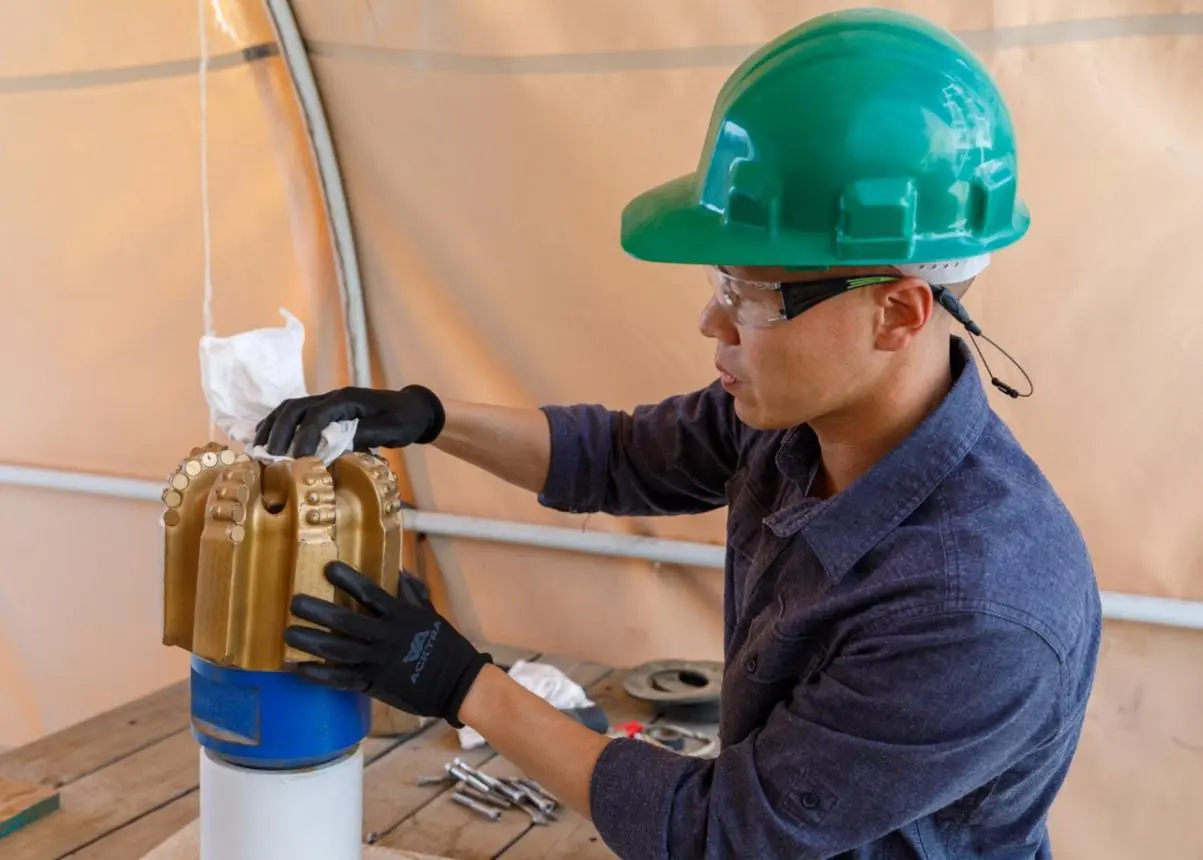
Hainaisen can help customers evaluate PDC bit specifications, including matrix-body construction, PDC cutter configuration, blade layout, hydraulic design, and application-specific requirements. Where customization is appropriate, these factors can be reviewed against formation data and previous drilling performance.
For a request involving a Four Blade Wing Oil Drilling Tool, Hainaisen should first clarify the intended application, required bit structure, formation conditions, and operating parameters. This helps determine whether the requested configuration is appropriate or whether a different cutting structure or matrix-body specification deserves consideration.
The practical advantages of working with a technically responsive supplier include:
- Stable product quality: Consistent manufacturing and inspection practices help reduce avoidable variation between supplied bits.
- Formation-based recommendations: Bit specifications can be assessed against lithology, wear patterns, and operating conditions.
- Customized design discussions: Cutter layout, blade configuration, and hydraulic requirements can be reviewed for the intended drilling application.
- Professional technical support: Clear specifications and timely communication help overseas buyers resolve questions before production and shipment.
- Export-oriented service: Organized order coordination and responsive communication support international procurement.
The objective is not to promise a universal solution. It is to establish a technically suitable specification, maintain quality control throughout manufacturing, and provide clear communication during selection and procurement.
For a formation-specific recommendation, contact Hainaisen with your bit size, formation description, previous bit performance, and available drilling parameters. These details provide a practical basis for evaluating suitable PDC bit options.
FAQ
1. Is a matrix-body PDC bit always better for hard rock?
No. Matrix-body construction is often advantageous in highly abrasive environments because of its erosion resistance. The correct choice also depends on impact loading, blade geometry, hydraulic requirements, and the toughness needed for the application.
2. What type of PDC bit is best for abrasive sandstone?
A matrix-body PDC bit with abrasion-resistant cutters is a reasonable starting point for many quartz-rich sandstone formations. Cutter grade, size, blade arrangement, gauge protection, and hydraulics should be selected according to the sandstone's strength, abrasiveness, and impact characteristics.
3. How can I tell whether cutter wear or matrix erosion is limiting bit life?
Inspect the dull bit and compare the observations with drilling records. Rounded or worn diamond cutting edges suggest cutter wear, while material loss around blades, nozzles, or the bit face suggests erosion. Both mechanisms can occur together, so a structured dull-bit evaluation is preferable to relying on ROP alone.
4. Should I increase WOB when ROP drops in hard rock?
Not automatically. First check for cutter wear, poor hole cleaning, vibration, changing lithology, and hydraulic restrictions. Increasing WOB without identifying the cause can accelerate damage. Adjust operating parameters within the bit manufacturer's limits and the drilling program.
5. Can a PDC bit be customized for highly abrasive formations?
Yes. Depending on the manufacturer's capabilities, customization may include cutter grade and size, cutter placement, blade configuration, gauge protection, matrix formulation, and hydraulic layout. The proposed design should be based on formation data and previous bit performance.
6. What information should I provide when requesting a PDC bit recommendation?
Provide the hole size, formation lithology, expected interval length, well trajectory, previous bit specifications, dull-bit photographs or reports, WOB, RPM, flow rate, and any known torque or vibration issues. More complete information allows a supplier to make a better-supported recommendation.
About the Author
Daniel Mercer is a drilling technology writer specializing in PDC bit selection, matrix-body design, and drilling performance in abrasive formations. His work focuses on translating cutter wear mechanisms, hydraulic considerations, and field operating data into practical guidance for drilling engineers, procurement teams, and international drilling contractors.
References
1. Society of Petroleum Engineers (SPE) — OnePetro Technical Literature Database. Technical papers on PDC bit design, cutter wear, and drilling performance.
2. SLB — PDC Drill Bits. Background on PDC cutter technology and drill bit design.
3. SLB — Material Science Innovation Improves Strength and Erosion Resistance of Steel-Body PDC Bits. Discussion of material engineering and erosion resistance.
4. International Association of Drilling Contractors (IADC) — IADC. Industry resources and drilling standards.
5. International Journal of Refractory Metals and Hard Materials — Journal and research articles. Research on carbide materials, fracture strength, and wear behavior.
6. Journal of Petroleum Technology (JPT) — SPE's Technical Publication. Technical coverage of drilling technology, bit performance, and field applications.