




What is a PDC Drill Bit? The Ultimate Guide for Oil & Gas Drilling
Contact Hainaisen
Email: hainaisen@hnsdrillbit.com
Tel: +86 17791389758
A PDC drill bit is a fixed-cutter drilling tool that uses polycrystalline diamond compact (PDC) cutters to shear rock continuously rather than relying on the crushing action of rolling cones. It is widely used in oil and gas drilling because it can deliver high penetration rates, consistent cutting performance, and long service life when matched correctly to the formation. For operators evaluating a Drilling Bit For Oil And Gas Rig, the most important decision is not simply whether to use PDC technology, but which cutter design, blade configuration, and hydraulic arrangement will perform reliably under actual downhole conditions.
PDC Bits are particularly effective in shale, soft to medium-hard sandstone, limestone, and many interbedded formations. However, a bit designed for homogeneous shale may struggle in abrasive sandstone or hard stringers. Formation changes, vibration, excessive torque, poor hole cleaning, and cutter damage can all reduce drilling efficiency.
This guide explains how PDC drill bits work, what determines their performance, how to select the right design for different oilfield applications, and what drilling engineers should consider before purchasing a bit.
1. What Is a PDC Drill Bit and How Does It Work?
Understanding PDC drill bit construction
A PDC drill bit is classified as a fixed-cutter bit, meaning its cutting elements do not rotate independently. Instead, the entire bit rotates with the drillstring or bottom-hole assembly (BHA), and the cutters continuously engage the formation.
A conventional PDC cutter consists of two main components:
- Polycrystalline diamond layer: Provides a highly wear-resistant cutting surface.
- Tungsten carbide substrate: Supports the diamond table and provides the mechanical foundation for mounting the cutter.
Multiple cutters are positioned on blades across the bit face. As the bit rotates, each cutter removes a small portion of rock, producing cuttings that are carried away by drilling fluid.
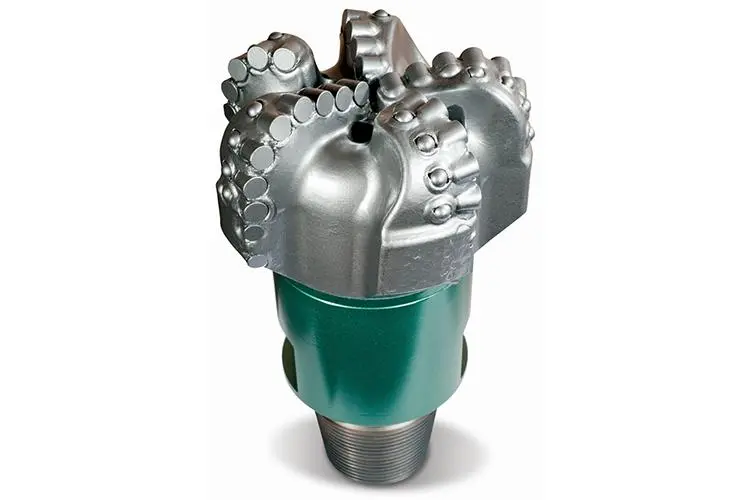
A complete PDC bit generally includes:
Component | Main function |
|---|---|
PDC cutters | Shear and remove formation material |
Blades | Support and position the cutters |
Bit body | Provides structural strength |
Junk slots | Provide passages for cuttings removal |
Nozzles | Direct drilling fluid toward the cutting structure |
Gauge pads | Maintain hole diameter and improve stability |
Connection | Connects the bit to the drilling assembly |
Steel-body versus matrix-body PDC bits
The bit body material affects durability, manufacturing flexibility, and suitability for different drilling environments.
Steel-body PDC bits are Manufactured from high-strength steel. Their advantages include structural toughness, flexible blade design, and adaptability to directional drilling applications.
Matrix-body PDC bits use a tungsten-carbide-based matrix material. They offer strong resistance to erosion and abrasion, making them useful in demanding drilling environments.
Neither construction is automatically superior. Steel-body designs generally offer toughness and design flexibility, while matrix-body designs provide valuable erosion resistance. The correct choice depends on formation characteristics, drilling fluid, hydraulic conditions, and expected mechanical loads.
Why PDC bits are widely used in oil and gas drilling
Compared with conventional roller-cone bits, PDC bits provide continuous shearing action instead of relying primarily on crushing and impact.
Their practical advantages include:
- Higher ROP potential: Continuous cutting can remove rock efficiently.
- Fewer moving components: Fixed cutters avoid the bearings and moving cones found in conventional roller-cone bits.
- Long drilling intervals: Properly selected cutters can remain effective over substantial footage.
- Directional drilling compatibility: Suitable bit profiles and cutter arrangements can improve steering response.
- Consistent cutting performance: Properly designed cutting structures can maintain productive drilling in relatively uniform formations.
Which formations are suitable for PDC drill bits?
PDC technology is not restricted to soft formations. Modern cutter materials and bit geometries allow operators to drill increasingly challenging lithologies.
Formation | Typical drilling characteristics | Design considerations |
|---|---|---|
Shale | Soft to medium-hard, sometimes sticky | Open hydraulics and efficient cuttings removal |
Limestone | Variable hardness and abrasiveness | Balanced cutter durability |
Sandstone | Can be highly abrasive | Wear-resistant cutters |
Granite | Hard, potentially fractured | Impact-resistant cutters |
Salt formations | Ductile and prone to bit balling | Effective hydraulics |
Interbedded formations | Rapid changes in rock strength | Impact resistance and vibration control |
The most challenging formations are often those combining high abrasiveness, sudden changes in hardness, and repeated impact loading.
Common PDC bit failure mechanisms
The most common problems include:
- Abrasive wear: Gradual deterioration of the diamond cutting surface.
- Cutter chipping: Sudden impact loads break sections from the cutting edge.
- Thermal damage: Excessive frictional heat accelerates cutter degradation.
- Cutter delamination: Damage at the diamond-table and substrate interface.
- Bit balling: Sticky formation material accumulates around cutters.
- Gauge wear: Abrasive contact damages gauge protection and can reduce hole diameter.
2. How to Select the Right PDC Drill Bit for Oil and Gas Drilling
Selecting a PDC bit requires more than matching a catalog diameter to the planned hole size. Engineers should consider formation characteristics, drilling systems, hydraulic capacity, expected mechanical loads, and historical bit performance.
1. Evaluate formation hardness and abrasiveness
The first step is to review geological information and offset-well records.
Two formations with similar compressive strength can produce very different cutter wear because their mineral composition and abrasiveness may differ.
For example:
- In relatively soft shale, aggressive cutters and open hydraulics can support high penetration rates.
- In abrasive sandstone, wear-resistant cutter grades and better-supported cutting edges can extend bit life.
- In hard limestone, balanced cutting structures can help control torque.
- In interbedded formations, impact-resistant cutters and stable blade geometry are particularly important.
Formation compressive strength, abrasiveness, fracture characteristics, and lithological transitions should all influence cutter selection.
2. Choose the appropriate PDC cutter type and size
Cutter selection directly affects cutting efficiency, torque, impact resistance, and wear characteristics.
Standard flat PDC cutters are widely used for general oilfield drilling, providing a practical balance between penetration efficiency and durability.
Chamfered PDC cutters have reinforced cutting edges that help distribute contact stresses and reduce susceptibility to edge chipping.
Shaped PDC cutters change rock-contact behavior and can improve performance in selected hard, abrasive, or interbedded formations.
Cutter diameter also matters:
- Larger cutters provide greater cutting-edge length and can support aggressive cutting structures.
- Smaller cutters allow greater flexibility in cutter placement.
- Higher cutter density can improve cutting redundancy but may affect torque and hydraulic space.
The goal is to balance cutting aggressiveness, cutter strength, and expected formation loads rather than simply choosing the largest cutters available.
3. Select blade configuration and cutter layout
Blade count determines how the cutting structure interacts with the formation and how much space remains for fluid circulation.
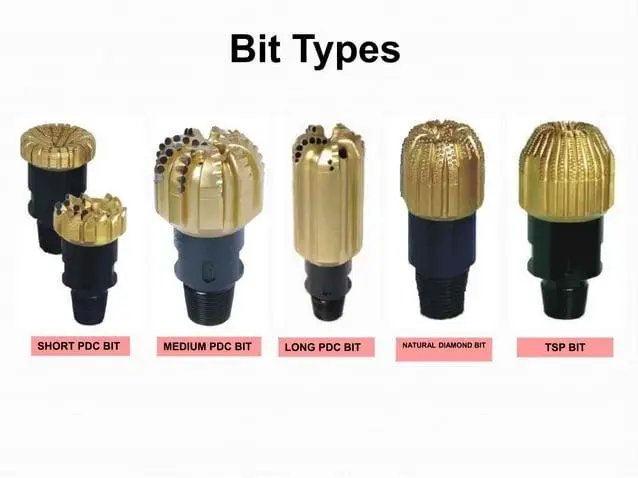
Typical design tendencies include:
- Three- to four-blade designs: Relatively open flow passages and aggressive cutting structures for suitable softer formations.
- Five- to six-blade designs: A balance between cutting efficiency, cutter support, and stability.
- Higher blade-count designs: Greater cutter distribution and stability in selected applications, although hydraulic space must be evaluated.
These are general design tendencies rather than fixed selection rules.
An effective cutter layout should provide:
- Balanced cutting coverage across the bit profile.
- Appropriate cutter exposure and back-rake angles.
- Adequate support behind cutting edges.
- Reduced risk of uneven wear.
- Stable contact with the formation during rotation.
4. Consider hydraulic design and hole cleaning
A PDC bit can have excellent cutters and still perform poorly if the hydraulic design cannot remove drilled cuttings efficiently.
During drilling, fluid exits through the bit nozzles and flows across the cutting structure. This helps cool the cutters, clean the bit face, and transport rock fragments into the annulus.
Poor hole cleaning can lead to:
- Recutting of previously removed rock.
- Increased friction and torque.
- Localized heat accumulation.
- Bit balling in sticky formations.
- Reduced penetration rate.
Nozzle position, nozzle size, total flow area, flow rate, and drilling-fluid properties must be evaluated together.
5. Optimize drilling parameters: WOB, RPM, torque, and ROP
Even a well-designed PDC bit can experience premature failure when operated outside its suitable drilling window.
Parameter | Function | Engineering consideration |
|---|---|---|
WOB | Applies downward force | Excessive loading increases cutter stress |
RPM | Controls rotational speed | Higher speed can increase heat and wear |
Torque | Reflects rotational resistance | Sudden fluctuations may indicate vibration |
Flow rate | Delivers drilling fluid | Must support cleaning and cooling |
ROP | Measures drilling progress | Evaluate alongside bit wear and operating cost |
WOB and RPM should be adjusted together rather than independently.
Increasing WOB may improve penetration initially, but excessive loading can cause aggressive depth of cut, torque fluctuations, and cutter damage.
Similarly, increasing RPM can improve drilling speed in suitable formations, but it may also increase frictional heating and vibration.
A practical operating approach is to:
- Establish a stable baseline using offset-well data and manufacturer recommendations.
- Increase WOB or RPM gradually within the approved operating envelope.
- Monitor surface torque, standpipe pressure, ROP, and vibration indicators.
- Investigate sudden performance changes instead of automatically increasing drilling force.
- Review dull grading after the bit is pulled to identify actual wear mechanisms.
A higher instantaneous ROP does not necessarily mean a more economical drilling operation. Bit life, footage per run, trip time, and total cost per foot should be considered together.
6. Pay attention to gauge protection and bit stability
Gauge protection is especially important in directional and horizontal drilling, where the bit may experience extended contact with the borehole wall.
Gauge pads and appropriate wear-resistant elements help maintain hole diameter and reduce excessive wear.
Excessive lateral or torsional vibration can cause cutter impact damage, irregular wear, unstable torque, and premature bit failure.
For horizontal wells, the selected bit should be compatible with the BHA, mud motor or rotary steerable system, and planned steering requirements.
7. An illustrative field scenario: Drilling through interbedded formations
Consider a drilling contractor operating in a Middle Eastern oilfield where the planned interval contains alternating shale, limestone, and abrasive sandstone.
The original PDC bit delivers acceptable ROP in shale but experiences unstable torque and premature cutter damage when entering harder sandstone layers.
The drilling team reviews offset-well records and identifies several potential contributors:
- Abrasive sandstone is accelerating cutter wear.
- Sudden changes in formation hardness are increasing impact loads.
- The original cutting structure may be too aggressive for the changing lithology.
- Hydraulic cleaning requires further evaluation.
The contractor and bit supplier consider a revised design featuring more impact-resistant cutters, improved cutter support, and a blade configuration suited to the mixed formation.
They also review WOB, RPM, and flow rate to establish a more stable operating window.
The next step is to evaluate ROP, footage, torque behavior, and the condition of the returned bit.
This is an illustrative engineering scenario, not a verified customer case or a claim of measured field improvement.
The practical lesson is straightforward: when a PDC bit performs well in one formation but deteriorates in another, replacing it with a more aggressive design is not necessarily the answer. Cutter durability, bit stability, hydraulic cleaning, and operating parameters should be evaluated as one system.
3. Practical Applications and Choosing a Reliable PDC Bit Supplier
PDC drill bit applications in different oilfield operations
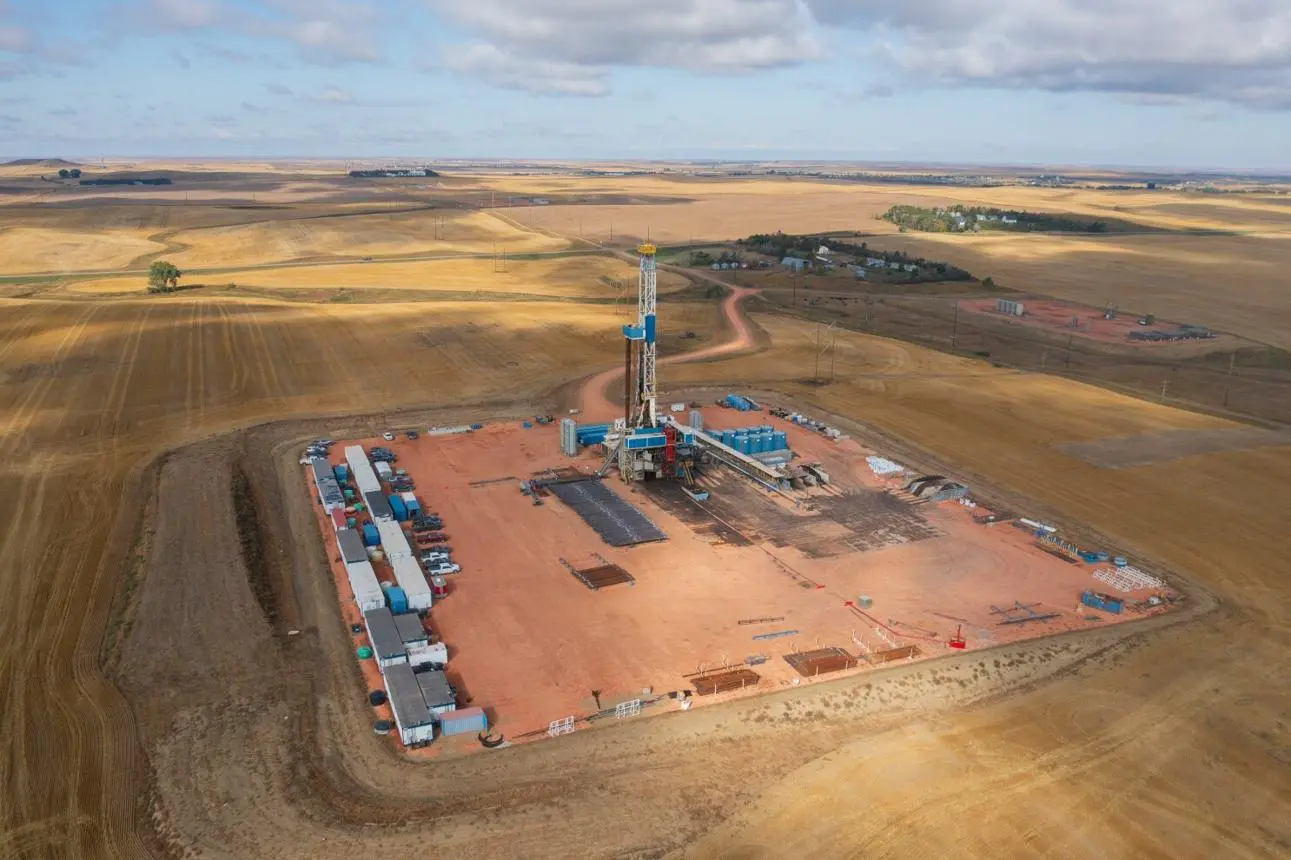
Different well designs place different demands on the cutting structure. A bit that performs well in a vertical well may not provide the same stability in a long horizontal section.
Vertical drilling
Vertical wells often require a balanced combination of penetration efficiency and directional stability. Cutter placement, gauge protection, and bit profile should be selected according to formation and BHA configuration.
Directional drilling
Directional wells require predictable steering behavior and controlled torque. The bit must work effectively with the mud motor or rotary steerable system (RSS).
Horizontal drilling
Long horizontal intervals can expose cutters to extended drilling hours and changing formation conditions. Cutter wear resistance, bit stability, and effective hole cleaning are particularly important.
Deep-well drilling
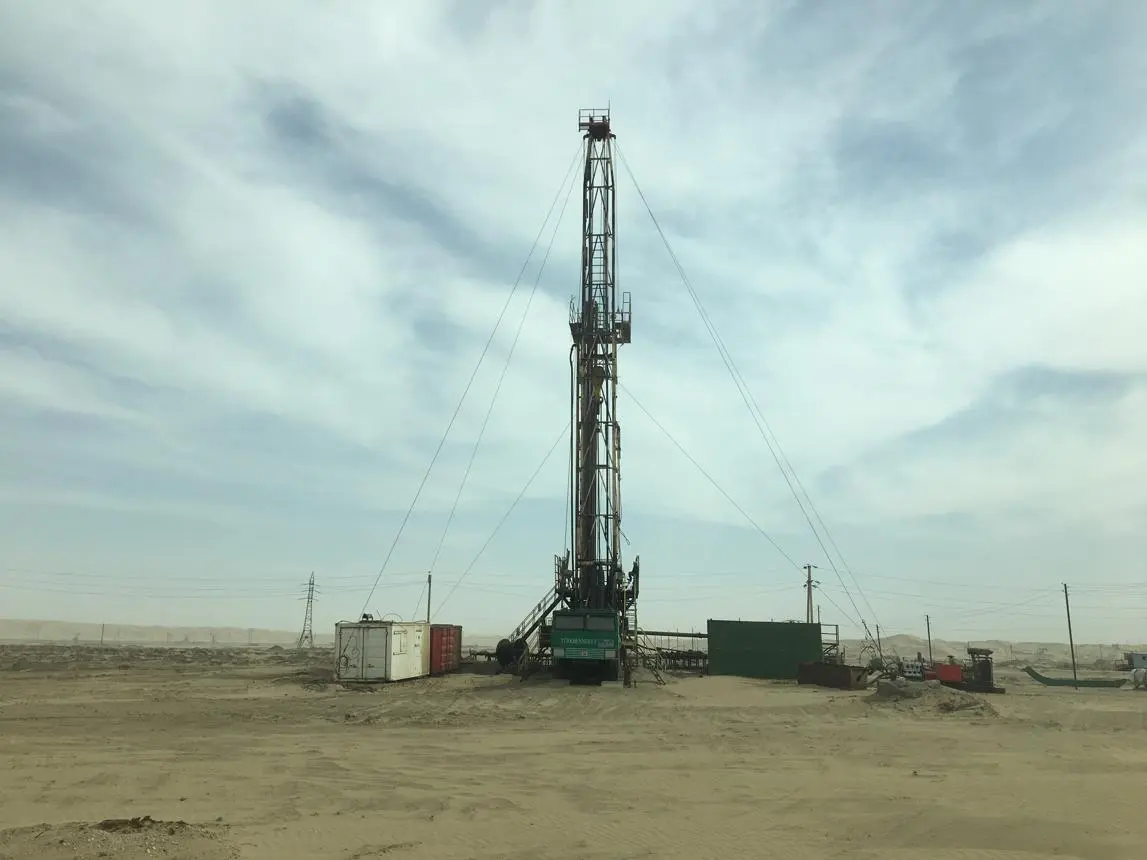
Deep wells may involve high temperatures, high pressures, abrasive formations, and considerable mechanical loads. Cutter thermal stability, body strength, hydraulic performance, and operating limits must be considered together.
How to evaluate a PDC bit before purchasing
Before ordering a Drilling Bit For Oil And Gas Rig, purchasing managers and drilling engineers should request technical information rather than relying exclusively on a product photograph or general performance claims.
A useful supplier evaluation should cover:
- Cutter specifications: Diameter, diamond-table characteristics, cutter grade, and impact resistance.
- Bit construction: Steel-body or matrix-body design, blade count, and body dimensions.
- Cutting structure: Cutter layout, exposure, back rake, and cutting profile.
- Hydraulic specifications: Nozzle configuration, total flow area, and recommended flow conditions.
- Operating recommendations: Suitable WOB, RPM, torque limits, and application range.
- Quality documentation: Manufacturing inspection, dimensional checks, and relevant quality records.
- Technical support: Ability to analyze formation information and recommend design adjustments.
It is also worth requesting information about previous applications in comparable formations. A supplier's ability to explain why a particular design is suitable is more valuable than simply offering the lowest quotation.
Why consider Hainaisen for PDC drill bit requirements?
For drilling contractors and oilfield equipment distributors, choosing a reliable manufacturer involves more than purchasing a cutting tool. Consistent manufacturing quality, communication, customization capability, and technical support all influence the long-term supplier relationship.
Hainaisen provides drilling tool solutions for different drilling applications, with attention to cutter performance, bit construction, and formation-specific requirements.
Several capabilities are particularly relevant:
1. Stable product quality and manufacturing control
Consistent product quality is essential because variations in cutter performance or manufacturing accuracy can affect drilling stability and service life. Hainaisen emphasizes quality control throughout its manufacturing process to support dependable product consistency.
2. PDC cutter technology
PDC cutters are the working elements of a fixed-cutter bit. Their wear resistance, impact toughness, and thermal behavior directly influence drilling performance.
Hainaisen focuses on PDC cutting technology and suitable cutter configurations for different formation conditions.
3. Customized bit design
Not every drilling project requires the same cutter diameter, blade count, or cutting structure. Hainaisen can discuss customized design requirements based on hole size, formation characteristics, and drilling application.
4. Formation-based recommendations
A useful supplier should understand the differences between soft shale, abrasive sandstone, hard limestone, and interbedded formations.
Hainaisen can work with customers to evaluate application requirements and identify appropriate product configurations rather than recommending one standard design for every project.
5. Export experience and responsive communication
International drilling projects often involve different technical standards, purchasing procedures, and delivery requirements.
Hainaisen supports overseas customers through product communication, technical discussions, and export-oriented service. Its responsive communication helps customers clarify specifications before placing orders.
For companies sourcing a Drilling Bit For Oil And Gas Rig, these capabilities provide a practical starting point for evaluating product suitability and developing a long-term manufacturing partnership.
Whether the requirement involves vertical drilling, directional wells, horizontal sections, or demanding abrasive formations, the recommended approach is to share geological information, hole size, BHA details, and operating parameters with the supplier before finalizing the bit specification.
Hainaisen's recommendation: Select PDC bits according to actual formation conditions and drilling objectives. A balanced combination of cutter durability, blade geometry, hydraulic cleaning, and operational stability is generally more valuable than maximizing aggressiveness alone.
For product specifications or customized requirements, contact Hainaisen to discuss your drilling application.
FAQ
1. What is the main difference between a PDC drill bit and a tricone bit?
A PDC bit uses fixed diamond cutters to shear rock continuously, while a tricone bit uses three rotating cones with teeth or inserts to crush and fracture the formation. PDC bits can offer higher ROP and longer drilling intervals in suitable formations.
2. What type of PDC bit is best for oil and gas drilling?
There is no universal best design. Soft shale may benefit from an aggressive cutting structure with effective hydraulics, while abrasive sandstone requires greater cutter wear resistance. Interbedded formations often need improved impact resistance and bit stability.
3. Can PDC bits drill hard rock formations?
Yes. Modern PDC technology can drill selected hard-rock formations, including hard limestone and some abrasive sandstone. However, cutter toughness, thermal stability, cutting geometry, and vibration control must be carefully considered.
4. How do I improve PDC drill bit life?
To extend bit life:
Match cutter grade to formation abrasiveness and impact conditions.
Maintain suitable WOB and RPM.
Ensure sufficient hydraulic cleaning.
Monitor torque and vibration.
Avoid excessive mechanical loading.
Analyze returned-bit dull grades to identify recurring failure mechanisms.
5. What is the difference between steel-body and matrix-body PDC bits?
Steel-body bits generally provide greater toughness and design flexibility, while matrix-body bits offer strong resistance to erosion and abrasion. The preferred construction depends on drilling-fluid conditions, formation characteristics, and mechanical demands.
6. Can PDC drill bits be customized for directional and horizontal wells?
Yes. Bit profile, cutter arrangement, blade configuration, gauge protection, and hydraulic design can be adapted to different BHA and steering requirements. The design should be evaluated against the planned well trajectory and operating conditions.
About the Author
Daniel Mitchell is a drilling technology writer specializing in fixed-cutter drilling systems, PDC cutter performance, and oilfield drilling applications. His technical interests include directional drilling, formation-based bit selection, cutter wear analysis, and drilling efficiency optimization across conventional and unconventional reservoirs.
References
1. SLB – PDC Bits
https://www.slb.com/products-and-services/innovating-in-oil-and-gas/well-construction/drilling/drill-bits/pdc-bits
2. Baker Hughes – Fixed Cutter PDC Drill Bits
https://www.bakerhughes.com/drilling/drill-bits/pdc-drill-bits
3. Halliburton – Juggernaut Advanced Cutter Technology
https://www.halliburton.com/en/products/juggernaut
4. SPE/IADC – The 1987 IADC Fixed Cutter Bit Classification System. SPE-16142-MS.
https://doi.org/10.2118/16142-MS
5. SPE/IADC – Application of the New IADC Dull Grading System for Fixed Cutter Bits. SPE-16145-MS.
https://doi.org/10.2118/16145-MS