




The Role of Matrix-Body vs. Steel-Body in High-Performance PDC Bits
Contact Hainaisen
Email: hainaisen@hnsdrillbit.com
Tel: +86 17791389758
Choosing between a matrix-body PDC bit and a steel body drill bit is an important decision when designing a high-performance drilling tool. The two constructions offer different mechanical properties, wear resistance, and design flexibility. The right choice depends primarily on formation abrasiveness, impact loading, drilling fluid conditions, and the operational requirements of the well.
In general, matrix-body PDC Bits are preferred when erosion and abrasive wear are major concerns, while steel-body designs are often advantageous when impact toughness, hydraulic flexibility, and directional control are priorities. Neither construction is universally superior. A bit that performs well in stable sandstone may not deliver the same results in fractured limestone or a long horizontal shale section.
For drilling contractors, bit Manufacturers, and drilling engineers, understanding these differences helps reduce premature bit damage, improve rate of penetration (ROP), and achieve a better balance between drilling efficiency and overall operating costs.
1. Understanding the Technical Differences Between Matrix and Steel Bodies
Matrix-Body PDC Bits: Resistance to Abrasion and Erosion
6 Blades Matrix Body 8 1/2" PDC Drill Bits for Oil and Gas Well Drilling - Pup Joints and Blowout Preventer Price
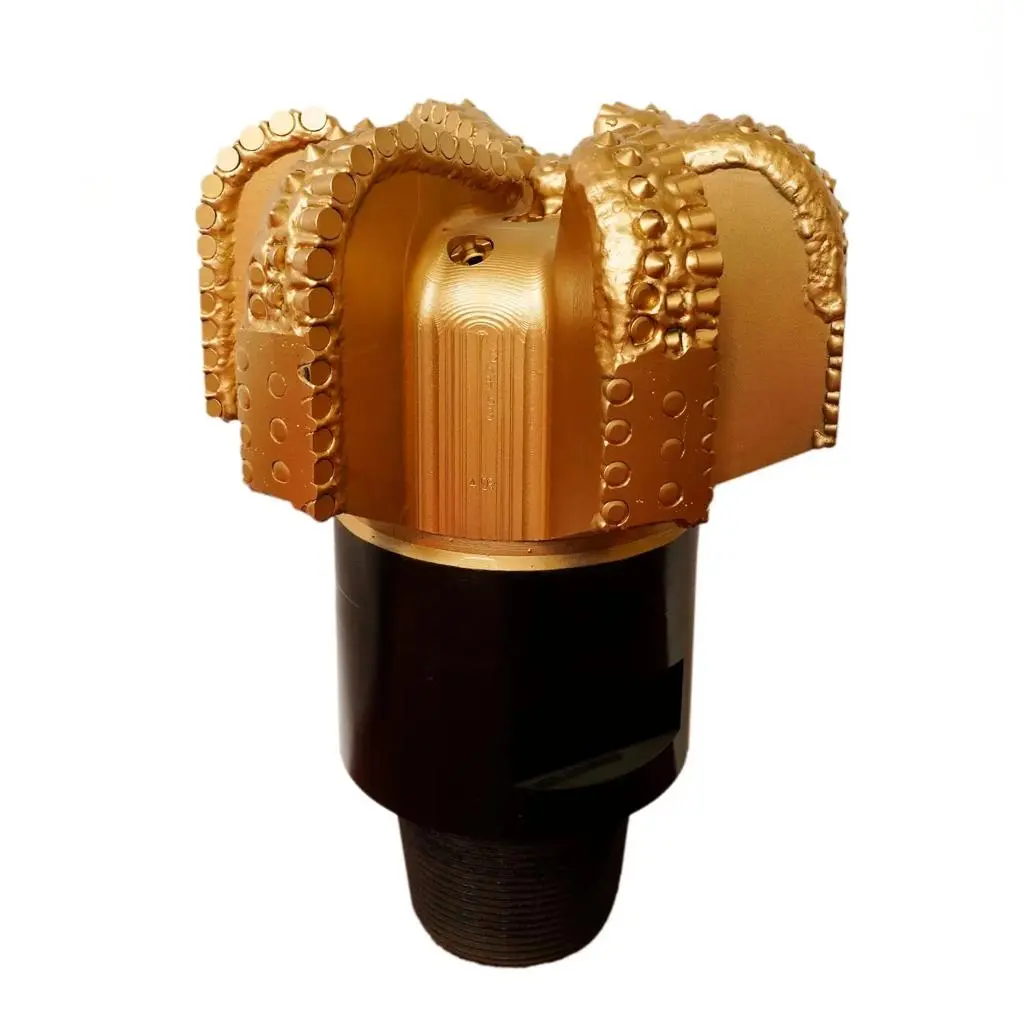
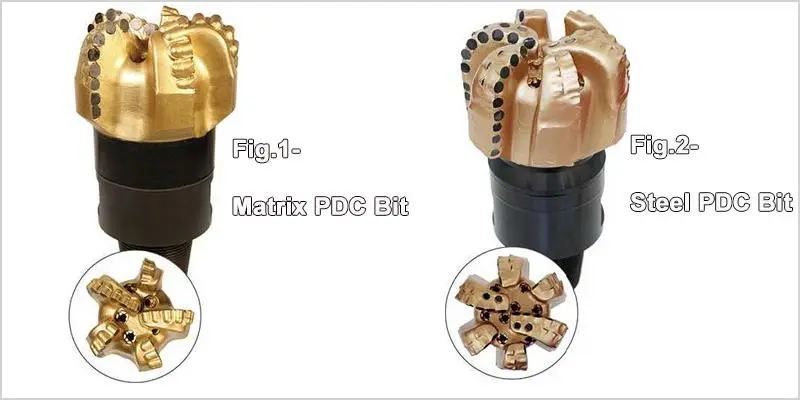
Matrix-body PDC bits are generally manufactured using tungsten carbide particles bonded together with a metallic binder. This composite structure provides excellent resistance to abrasive wear and erosion caused by high-velocity drilling fluids carrying solid particles.
Their main advantages include:
- High abrasion resistance: Suitable for formations containing abrasive minerals, particularly quartz-rich sandstone.
- Excellent erosion resistance: Helps protect the bit body when drilling fluid circulates through high-velocity hydraulic passages.
- Durable blade surfaces: Helps maintain blade geometry during extended drilling operations.
- Design flexibility: The molding process allows manufacturers to produce complex body profiles and integrated hydraulic passages.
Matrix construction is particularly valuable in deep wells and extended-reach drilling operations where the bit may remain exposed to abrasive formations and circulating fluids for long periods.
However, matrix material has a relatively brittle failure behavior compared with steel. Severe vibration, repeated impact, and sudden changes in formation hardness can increase the risk of blade cracking or structural damage.
Steel-Body PDC Bits: Toughness and Design Flexibility
A steel body drill bit is manufactured from high-strength steel through machining and other controlled manufacturing processes. Its greatest advantages are toughness, structural flexibility, and the ability to accommodate different blade and hydraulic configurations.
Compared with matrix construction, steel generally provides:
- Better impact tolerance: More suitable for applications involving mechanical shock and vibration.
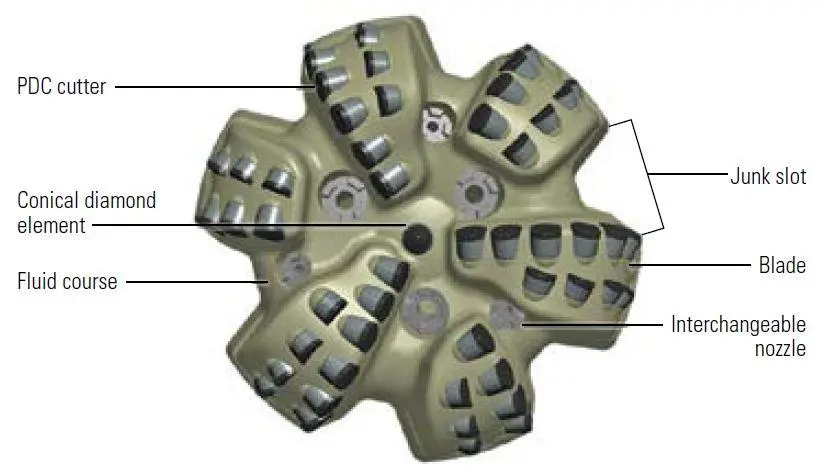
- Greater blade design flexibility: Allows manufacturers to develop taller blades and larger junk slots.
- Efficient cuttings evacuation: Larger fluid passages can help improve cleaning in formations that generate substantial cuttings.
- Repair potential: Steel bodies can generally be welded, machined, and rebuilt when their condition permits.
- Adaptability: Suitable for customized designs targeting different well profiles and drilling conditions.
These characteristics make steel-body designs attractive for directional drilling, horizontal wells, and formations where efficient cuttings removal is essential.
The main limitation is their susceptibility to erosion. High-velocity drilling fluid containing abrasive solids can gradually wear exposed body surfaces, particularly around the blades, waterways, and gauge area.
Hardfacing and protective coatings help reduce this problem, but their effectiveness depends on coating quality, thickness, bonding, and the severity of the operating environment.
Key Differences at a Glance
Performance factor | Matrix body | Steel body |
|---|---|---|
Base material | Tungsten carbide composite | High-strength steel |
Abrasion resistance | Excellent | Moderate to good with protection |
Erosion resistance | Generally excellent | Requires hardfacing or coatings |
Impact tolerance | More sensitive to severe impact | Generally higher |
Blade configuration | More constrained by material brittleness | Greater geometric flexibility |
Hydraulic passages | Design-dependent | Can accommodate larger junk slots |
Repairability | Limited for major body damage | Generally easier to repair |
Typical applications | Abrasive formations | Directional, shale, and less abrasive formations |
The most important distinction is that matrix construction prioritizes body wear resistance, while steel construction provides greater toughness and design flexibility.
2. How to Select the Right PDC Bit for Different Drilling Conditions
Selecting the appropriate body material requires more than comparing material hardness. Engineers should evaluate the complete drilling environment, including formation characteristics, cutter performance, hydraulic requirements, and drilling parameters.
Formation Hardness and Abrasiveness
Formation hardness and abrasiveness are related but different properties.
Hardness influences the cutting force required to break the rock, while abrasiveness determines how quickly the cutting elements and bit body wear during contact with the formation.
Consider the following drilling conditions:
Soft to medium shale
Steel-body PDC bits are often suitable for relatively soft shale formations. Their larger junk slots and flexible blade configurations can support efficient cuttings removal, particularly in horizontal sections.
However, sticky shale may cause bit balling. In these conditions, blade spacing, hydraulic nozzle placement, and fluid velocity must be optimized to prevent cuttings from accumulating around the cutting structure.
Abrasive sandstone
Quartz-rich sandstone can create significant abrasive wear. Matrix-body construction is often preferable when body erosion is expected to limit bit life.
Cutter selection is equally important. Appropriate diamond-table grades, cutter exposure, back rake angles, and cutter spacing help maintain cutting efficiency throughout the run.
Hard limestone and interbedded formations
Limestone containing hard stringers or fractured sections can generate substantial impact loading.
A steel-body design may provide an advantage when vibration and mechanical shock are significant. However, a properly engineered matrix bit can also perform effectively when its blade structure, cutter placement, and impact resistance are matched to the formation.
Granite and highly abrasive hard rock
These formations demand careful consideration of cutter wear, thermal stability, and impact resistance. Neither body material should be selected based on formation hardness alone. The complete cutting structure and expected drilling dynamics must determine the final design.
Cutter Configuration and Blade Design
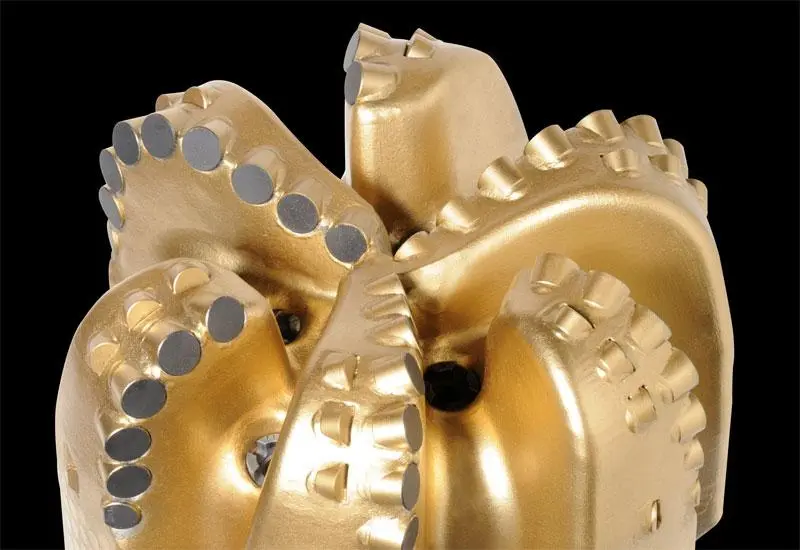
The body material is only one part of PDC bit performance. Cutter arrangement and blade geometry have a direct influence on drilling efficiency.
Important design considerations include:
- Cutter size: Larger cutters can provide higher cutting capacity, while smaller cutters allow more flexible placement and load distribution.
- Cutter grade: Diamond-table properties should match formation abrasiveness, impact loading, and thermal exposure.
- Back rake angle: Higher back rake generally improves cutter protection and stability, although excessive back rake can reduce aggressiveness and ROP.
- Blade configuration: Blade count and spacing affect cutter distribution, stability, and available flow area.
- Gauge protection: Appropriate gauge cutters and wear-resistant components help maintain hole diameter and reduce gauge wear.
- Cutter exposure: Proper exposure balances cutting efficiency against impact protection.
For example, a directional drilling application in abrasive sandstone may require a matrix body with reinforced gauge protection and a carefully distributed cutter layout.
A horizontal shale well may benefit more from a steel body with taller blades, optimized junk slots, and hydraulic passages designed to remove sticky cuttings efficiently.
Hydraulic Design and Drilling Parameters
Even a well-designed bit can perform poorly if the drilling parameters do not match its cutting structure.
Hydraulic design controls how effectively drilling fluid cleans the bit face, cools the cutters, and transports cuttings away from the bottom of the hole.
Engineers should evaluate:
- WOB (Weight on Bit): Excessive WOB can overload cutters and increase mechanical damage.
- RPM (Revolutions Per Minute): High rotational speed can increase thermal exposure and vibration if the cutter layout is unsuitable.
- Flow rate: Must provide adequate cleaning and cooling without creating excessive erosion around the bit body.
- Torque: Sudden torque fluctuations may indicate stick-slip, uneven cutter loading, or changing formation conditions.
- ROP: Should be evaluated alongside bit wear and drilling stability rather than treated as the only performance indicator.
The relationship between these parameters is especially important in deep and horizontal wells. Insufficient flow can result in poor hole cleaning and cutter overheating, while excessive flow through poorly protected waterways may accelerate body erosion.
IADC and SPE technical literature provide useful guidance for evaluating PDC bit design, classification, and field performance. Engineers should also review drilling records and dull-bit inspections to identify whether failures originate from cutter wear, body erosion, impact damage, or hydraulic problems.
Practical Industry Case: Directional Drilling in Abrasive Sandstone
Consider an illustrative field scenario involving a drilling contractor operating a directional well in the Middle East.
The formation consists mainly of sandstone with abrasive mineral content and occasional harder interbeds. The original bit experienced noticeable gauge wear and erosion around the blade surfaces. Although the PDC cutters retained some useful cutting capability, deterioration of the surrounding body affected the bit's ability to maintain its intended geometry.
After reviewing the drilling conditions, the engineering team identified three main issues:
- The formation's abrasive characteristics were contributing to excessive body wear.
- The hydraulic configuration was exposing certain blade areas to concentrated fluid erosion.
- The existing gauge protection was insufficient for the side loading encountered during directional drilling.
For the next run, the contractor considered a matrix-body PDC design with improved gauge protection, revised cutter placement, and optimized nozzle distribution.
The drilling team also reviewed WOB, RPM, and flow rate to reduce unnecessary mechanical and hydraulic stress.
The practical lesson is that changing the bit body alone is not enough. Body material, cutter configuration, gauge protection, and hydraulic design must work together.
This example illustrates a common engineering decision process rather than reporting a specific Hainaisen customer project or verified field-performance result.
3. Improving PDC Bit Performance with Customized Design from Hainaisen
Why Customized Bit Design Matters
There is no universal PDC bit configuration that performs equally well in every formation. Two wells with similar depths may require different bit designs because of differences in rock abrasiveness, compressive strength, drilling fluid properties, and directional requirements.
A reliable manufacturing partner should evaluate the complete drilling application before recommending a specific construction.
Hainaisen provides PDC drill bit solutions for oil and gas drilling, mining, water well drilling, and other drilling applications. Its product development approach focuses on matching cutter technology, body construction, and blade geometry to actual operating conditions.
Key considerations include:
1. Stable Product Quality
Consistent manufacturing processes and strict quality control are important for maintaining cutter positioning, blade geometry, and overall bit reliability. Quality inspection should cover critical manufacturing stages rather than relying solely on final appearance.
2. Advanced PDC Cutter Technology
PDC cutter performance directly influences cutting efficiency, wear resistance, and operational stability. Selecting suitable cutter grades and sizes helps ensure that the cutting structure matches the expected formation conditions.
3. Customized Bit Design
Hainaisen can develop bit configurations according to customer requirements, including:
- Matrix-body and steel-body construction options.
- Different blade counts and bit profiles.
- Customized cutter sizes, grades, and layouts.
- Optimized hydraulic nozzle configurations.
- Reinforced gauge protection.
- Application-specific cutting structures.
4. Formation-Based Technical Recommendations
The selection process should consider formation hardness, abrasiveness, expected impact loading, well trajectory, and drilling parameters.
For abrasive sandstone, matrix-body construction may be worth considering. For directional shale drilling, a steel-body design may provide greater hydraulic and geometric flexibility.
The final recommendation should always be based on the actual application rather than a general preference for one material.
5. Professional Technical Support and Export Experience
International drilling projects require clear technical communication, specification confirmation, and reliable coordination throughout the purchasing process.
Hainaisen works with overseas customers across different drilling applications, providing product consultation, customized manufacturing support, and communication throughout the order process.
When Should You Choose Each Construction?
Drilling condition | Recommended design direction |
|---|---|
Soft, relatively non-abrasive shale | Steel body |
Sticky formations requiring large junk slots | Steel body |
Abrasive quartz-rich sandstone | Matrix body |
Long intervals with severe body erosion | Matrix body |
High impact and vibration conditions | Consider steel body |
Directional drilling with substantial gauge wear | Evaluate matrix body and enhanced gauge protection |
Complex interbedded formations | Application-specific engineering assessment |
These are starting points, not fixed rules. Cutter technology, hydraulic design, bit profile, and drilling parameters can change the final selection.
Work with Hainaisen on Your Next PDC Bit Project
Choosing the correct bit construction is an investment in drilling efficiency, equipment reliability, and overall project economics.
Hainaisen focuses on stable product quality, customized PDC bit manufacturing, formation-based design recommendations, and professional technical communication. Whether your project involves oil and gas drilling, directional wells, water wells, or mining operations, selecting the right cutting structure and body construction is essential.
If you are unsure which design is suitable for your formation, Hainaisen can help evaluate your application and discuss an appropriate configuration.
Contact Hainaisen with your bit size, formation information, drilling application, and preferred technical specifications to discuss a customized PDC drill bit solution.
FAQ
1. What is the main difference between matrix-body and steel-body PDC bits?
The main difference is their body material and mechanical behavior. Matrix bodies offer superior abrasion and erosion resistance, while steel bodies generally provide better impact toughness, greater design flexibility, and easier body repair.
2. Which PDC bit is better for abrasive sandstone?
Matrix-body PDC bits are often preferred for highly abrasive sandstone because their tungsten-carbide-based construction resists body erosion. Cutter grade, gauge protection, and hydraulic design must also match the formation.
3. Are steel-body PDC bits suitable for horizontal drilling?
Yes. Steel-body designs are commonly used in horizontal and directional drilling because they can accommodate taller blades, larger junk slots, and flexible hydraulic configurations. However, highly abrasive formations may require additional body and gauge protection.
4. Can a matrix-body PDC bit drill hard rock?
Yes. Matrix-body PDC bits can be designed for hard and abrasive formations. Their suitability depends on formation strength, impact loading, cutter grade, blade structure, and drilling parameters.
5. How do drilling parameters affect PDC bit life?
WOB, RPM, flow rate, and torque directly influence cutter loading, heat generation, vibration, and hole cleaning. Excessive WOB or RPM can accelerate cutter damage, while insufficient flow can cause poor cleaning and overheating.
6. Can PDC drill bits be customized for specific formations?
Yes. Manufacturers can customize body construction, blade count, cutter size, cutter grade, cutter placement, gauge protection, and hydraulic design according to the formation and drilling requirements. Providing previous bit performance and drilling records helps improve the accuracy of design recommendations.
About the Author
Daniel Mitchell is a drilling technology writer and technical consultant specializing in PDC drill bit engineering, cutting structure optimization, and drilling equipment selection. His professional interests include oil and gas drilling, directional well operations, abrasive formation drilling, and the application of matrix and steel-body technologies in challenging downhole environments.
References
1. SLB – The Defining Series: Bits. Technical overview of fixed-cutter bit structures, PDC cutters, fluid courses, and hydraulic components.
https://www.slb.com/resource-library/oilfield-review/defining-series/defining-bits
2. IADC – IADC Classification System for PDC Drill Bits. Industry reference covering PDC bit classification, body types, cutting structures, and bit profiles.
https://iadc.org/wp-content/uploads/2025/04/Petro-Gate-Issue-1.pdf
3. Society of Petroleum Engineers (SPE) – Steel Body PDC Bit Technology Demonstrates Performance Improvements. SPE-47815-MS, IADC/SPE Asia Pacific Drilling Technology, 1998.
https://onepetro.org/SPEAPDT/proceedings-abstract/98APDT/98APDT/SPE-47815-MS/190410
4. Wear – Evaluation of the Slurry Erosion Resistance of the Body Materials of Oil & Gas Drill Bits with a Modified Abrasive Waterjet. Research examining erosion resistance and mechanical properties of matrix and steel bit-body materials.
https://www.sciencedirect.com/science/article/abs/pii/S0043164820302556
5. Hainaisen – PDC Drill Bit products. Official product information.
https://www.hnsdrillbit.com/