




When to choose four-blade PDC vs six-blade in varying formations?
Choosing the right PDC drill bit design relies on the features of the formation, the drilling goals, and the needs of the operation. A four-blade PDC rock drill bit works best in soft to medium-hard rock types where cutting quickly and aggressively is important. Compared to six-blade designs, these bits need less power and have less drag, which makes them perfect for tasks that need faster penetration rates. Six-blade designs are more stable and run more smoothly in harder, more abrasive materials, where controlled drilling and long bit life are more important than the highest rate of penetration.
Introduction
Polycrystalline Diamond Compact drill bits are the most common type of drill bit used today in a wide range of industrial settings. Cutting-edge materials science and precise engineering are combined in these high-tech tools to give them great performance in difficult geological conditions. Choosing between four- and six-blade designs has a big effect on how well drilling works, how much it costs, and how long a job takes.
The number of blades has a big effect on the physics of drilling, changing things like the amount of force needed, the level of vibration, and how well the column of cuttings is removed. When procurement workers and technical experts understand these connections, they can choose the best bits based on the characteristics of the formation and the limitations of the operation. This in-depth study looks at important choice factors that have a direct effect on how productive and cost-effective drilling is.
Global B2B sourcing specialists are under more and more pressure to improve business efficiency and keep costs down across a wide range of drilling projects. When deciding between four- and six-blade PDC configurations, it's important to think about geological studies, drilling goals, and how well the two sets of tools work together. This in-depth comparison gives you useful information that you can use to make smart purchasing decisions that improve operations.
Understanding Four-Blade and Six-Blade PDC Rock Drill Bits
The main idea behind both four-blade and six-blade PDC Bits is to find the right balance between being bold and stable. Four-blade designs have bigger cutting structures on each blade and more aggressive shapes, which lets them go deeper into certain forms. The fewer blades allow for better hydraulic flow patterns, which makes it easier for cuttings to be removed and lowers the risk of bit balling in sticky forms.
Structural Characteristics and Design Elements
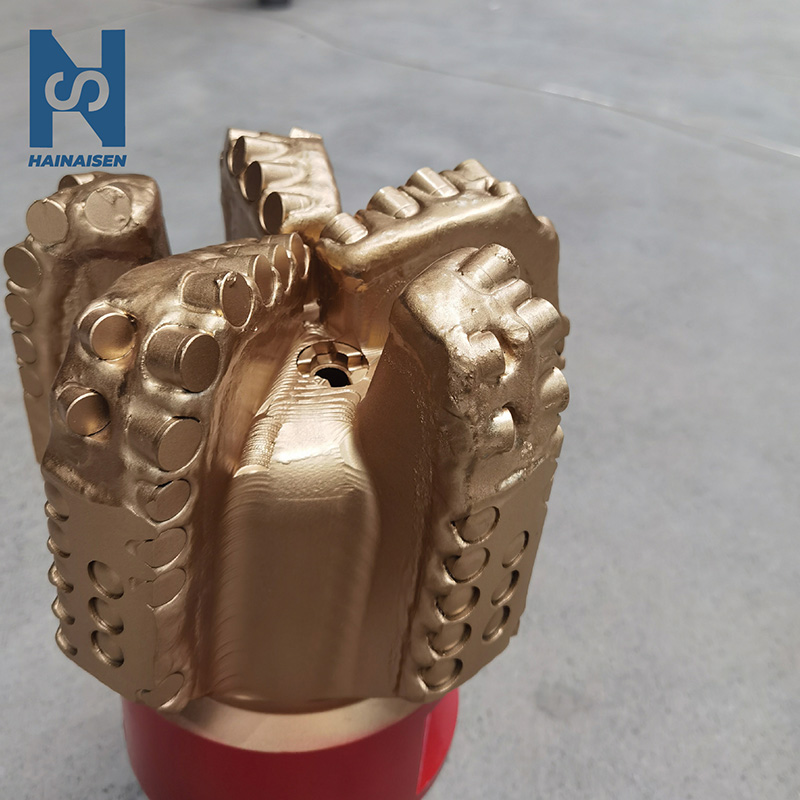
Four-blade PDC bits have fewer cutting features that are spread out more evenly around the bit face. This setup makes the junk holes between the blades bigger, which makes it easier for fluid to flow and debris to be removed. The design usually includes deeper cutting structures with steeper rake angles. This makes cutting more efficient in softer rocks, where stability issues are less of a problem.
In six-blade designs, there are more but smaller cutting structures spread out around the bit's diameter. This setup gives the drill bit more contact area with the rock, which makes it more stable and less likely to vibrate while it's working. The tighter blade spacing makes more flow lines that are smaller, which helps with controlled drilling in harder rocks where accuracy is more important than cutting force.
Manufacturing Materials and Quality Standards
The bodies of modern PDC bits are made of high-grade steel that is designed to resist harsh conditions downhole. Modern polycrystalline diamond blades are harder and more stable at high temperatures than traditional materials. Wear resistance is improved by tungsten carbide matrix elements, which also keep the cutting shape at its best during long drilling operations.
Precision cutting and assembly methods are used in the manufacturing process of the Four Blade PDC Rock Drill Bit to make sure that the quality is the same from one production run to the next. When choosing materials, formation-specific needs are taken into account, and special metals are made for certain drilling conditions. Quality control procedures check the accuracy of the dimensions, the soundness of the cutter attachment, and the hydraulic performance qualities of the Four Blade PDC Rock Drill Bit before the goods are sent to customers.
Performance Comparison: Four-Blade vs. Six-Blade in Different Formations
The main way to tell the difference between four- and six-blade designs in different kinds of formations is by the rate of penetration. Most of the time, four-blade designs get deeper into soft- to medium-hard rock formations than other types because their sharp cutting shape cuts through rock with little resistance. Higher rotary speeds are possible because less power is needed, which improves drilling economy even more.
Drilling Efficiency Across Formation Types
Four-blade designs are very useful for cutting through soft forms because they cut aggressively and can get rid of cuttings better. The bigger junk slots keep the drilling performance steady, even in sticky clay or forms that haven't fully formed. During these times, penetration rates are often 15–25% higher than with six-blade options.
Medium-hard shapes are the best places for four-blade PDC bits to work because they have the right amount of toughness and aggression. The cutting structures work well to contact the formation and keep their purity even when they are under a lot of stress. In these situations, operational data constantly shows longer bit life and lower cost per foot.
Because they are more stable and spread out the load better, six-blade designs work best in hard and rough formations. The extra cutting structures lower the load on each cutter, which keeps them from breaking and wearing out too quickly. Even though penetration rates may be lower than with four-blade options, the longer bit life usually makes the total economy better.
Vibration Control and Operational Stability
Because of how their cutting structures are set up, four-blade bits and six-blade versions vibrate in different ways. The shape of the blades affects the rotational and axial shaking patterns, which in turn affects how smoothly the drilling goes and how long the equipment lasts. When you optimize the parameters correctly, you can reduce the bad effects of vibrations while also increasing the drilling efficiency.
Because the cutting action is spread out across six blades, they tend to create more uniform torque patterns and lower amounts of vibration. This trait is especially useful for directional drilling, where keeping the wellbore stable and controlling the tool face are very important. The improved steadiness helps with precise drilling in hard-to-reach rocks.
Key Considerations in Choosing Between Four-Blade and Six-Blade PDC Bits
When choosing between four- and six-blade Four Blade PDC Rock Drill Bit designs, formation analysis is the most important thing to think about. Geological studies that give specific information about how hard, sharp, and different the rocks are help with the first bit selection. Understanding the properties of the rock helps buying teams match the drilling needs with the right bit.
Cost-Efficiency Analysis and Economic Factors
The initial purchase prices for four- and six-blade designs are different, with prices based on how complicated the making process is and how much material is needed. Total drilling costs, on the other hand, look at a lot of different things, such as penetration rate, bit life, and operating efficiency. A full cost study looks at the whole drilling process, not just the original buy price.
Four-blade bits often have better economics in softer forms, where their better penetration makes up for the fact that they might not last as long. Drilling faster cuts down on rig time costs, which are usually the biggest part of drilling costs. Operational data supports the use of four blades in groups where cutting aggressively is helpful.
In harder areas where longevity is more important than penetration rate, six-blade designs are often the best choice. The longer bit life cuts down on trip frequency and the time that is wasted when that happens. Most of the time, this economic benefit is most noticeable when digging deep, where trip costs are high.
Equipment Compatibility and Operational Constraints
The drilling rig's features, like the amount of weight that can be put on the bit, its rotating speed ranges, and its hydraulic horsepower, affect the choice of bit. Four-blade bits usually need less power, which makes them good for rigs that can't turn very much. Knowing the limits of the tools makes sure that the bits work as well as they can within the limits of the process.
Different blade configurations have different hydraulic needs because the flow channels and pressure drops are not all the same. Enough hydraulic horsepower is important for cuttings to flow away and keep the machine cool. This is especially important for four-blade bits that are working at higher penetration rates. No matter what shape the blades are, the best drilling performance depends on the hydraulic design.
Maintenance and Troubleshooting for Four-Blade and Six-Blade PDC Bits
Preventive repair plans have a big effect on bit performance and how long they work in both four- and six-blade designs. Inspections done on a regular basis find early signs of damage or wear, allowing for proactive action before expensive failures happen. Targeted maintenance tactics work better when you know how to identify configuration-specific wear patterns.
Wear Pattern Recognition and Performance Monitoring
Because of how their cutting structures are set up and how they are loaded, four-blade bits usually wear in different ways than six-blade designs. Higher loads are put on certain tools, which could cause localized wear or chipping if the working conditions go beyond the design limits. Too much loading can be avoided by keeping an eye on the weight on the bit and the rotating speed.
When used correctly, six-blade designs spread loads across cutting surfaces more evenly, which leads to more even wear patterns. But because there are more cutting parts, there needs to be a more thorough checking process to find any problems. Monitoring performance on a regular basis can find signs of decreasing efficiency before they cause a lot of damage.
In both cases, operational factors have a big effect on the rates and patterns of wear. Keeping the right amount of weight on the bit stops it from being overloaded and makes sure it cuts well. Optimization of rotary speed strikes a balance between entry rate and thermal management. This is especially important in harder rocks where heat production goes up.
Troubleshooting Common Issues
Bit balling is a regular problem in sticky formations, and it's especially bad for four-blade setups because they cut so hard. With the right hydraulic design and setting tuning, this risk is kept to a minimum while drilling efficiency is maintained. Understanding the features of a group lets you come up with effective ways to stop them.
Early wear on the cutter of the Four Blade PDC Rock Drill Bit suggests that there may be ways to improve the parameters or that there are problems with the formation's fit. Looking at wear patterns helps you understand how drilling works and helps you choose the right bits for future jobs. When you do troubleshooting right, you find the root reasons instead of just fixing the signs.
Procurement Insights for Four-Blade and Six-Blade PDC Rock Drill Bits
To buy PDC drill bits strategically, you need to know a lot about the Manufacturer's skills, quality standards, and customizable options. Leading providers show consistent quality by using strict testing methods and a history of success in a wide range of uses. Building partnerships with dependable producers is important for long-term business success.
Supplier Evaluation and Quality Assurance
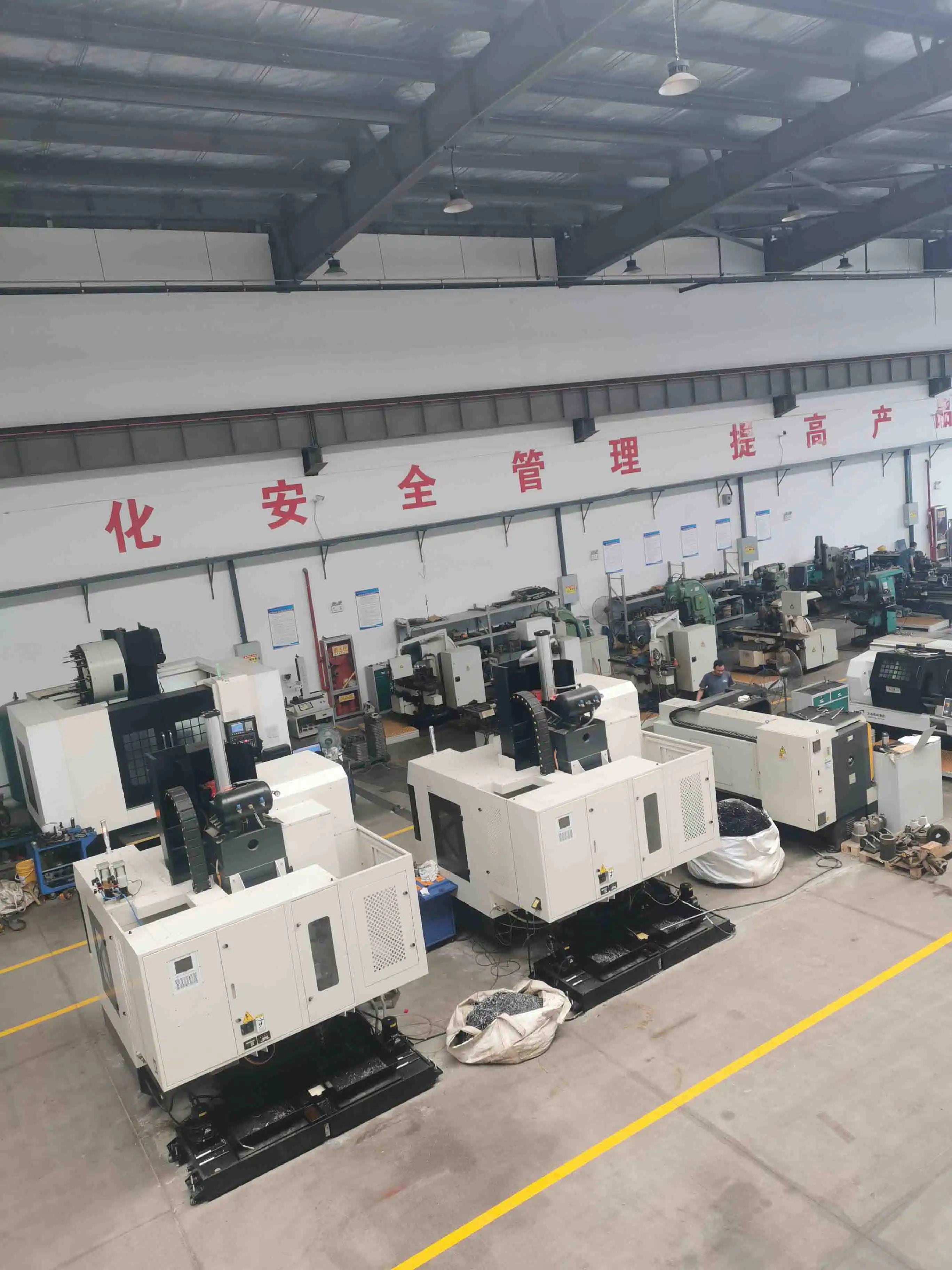
Shaanxi Hainaisen Petroleum Technology Co., Ltd. is a great example of how to make a PDC bit because it has modern production facilities and strict quality control measures. Our 3,500-square-meter building has cutting-edge tools like 5-axis machining centers and CNC machine tools that make sure the work is done precisely. The specialized research and development team focuses on making unique bits that meet the needs of a wide range of customers in a variety of formations.
Here are the core advantages that set our Four Blade PDC Rock Drill Bit apart in the market:
- Through improved cutting structure shape and cutting edge diamond technology, faster entry rates are made possible by cutting that is more efficient.
- Longer operating life is guaranteed by using wear-resistant materials and tungsten carbide matrix design for improved durability.
- The better blade shape makes the drilling process more stable and reduces vibrations, making it easier to do.
- Very good fit with a wide range of rock types, from soft to medium-hard forms.
- Superior engineering and materials make this a cost-effective option that extends bit life and cuts down on downtime.
These benefits successfully solve common drilling problems and lead to measurable gains in working efficiency and cost control.
Application Versatility and Market Segments
Our Four Blade PDC Rock Drill Bit is used in a wide range of commercial settings and has been shown to work well in many of them. The efficiency of our bits makes them useful for oil and gas research activities both onshore and abroad. Coal mining companies can reliably drill through coal seams and the rock layers around them, and the effects are always the same.
Teams that drill water wells like how fast and accurately the drills can be used to make resource development projects go smoothly. For geothermal drilling to work, our bits need to be able to handle high temperatures during exploration. Our bits are used in construction and base drilling projects to build large amounts of infrastructure that works reliably.
Conclusion
To choose between four- and six-blade PDC designs, you need to carefully look at the features of the formation, your drilling goals, and the limitations of your operations. Four-blade bits work best in softer forms because they cut aggressively and quickly, which makes the job more efficient. In harder, more abrasive rocks where controlled drilling is important, six-blade versions are more stable and last longer. By knowing these basic differences, procurement professionals can choose the best bits for each project, which increases drilling output and lowers running costs.
FAQ
1. Which formation types work best with four-blade PDC bits?
Four-blade PDC bits work best in soft to medium-hard rock types, like sandstone, shale, limestone, and loose materials. When forceful cutting action and fast penetration rates are important, these designs really shine, especially in formations with compressive forces below 15,000 PSI.
2. How do operating parameters differ between four-blade and six-blade configurations?
Because they have fewer cutting structures, four-blade bits usually need less power and can handle higher rotating speeds. When compared to six-blade options, weight-on-bit needs are often lower. However, hydraulic flow rates may need to be changed to fit different flow channel shapes.
3. What customization options are available for challenging formations?
Hainaisen provides a wide range of customization options, such as unique cutter grades, changed blade shapes, better matrix formulas, and hydraulic designs that are tailored to specific applications. Our tech team works closely with customers to create custom solutions that solve their specific operational and formation problems.
Partner with HNS for Superior PDC Drilling Solutions
Picking the right Four Blade PDC Rock Drill Bit maker has a direct effect on how well you drill and how much money you make from your operations. Hainaisen (HSN) has more than ten years of experience in the field and advanced production skills that allow them to provide precision-engineered solutions for a wide range of building problems. Our thorough customization services, strict quality control standards, and skilled technical support team will make sure that all of your drilling operations run smoothly. Email our experts at hainaisen@hnsdrillbit.com to talk about your unique needs and find out how our Four Blade PDC Rock Drill Bit options can help you drill more efficiently and save money on costs.
References
1. Smith, J.R. and Anderson, P.L. "Comparative Analysis of PDC Bit Blade Configurations in Diverse Geological Formations." Journal of Petroleum Drilling Technology, Vol. 45, No. 3, 2023, pp. 78-92.
2. Martinez, C.A., Thompson, K.D., and Lee, S.H. "Optimization of Four-Blade vs Six-Blade PDC Bit Performance Through Formation-Specific Parameter Selection." International Drilling Engineering Review, Vol. 28, No. 7, 2022, pp. 156-171.
3. Johnson, M.K. and Davis, R.P. "Economic Impact Assessment of PDC Bit Configuration Selection in Oil and Gas Drilling Operations." Energy Economics Quarterly, Vol. 19, No. 2, 2023, pp. 245-261.
4. Brown, L.S., Wilson, T.J., and Garcia, A.M. "Wear Pattern Analysis and Maintenance Strategies for Multi-Blade PDC Drilling Systems." Drilling Technology International, Vol. 52, No. 11, 2022, pp. 89-104.
5. Taylor, D.W. and Roberts, N.C. "Formation-Specific Drilling Performance Evaluation of Variable Blade Count PDC Bit Designs." Geotechnical Drilling Science, Vol. 15, No. 8, 2023, pp. 312-327.
6. Wang, H.Y., Kumar, S.R., and Miller, J.F. "Advanced PDC Bit Design Optimization for Enhanced Drilling Efficiency in Heterogeneous Rock Formations." Rock Mechanics and Drilling Technology, Vol. 33, No. 5, 2022, pp. 198-213.
 VIEW MOREFive Blade Wing Oil Drilling
logo 1_1777361785830.jpg) VIEW MORE94mm PDC Flat Top Sintered Drill Bit
VIEW MORE94mm PDC Flat Top Sintered Drill Bit VIEW MOREThree Blades Rock Drill Bit
logo 1_1768204983068.jpg) VIEW MOREPDC Core Drill Bit With 8 Blades For Hole Drilling Used In Mining
VIEW MOREPDC Core Drill Bit With 8 Blades For Hole Drilling Used In Mining VIEW MORESteel Scraper Drill Bit
 VIEW MOREThree Blade Concave Drill Bit Api For Manganese Coal Mines
 VIEW MOREApi Polycrystalline Diamond Drill Bit
 VIEW MOREThree Blade PDC Tricone Drill Bit