







What are the recognized industry standards for oil drilling bit quality assurance?
It's not enough to just follow quality assurance standards when buying drilling tools; you need to know about them to protect your business from costly downtime Diamond Oil Drill Bit and safety risks. API (American Petroleum Institute) Spec 7 for quality assurance in the oil drilling bit business, ISO 9001 for manufacturing quality systems, and ASTM testing protocols that check material integrity and performance are all well-known standards in the field. These frameworks make sure that Diamond Oil Drill Bit products meet strict mechanical, dimensional, and material requirements that are needed for drilling activities to go smoothly in a wide range of rock formations.
Understanding Oil Drilling Bit Quality Assurance Standards
Quality assurance in drilling tools represents the foundation of operational success. Over the past decade, I've witnessed how adherence to established standards directly impacts project outcomes, from exploration efficiency to worker safety.
API Specifications and Their Role in Drilling Safety
The American Petroleum Institute keeps detailed rules about how drilling bits should be made and how well they should work. API Spec 7 and API Spec 7-1 set the minimum requirements for rotary drill stem elements and roller cone bits. API RP 7G gives advice on how to build drill stems and what their operating limits should be. These standards cover important safety factors like the strength of the link, how much weight it can hold, and how long it will last without wearing out. When HNS looks at possible sources, API certification is the first thing we look at to make sure that the way the products are made follows standard industry practices.
ISO Quality Management Systems in Bit Manufacturing
Getting ISO 9001 approval shows that a company is dedicated to maintaining quality control throughout the whole production process. This standard calls for written steps to be taken for finding materials, keeping an eye on production, testing methods, and taking corrective action. When a factory gets ISO approval, it is regularly checked to make sure it is still following the rules. In addition to basic certification, implementing ISO 9001 creates traceability systems that let you keep track of individual parts from the time the raw materials are chosen until they are delivered. This responsibility is something that procurement managers value when they are building long-term relationships with suppliers.
ASTM Material Testing Protocols for PDC Drill Bits
The American Society for Testing and Materials comes up with ways to test materials to make sure they have the right qualities for drilling. ASTM E10 includes Brinell hardness testing, which checks how resistant cutting structures and bit bodies are to wear. Tensile testing according to ASTM E8 checks how strong steel parts are when they are under stress. ASTM guidelines explain how to test the thermal stability of polycrystalline diamond compact bits, measure their impact resistance, and check the bonding strength between diamond tables and carbide substrates. By giving these tests to all products, technical experts at Diamond Oil Drill Bit can get objective information about how well different brands and lines of products work.
Diamond-Specific Quality Checkpoints
PDC Bits need extra special quality checks that aren't possible with regular boring tools. The diamond grit size must stay within certain limits. It usually ranges from 30/40 mesh for rough cutting to smaller grades for more precise tasks. Even distribution across the cutting face stops wear patterns that aren't even, which shortens the life of the bit. How well cutters stay together under high-impact situations depends on how strong the bond is between the synthetic diamond layers and the carbide substrate. Modern makers use non-destructive testing methods like X-ray analysis and ultrasonic inspection to find problems inside bits before they are used. Our Xi'an facility's quality assurance procedures include these diamond-specific checks, which make sure that every bit works as expected for as long as it's used.
Core Specifications and Performance Benchmarks for Diamond Oil Drill Bits
Understanding technical specifications helps procurement professionals match bit characteristics to operational requirements. Performance benchmarks translate abstract specifications into tangible drilling outcomes.
Bit Size and Crown Geometry Standards
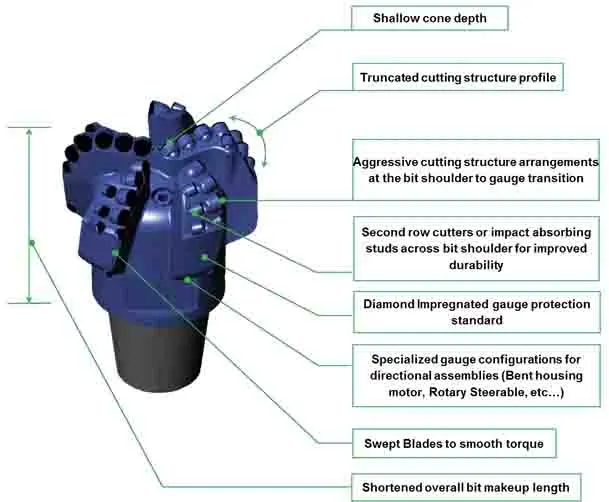
Standard rules say how big a drill bit should be so that it can work with downhole parts and casing programs. Most of the time, sizes run from 3-7/8 inches for slim holes to 17-1/2 inches for large surface holes. Crown geometry, or the shape and outline of the cutting face, affects how well bits cut through different types of material. When working with soft to medium-hard formations, parabolic crown shapes work best because they cut aggressively and remove cuttings quickly. Crown shapes that are flat or rounded work best on harder rock because they spread the cutting forces more evenly across the bit face. There are usually between three and eight blades. Fewer blades offer higher penetration rates, while more blades offer better steadiness and direction control.
Diamond Ring Construction and Grit Concentration
The diamond ring building method has a big effect on how long the bit lasts and how well it cuts. Matrix body bits put PDC cutters inside a tungsten carbide hybrid material. This makes the material very resistant to erosion, making it perfect for working in rough formations. Steel body bits hold cutters in place on a steel base, which makes it easy to change cutters and fix problems in the field. The grit concentration is the amount of diamond material in the cutting surface as a portion of the total volume. It is usually between 25% and 50%. Higher concentrations make bits last longer, but they need more drilling power. Lower concentrations, on the other hand, cut more quickly but don't last as long. At HNS, our engineering team looks at the properties of the formation to find the best grit concentrations that balance bit toughness with penetration rates.
Performance Benchmarks Across Geological Formations
Realistic performance expectations guide operational planning and budget forecasting. In soft formations like shale and clay, quality PDC bits achieve penetration rates between 40 and 100 feet per hour, with bit life exceeding 500 feet of drilling in optimal conditions. Medium-hardness formations, including limestone and sandstone reduce penetration rates to 20-60 feet per hour, with expected bit life ranging from 300-600 feet depending on abrasiveness. Hard formations such as granite and quartzite challenge even premium bits, yielding 10-30 feet per hour with bit life limited to 150-300 feet. These benchmarks assume proper drilling parameters—weight on bit, rotational speed, and hydraulic flow—calibrated to formation characteristics and bit design.
Comparing PDC Bits with Alternative Drill Bit Types
While PDC technology dominates modern drilling operations, understanding alternative bit types clarifies PDC's quality assurance advantages. Tungsten carbide insert bits feature hardened carbide buttons that crush rock through compressive force, suitable for extremely hard formations where PDC cutters might chip or fracture. Steel tooth roller cone bits use machined steel teeth for economical drilling in soft formations but wear rapidly in abrasive conditions. Natural diamond bits, though expensive, offer superior performance in highly abrasive formations that quickly degrade PDC cutters. The quality assurance measures for PDC bits focus on cutter integrity, bonding strength, and thermal stability—distinct from the bearing reliability and cone balance, Diamond Oil Drill Bit critical to roller cone bits or the diamond quality and setting precision essential to natural diamond bits.
How to Choose Diamond Oil Drill Bits Meeting Industry Standards
Selecting appropriate drilling tools requires balancing technical specifications, certification verification, and supplier reliability. Strategic procurement protects operations from substandard equipment while optimizing cost efficiency.
Matching Bit Specifications to Drilling Environments
Formation hardness represents the primary factor in bit selection. Soft formations with compressive strengths below 5,000 psi respond well to bits with larger PDC cutters, aggressive rake angles, and fewer blades for maximum penetration. Medium formations ranging from 5,000-15,000 psi require balanced cutter sizes, moderate rake angles, and intermediate blade counts that compromise between cutting speed and stability. Hard formations exceeding 15,000 psi demand smaller, more numerous cutters with conservative rake angles that resist chipping under high impact loads. Beyond hardness, abrasiveness dictates cutter material selection and matrix composition, while formation tendency to ball-up influences hydraulic design and nozzle placement.
Verifying Supplier Certifications and Testing Reports
Documentation review separates qualified Manufacturers from questionable suppliers. Legitimate API Certifications include license numbers verifiable through the API Composite List, an online database of authorized licensees. ISO certificates should display accreditation body logos and include scope statements confirming coverage of drilling bit manufacturing. Comprehensive testing reports document individual bit inspections, including dimensional measurements, hardness readings, non-destructive testing results, and hydrostatic pressure tests. Technical engineers should request certificates of conformance that specify material grades, heat treatment procedures, and quality control checkpoints completed during production. Our documentation at HNS provides complete traceability, giving procurement managers confidence in product authenticity and manufacturing integrity.
Evaluating Warranty Terms and Supplier Support
Warranty provisions reveal manufacturer confidence in product quality. Standard warranties cover manufacturing defects, including cutter loss, premature wear, and structural failures attributable to material or workmanship issues. Comprehensive warranties extend coverage to include performance guarantees, providing replacements or credits when bits fail to achieve specified footage or penetration rates under documented drilling conditions. Warranty claims processes should offer straightforward submission procedures, reasonable evaluation timelines, and transparent approval criteria. Beyond warranty terms, supplier support capabilities including technical consultation, application engineering, and field service, determine whether procurement relationships deliver long-term value or merely transactional exchanges.
The Value of Supplier Audits and Factory Inspections
For large procurement commitments or long-term supply agreements, on-site facility evaluation provides direct quality verification that certificates alone cannot deliver. Factory audits assess equipment capabilities, including CNC machining centers, automated welding systems, and computerized inspection tools that determine manufacturing precision and consistency. Process observations reveal whether documented quality procedures translate into actual shop floor practices. Material storage conditions, in-process inspection frequency, and calibration programs for measuring equipment indicate operational discipline and quality commitment. Our 3,500-square-meter facility in Xi'an welcomes customer visits, offering transparency that builds trust with procurement professionals evaluating potential suppliers. The investment in factory inspection protects against misrepresentation and establishes personal relationships that facilitate problem-solving throughout partnership duration.
Procurement and Supplier Selection for Industry-Standard Diamond Oil Drill Bits
Strategic sourcing decisions impact operational performance and long-term cost efficiency. Understanding the global supplier landscape enables informed partner selection that balances quality requirements with budget constraints.
Navigating the Global Supplier Landscape
The drilling bit manufacturing sector includes established Diamond Oil Drill Bit multinational corporations, specialized regional manufacturers, and emerging suppliers in developing markets. Major international brands invest heavily in research and development, offering cutting-edge designs backed by extensive field testing and technical support networks. Regional specialists often provide responsive customer service, customized designs for local formation conditions, and competitive pricing structures. Emerging manufacturers present cost advantages but require careful vetting to verify quality compliance and manufacturing capabilities. Shaanxi Hainaisen Petroleum Technology Co., Ltd. represents the specialized regional category, combining advanced manufacturing equipment, including five-axis machining centers, with customization capabilities that address specific formation challenges.
Understanding Price Versus Quality Considerations
Price differences among suppliers reflect variations in material quality, manufacturing precision, design sophistication, and business overhead rather than arbitrary markups. Premium-priced bits typically incorporate higher-grade synthetic diamonds, precision-machined components with tighter tolerances, and advanced hydraulic designs optimized through computational modeling. Mid-range offerings balance cost and performance, using quality materials with conventional designs proven in field applications. Budget options minimize manufacturing costs through simplified designs, standard materials, and reduced quality control intensity. The critical analysis involves the total cost of ownership rather than the purchase price alone—bits that drill farther, last longer, and require fewer trips ultimately deliver lower per-foot drilling costs despite higher initial investment.
Logistics Considerations for International Procurement
When you buy things from other countries, you have to deal with shipping times, customs processes, and import rules that can make your supply chain less reliable. Standard ocean freight from Asian manufacturers to North American destinations takes 25–35 days to travel, plus time for customs clearance. Air freight cuts arrival time to 5–10 days, but costs a lot more. Consolidated packages lower the cost of shipping each unit, but you have to plan ahead to get enough orders. The tax rates and paperwork needed for imports are based on the Harmonised Tariff Schedule codes that are used for classification. Drill bits are usually classified under Chapter 8207 codes. Expert suppliers offer export paperwork like business invoices, packing lists, certificates of origin, and quality certifications that make the customs process go more smoothly.
Negotiation Strategies for Bulk Orders and Long-Term Agreements
When you buy in bulk, you can get better prices, longer payment terms, and stronger service promises. To negotiate well, you need to know how suppliers set their prices, what other options are available, and how you can both benefit from the negotiations. Combining needs from several projects or processes into one increases the number of orders, which allows price cuts. Long-term supply agreements help manufacturers plan their capacity and inventory better by giving them a way to predict their income. This value can be traded for price cuts or priority allocation when supplies are low. Performance-based terms that tie pricing to drilling metrics align the interests of both the provider and the customer, rewarding good delivery with more business.
Conclusion
Quality assurance standards provide the framework that ensures Diamond Oil Drill Bit products deliver reliable performance across demanding drilling applications. API specifications, ISO quality systems, and ASTM testing protocols establish objective benchmarks that separate qualified manufacturers from substandard suppliers. Understanding core specifications, performance expectations, and selection criteria empowers procurement professionals to make informed decisions that balance cost efficiency with operational requirements. Proper maintenance and strategic supplier relationships maximize equipment value while minimizing downtime risks. Whether drilling for oil and gas, extracting coal bed methane, or completing water wells, adherence to recognized industry standards protects your operations and supports project success.
FAQ
1. What certifications should I verify when purchasing Diamond Oil Drill Bits?
Verify API Spec 7 licensing for drilling equipment compliance and ISO 9001 certification for quality management systems. Request material certifications documenting steel grades and carbide specifications, along with testing reports confirming dimensional accuracy and mechanical properties. Check that certificates include verifiable license numbers and accreditation body endorsements, avoiding generic compliance claims without supporting documentation.
2. How do PDC bits compare to roller cone bits in terms of quality standards?
PDC bits emphasize cutter integrity, bonding strength, and thermal stability in quality assurance protocols, while roller cone bits focus on bearing reliability, seal performance, and cone balance. Both types follow API specifications, but testing methodologies differ based on their distinct failure modes and operating mechanisms. PDC technology generally provides longer bit life in most formations, though roller cone bits excel in specific hard rock applications.
3. What factors determine Diamond Oil Drill Bit service life?
Formation characteristics, including hardness and abrasiveness, represent primary factors, along with drilling parameters such as weight on bit, rotational speed, and hydraulic flow rates. Bit quality, including cutter grade, matrix composition, and manufacturing precision, directly impacts durability. Proper maintenance, appropriate application matching, and operational discipline extend service life, while aggressive drilling practices or formation mismatches accelerate wear.
Partner with HNS for Certified Diamond Oil Drill Bit Manufacturing Excellence
At Shaanxi Hainaisen Petroleum Technology Co., Ltd., we understand that quality assurance extends beyond certifications to encompass manufacturing capabilities, technical expertise, and customer partnership. Our Xi'an facility combines advanced five-axis machining centers with experienced engineering teams dedicated to delivering Diamond Oil Drill Bit solutions that meet rigorous industry standards. We serve oil and gas operators, coal mining companies, geological exploration teams, and water well drilling contractors with products backed by comprehensive testing and documented compliance. Our customization capabilities address formation-specific challenges that standard designs cannot solve, while our competitive pricing structures accommodate projects ranging from major oil service companies to regional drilling teams. Whether you require high-specification PDC bits for demanding formations or cost-effective solutions for routine applications, our team provides technical consultation that matches equipment to operational requirements. Contact Us today at hainaisen@hnsdrillbit.com to discuss your drilling requirements with experienced Diamond Oil Drill Bit suppliers committed to your operational success.
References
1. American Petroleum Institute. (2016). Specification for Rotary Drill Stem Elements. API Specification 7, 45th Edition. Washington, DC: American Petroleum Institute.
2. Bellin, F., Dourfaye, A., King, W., & Thigpen, M. (2010). The Current State of PDC Bit Technology. World Oil Magazine, 231(8), 41-46.
3. International Organization for Standardization. (2015). Quality Management Systems – Requirements. ISO 9001:2015. Geneva: International Organization for Standardization.
4. Sinor, L. A., & Warren, T. M. (1989). Drag Bit Wear Model. SPE Drilling Engineering, 4(2), 128-136. Society of Petroleum Engineers.
5. Winters, W. J., Warren, T. M., & Onyia, E. C. (1987). Roller Bit Model With Rock Ductility and Cone Offset. SPE Annual Technical Conference and Exhibition. Society of Petroleum Engineers Paper 16696.
6. Zhang, Z., Zhao, D., Zhou, Y., & Tang, J. (2018). Review of PDC Cutter-Rock Interaction: Methods and Physics. Geofluids, 2018, Article ID 5271814.
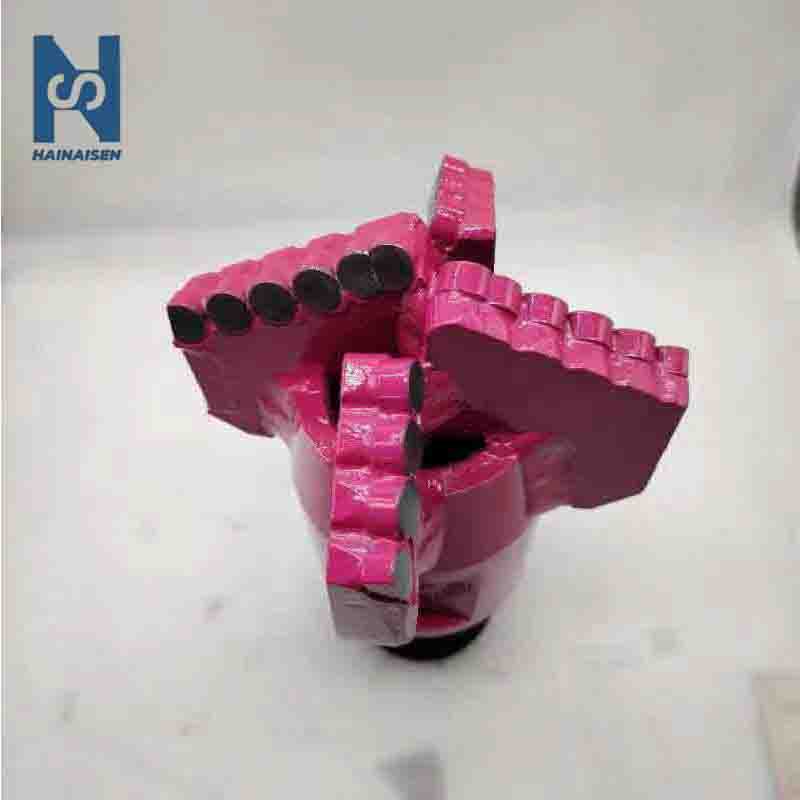 VIEW MOREAlloy Scraper Drill Bit For Water Well
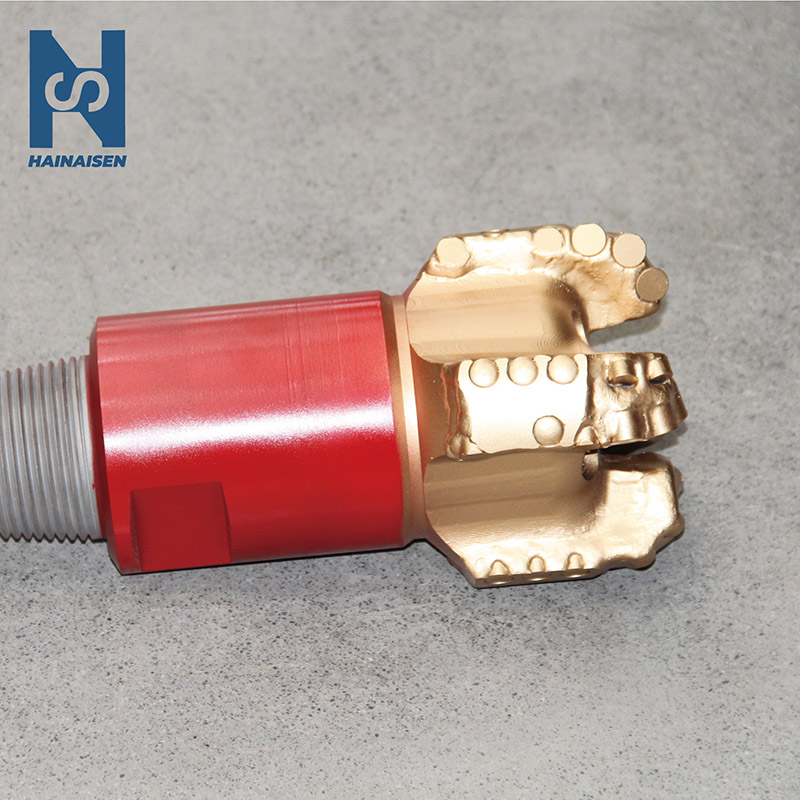 VIEW MOREPetroleum PDC Oil Drill Bit
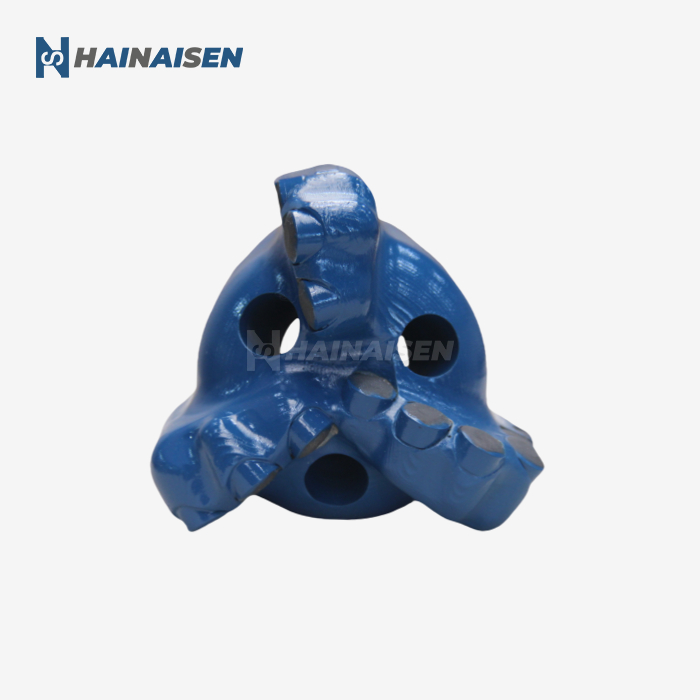 VIEW MORE3 Blade PDC Arc Angle Drill Bit
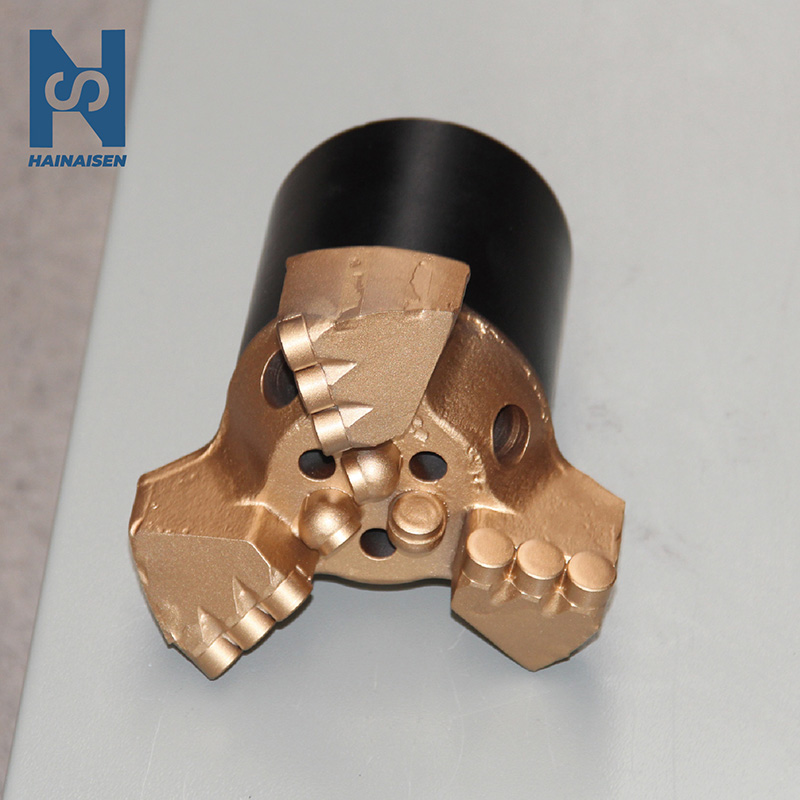 VIEW MOREThree Blade Concave Drill Bit Api For Manganese Coal Mines
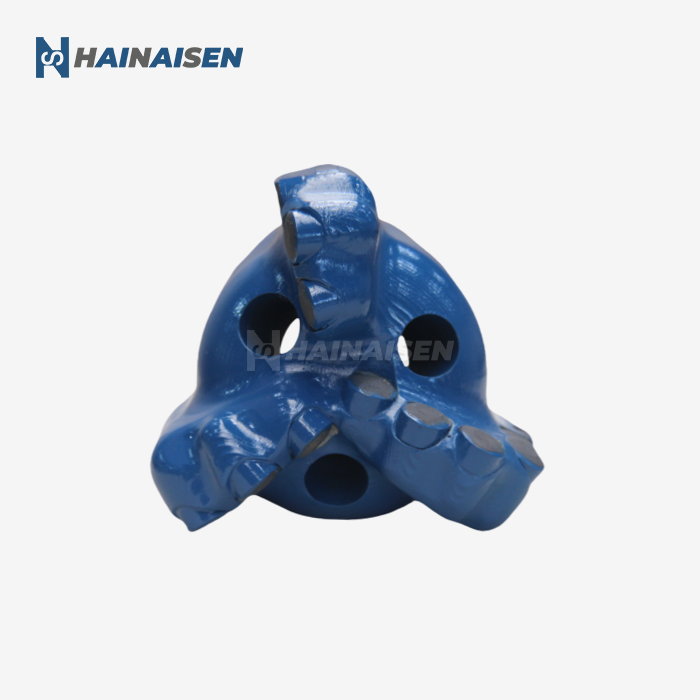 VIEW MORE113mm Three Wing Arc Angle Drill Bit
logo 2_1777361643767.jpg) VIEW MORE94mm Four Wing Arc Angle Drill Bit
VIEW MORE94mm Four Wing Arc Angle Drill Bit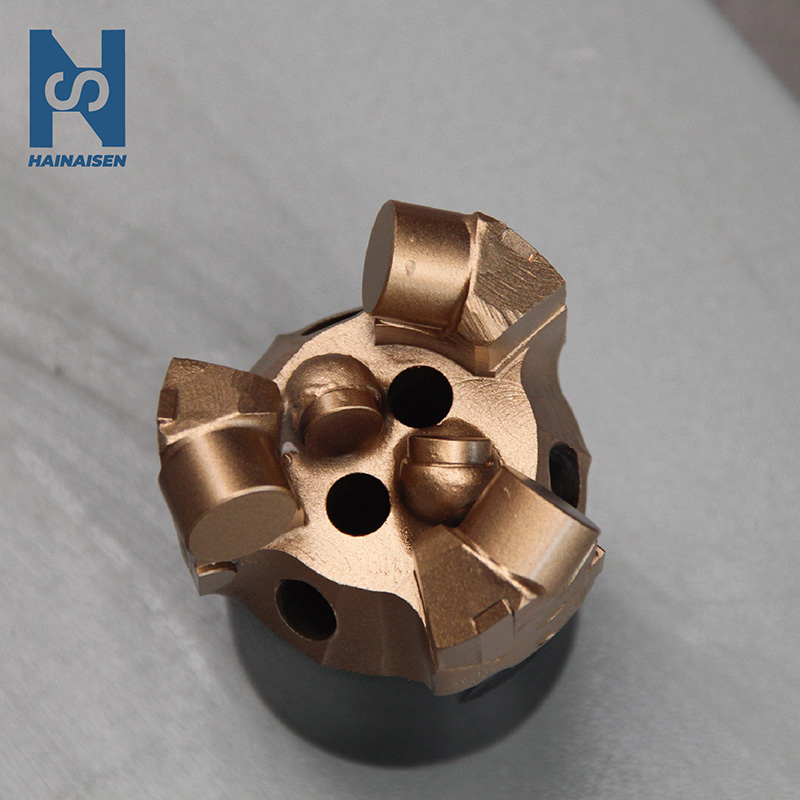 VIEW MORECoal Mines Use Haineisen PDC Drill Bits
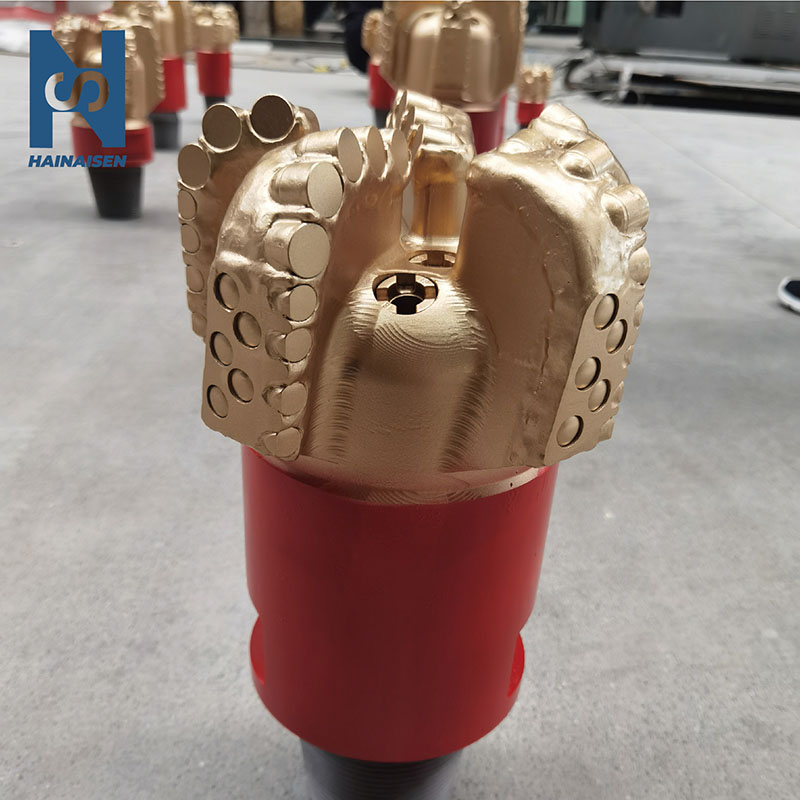 VIEW MOREFive Blade Oil Drill Bit
