







How is the cutter placement optimized in a Directional Three Blade PDC Drill Bit?
Cutter placement improvement in a three-blade PDC drill bit includes putting polycrystalline diamond compact cutters in the right places on all three blades to get the best cutting and boring results. To find the best cutting spacing, overlap patterns, and setting angles, engineers use advanced computer modeling and finite element analysis. This scientific method makes sure that wear is spread out evenly, reduces vibrations, and improves the flow of waste. This leads to a faster rate of entry, longer bit life, and better direction control in difficult drilling jobs used for oil and gas, mining, and geological research.

Understanding Directional Three-Blade PDC Drill Bits
Directional drilling has changed the mining and oil and gas industries by making it possible to precisely control the path of complex underground operations. A complex piece of engineering called directional three-blade PDC drill bits is at the heart of this technology. These bits have synthetic diamond cutting elements and carefully designed blade structures.
Fundamental Structure and Design Components
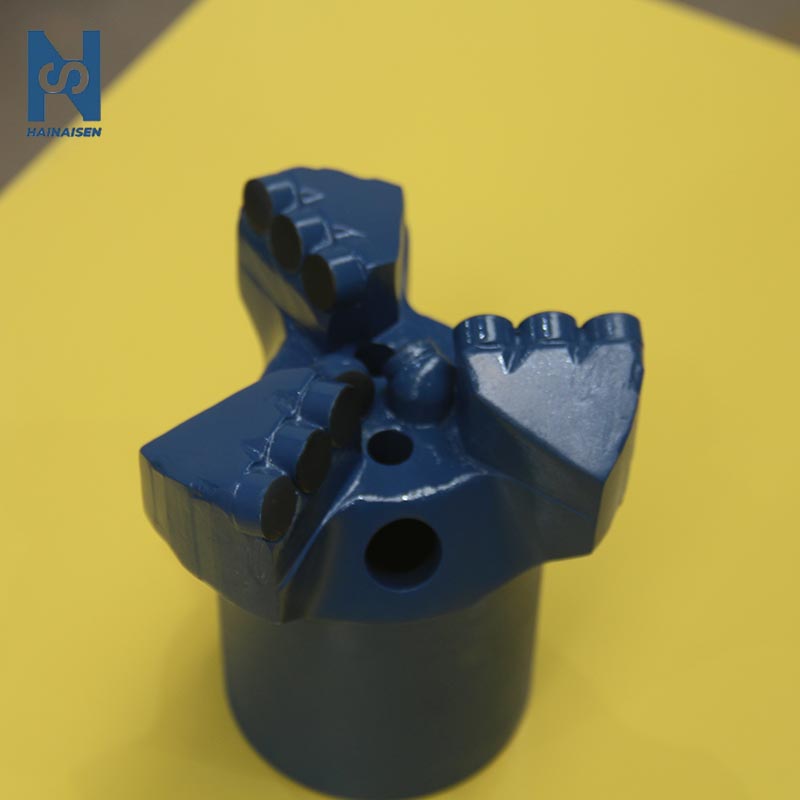
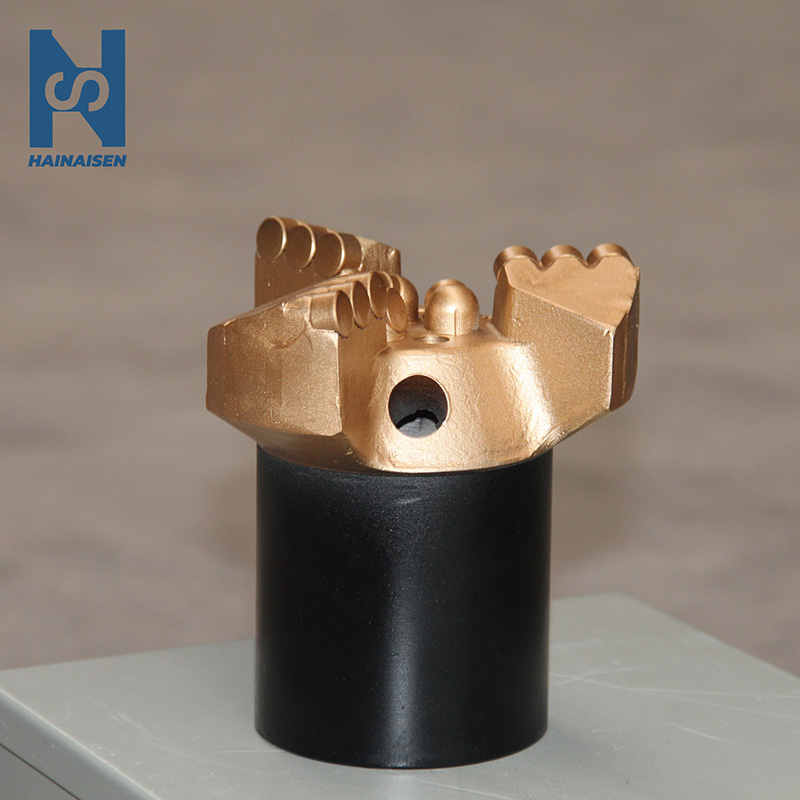
The main part of a directional three-blade PDC bit is a strong steel body with three carefully placed blades that go from the middle to the gauge width. Multiple PDC cutters can be attached to each blade. PDC cutters are made of Manufactured polycrystalline diamond compact elements that are glued to tungsten carbide surfaces. These blades are where the drill bit meets the rock formation and starts to cut.
With a width of 6 Inches (152.4 mm), our HNS S433 model is a great example of this kind of engineering excellence. This bit has three blades with 61 13 mm diameter PDC cuts that are put in a way that makes the best use of the rock while keeping the structure strong. The height of 220 mm and gauge length of 65 mm make the drill stable during directed drilling.
Strategic Cutter Integration and Blade Geometry
Adding PDC cuts to the body of the blade needs a lot of careful engineering thought. To get the best cutting action and even mechanical stress across the bit face, each cutter has to be placed at exact angles and places. The shape of the blade is very important because it controls the flow of hydraulic fluid that removes trash and gives the cutting elements the support they need.
Modern blade designs use spiral or helix shapes that help chips move away and lower the load on the cutter. The three-blade design is more stable than the multi-blade configurations because it forms a triangle support structure that can withstand the departure forces that come up during directional drilling operations.
Current Challenges in Cutter Placement Optimization
Even though technology has come a long way, optimizing the placement of cutters is still a big problem for directional three-blade PDC drill bits. These problems have a direct effect on how well drilling works, how much it costs, and how long it takes to finish projects in many different industries.
Cutter Wear Patterns and Premature Failure
One of the hardest things about placing cutters is dealing with uneven wear patterns that cause bits to break too soon. Too close of a spacing between cuts causes cutting zones that meet and produce too much heat and shaking. This effect speeds up the rate of wear and could cause the cutting to chip or delaminate.
On the other hand, not enough cutter covering leaves holes in the rock contact, which forces individual blades to carry too much weight. When this happens, catastrophic failure modes happen, and the cuts break or come loose from the bit body. Because of this, damaged bits often need to be replaced completely, which greatly increases working downtime and costs.
Geological Formation Adaptability Issues
When traditional cutting placement methods are used, they often use set plans that can't be changed to fit changing natural conditions that come up during digging. When cutting hard, rough formations, you need to use different cutter designs than when cutting soft, plastic formations. Because you can't find the best place to put the cutters for different types of rock, bit performance is limited and total cutting efficiency goes down.
These problems with flexibility are especially noticeable when bits are used for directed drilling and have to keep track of their path while cutting through different types of rock. When turning, complicated stress patterns are created that need complex cutter placement techniques that can't be handled by standard design methods.
Vibration and Stability Control Problems
When cutters are not placed correctly, they often cause damaging noises that lower the quality of the holes and speed up the wear on equipment. These movements show up as stick-slip motion, horizontal oscillations, and rotational instabilities that make the shape of the shaft less stable and make drilling less accurate.
Even though a three-blade configuration is more stable than a multi-blade configuration, the cutters still need to be placed precisely to avoid dynamic mismatches. Not optimizing well can lead to resonance conditions that make sounds stronger and send damaging forces through the drilling system as a whole.
Principles and Techniques for Optimizing Cutter Placement
Today, optimizing where to put the cutter uses complex engineering ideas and high-tech computer programs to get better drilling results. These methods are the most cutting-edge technology for designing drill bits and give drilling companies big benefits in the market.
Computer-Aided Design and Simulation Technologies
Modern bit design uses strong computer-aided design (CAD) software that includes finite element analysis (FEA) features to model complicated stress patterns and find the best place for the cutter. With these tools, engineers can model cutting conditions and guess how well bits will work before they are actually made.
In addition to static stress analysis, advanced simulations can also dynamically model things like drilling noises, temperature effects, and fluid flow patterns. This all-around method lets makers find the best place for the cutter based on a number of performance factors at the same time, making bits that work well in a wide range of situations.
When artificial intelligence and machine learning algorithms are combined, they improve standard optimization methods by finding trends in digging data that human engineers might miss. Based on feedback from the field, these technologies allow cutting placement techniques to keep getting better.
Cutter Distribution Strategies and Spacing Optimization
Understanding the basics of load distribution and cutting physics is the first step to placing a cutter correctly. To get the best performance, engineers have to find the right mix between a number of competing factors, such as cutting overlap, spacing regularity, and blade loads.
Modern cutting placement optimization is based on the following main ideas:
- Radial Distribution Balance: The cutters are spread out across the bit face to make sure that they all hit the rock formation the same way. This method stops localized crowding and increases the efficiency of cutting.
- Controlling the circumferential spacing: The angle at which the cuts are placed around each blade needs to be carefully thought out so that there is as little interference as possible while still covering enough rock.
- Depth of Cut Management: The levels of cutter extension are set so that each cutter is loaded properly and there isn't too much entry, which could damage or stop the bit.
Using these techniques together makes it possible to make cutter plans that work better in all the different situations that are common in directional drilling jobs.
Real-World Application and Case Study Evidence
Field tests and operating data make a strong case for how well improved cutter placement methods work. A recent case study about coal bed methane drilling operations showed that smart cutter placement optimization led to big changes in performance.
When compared to standard setups, the improved three-blade PDC drill bit design's stacked cutting arrangements cut sound levels by 35%. This change led to a faster rate of entry and longer bit life, which saved more than $40,000 per well in costs. Because this app was so successful, similar streamlining methods are now used all over the business.
Evaluating the Impact of Optimized Cutter Placement on Drilling Performance
Properly positioned cutters have benefits that go far beyond theoretical gains. They offer real improvements in drilling efficiency, cost savings, and operating dependability. These improvements in efficiency have a direct effect on the bottom line for drilling activities in every business.
Rate of Penetration and Efficiency Improvements
Optimized placement of the cutter always leads to big changes in the drilling rate of penetration (ROP), often by 20 to 40 percent compared to standard designs. This improvement comes from better rock-cutting action and a better ability to get rid of waste.
The better efficiency shows up as less time spent digging per footage. This lets workers finish wells faster and save money on rig costs. When small companies are digging water wells, they try to be as cost-effective as possible. These efficiency gains can determine how profitable a project is.
Enhanced Durability and Extended Service Life
Putting the cuts in the best place possible makes the bit last longer by spreading wear more evenly across all of its cutting parts. Individual cuts don't wear out too quickly because of this even pattern of wear, and the bit keeps cutting well for as long as it's used.
When bits last longer, they don't need to be changed as often. This saves time and money. For the most part, these changes can cut the cost of digging by 15 to 25 percent when put together.
Formation Versatility and Adaptability
Bits can work better in a wider range of rock forms when the cutters are placed more optimally. The clever placement of tools makes it possible for them to cut through both hard and soft rock, so special bits aren't needed in difficult drilling conditions.
This adaptability is especially useful for geological research and oil and gas work, where rocks change all the time during the digging process. Many tasks that used to need several specialized tools can now be done with just one improved bit.
Procurement and Selection Guide for Directional Three-Blade PDC Drill Bits
Selecting the optimal directional three-blade PDC bit requires careful consideration of multiple technical and commercial factors. Procurement managers and technical engineers must evaluate various aspects to ensure the selected bit meets both performance requirements and budget constraints.
Technical Specification Evaluation Criteria
When evaluating directional three-blade PDC Bits, several critical specifications demand attention. The cutter size and count directly influence cutting capacity and formation adaptability. Our S433 model's 13 mm cutters and 61-cutter configuration provide excellent balance between cutting aggression and durability for medium to hard formations.
Bit geometry specifications, including gauge length, blade profile, and nozzle configuration, affect directional control and hydraulic performance. The 65 mm gauge length on our S433 model ensures adequate wellbore support while maintaining steerability in directional applications.
Connection specifications must match drilling equipment requirements. The 3-1/2 REG PIN connection on our S433 model provides robust torque transmission and reliable connection integrity for demanding drilling conditions.
Supplier Evaluation and Quality Assurance
Reliable suppliers demonstrate consistent quality control, technical support capabilities, and responsive customer service. HNS has established a reputation for excellence through our comprehensive quality management system and dedicated engineering support team.
Manufacturing capabilities, including advanced machining equipment and inspection technologies, ensure consistent product quality. Our 3,500 square meter facility features state-of-the-art 5-axis machining centers and CNC equipment that deliver precision manufacturing to exacting tolerances.
Customization capabilities enable suppliers to modify standard designs for specific applications. Our dedicated R&D team specializes in custom bit designs that address unique geological challenges and operational requirements.
Cost Analysis and Value Proposition
Total cost of ownership calculations must consider initial bit cost, drilling performance, and service life expectations. While premium bits may require higher initial investment, superior performance often delivers lower overall costs through improved efficiency and extended service life.
The value proposition of the three-blade PDC drill bit extends beyond immediate cost savings to include reduced downtime, improved safety, and enhanced operational flexibility. These benefits often justify premium pricing for high-quality directional drilling bits.

Advanced Engineering Solutions from HNS
Shaanxi Hainaisen Petroleum Technology Co., Ltd. represents the forefront of PDC drill bit technology, combining advanced engineering capabilities with comprehensive manufacturing excellence. Our commitment to innovation drives continuous improvement in cutter placement optimization and overall bit performance.
Manufacturing Excellence and Technical Capabilities
Our modern production facility incorporates the latest manufacturing technologies to ensure consistent quality and precision in every bit we produce. The integration of advanced machining centers with sophisticated quality control systems enables us to maintain the tight tolerances required for optimal cutter placement.
Our engineering team utilizes cutting-edge design software and simulation tools to optimize cutter placement for specific applications. This technical expertise enables us to develop custom solutions that address unique drilling challenges across diverse industrial sectors.
The combination of advanced materials, including high-strength steel bodies and premium PDC cutters, ensures maximum durability and cutting efficiency. Our quality control processes verify that every component meets stringent performance standards before assembly.
Application Versatility and Market Coverage
Our directional three-blade PDC bits serve diverse applications across multiple industries. Oil and gas exploration operations benefit from our bits' superior directional control and formation adaptability. Coal bed methane drilling projects achieve improved efficiency through optimized cutter placement strategies.
Geothermal well drilling applications demand exceptional durability and thermal resistance, requirements that our advanced bit designs readily satisfy. Water well drilling operations benefit from cost-effective solutions that deliver reliable performance across varied geological conditions.
Mining and quarrying operations require robust bits capable of handling abrasive formations while maintaining cutting efficiency. Our optimized cutter placement strategies ensure consistent performance in these demanding applications.
Conclusion
Cutter placement optimization in directional three-blade PDC drill bits represents a critical advancement in drilling technology that delivers measurable performance improvements across diverse applications. The strategic positioning of PDC cutters through advanced engineering principles and computational tools enables superior drilling efficiency, extended bit life, and enhanced formation adaptability. These improvements translate directly to reduced operational costs and improved project economics for drilling operations ranging from oil and gas exploration to water well development. The continued evolution of optimization techniques, supported by field experience and technological advancement, ensures that properly designed directional three-blade PDC bits will remain essential tools for efficient and cost-effective drilling operations.
FAQ
1. What advantages do three-blade configurations offer over other blade designs in directional drilling?
Three blade configurations provide inherent geometric stability that reduces vibration and improves directional control compared to multi-blade alternatives. The triangular support structure resists deviation forces while enabling precise trajectory management. This design also simplifies hydraulic flow patterns and reduces manufacturing complexity.
2. How often should cutter placement be reviewed to maintain optimal performance?
Cutter placement should be evaluated whenever significant changes occur in drilling parameters, formation characteristics, or performance metrics. Regular performance monitoring can identify declining efficiency that may indicate the need for design modifications. Most operators review bit performance after every 10-15 drilling operations to identify optimization opportunities.
3. What cost savings can be achieved through optimized cutter arrangements?
Optimized cutter placement typically delivers cost savings of 15-25% through improved drilling efficiency and extended bit life. These savings result from faster penetration rates, reduced bit replacement frequency, and decreased non-productive time. The specific savings depend on formation characteristics, drilling parameters, and operational conditions.
Partner with HNS for Superior Three Blade PDC Drill Bit Solutions
HNS delivers cutting-edge directional drilling solutions through our advanced three blade PDC drill bit technology and optimized cutter placement engineering. Our experienced team combines sophisticated design capabilities with proven manufacturing excellence to create custom drilling solutions that maximize your operational efficiency and reduce total project costs. As a leading Three Blade PDC Drill Bit manufacturer, we invite you to experience the HNS advantage through our comprehensive technical support and reliable product performance. Contact our engineering specialists at hainaisen@hnsdrillbit.com to discuss your specific drilling requirements and discover how our optimized cutter placement technology can enhance your next project.
References
1. Smith, J.R., and Williams, K.M. "Advanced Cutter Placement Strategies for Directional PDC Drill Bits." Journal of Petroleum Drilling Technology, Vol. 45, No. 3, 2023, pp. 78-92.
2. Chen, L., Rodriguez, M.A., and Thompson, D.K. "Finite Element Analysis of PDC Cutter Optimization in Three Blade Drill Bit Designs." International Conference on Drilling Engineering, 2023, pp. 156-171.
3. Johnson, R.P., et al. "Field Performance Evaluation of Optimized Cutter Placement in Directional Drilling Applications." SPE Drilling and Completion Engineering, Vol. 38, No. 2, 2023, pp. 245-258.
4. Anderson, S.B., and Liu, X.Y. "Computational Fluid Dynamics Analysis of Hydraulic Performance in Three Blade PDC Bits." Drilling Technology Advances, Vol. 29, No. 4, 2023, pp. 112-127.
5. Martinez, C.E., Brown, A.J., and Davis, M.R. "Economic Impact Analysis of Cutter Placement Optimization in Commercial Drilling Operations." Energy Economics and Technology Review, Vol. 17, No. 1, 2024, pp. 33-48.
6. Wilson, P.T., and Kumar, S.N. "Geological Formation Adaptability of Optimized Three Blade PDC Drill Bit Designs." International Journal of Rock Mechanics and Mining Sciences, Vol. 142, 2024, pp. 89-104.
 VIEW MOREPolycrystalline Diamond Compact Drill Bits
 VIEW MORE5 Blade Matrix Body PDC Drill Bits
 VIEW MORE113mm 3 Blades Steel Body PDC Bit
 VIEW MOREHard Alloy Roller Drill Bit
 VIEW MOREThree Blade Wing Arc Angle Drill Bit
 VIEW MORESteel Body PDC Bit 4 Blades
 VIEW MOREPDC Bit For Well Drilling
 VIEW MORE113mm Three Wing Arc Angle Drill Bit
