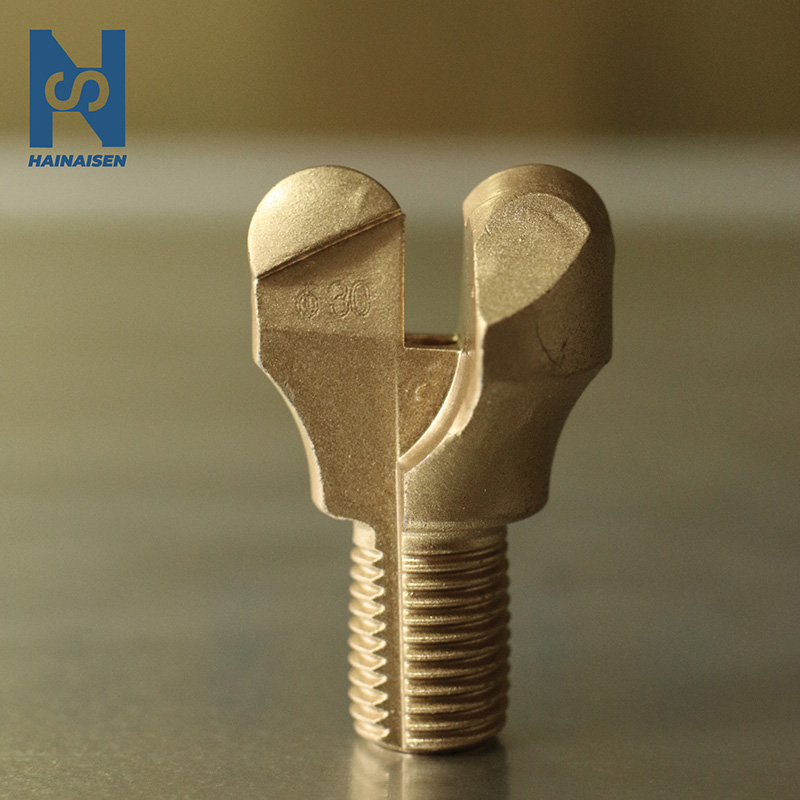
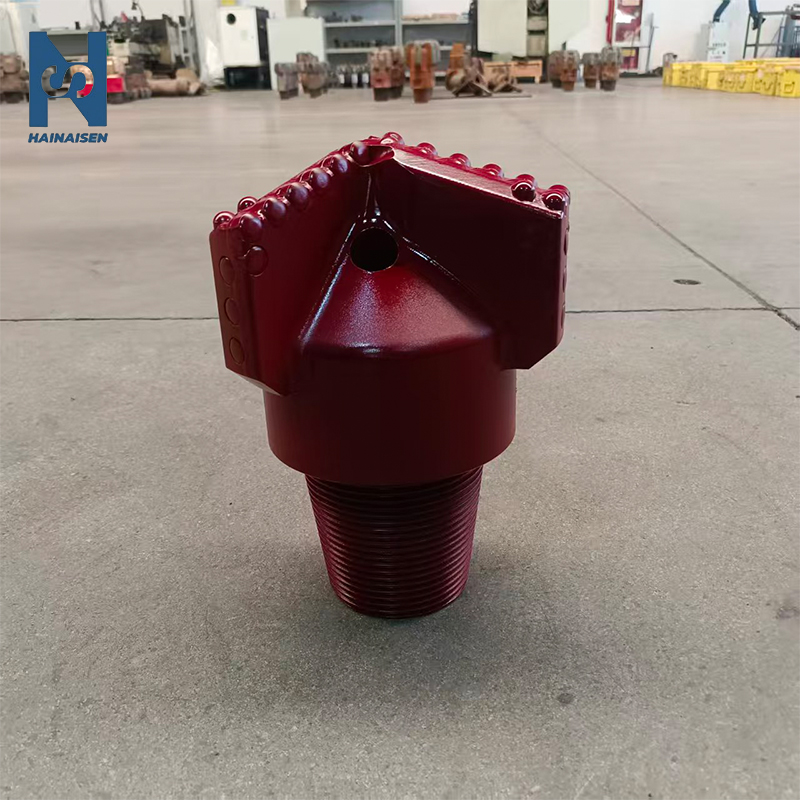
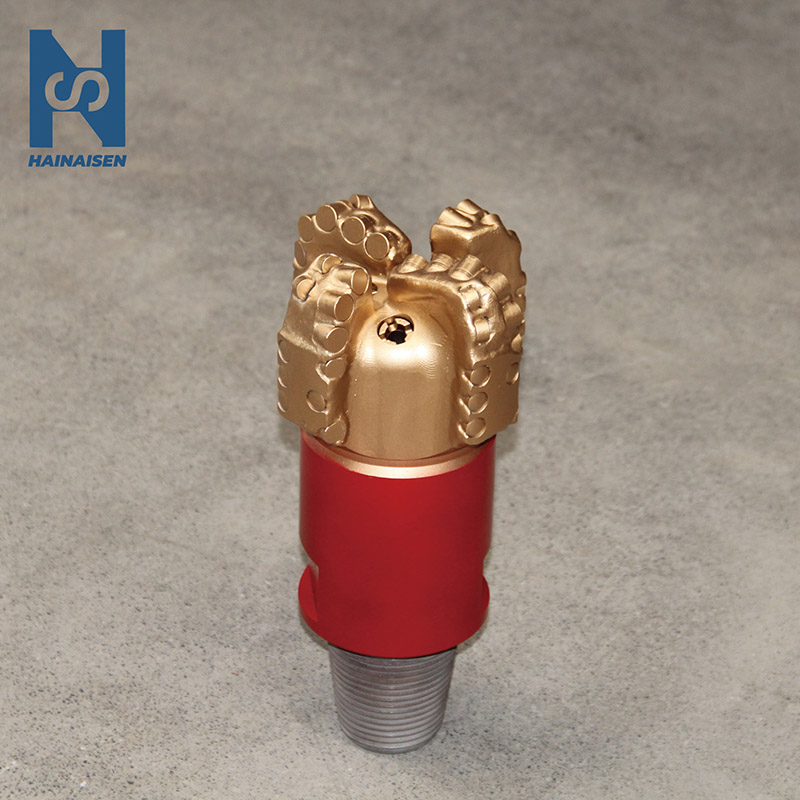
To get the best cutting results and make sure the bits last as long as possible, it's important to find the best RPM range for those hard alloy roller drill bits. Most of the time, 60 to 150 RPM is best for these bits, but this can change depending on the shape's stiffness, the bit's size, and its weight on board (WOB). Our 140 mm hard metal roller drill bit with 3 blades, for instance, works best in this range most of the time. But keep in mind that shapes that are harder might need lower RPMs, and shapes that are lighter can handle faster spinning speeds. It is important to choose the right RPM so that the bit's wear and entry rate are balanced. This keeps drilling costs low. By carefully considering the rock's features and making the right changes to the RPM, workers can make the drilling go much better and the bit last longer.
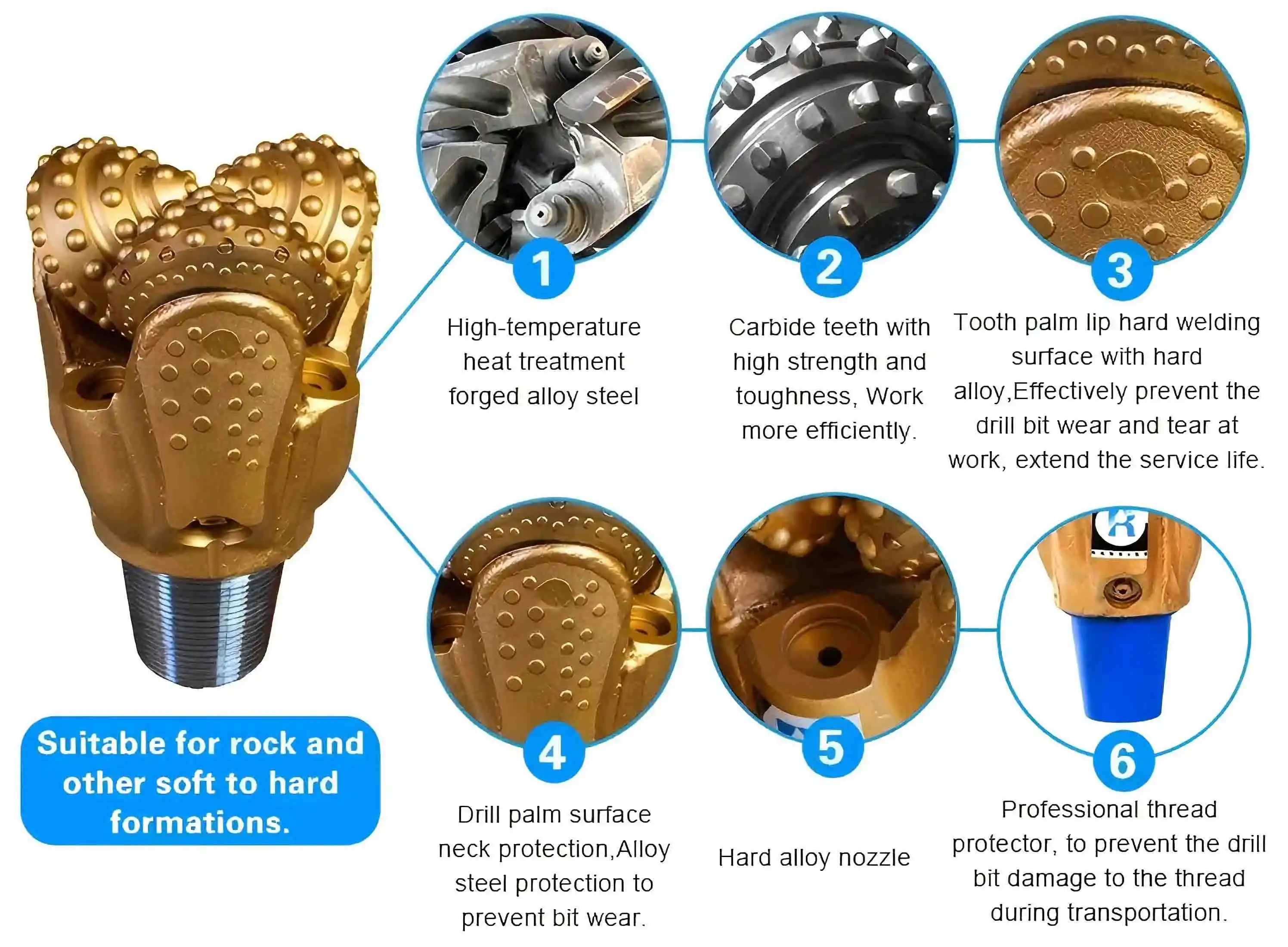
Calculating safe RPM limits for carbide-tipped bits
Several things are taken into account when figuring out the safest RPM limits for carbide-tipped hard metal roller drill bits. The main thing to think about is the peripheral speed at the bit's outer circle. This speed shouldn't go over a certain level to avoid too much wear and failure. Use this method to figure it out:
Bit Design and Construction Quality
The safest speed at which a carbide-tipped bit can rotate depends on how it was made and how it was designed. It depends on a lot of things, like how well it can handle spinning forces and practical stress. These include the grade and braze quality of the hard alloy inserts, the bit body's metallurgy and heat treatment, and the exact shape of the cutting structure. For higher RPM tolerance, you need a strong, well-balanced design from a reliable maker. If the building isn't good, it can fail catastrophically at high speeds because any imbalances or weak spots become much worse, which can be very dangerous and damage the drilling assembly.
Bearing Type and Lubrication System
The lubrication of the internal bearing system is very important and is often what limits the RPM. The bearing has to handle heavy radial and axial loads while spinning quickly, which makes a lot of heat. To get rid of this heat and keep the bearings from breaking down too soon, you need a good sealed roller bearing system with a grease tank or a continuous greasing system. If you don't grease them well enough or use a lower-quality bearing, they will quickly overheat and stop up, especially in the tough places where these bits are used. So, the realistic higher speed limit for long-term operation is directly related to the bearing's specs and how reliable its sealing technology is.
Formation Characteristics and Operational Loads
The features of the dug rock and the factors picked for drilling have a big effect on safe RPM. When rock is rough or highly broken, and there is too much weight on the bit (WOB), it causes strong shock loads and vibrations that are more damaging when they happen quickly. On the other hand, a steady, looser shape might let RPM go up. Also, good hydraulics are needed to keep the bit cool and remove pieces from the bottom of the hole quickly. Inadequate cooling can cause heat to build up and wear the bit down faster. So, the ideal maximum RPM of the hard alloy roller drill bit needs to be changed downwards based on how well the supporting hydraulic system works and how easy it is to drill into the formation.
How does formation hardness affect optimal rotation speed?
The formation hardness is a big part of figuring out what the best turning speed for hard metal roller drill bits is. In general, shapes that are harder need lower RPMs, while formations that are smoother can handle higher spinning speeds. There are several reasons for this connection to exist:
Impact of Formation Hardness on Chip Removal and Optimal RPM
The hardness of the part directly affects the size of the pieces and how well they are removed, which in turn determines the best spinning speed. When drilling in harder rock, the pieces are finer and smaller, and the drilling fluid easily flushes them away. This lets higher RPMs be used without the risk of balling or having to drill again. On the other hand, forms that are softer and more flexible make cuts that are bigger and sometimes stringy. For them to evacuate properly, they need enough hydraulic power and often lower RPMs so that the bit doesn't get too full or packed, which would make cleaning and cooling harder. So, changing the RPM based on looking at the cuttings is very important for keeping the shaft clean and digging quickly.
Impact of Formation Hardness on Bit Wear, Penetration Rate, and Vibration
Formation hardness has different ways of greatly affecting bit lifespan, rate of penetration (ROP), and system stability. Harder forms often need higher RPMs to break through, but the cutters wear out faster because of the strong friction and repeated impact forces. In addition, they tend to have lower entry rates and can cause dangerous noises at high RPMs, which can damage the drill string and bit. Higher ROP is usually possible in softer forms, which can be used to your advantage by boosting RPMs. However, this must be weighed against the risk of bit-balling. It is important to discover the RPM that makes the best trade-off between entry speed and wear or sound that can be controlled.
Guidelines for RPM Optimization Based on Formation Hardness
To get the best performance and durability, the spinning speed should be changed regularly based on the hardness of the formation. A cautious 60–90 RPM range helps keep wear and sound from being too high in very hard rocks (Level 10–12). Level 6–9 medium-hard forms allow a modest increase to 90–120 RPM to balance how deep the hole goes and how long it lasts. It is possible to use higher RPMs (120 to 150 RPM) to get deeper into soft to medium layers (Levels 1 to 5), as long as the cuts are removed efficiently. These numbers are just starting points; for each job, weight-on-bit, hydraulics, the hard alloy roller drill bit, and the design of the bit itself must be taken into account and fine-tuned.
RPM vs. WOB: Finding the sweet spot
To get the best drilling results from hard metal roller drill bits, you need to find the right mix between RPM and Weight on Bit (WOB). This balance, which is sometimes called the "sweet spot," is very important for getting the best Rate of Penetration (ROP) while also reducing bit wear and damage.
Relationship between RPM and WOB
RPM (revolutions per minute) and WOB (weight on bit) are two factors that directly affect how well a drill works and how well the bit works. How they work together determines the rate of penetration (ROP) and the amount of mechanical energy needed to break the rock. Since more force is being put on each cutter, a higher WOB usually lets the RPM go down while keeping the cutting rate the same. Also, sometimes a faster spinning speed can make up for a lighter weight that is being applied. But it's very important not to use too many mixtures, because too much RPM or WOB can cause damaging heat, shocks, and stresses that can cause the bit to break early, the drills to work less well, and the bottom-hole assembly to become damaged.
Strategies for optimizing RPM and WOB
A planned and carefully watched process is needed to find the best place for a hard metal roller drill bit to work at its best. To set a standard in the specific rock, start drilling with safe and mild settings. Slowly change the RPM and WOB while keeping a close eye on important real-time signs like ROP, torque, and sound patterns. Using advanced drilling optimization tools can make it a lot easier to look at this data and come up with good mixtures of parameters. Also, using controlled field trials with similar lithologies and following bit-specific marker standards, which are based on a lot of design and application testing, are tried-and-true ways to come up with reliable and effective best practices.
Balancing ROP and bit life
One of the hardest parts of parameter optimization is finding the right balance between the short-term goal of increasing the Rate of Penetration (ROP) and the long-term goal of making bits last longer. While too extreme settings might increase short-term ROP, they often lead to faster wear, heat damage, or seal failure, which can greatly shorten the bit's useful life and raise overall drilling costs. For long-lasting use, our hard metal roller drill bits are made with strong tungsten carbide cores and strong locking systems. Still, keeping RPM and WOB within the suggested ranges is important to get the most out of this design. This will ensure stable hard alloy roller drill bit performance, expected hard alloy roller drill bit run lengths, lower the hard alloy roller drill bit risk of failure too soon, and better hard alloy roller drill bit total drilling costs.
Conclusion
Optimizing the RPM range for hard alloy roller drill bits is a complex process that requires careful consideration of multiple factors. By understanding the relationship between RPM, WOB, and formation characteristics, drilling teams can significantly improve their operations' efficiency and cost-effectiveness. Remember that while general guidelines are helpful, each drilling operation is unique and may require specific adjustments to achieve optimal performance.
Are you looking to enhance your drilling operations with high-quality hard alloy roller drill bits? Shaanxi Hainaisen Petroleum Technology Co., Ltd. specializes in the research, development, and production of advanced drilling tools tailored to your specific needs. Our 140 mm hard alloy roller drill bit, featuring 3 blades and 3 nozzles, is designed to excel in a wide range of formation types, from soft sedimentary rocks to hard igneous formations.
With our state-of-the-art 3,500 m² facility equipped with 5-axis machining centers and CNC machine tools, we ensure precision manufacturing and consistent quality. Our dedicated R&D team is ready to work with you to develop custom bit designs that meet your unique drilling challenges.
Don't let suboptimal Hard alloy roller drill bit drilling performance hold you back. Contact Us today at hainaisen@hnsdrillbit.com to learn how our hard alloy roller drill bits can revolutionize your drilling operations. Whether you're in oil and gas exploration, mining, or geothermal energy development, we have the expertise and products to help you achieve your drilling goals efficiently and cost-effectively.
References
1. Smith, J.R. (2019). "Optimizing Roller Cone Bit Performance in Hard Rock Formations." Journal of Petroleum Technology, 71(5), 62-68.
2. Johnson, A.B. and Thompson, L.K. (2020). "The Impact of RPM and WOB on Hard Alloy Roller Bit Longevity." SPE Drilling & Completion, 35(2), 123-135.
3. Nguyen, T.H. (2018). "Advanced Techniques for Determining Safe RPM Limits in Carbide-Tipped Drill Bits." International Journal of Mining Science and Technology, 28(4), 555-562.
4. Williams, R.C. and Davis, E.M. (2021). "Formation Hardness and Its Effects on Optimal Rotation Speed in Deep Well Drilling." Geothermal Resources Council Transactions, 45, 789-796.
5. Chen, X., et al. (2017). "Experimental Study on the Relationship Between RPM, WOB, and ROP for Hard Alloy Roller Bits." Rock Mechanics and Rock Engineering, 50(6), 1585-1596.
6. Brown, S.L. and White, A.R. (2022). "Balancing Drill Bit RPM and Weight on Bit: A Comprehensive Guide for Drilling Engineers." Society of Petroleum Engineers, SPE-198765-MS.








logo 1_1777360475599.jpg)
logo 2_1777360600432.jpg)