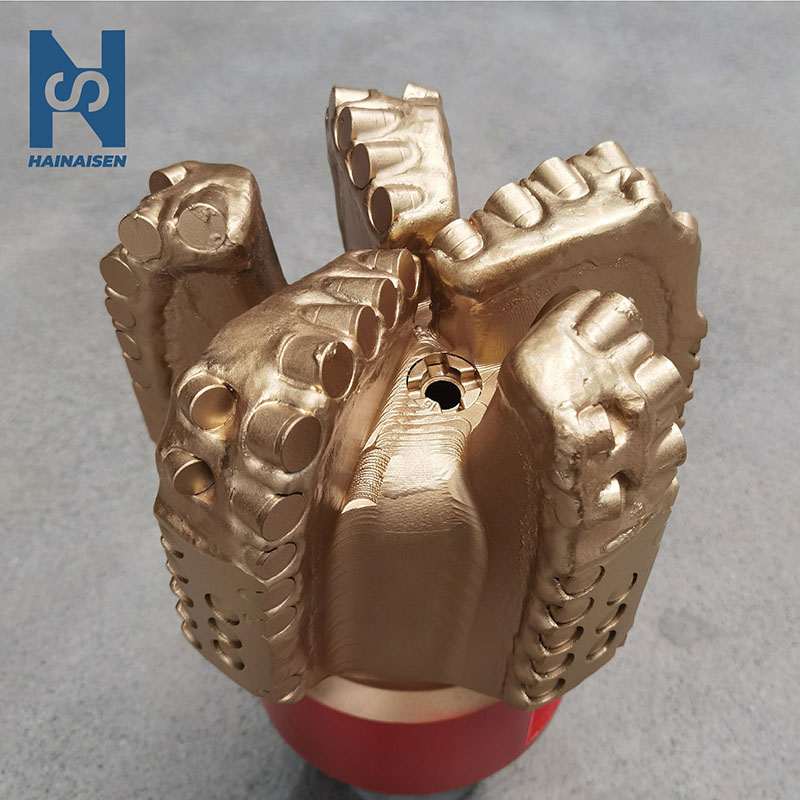
Factors Influencing Blade Spacing Calculations
When calculating blade spacing for a 5 Blades PDC Oil Bit, several critical factors come into play:
Formation Characteristics
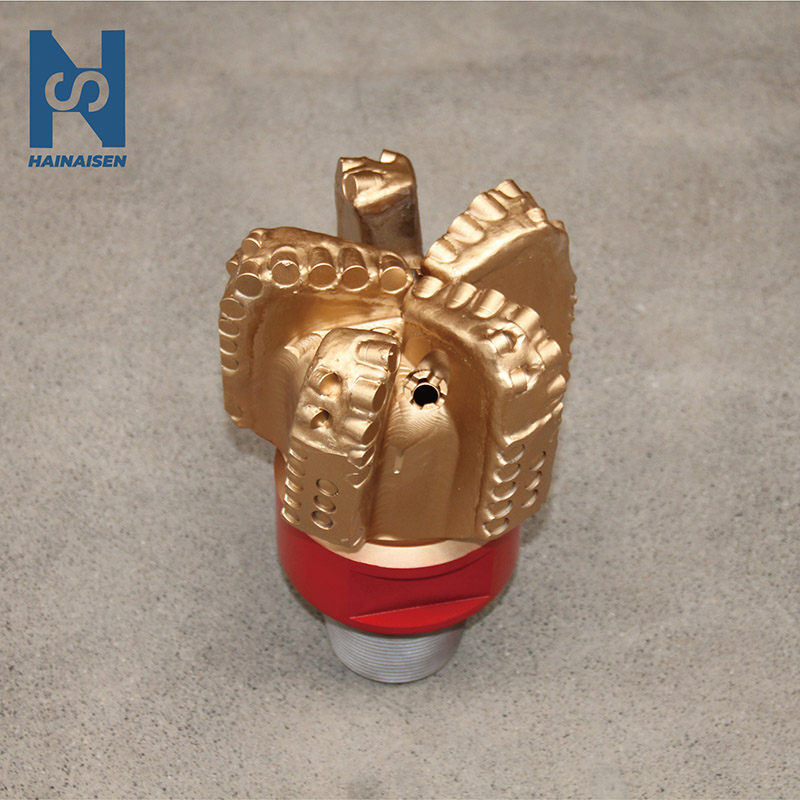
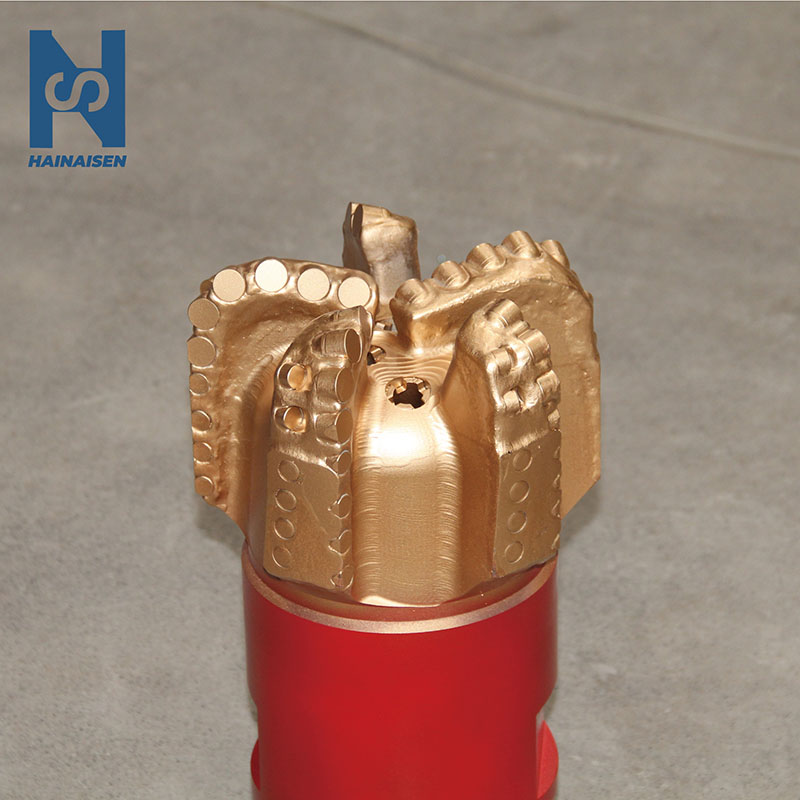
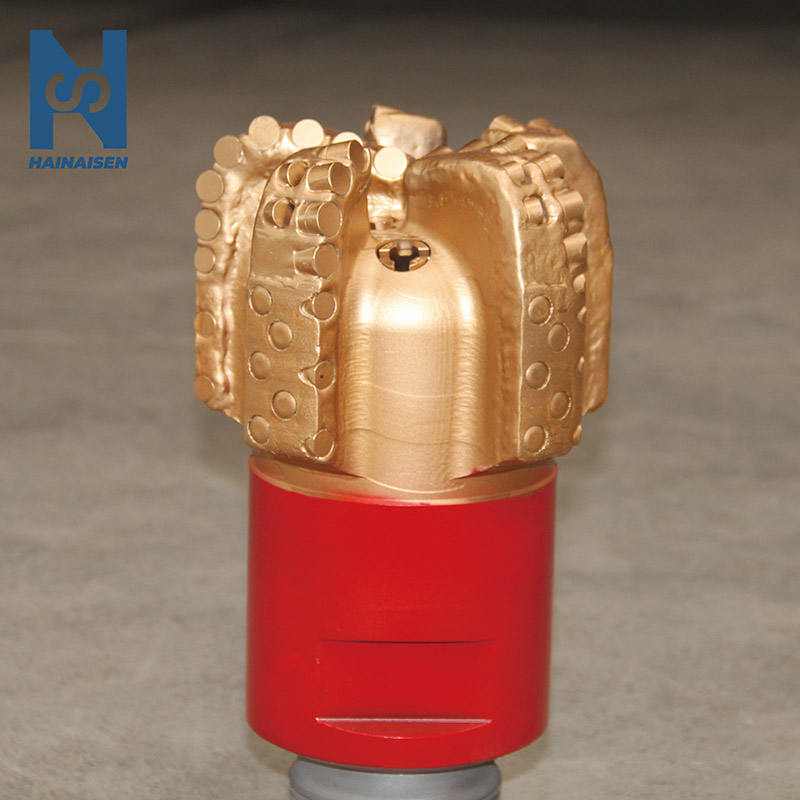
Blade spacing choices are greatly affected by the type of rock formations being drilled and their properties. To keep bit balling from happening in softer formations, you may need to make the spaces bigger. On the other hand, in harder formations, closer blade spacing might be better for cutting density. Engineers figure out the best blade layout by looking at formation compressive strength, abrasiveness, and uniformity.
Hydraulic Considerations
For quick bit cooling and easy removal of pieces, proper fluid flow is very important. Nozzle placement and the junk slot area must be taken into account when figuring out blade spacing to make sure that the hydraulic system works well. The bit's ability to clean the bottom hole and move cuttings efficiently is influenced by the spacing of the blades since it changes the size and shape of the fluid channels.
Stability and Vibration Control
Blade spacing is very important for keeping the 5 Blades PDC Oil Bit stable and reducing vibration. If the spacing is not even or correct, the cutting action can become unbalanced. This can cause a lot of vibration, which might hurt both the bit and the drillstring. Advanced modeling methods are used to find the best blade placement for better support over a range of drilling conditions.
Mathematical Approach to Blade Spacing Calculation
The mathematical process for calculating blade spacing in a 5 Blades PDC Oil Bit involves several steps:
Basic Angular Calculation
The fundamental calculation starts with dividing 360 degrees by the number of blades:
Angular Spacing = 360° ÷ 5 = 72°
This provides the theoretical equal spacing between blades. However, this basic calculation is often adjusted based on other design considerations.
Arc Length Determination
To determine the actual distance between blades on the bit surface, engineers calculate the arc length using the formula:
Arc Length = (π × Bit Diameter × Angular Spacing) ÷ 360°
This calculation helps in visualizing the physical spacing and aids in cutter placement decisions.
Spiral Angle Incorporation
A lot of 5 Blades PDC Oil Bits use spiral blades to make cutting easier. The spiral angle is used in the spacing math by trig formulas to find the real blade path and spacing along the bit profile.
Optimization Techniques for Blade Spacing
Achieving optimal blade spacing in a 5 Blades PDC Oil Bit goes beyond basic calculations and involves sophisticated optimization techniques:
Computational Fluid Dynamics (CFD) Analysis
CFD models help figure out how fluid flow patterns look around the bit. These models help engineers find the best spacing for the blades so that the hydraulics work better. This makes sure that the bit face gets cleaned and cooled properly while it's working.
Finite Element Analysis (FEA)
FEA models help predict stress distribution and potential vibration patterns across different blade spacing configurations. This analysis is crucial for designing bits that maintain stability and structural integrity under various drilling conditions.
Field Data Integration
The design method uses performance data from the real world for similar 5 Blades PDC Oil Bit and formations. This empirical data helps make theoretical predictions more accurate and ensures that choices about blade spacing are based on real-world drilling knowledge.
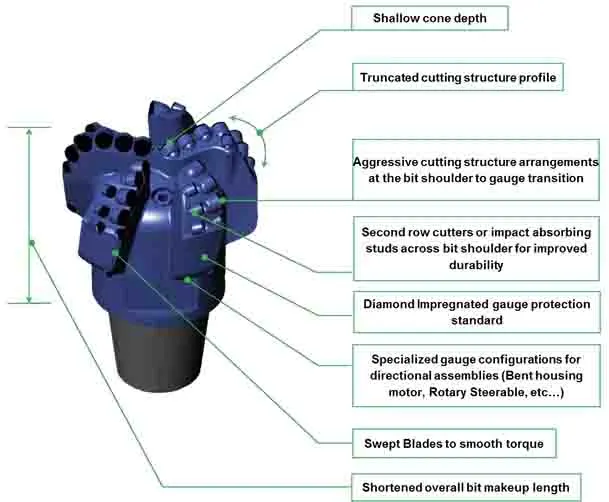
Conclusion
The 5 Blades PDC Oil Bit is an example of how advanced engineering and practical drilling needs can be combined to get the best results in a wide range of natural settings. Designers create a base for stable drilling and balanced cutting forces by splitting the bit's circumference into five blades. These blades are usually set 72 degrees apart. But the best distance between blades goes beyond just mathematics. Formation hardness, how abrasive it is, the desired rate of penetration (ROP), and hydraulic efficiency are some of the things that are looked at closely to get the blade shape just right. Engineers can make sure that the bit works well under tough conditions by using high-tech tools such as computational fluid dynamics (CFD) and finite element analysis (FEA) to improve fluid flow, stress distribution, and vibration control.
The 5-blade setup gives a good balance between cutting density and stability, so it works really well on rocks of medium hardness, like shale and limestone, as well as on complex interbedded layers. Its customizable cutter placement and hydraulic channels make it easier to get cuttings out, lower bit balling, and keep the borehole intact. Plus, the optimal spacing helps bits last longer and increases ROP. The 5 Blades PDC Oil Bit brings down drilling costs, keeps the rate of drilling steady, and improves wellbore quality by merging theories with real-world data and simulations. Overall, it gives drilling operators a flexible, dependable, and affordable answer that can handle the problems of today's oil, gas, and water well operations with accuracy and long-lasting strength.
FAQ
1. What are the advantages of a 5 Blades PDC Oil Bit over other configurations?
A 5 Blades PDC Oil Bit gives you a good mix of cutting speed and steadiness. The five-blade design keeps the bit stable, reduces sound, and has enough cutting power to remove rock easily. In most cases, this setup leads to a higher ROP and longer bit life compared to bits that have fewer blades, particularly in forms with medium hardness.
2. How does blade spacing affect drilling performance?
Bit stability, hydraulic performance, and cutting efficiency are all affected by the spacing of the blades on the 5 Blades PDC Oil Bit. The bit face will experience balanced wear, cutting forces will be distributed evenly, and cuttings will be properly evacuated if the spacing is just right. You may increase ROP, improve hole quality, and extend bit life by carefully designing the blade spacing.
3. Can blade spacing be customized for specific formations?
It is recommended to tailor blade spacing to the unique properties of the formation and drilling conditions. Shaanxi Hainaisen Petroleum Technology Co., Ltd.'s technical team examines your particular drilling needs and formation data to determine the optimal blade spacing for your job.
4. How often should blade spacing calculations be reviewed?
When entering a new formation or making significant adjustments to other drilling parameters, or if there is a significant change in the drilling circumstances generally, you should double-check your blade spacing calculations. Bit performance data over time can also be used to improve blade spacing design for bits in the future.
Custom 5 Blades PDC Oil Bit Solutions | HNS
Looking for a 5 Blades PDC Oil Bit that's tailored to your specific drilling needs? Shaanxi Hainaisen Petroleum Technology Co., Ltd. offers custom-designed PDC Bits that maximize performance in your unique operating environment. Our experienced engineers work closely with you to develop bit designs that optimize blade spacing, cutter placement, and hydraulics for your specific formation challenges. Whether you're drilling in shale, limestone, or complex interbedded formations, we have the expertise to deliver a bit that enhances your drilling efficiency and reduces overall costs. Don't settle for off-the-shelf solutions – experience the difference a custom-engineered 5 Blades PDC Oil Bit can make in your operations. Contact Us today at hainaisen@hnsdrillbit.com to start the process of creating your optimal drilling solution.
References
1. Smith, J.R. and Brown, T.L. (2019). Advanced PDC Bit Design: Optimizing Blade Configurations for Enhanced Performance. Journal of Petroleum Technology, 71(5), 62-68.
2. Chen, D., et al. (2020). Computational Fluid Dynamics Analysis of PDC Bit Hydraulics and Its Impact on Cuttings Transport. SPE Drilling & Completion, 35(2), 167-180.
3. Johnson, A.K. and Williams, R.E. (2018). The Role of Blade Spacing in Modern PDC Bit Design: A Comprehensive Review. SPE/IADC Drilling Conference and Exhibition, 6-8 March, The Hague, The Netherlands.
4. Garcia, M.P. and Thompson, L.S. (2021). Field Performance Analysis of Optimized 5-Blade PDC Bits in Challenging Formations. Offshore Technology Conference, 3-6 May, Houston, Texas, USA.
5. Lee, S.H., et al. (2017). Innovative Approaches to PDC Cutter Layout and Blade Design for Improved Drilling Efficiency. SPE Annual Technical Conference and Exhibition, 9-11 October, San Antonio, Texas, USA.
6. Roberts, T.A. and Anderson, K.L. (2022). The Evolution of PDC Bit Design: From Fixed Blades to Adaptive Configurations. World Oil, 243(4), 55-60.