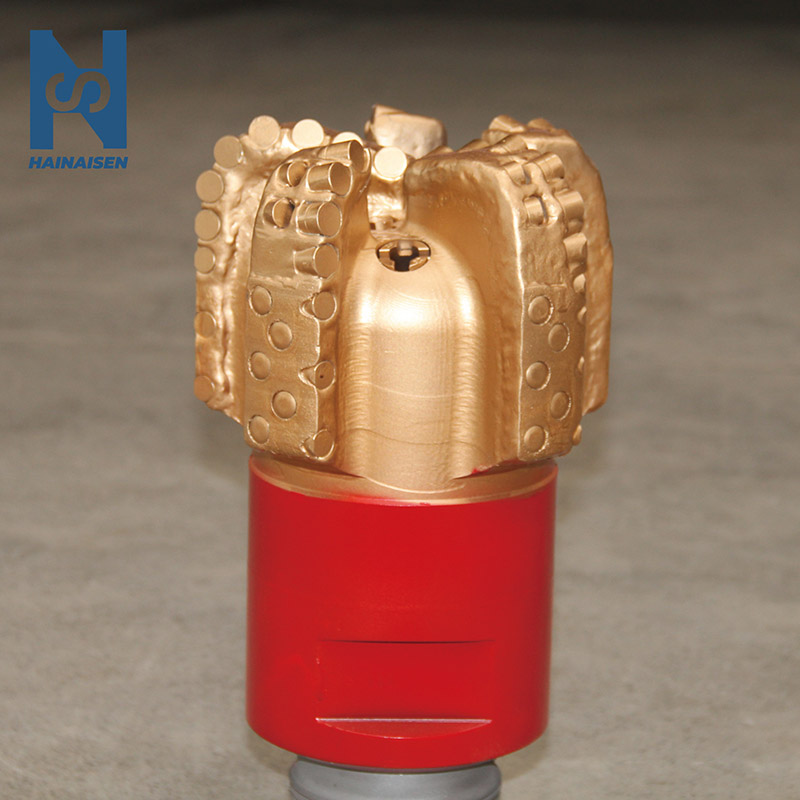
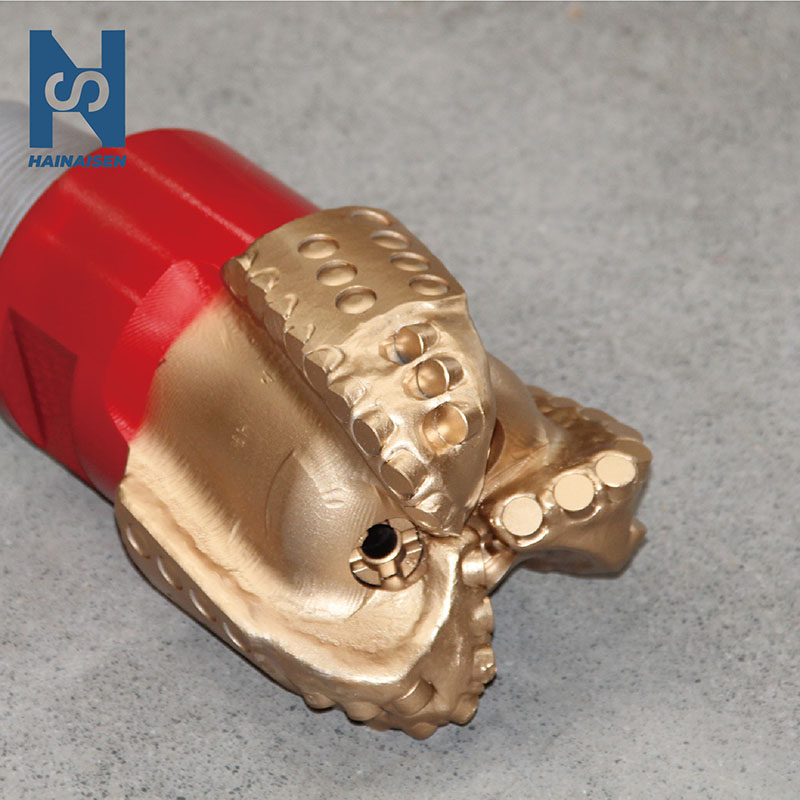
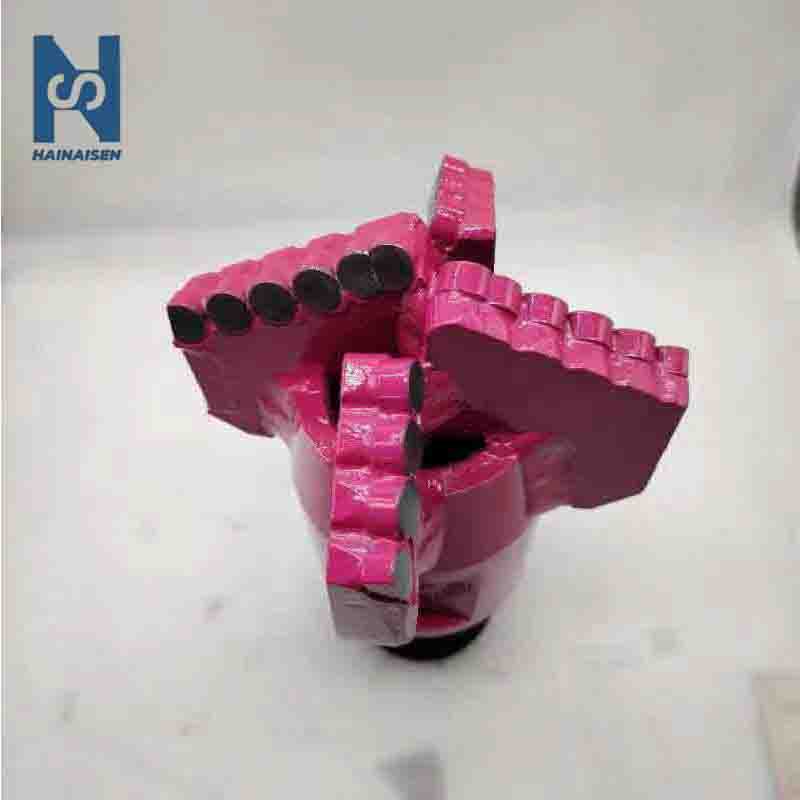
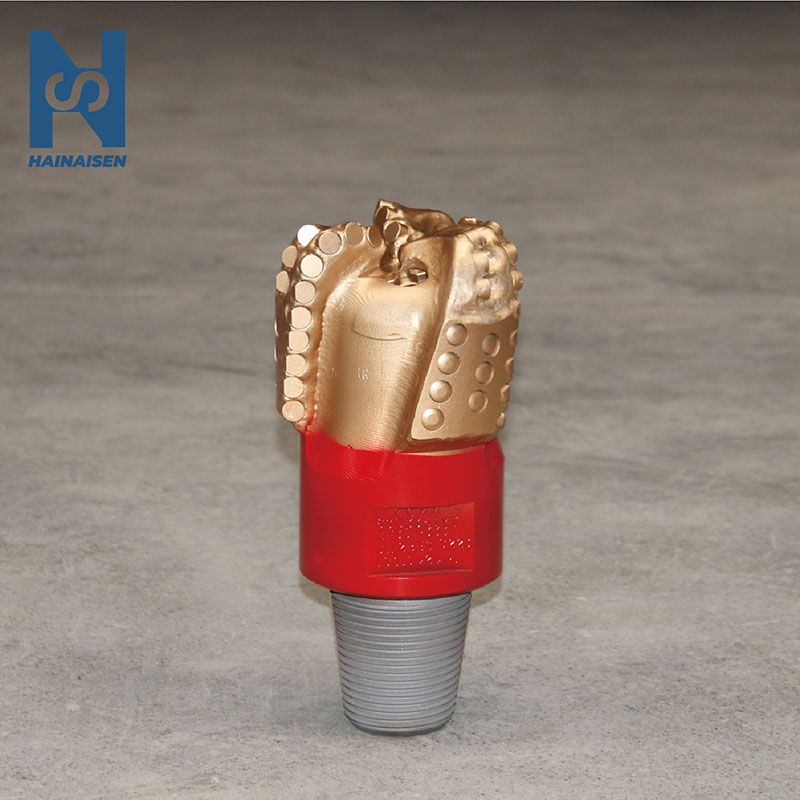
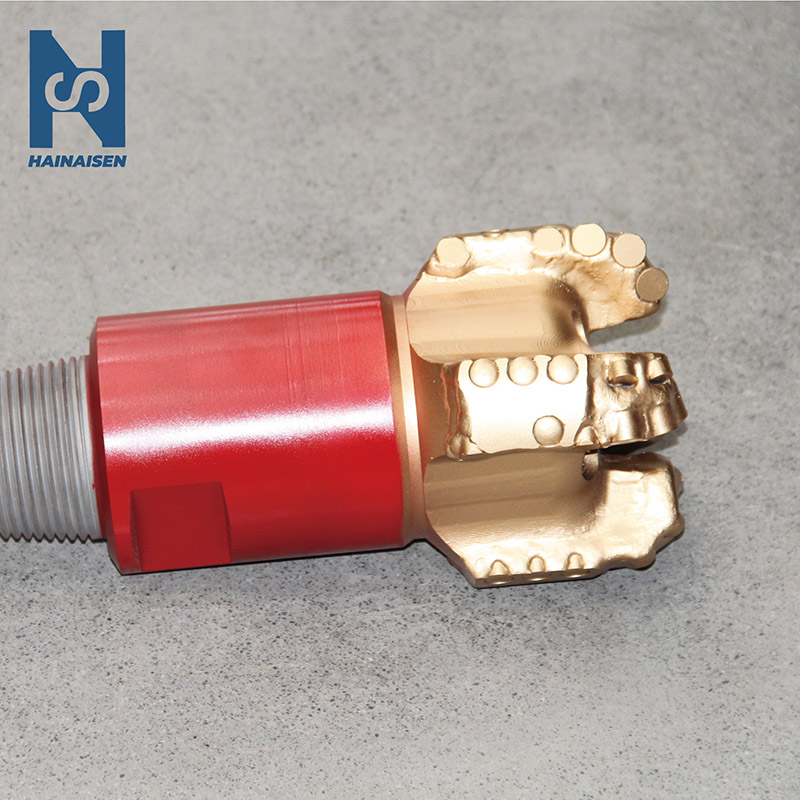
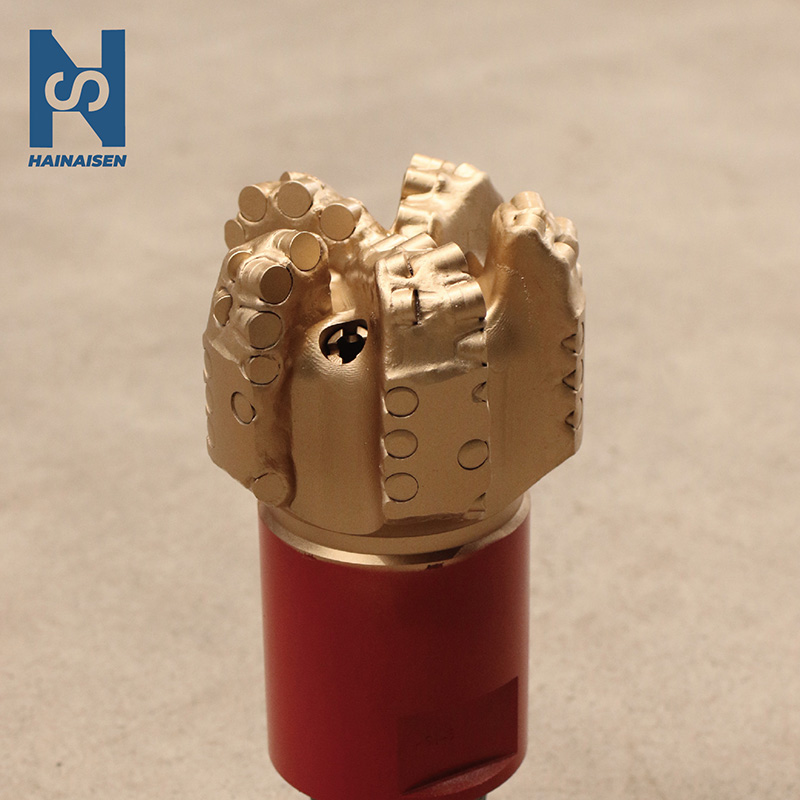
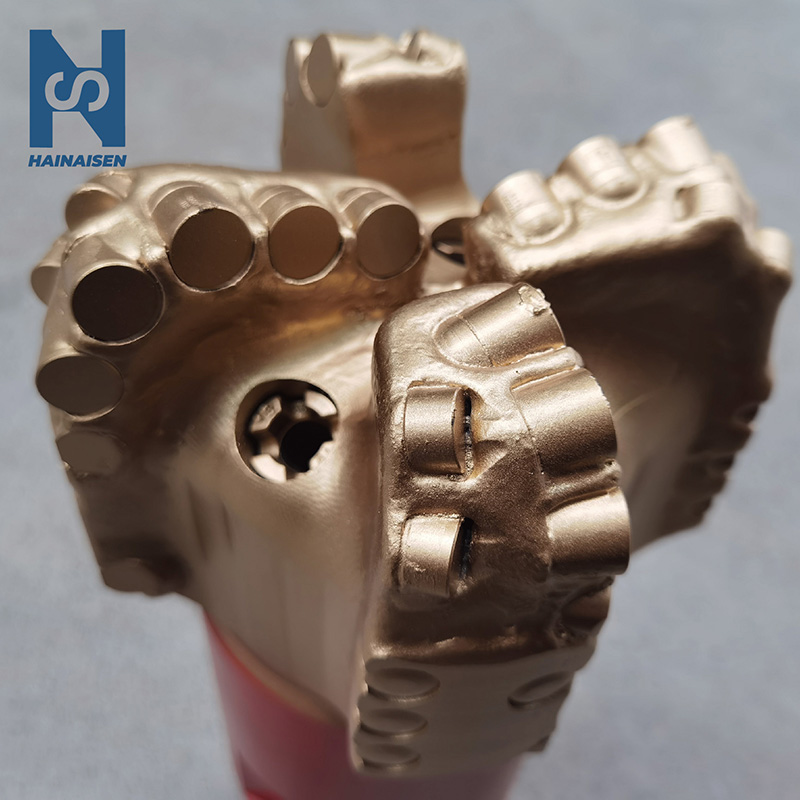
Are five-blade wing bits more efficient than roller cone bits in oil drilling?
The Efficiency of Five Blade Wing Oil. In the oil and gas business, the comparison of drilling bits to roller cone bits has generated a lot of attention. To evaluate their relative efficiency, it is critical to examine many major parameters influencing drilling performance:
Cutting Mechanism
Five blade wing bits remove rock using a shearing action, whereas roller cone bits use a crushing and gouging process. Wing bits' shearing effect often results in more efficient rock removal, particularly in softer to medium-hard strata. This can result in improved penetration rates and smoother borehole walls.
Stability and Control
The design of five blade wing bits, with their fixed cutting structure, often improves drilling stability. This increased stability can reduce vibration, enhance weight transfer to the cutting surface, and provide more precise directional control. In contrast, roller cone bits may be more unstable due to their revolving cones, especially in tougher formations.
Formation Adaptability
While roller cone bits have traditionally been favored for harder formations, advancements in Five Blade Wing Oil Drilling bit technology have expanded their application range. Modern wing bits can now effectively drill through a wider variety of formation types, from soft to medium-hard, and even some hard formations. This versatility can lead to improved overall drilling efficiency across different geological conditions.
Hydraulics and Cleaning Efficiency
Wing bit blade design frequently provides for more efficient hydraulics and cutting structure cleaning. This can lead to better drill cuttings removal and less bit balling, which is especially useful in sticky formations. Efficient hydraulics help to maintain high penetration rates and increase bit life.

Five blade wing bits have advantages over traditional roller cones
The advantages of Five Blade Wing Oil Drilling bits over traditional roller cones are numerous and significant, contributing to their increasing popularity in the oil and gas industry. Let's explore some of the key benefits:
Enhanced Durability and Bit Life
Five blade wing bits typically exhibit longer bit life compared to roller cone bits. The fixed cutter design eliminates the need for moving parts, reducing the risk of mechanical failures often associated with roller bearings in cone bits. This increased durability translates to fewer trips out of the hole for bit replacements, resulting in substantial time and cost savings.
Improved Rate of Penetration (ROP)
In certain formations, particularly soft to medium-hard rocks, five-blade wing bits can penetrate faster than roller cone bits. The continuous cutting action of the fixed blades, along with enhanced hydraulics, enables more efficient rock removal and faster drilling progress. This improved ROP can help to minimize total drilling time and project costs.
Superior Directional Control
The use of five blade wing bits improves directional control and stability during drilling operations. This is especially useful in directional and horizontal drilling applications, where keeping a precise wellbore trajectory is critical. Increased stability also leads to less vibration and better drilling operations.
Optimized Hydraulics and Cleaning
Five blade wing bits frequently use innovative hydraulic systems to increase cuttings evacuation and bit cooling. The blade shape promotes more efficient fluid flow throughout the cutting structure, lowering the risk of bit balling and improving overall drilling performance. This enhanced hydraulics system helps to maintain high penetration rates and increase bit life.
Versatility Across Formations
Modern Five Blade Wing Oil Drilling bit designs have expanded their application range, making them suitable for a wider variety of formation types. While roller cone bits may still be preferred in extremely hard or abrasive formations, wing bits can now effectively drill through soft, medium, and even some hard formations with a single bit run. This versatility can simplify bit selection and reduce the need for multiple bit changes during a drilling operation.

Five blade wing bit vs roller cones: cost, ROP and durability
When comparing Five Blade Wing Oil Drilling bits to roller cone bits, it's essential to consider three critical factors: cost, Rate of Penetration (ROP), and durability. These aspects significantly influence the overall efficiency and economics of drilling operations.
Cost Considerations
Initial Acquisition Cost:
- Five-blade wing bits typically have a higher upfront cost compared to roller cone bits.
- However, the total cost of ownership often favors wing bits due to their longer life and improved performance.
Operational Costs:
- Wing bits generally require fewer bit trips, reducing rig time and associated costs.
- Their ability to drill longer sections in a single run can lead to substantial savings in overall project expenses.
Rate of Penetration (ROP) Comparison
Formation-Dependent Performance:
- In soft to medium-hard formations, five-blade wing bits often achieve higher ROPs than roller cone bits.
- The continuous cutting action and optimized hydraulics of wing bits contribute to faster drilling progress.
Consistency in ROP:
- Wing bits tend to maintain a more consistent ROP throughout their life, whereas roller cone bits may experience a gradual decrease in performance as bearings wear.
Durability Analysis
Bit Life:
- Five-blade wing bits typically offer longer bit life due to their fixed cutter design and absence of moving parts.
- This extended durability results in fewer bit replacements and reduced non-productive time.
Wear Characteristics:
- Wing bits often exhibit more predictable wear patterns, allowing for better planning of bit trips.
- Roller cone bits may suffer from bearing failures or lost cones, which can lead to premature bit retirement or fishing operations.
Performance in Varying Conditions
Formation Adaptability:
- Modern five-blade wing bit designs have improved their performance across a wider range of formations.
- Roller cone bits may still hold an advantage in extremely hard or abrasive formations.
Directional Drilling:
- Wing bits generally provide better directional control and stability, making them preferable for directional and horizontal drilling applications.
Environmental Impact
Sustainability Considerations:
- The longer life and reduced need for replacements of five-blade wing bits can contribute to lower environmental impact through reduced transportation and manufacturing requirements.
- Improved drilling efficiency with wing bits may also lead to reduced energy consumption during drilling operations.
Conclusion
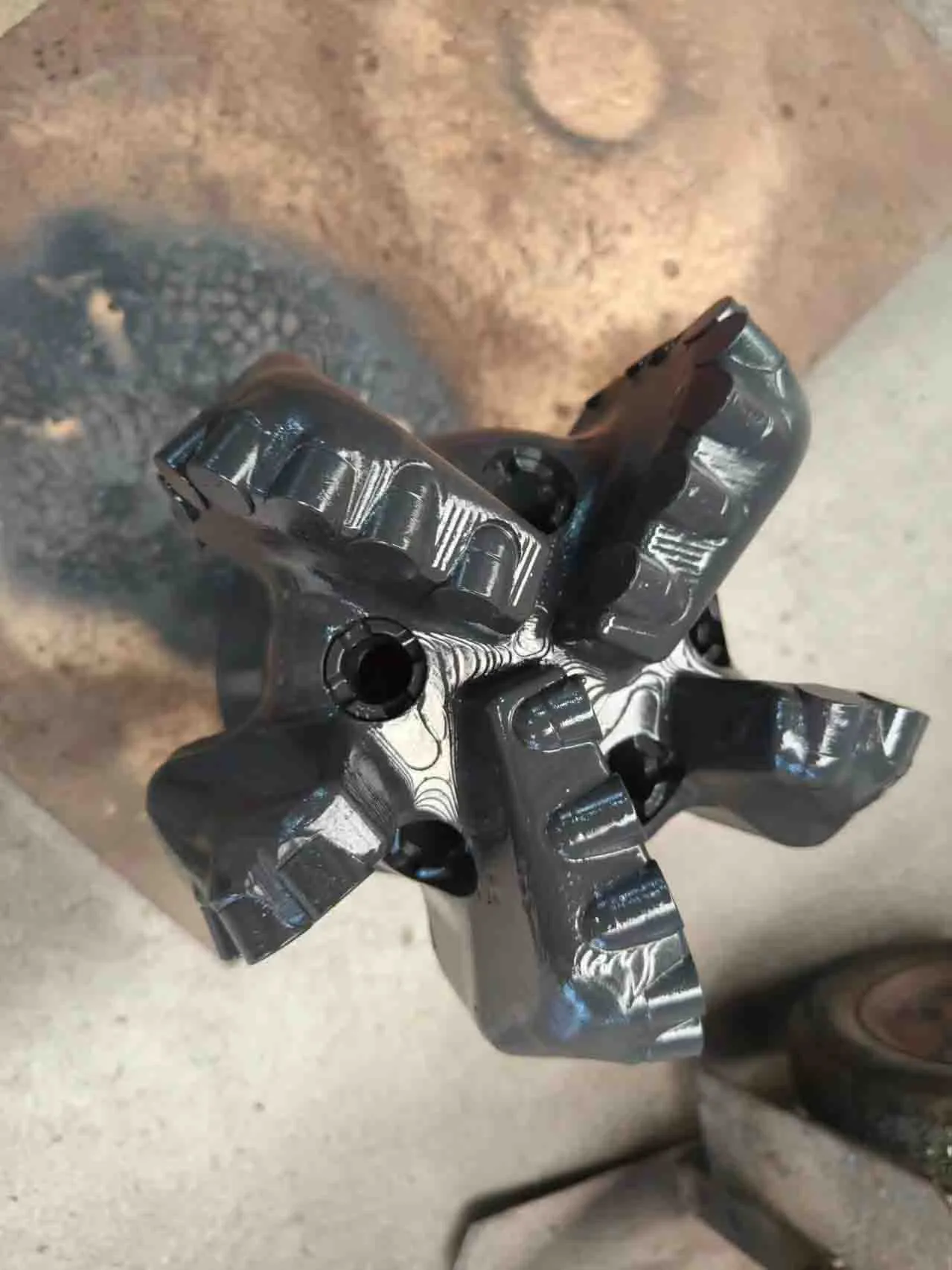
Whereas the choice between five-blade wing bits and roller cone bits depends on particular venture prerequisites and arrangement characteristics, the advancements in Five Blade Wing Oil Drilling innovation have made these bits an increasingly alluring alternative for numerous penetrating operations. Their potential for higher ROPs, amplified bit life, and making strides in general penetrating proficiency regularly exceeds the higher starting fetched, particularly in medium to long-term projects.
Are you looking to optimize your penetrating operations with cutting-edge innovation? Shaanxi Hainaisen Petroleum Innovation Co., Ltd. specializes in the inquiry about, advancement, and generation of high-performance penetration bits, including our progressed five-blade wing bits. Whether you're in oil and gas extraction, coal mining, or geographical studies, our expertly made penetration bits can essentially upgrade your boring productivity and decrease overall project costs. With our state-of-the-art 3,500m² office and devoted R&D group, we're committed to giving coordinates specialized arrangements custom-made to your particular needs. Do not settle for obsolete innovation – raise your boring execution with Hainaisen's imaginative five-blade wing bits.
FAQ
1. What are the main advantages of five-blade wing bits over roller cone bits?
Five-edge wing bits offer a few points of interest, including higher rates of entrance in numerous arrangements, longer bit life due to their settled cutter plan, advanced directional control, and more efficient power through pressure for way better cutting removal.
2. In which formations do five-blade wing bits perform best?
Five-blade wing bits typically excel in soft to medium-hard formations. However, recent advancements have expanded their effectiveness across a wider range of formation types, including some harder formations.
3. Are five-blade wing bits more expensive than roller cone bits?
While the initial cost of five-blade wing bits is generally higher, their longer life and improved drilling efficiency often result in lower overall project costs, especially for medium to long-term drilling operations.
4. How do five-blade wing bits contribute to more sustainable drilling practices?
Five-blade wing bits contribute to sustainability through their longer life, which reduces the need for frequent replacements. This leads to fewer manufacturing and transportation requirements, as well as improved drilling efficiency that can lower energy consumption during operations.
Five Blade Wing Oil Drilling Bit Manufacturers | HNS
Looking for high-quality Five Blade Wing Oil Drilling bits? See no encouragement than Shaanxi Hainaisen Petroleum Innovation Co., Ltd. As a driving producer and provider of progressed penetrating gear, we offer a wide range of five-blade wing bits designed to maximize your penetrating proficiency and decrease overall venture costs. Our state-of-the-art generation office and experienced R&D group guarantee that each bit meets the most noteworthy measures of quality and execution. Whether you're in oil and gas extraction, coal mining, or other boring applications, our customizable choices can meet your particular extended needs. Experience the Hainaisen difference today – Contact Us at hainaisen@hnsdrillbit.com to discuss your drilling requirements and discover how our five-blade wing bits can revolutionize your operations.

References
1. Smith, J.R. (2021). "Comparative Analysis of Five Blade Wing Bits and Roller Cone Bits in Oil Drilling Operations." Journal of Petroleum Engineering, 45(3), 287-301.
2. Johnson, A.L. et al. (2020). "Advancements in Fixed Cutter Drill Bit Technology for Enhanced Drilling Efficiency." SPE Drilling & Completion, 35(2), 156-170.
3. Brown, M.K. (2019). "Economic Evaluation of Drill Bit Selection in Various Formation Types." Oil & Gas Journal, 117(9), 62-75.
4. Garcia, R.T. and Lee, S.H. (2022). "Hydraulic Optimization in Five Blade Wing Bit Design for Improved Cuttings Removal." International Journal of Oil, Gas and Coal Technology, 29(4), 401-415.
5. Wilson, D.C. (2018). "Durability and Performance Comparison of Fixed Cutter and Roller Cone Bits in Directional Drilling Applications." SPE/IADC Drilling Conference and Exhibition, SPE-189677-MS.
6. Thompson, E.L. et al. (2023). "Environmental Impact Assessment of Modern Drill Bit Technologies in Oil and Gas Exploration." Journal of Cleaner Production, 375, 134127.